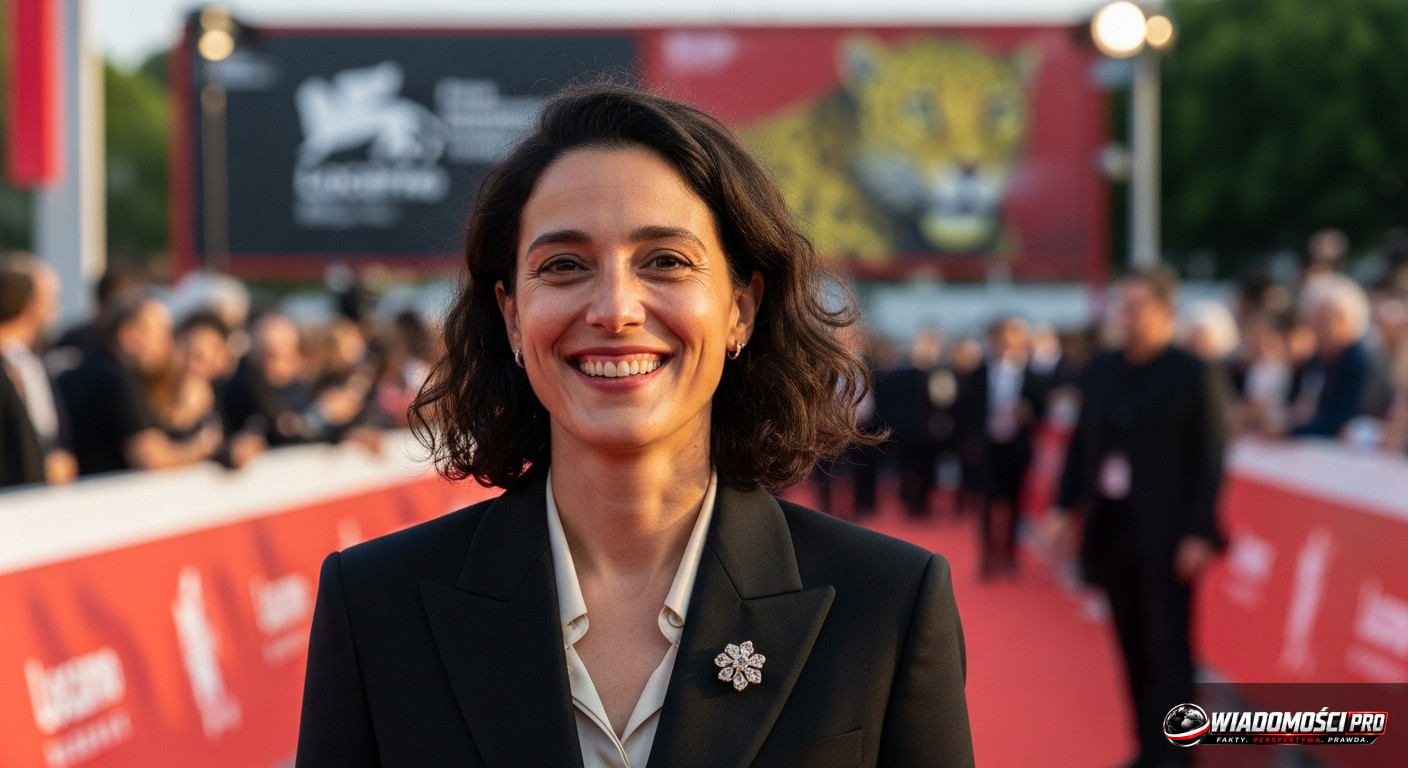
Yes, Kamila Serwicka's documentary "And Now Spring" has won the prestigious Grand Prix in the Semaine de la Critique section at the 2026 Locarno Film Festival and received a 10-minute standing ovation, making it one of the most significant achievements in Polish debut cinema in recent years. This success places Serwicka's work at the very center of the discussion about the state of domestic cinema, extending beyond the framework of a local festival success. Comparing this result to other high-profile Polish debuts of the past decade, such as Jagoda Szelc's "Tower. A Bright Day" or Jan Komasa's "Suicide Room," a clear shift in emphasis is visible – from narrative fiction toward uncompromising documentary filmmaking, which is gaining recognition from international jurors with its very first feature-length project.
The road to Locarno: How was the success of And Now Spring created?
Kamila Serwicka entered the international film arena with a determination rarely seen in debutants. Her feature-length production "And Now Spring" was not the result of years of maneuvering within the studio system, but the effect of work that dominated this year's edition of the Locarno festival. When the music faded on August 15, 2026, after the final minute of the screening, the hall in the Swiss resort turned into a place where traditional festival norms ceased to apply. The ten-minute audience reaction was a clear message: in "And Now Spring," technical precision collided with an authenticity lacking in many contemporary documentary productions.
The process of creating this film remains a matter of speculation, as the director consistently protects the behind-the-scenes details of her work. It is only known that the foundation of the film is a raw, original visual language, which was recognized in Locarno as the most interesting voice in young Polish cinema. In the film industry, it is said that Serwicka rejected safe financing paths, choosing the more difficult route of building a narrative without compromises. Such a model of operation, although burdened with high risk, paid off in the form of a win in one of the most important parallel sections in Europe. This success proves that international selection committees are hungry for material that does not pretend to be cinema, but actually is.
Contemporary Polish cinema is going through a phase of intense verification. Serwicka's debut fits into this trend, offering a perspective that does not require the backing of big names or broad promotional campaigns. Unlike debuts that often rely on safe adaptations of well-known themes, Serwicka focused on observation that transcends the borders of Poland. This approach makes the film a universal record of emotions, readable to every viewer, regardless of their cultural code. The win in Locarno confirms that Polish documentary cinema no longer needs to beg for attention – it commands that attention through the quality of its execution.
10 minutes of applause: Why did the audience go wild?
The reaction in Locarno was not the result of festival politeness. The audience, usually jaded by an excess of programming offerings, reacted this time with rare passion. Ten minutes of standing ovation is a result in the film world that opens doors to global distribution. Viewers in Switzerland, often accustomed to intellectually exhausting cinema, found something in "And Now Spring" that goes beyond the schematic observation of reality. Serwicka managed to translate personal drama into a language understandable to everyone who sat in the festival hall.
Documentaries rarely win the fight for viewer attention when compared to feature productions. Here, however, the line was blurred. The success in Switzerland is hard proof that debutants no longer need to use beaten paths to break into the mainstream. It is clearly visible that the ability to translate intimate experiences into a universal image is what the best selectors are looking for. When the lights in the hall came on after the applause, a kind of intellectual agitation could be seen on the faces of those present, which rarely accompanies debut screenings.
Comparing this to other important Polish titles of the last decade, such as Anna Zamecka's "Communion" or Michał Marczak's "All These Sleepless Nights," "And Now Spring" seems to close a certain chapter. If those films set aesthetic standards, Serwicka imposes a new way of conducting a narrative. Her documentary does not seek confirmation in film theory, but in emotional truth. It is precisely this sincerity that made the audience in Locarno not want to leave the hall, celebrating the moment of the birth of a new talent.
The festival distinction that is the Grand Prix is not just a statuette. It is a ticket to the league of directors from whom a change in the landscape of Polish cinema is expected. Serwicka has set the bar higher than it has been in years. Now, as the emotions after the Swiss success slowly subside, the real test begins. Will "And Now Spring" hold its own in theatrical distribution before a Polish audience? Viewers in the country tend to be much stricter than the jury in Locarno, however, after such an international success, expectations are set at a level that does not allow for mistakes.

The importance of the award for Polish cinema
The Grand Prix in the Semaine de la Critique section is a quality certificate for Kamila Serwicka, which in the film world opens doors inaccessible to most debutants. When the verdict was announced on August 15, 2026, the Polish documentary gained a new agenda. This event changes the optics with which international A-class festivals look at our cinema. For years, the Polish documentary was valued, but often remained in the shadow of feature films. Serwicka's success shifts these proportions.
Why is this distinction so important for the industry:
- The Grand Prix in the Semaine de la Critique section acts as a springboard to an international career. Winners of this specific selection rarely disappear from radars; they usually become regulars at the most important European festivals, which ensures them constant funding for subsequent projects.
- The consolidation of the position of the Polish documentary in the world is becoming a fact. Locarno is not a niche festival for connoisseurs; it is a powerful distribution market. After this success, Polish productions of this type cease to be treated as a local curiosity and become a desirable export commodity.
This distinction is not a matter of chance or festival politics. Serwicka hit the point where her sensitivity met the expectations of the selectors. This is a changing of the guard in Polish cinema that is happening before our eyes. Although skeptics may raise the issue of theatrical distribution, the 10-minute ovation in Locarno is capital that cannot be bought with any promotional campaign. The director not only won the competition, she introduced the Polish documentary debut to the first league of European cinema, forcing the selectors of other prestigious events to look closely at what is being created in our country.
For the Polish film industry, this is a signal that young creators no longer need years of building a position within structures to exist on the outside. This approach forces producers to change their strategy. Instead of waiting for a local success that will allow them to exist at festivals, they bet on bold projects that immediately aim for the highest goals. Serwicka proved that this model is effective. Her success is also a challenge for institutions funding culture in Poland, which must verify their priorities, seeing the high quality presented by the new generation.
Kamila Serwicka: Who is the new hope of Polish cinema?
Kamila Serwicka entered the global film industry without warning. Her debut film "And Now Spring" was not promoted by a months-long campaign, it was not preceded by interviews on morning shows, and yet on August 15, 2026, she was the one everyone was talking about in Locarno. The Grand Prix in the Semaine de la Critique section is one of the most prestigious distinctions that a director taking their first steps in such a serious arena can receive.
The ten-minute standing ovation that accompanied the screening was not just a courtesy to a debutant. It was a reaction to an authentic artistic shock. In the film environment, there has been a deficit of fresh voices for years that can combine an intimate perspective with technical proficiency, and Serwicka seems to fill this gap with terrifying ease. We don't know much more about her other than that she is a graduate of a Polish film school who has avoided the mainstream until now. The focus on her name after Locarno makes us ask whether Polish cinema has finally gained an author who does not have to copy Western patterns to be noticed.
Many market observers are wondering if such a spectacular debut will become a trap for her. The history of cinema knows dozens of creators who, after an outstanding debut, disappeared in the shadow of their own expectations or the expectations of the market. Serwicka now faces the most difficult task: she must face the label of the hope of Polish cinema before the Polish public has even had a chance to get to know her. If her style maintains this level of rawness and precision that delighted the jurors in Locarno, we will be witnessing the birth of the most important talent of the last decade. Provided that the weight of the award does not overwhelm her on her next project.
Expectations for her future actions are huge, which in itself is a challenge. The film industry is ruthless in judging directors who cannot maintain their level after a success. Serwicka, entering such a high level right from the start, has eliminated her margin for error. This is a situation where every next step will be followed by critics from all over the world. For Polish culture, however, this is a chance to exist in a new, more demanding festival circuit that rewards creators capable of crossing the boundaries of their own backyard.
Semaine de la Critique: Prestige that discovers talents
Semaine de la Critique is not just an ordinary point on the festival calendar. It is a section that has functioned for years as a ruthless selection sieve of the prestigious Locarno festival, fishing out auteur cinema that rarely breaks into the mainstream without a solid stamp of quality. When the verdict was announced on August 15, 2026, which became an unprecedented event for Polish cinema, the rule was confirmed: here, debuts are not rewarded "out of sympathy." Uncompromisingness is rewarded.
Kamila Serwicka received the Grand Prix for "And Now Spring" in an atmosphere that the largest productions with budgets counted in millions of dollars would not be ashamed of. A ten-minute standing ovation in a hall where the audience consists mainly of critics and selectors sensitive to cliché is a signal that we are dealing with a new quality. This was not a courtesy. It was a real shock, which happens in Locarno once every few years.
For a Polish debutant, Locarno is usually difficult ground. It often ends with screenings in side sections, without a wider echo in industry media. Serwicka broke this pattern. Winning the Semaine de la Critique means an automatic pass to the most important European distribution markets for her film. If anyone was wondering whether the cinema of young Polish creators can still go beyond the safe biographical or historical pattern, they have their answer.
The question is whether, after such a loud success in Switzerland, the author will be able to bear the weight of the expectations of the domestic industry, which will now start tearing her apart in the fight for the next project. Success in such an exclusive group is a double-edged sword. On one hand – doors wide open. On the other – pressure that has destroyed more than one promising creator. For now, however, the facts are undeniable: "And Now Spring" is the most important Polish debut of the last decade. The rest is just a matter of distribution.
It is worth noting that this section has been promoting cinema for years that does not seek applause, but truth. The choice of "And Now Spring" by the international jury is therefore a form of recognition for work that rejects convention in favor of a deeper analysis of reality. For Polish cinema, this is a signal that the world is no longer looking for just a "Polish topic" in us, but a universal narrative that can move regardless of latitude. This is a success that redefines the way Polish directors should look at their place in Europe.
What's next for the film? Distribution and plans
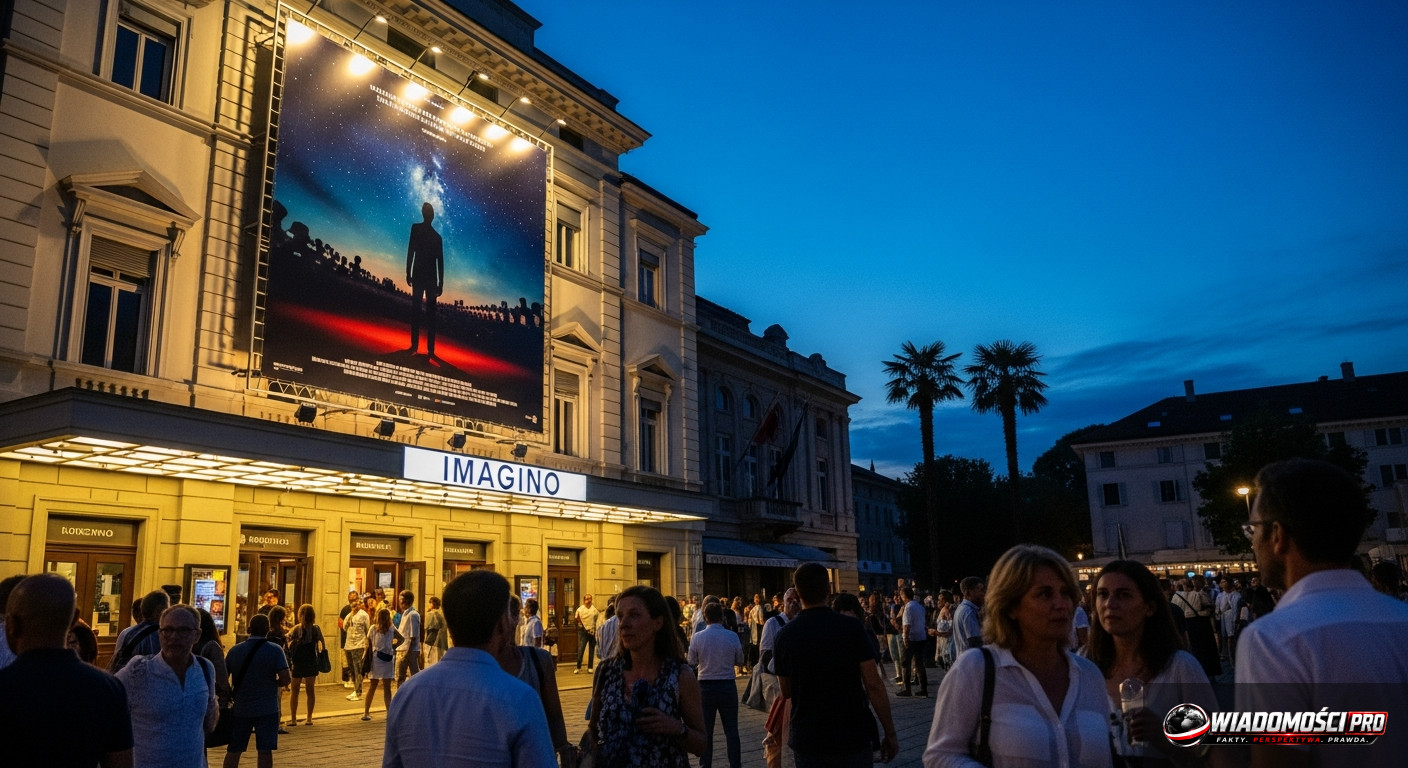
The success of Kamila Serwicka's film at the Locarno festival is not just a prestigious entry in the director's biography, but real fuel for future distribution. Winning the Grand Prix in the Semaine de la Critique section and a 10-minute standing ovation are signals that distributors cannot ignore. The film industry rarely gives such an unambiguous mandate to debutants. Now, after the Swiss triumph of August 15, 2026, the situation around "And Now Spring" becomes clear: the project is moving from the phase of an artistic curiosity to a must-see position in the premiere calendar.
Expectations for the commercial entry of the production onto the market are high. Success in Locarno almost guarantees increased interest from foreign sales agents, which in Polish conditions often determines whether a film will hit multiplexes or land in niche art-house slots. Currently, the situation looks as follows:
- The producer has not yet revealed the official date of the theatrical premiere in Poland.
- Talks are underway with entities interested in international distribution, which is a natural step after such a warm reception in Switzerland.
- There is no confirmation whether the film will go directly to a streaming service or first follow the traditional theatrical path.
The debut market is brutal. Often, after the festival buzz, silence comes because distributors are afraid of the financial risk associated with niche auteur cinema. In the case of Serwicka's film, the Grand Prix award acts as a fuse. It takes some of the image risk off the distributor's shoulders. However, if the producer waits too long to announce the details, the momentum built in Locarno may fade. Viewers need specifics, not just festival laurels. We are waiting for a move from the distributor, who will decide whether "And Now Spring" will dominate Polish cinemas in the coming season or remain only a success for the few.
There is a belief in the industry that films of this type must hit the big screen. Streaming, although it gives reach, does not capture the scale and visual rawness that Serwicka presented in her debut. For the Polish viewer, who is increasingly looking for something more than entertainment in the cinema, "And Now Spring" may become a point of reference. The question remains about the courage of distributors, who must risk introducing an ambitious documentary to cinemas at a time when the market is dominated by blockbusters. Will the Swiss success be enough to convince decision-makers to invest in a Polish auteur vision? This will be seen in the coming months.
What this means for you
Editorial angle: Serwicka's success is a signal to the market that the Polish documentary has become a top-class export commodity. Polish creators benefit from this, as they will gain easier access to international funds, but the catch remains maintaining this quality in subsequent, often more difficult to implement, projects. For the viewer, this is good news – it means access to cinema that is not afraid of difficult topics and does not need artificial embellishments. The real test, however, will be whether this quality translates into attendance, which in Poland can be kind to documentaries only with big names. Serwicka has just become such a name, but is the audience ready for it? This is a question that we will only know the answer to during the theatrical premiere.
Questions and answers
Is "And Now Spring" Kamila Serwicka's first film?
Yes, it is Kamila Serwicka's directorial debut, which immediately won the Grand Prix in Locarno.
Where did the documentary premiere?
The world premiere of the film took place in August 2026 at the prestigious Locarno festival as part of the Semaine de la Critique section.
How long did the ovation last after the screening?
The audience rewarded the creators with a 10-minute standing ovation, which is an expression of huge appreciation for the quality of the film.
Sources
Article prepared by the Wiadomości PRO editorial team with the support of artificial intelligence. Facts come from the sources provided above.



Komentarze (0)
Ładowanie komentarzy...