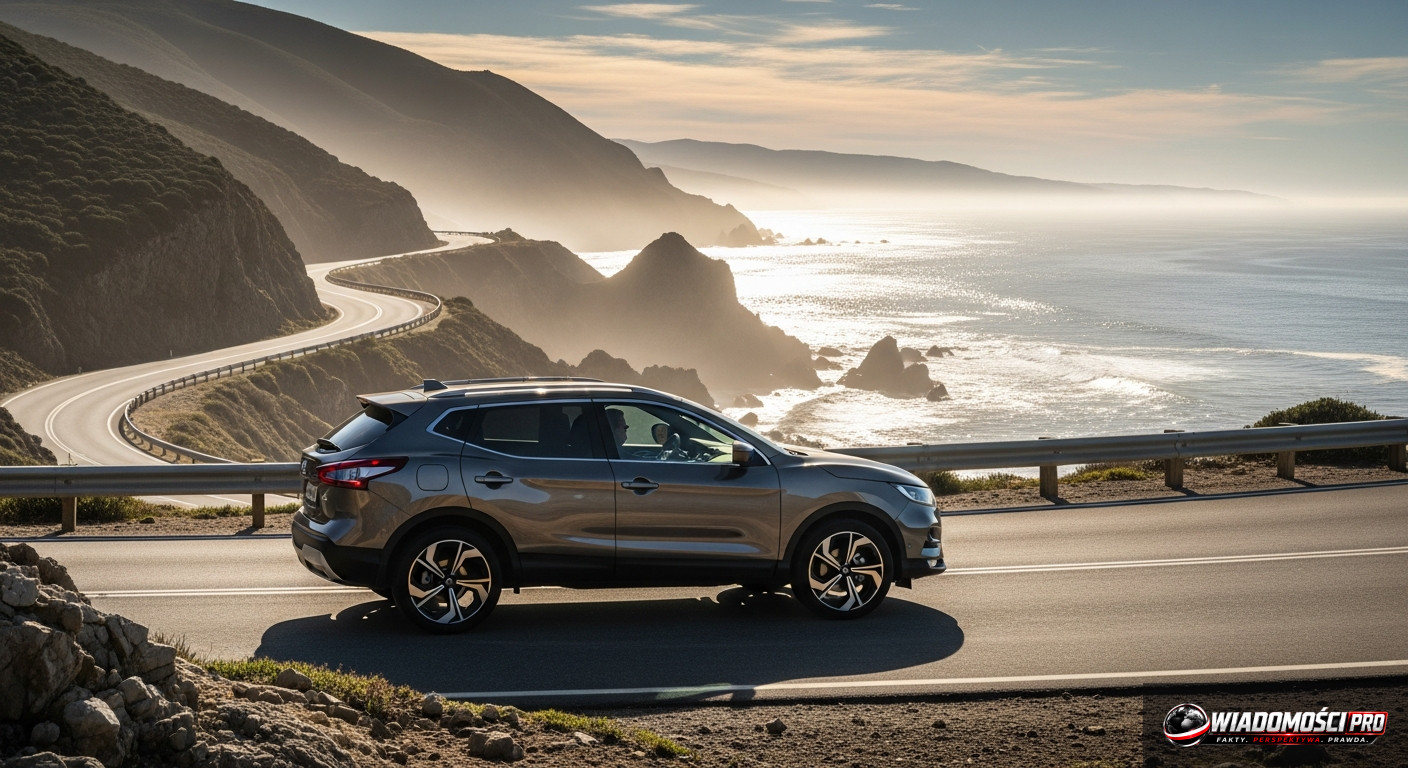
The Nissan Qashqai e-Power drove 1,980 km with an average fuel consumption of 2.78 l/100 km, however, this result was achieved under laboratory and specific conditions that do not translate to everyday use. The manufacturer conducted this test on a route from Hanoi to Ho Chi Minh City in August 2026, optimizing every aspect of driving technique for maximum efficiency. Drivers who expect to repeat this result in urban conditions must accept the fact that the physics of fuel consumption in normal traffic excludes such extreme results.
Guinness World Record: 1,980 km without refueling
The official record, entered into the Guinness Book, stirs emotions due to the distance. Nearly two thousand kilometers on a single fuel tank sounds like a promise of freedom from frequent visits to gas stations. The car covered the route from Hanoi to Ho Chi Minh City, maintaining an average fuel consumption of 2.78 l/100 km. This figure became the foundation of a marketing campaign promoting the e-Power drivetrain as a solution combining the features of a diesel with the comfort of an electric vehicle.
Analyzing this feat, however, requires a cool look at the definition of the record itself. In road conditions, where there is variable traffic intensity, traffic lights, traffic jams, and the need for dynamic overtaking, the internal combustion engine must react to changing energy demands. In Vietnam, the car moved at a strictly controlled pace, which allowed the combustion unit to operate in the optimal RPM range. This was not driving in the classic sense of the word, but rather a precisely orchestrated display of engineering efficiency.
For the average Qashqai user, this data is merely proof of how advanced Nissan's energy management system is. It is not, however, a benchmark for the range available on the way to work or during a holiday highway trip. The physics of the internal combustion engine acting as a power generator remain unchanged. When the car has to accelerate with high intensity, fuel demand increases in proportion to the vehicle's mass and air resistance. The 2026 record is a triumph of strategy over the everyday logic of car usage.

What is e-Power technology?
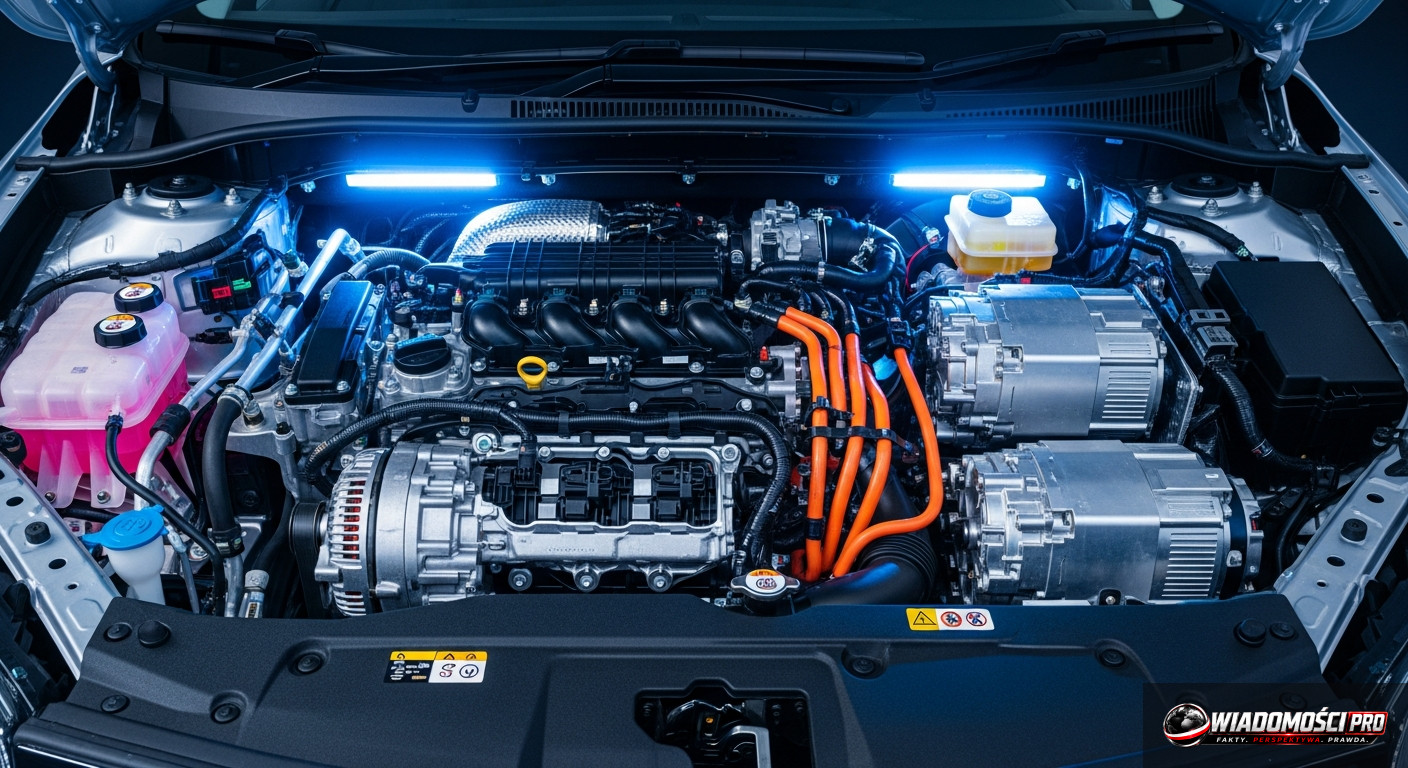
The Nissan Qashqai e-Power is a unique construction in the context of modern automotive industry. Engineers moved away from the classic hybrid layout, where the internal combustion engine supports wheel drive. Here, the gasoline unit acts solely as a power generator. Energy goes to the battery and then powers the electric motor, which is the sole source of axle propulsion. The driver receives driving characteristics typical of an "electric" – instant torque and silence in the cabin.
The lack of a need for external charging makes the system seem like an ideal solution for people who do not have their own charging infrastructure. The internal combustion engine runs continuously but independently of the wheel rotation speed. Such an architecture theoretically allows the unit to be kept at the optimal point of thermal efficiency. It was this mechanism that the record result obtained in Vietnam was based on.
This design eliminates the gearbox in the traditional sense. The lack of a need to change gears translates into smoothness that is unattainable for classic hybrids with e-CVT transmissions in urban traffic. The question of whether it makes sense to buy this model comes down to a choice between convenience and pure economy. The e-Power system offers high acoustic comfort, but the technological advancement generates service costs and a higher purchase price, which rarely pays off with moderate annual mileage.
The methodological catch: Why is this result not an everyday occurrence?
Let's look at the numbers. The record-breaking 2.78 l/100 km is a result that is practically unattainable under normal road conditions, even with very calm driving. Editorial tests conducted in road conditions, such as the one from August 2025, indicate fuel consumption of around 3.76 l/100 km. A difference of nearly one liter per hundred kilometers is a chasm that results from the methodology of the test conducted on the Hanoi – Ho Chi Minh City route.
The organizers of the record took advantage of the fact that the e-Power drivetrain shows the highest efficiency at a constant, low cruising speed. In such a scenario, the generator runs rarely and very efficiently. Every braking, starting from a traffic light, or overtaking maneuver forces the system to increase power production, which immediately raises gasoline consumption.
Here are the main factors that made the record possible to achieve:
- Maintaining speed within the range of the generator's maximum efficiency.
- Elimination of frequent start-stop cycles, which are the biggest challenge for any hybrid system in the city.
- Specific terrain and the lack of sudden speed changes, which allowed the energy recovery system to regain power in an extremely efficient manner.
The marketing message about a 2,000-kilometer range is a powerful tool, but it is based on the assumption that the driver will operate the car in near-laboratory conditions. Real life verifies these numbers. When the car enters a European highway at 140 km/h, air resistance becomes the dominant factor, and the e-Power system must run at high RPMs to power the electric motor. In such conditions, a result of 2.78 l/100 km is unattainable.
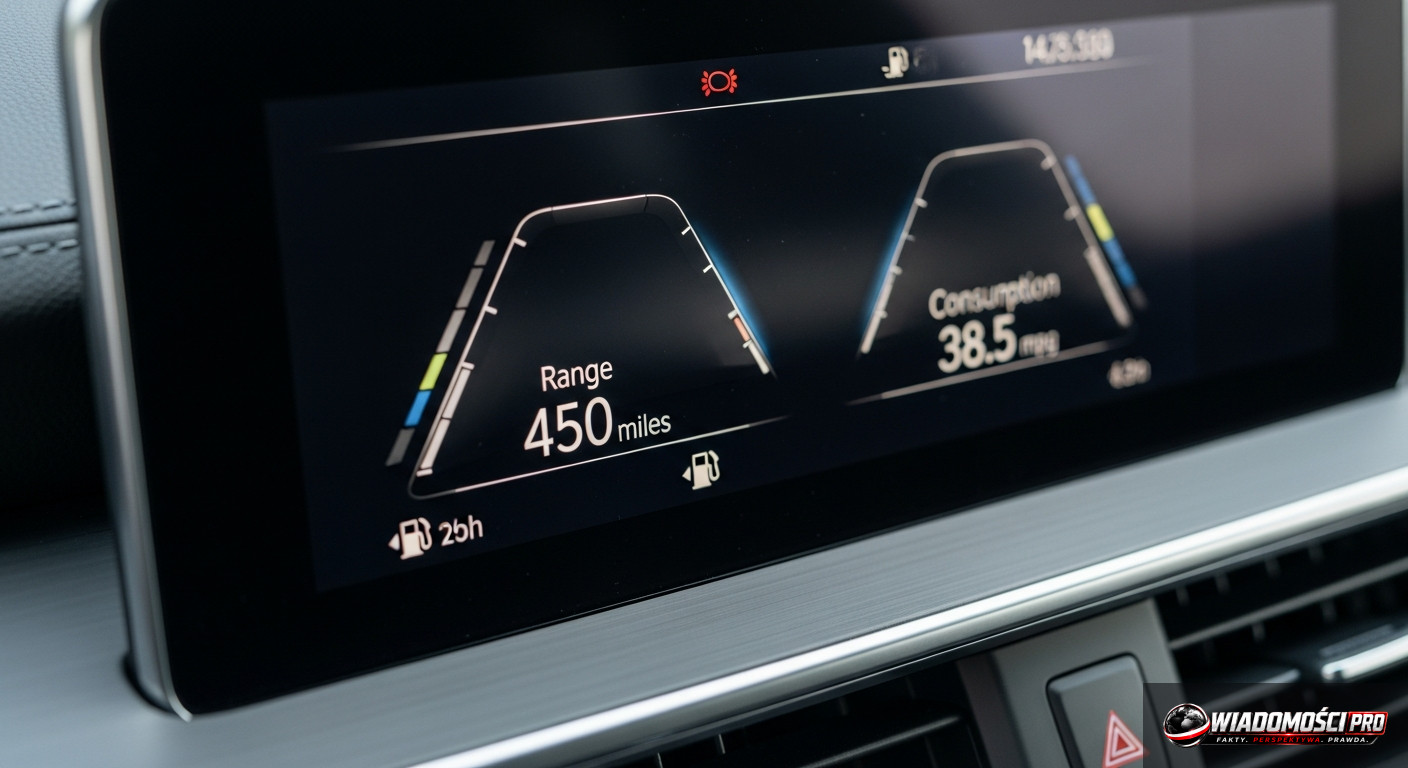
Hanoi - Ho Chi Minh City route: A challenge for the drivetrain
The route on which the Nissan Qashqai e-Power broke the record was not a random choice. Roads in Vietnam offer unique challenges, but also opportunities for e-Power type drivetrains. Variable traffic, often forcing a lower average speed, allowed Nissan engineers to demonstrate potential that is suppressed in Europe by the restrictive time requirements of highway travel.
In August 2026, when the record was confirmed, the media emphasized that the car reached the finish line with fuel to spare. This proves the huge advantage of hybrid systems over full electrics in terms of long-distance logistics. The driver does not have to plan charging stops, which is a key advantage in Vietnamese conditions or even on European long-distance routes.
However, one must remember what was happening behind the wheel. Focus on every aspect of driving was required to not exceed efficiency limits. This was not a comfort test, but a precise technical maneuver. Will the average driver, returning from work to home in a traffic-jammed city, be able to devote their time to such optimization? The answer is obvious.
The range in question is the result of a numbers game. The manufacturer provided a car that can work wonders in the hands of specialists. However, in the hands of a user who simply wants to get from point A to point B, the Qashqai e-Power will remain just a comfortable, fairly economical SUV, not a Guinness record holder.
Nissan e-Power vs. Diesel and classic hybrids
The hybrid market is saturated, and Nissan is trying to distinguish itself from the competition using e-Power technology. Comparing this drivetrain to classic diesel units, there is a clear difference in comfort. A diesel, although economical on the road, generates vibrations and noise. E-Power provides the silence of an electric car, which is an invaluable asset in everyday urban use.
However, when we compare e-Power with a classic Toyota-type hybrid, the differences blur. Toyota relies on planetary gears, Nissan on a series drivetrain. Tests from 2025, such as the one published by Auto Świat, showing fuel consumption of 3.76 l/100 km, are much closer to reality than the record-breaking 2.78 l/100 km. This shows that e-Power is not "magical." It is just a very well-designed system that has its physical limits.
It is worth citing data from various tests to realize the scale of the discrepancy:
- 2026 Guinness World Record: 2.78 l/100 km.
- 2025 long-distance tests: about 3.76 l/100 km.
- Driving in winter and highway conditions: usually exceeds 5-6 l/100 km.
This range of results shows that e-Power is a drivetrain very sensitive to driving style. If the driver learns to use recuperation, they will gain on fuel consumption. If they treat the car like a classic combustion vehicle, the system will not forgive the lack of attention to driving style. This is a car for a conscious driver who wants to reap the benefits of advanced technology, not for someone who expects the car to "conjure up" low fuel consumption without their participation.
Verdict: Is it worth buying e-Power for the range?
The Nissan Qashqai e-Power is one of the most interesting projects of recent years in the crossover segment. The record of 1,980 km on a single tank is impressive, but it should not be the only argument for buying this car. If you are looking for a vehicle that combines the comfort of driving an electric car with the maintenance-free nature of a combustion car, e-Power will meet your expectations.
However, buying it solely with the intention of breaking fuel consumption records is a mistake. Real fuel consumption in everyday use will oscillate in the range of 3.5–4.5 l/100 km, which is still a very good result for an SUV of this size. The e-Power system offers smoothness that you won't find in cars with traditional drivetrains. This is its true strength, not the numbers from the book of records.
Investing in this drivetrain is an investment in comfort. Silence, no jerking, immediate throttle response – you will feel this every day. The record-breaking 2.78 l/100 km is a curiosity that says more about Nissan's engineering potential than about how much you will actually spend at the gas station. Don't be fooled by marketing promises of free driving. It is a solid, modern car, but still requires fuel and follows the laws of physics.
Questions and answers
Will every Nissan Qashqai e-Power burn 2.78 l/100 km?
No. This is a result achieved under laboratory conditions and with extreme optimization of driving style. In everyday urban and mixed traffic, real fuel consumption is higher and usually oscillates around 3.76 l/100 km or more, depending on driving style and road conditions.
What exactly was the catch in the testing?
The catch lies in the choice of route and driving technique. The route in Vietnam was chosen to minimize the need for sudden acceleration and braking. The e-Power system works most efficiently at a constant, calm pace, which is impossible to maintain in normal road traffic – full of traffic jams and lights.
Does this car need a charger?
No. The Nissan e-Power is a so-called self-charging electric car. The internal combustion engine acts as a generator that charges the battery while driving. Thanks to this, the driver enjoys the experience of driving an electric car without the need to look for external charging stations or home outlets.
Why do road test results differ from the record?
The difference stems from dynamics. The record is the result of "feather-foot" driving, where factors such as variable speed, sudden acceleration, or high air resistance were eliminated. Road tests reflect real conditions where the internal combustion engine must generate much more energy to propel the car in a changing environment, which translates into higher fuel consumption.
Is the e-Power system better than a diesel?
It depends on your needs. A diesel may be more economical during long highway trips at high speeds. E-Power, on the other hand, outclasses a diesel in urban driving comfort, offering the silence and smoothness characteristic of electric cars, while eliminating the vibrations of a combustion engine.
What are the operating costs of e-Power compared to a classic hybrid?
The e-Power system is more technologically complex, which may affect service costs. However, it offers higher driving comfort, which for many drivers is worth the higher purchase price and potential maintenance costs.
Does the 1,980 km record matter to a Qashqai owner?
For an owner, it is mainly proof that the car is capable of very economical driving if the need arises. In practice, however, this record is mainly marketing material intended to emphasize the efficiency of the drivetrain, not to set standards for everyday driving.
Is the Nissan e-Power an electric car?
Technically, it is a series hybrid. An electric motor drives the wheels, but the energy comes from an internal combustion engine that acts as a generator. It is not a full electric (BEV) because it does not have a large battery that is charged from an outlet, although the driving experience is very similar to one.
Is it worth paying extra for e-Power compared to the combustion version?
It is worth it if you care about driving comfort, quiet drivetrain operation, and smoothness in urban traffic. If the priority is only low fuel consumption, it is worth considering the balance of purchase costs and projected annual mileage, as the purchase price of the e-Power version is higher than the version with a conventional drivetrain.
Did this record change the way we perceive Nissan hybrids?
Yes, the record showed that the e-Power drivetrain has huge efficiency potential, provided it is managed properly. It is a shift in perception from "just a hybrid" to "an advanced power generator on wheels," which attracts the attention of drivers looking for an alternative to fully electric cars.
Is the Qashqai e-Power fast?
Thanks to the electric motor, the car reacts to the gas pedal almost instantly, which gives a sense of high dynamics when starting. Performance is sufficient for efficient movement in the city and safe overtaking on the road, although it is not a car with a sports character.
What are the biggest drawbacks of the e-Power system?
The main drawback is the higher purchase price and the complex construction of the drivetrain. Furthermore, during very fast highway driving, fuel consumption can increase much more than in the case of diesel engines, which is worth considering if you travel a lot on expressways.
Was the Vietnamese record credible?
Yes, the record was confirmed by the appropriate institutions, which means it is technically correct. However, one must remember that the credibility of the result does not mean repeatability in everyday use, which is key for the proper assessment of this achievement by drivers.
Does the internal combustion engine in e-Power always run?
The internal combustion engine turns on automatically when the battery charge level drops below a certain threshold. Its operation is independent of the driver, which allows for maximum optimization of fuel consumption, but it also means that the car is not completely silent if the battery needs charging.
Is the Qashqai e-Power the future of the automotive industry?
It is one of the directions of development that fits well into the transition period between combustion and electric cars. It offers a solution to the "range anxiety" problem while maintaining the advantages of an electric drivetrain, which makes it attractive to many drivers in current market realities.
Is it worth counting on a 2,000 km range in the Polish climate?
In Poland, road conditions are completely different than in Vietnam. Variable weather, lower temperatures in winter that affect battery efficiency, and more frequent highway driving mean that a 2,000 km range is unattainable. One should realistically expect ranges typical of modern hybrids with a similar fuel tank size.
What is the main message for the buyer?
The message is: enjoy the comfort and modern technology, but don't expect miracles at the gas station. The Nissan e-Power is a great drivetrain for demanding urban drivers, not a way to cheat physics or get free driving.
Is e-Power more expensive to service?
The e-Power system is more complex than a classic combustion drivetrain, which may generate higher service costs after the warranty period. On the other hand, the lack of a traditional gearbox or clutch eliminates some typical faults known from classic combustion cars.
Does every Qashqai e-Power have the same power?
The power of the e-Power system depends on the specific model version and electric motor configuration. It is worth checking the technical data for a specific year and equipment version, as Nissan systematically develops this drivetrain.
Is e-Power environmentally friendly?
Thanks to the optimization of the internal combustion engine's operation in the range of highest efficiency, e-Power emits fewer pollutants than traditional combustion engines, especially in urban conditions. However, it is not a zero-emission car, which must be taken into account in the context of growing environmental requirements.
Sources
- 2.8 l/100 km fuel consumption and a Nissan car covered a record-breaking nearly 2,000 km. There is one big catch - chip.pl
- Guinness World Record: Japanese car model covered 2,000 km without refueling. - Vietnam.vn
- 1,980 km with an average fuel consumption of 2.78 l/100 km. Qashqai broke the Guinness World Record - WP
- "Self-charging electric car" set a record by covering nearly 2,000 km from Hanoi to Ho Chi Minh City without refueling. - Vietnam.vn
- Range like a diesel, feel like an electric – Nissan Qashqai e-POWER drove across Great Britain and reached the finish line with fuel to spare - Francuskie.pl
- This car burned 3.76 liters per 100 km. And it's not a diesel - Auto Świat
- Nissan e-POWER. Qashqai with diesel range and electric silence - Vehis
- Nissan X-Trail e-Power test. Ultra-comfortable electric... charged by a combustion engine - ANDROID.COM.PL
Article prepared by the Wiadomości PRO editorial team with the support of artificial intelligence. Facts come from the sources listed above.


Komentarze (0)
Ładowanie komentarzy...