In brief
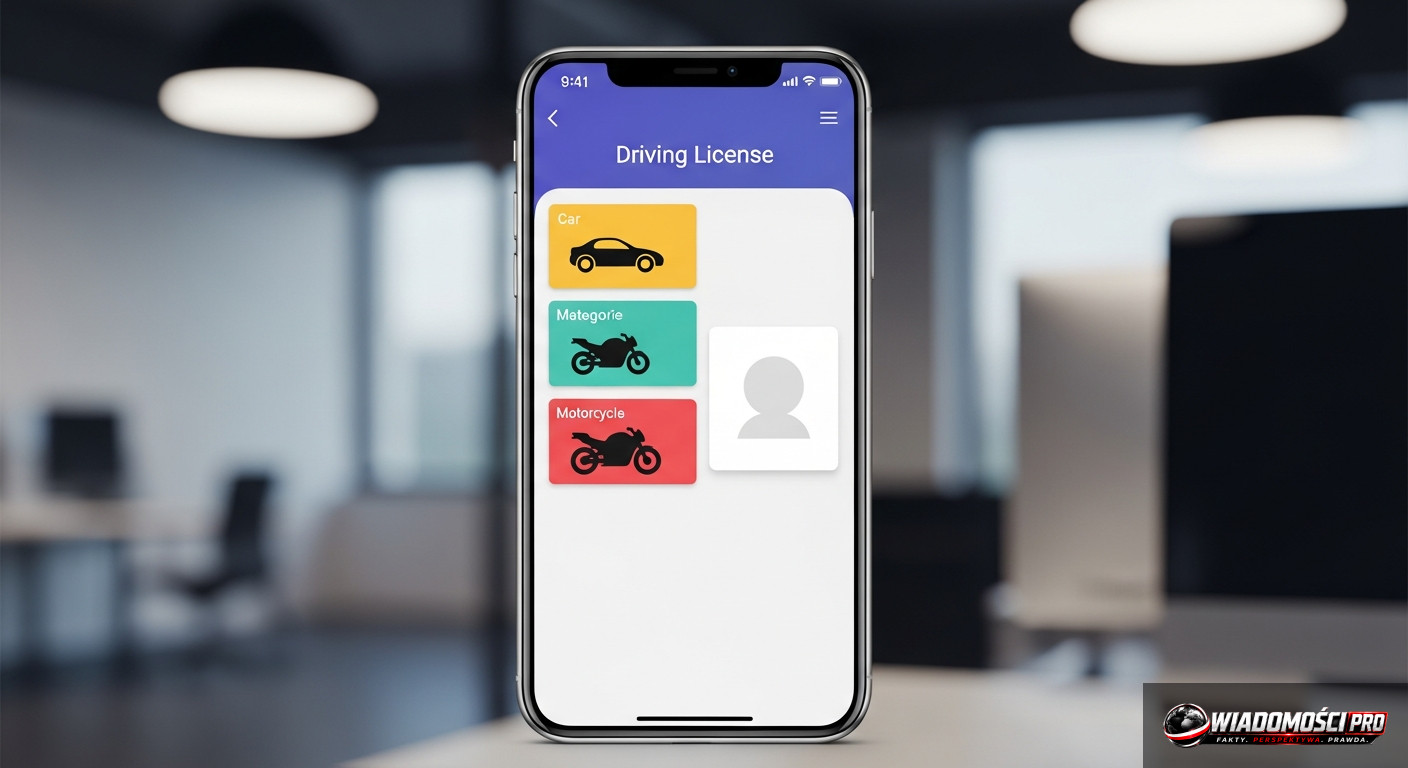
- Introduction of full digitalization of driving licenses, which will be honored in every EU country without the need to carry a plastic document.
- Mandatory medical examinations for drivers over 65, aimed at regular verification of driving ability.
- Stricter regulations for young drivers, including longer probationary periods and restrictions on speed and driving high-power vehicles.
Digital driving license: The end of the plastic document
The digital driving license is becoming a legal reality, ending the era of ubiquitous plastic in drivers' wallets. The European Parliament has adopted an amendment to the directive that introduces an EU standard for a digital document, honored in each of the 27 member states. This is a technical solution that forces national transport authorities to ensure full compatibility with mobile applications. From the driver's point of view, this means that the phone becomes a full-fledged proof of driving privileges, regardless of whether you are traveling in Poland or through Germany to Portugal.
The technical dimension of this change is primarily the integration with central systems. Roadside checks will be shortened to the absolute minimum because, instead of physically checking holograms, the officer will perform an immediate verification in the database. However, the lack of a need to carry a physical document is only one side of the coin. The second, less enthusiastic one, is the digital footprint that remains in the system with every data read.
The introduction of these solutions goes hand in hand with new medical requirements for seniors. The European Parliament has decided that drivers over 65 will have to undergo more frequent check-ups. This is a direct blow to the previous freedom, often based on lifetime licenses issued decades ago. Harmonizing regulations in the Union is intended to eliminate situations where a driver deemed unfit to drive in one country can freely get behind the wheel in a neighboring state. The digitalization of the system allows for the instant revocation of privileges across the entire community, which in practice means that "escaping" from medical examinations to another member state loses its purpose. Officials are gaining a tool they have dreamed of for years, while drivers are entering a new, digital reality where a system error could cost more than a wallet forgotten at home.
Seniors behind the wheel: New health requirements
In June 2026, the European Parliament finally approved the amendment to the directive that changes the rules of the game for older drivers. Brussels is focusing on rigorous health monitoring. No more lifetime licenses for people who have passed the age of 65. EU officials have concluded that road safety in the 27 member states requires the harmonization of regulations that have treated seniors too leniently until now.
The new regulations introduce specific frameworks that motoring seniors will have to face:
- The obligation to undergo periodic medical examinations has become a fact for every driver over 65.
- The possibility of temporarily limiting the validity of licenses has been introduced, which is directly dependent on the individual health status of the driver.
- The digital driving license, valid throughout the Union, is intended to make it easier for services to monitor these deadlines in real time.
However, this change raises a number of questions about the capacity of the medical system. Will clinics, already burdened with queues for specialists, cope with the wave of seniors requiring comprehensive certificates? The previous model, in which the examination was often just a formality, is becoming a thing of the past. Now, a real diagnosis counts, not just a stamp on a document.
Critics point out that tightening procedures may exclude thousands of still-capable drivers from traffic, for whom the car is the only window to the world, especially in regions with transport exclusion. EU authorities argue that accident statistics leave no choice. Safety is a priority, even if seniors have to pay the price for it in official queues. Time will tell whether these strict guidelines will actually reduce the number of road incidents or merely add work to medical examiners and transport department officials.

Young drivers: Probationary period under EU scrutiny
Young drivers: Probationary period under EU scrutiny
Brussels has no illusions about the accident statistics among inexperienced people behind the wheel. The European Parliament has adopted an amendment to the directive that hits the existing privileges of novices, forcing a completely different model of integration into road traffic. From now on, a driving license is not just a document authorizing you to drive, but a test of responsibility that lasts much longer than before.
Brussels officials concluded that the existing legal frameworks were too liberal in the context of the real threat posed by drivers without many years of practice. The new regulations are intended to increase safety and harmonize rules in the 27 member states, which in practice means the end of the "wild west" era for newly minted driving license holders.
Specific requirements for people who have just received their document are uncompromising:
- Introduction of an extended probationary period for people who have recently passed the exam, which is intended to force beginners to drive longer under special regulatory supervision.
- Restrictions on engine power in vehicles available to young drivers to eliminate the temptation to test the performance of high-dynamic cars immediately after obtaining a license.
- Zero tolerance for alcohol during the probationary period, which means a strict 0.0 per mille limit and severe consequences for the slightest offense.
For a young driver, this means in practice the need to switch to weaker, economical cars and give up any amount of alcohol, even if national law would allow some margins for experienced road users. This harmonization of regulations is a blow to fans of fast driving, but road safety experts have for years pointed to this segment as the most susceptible to errors resulting from recklessness. The question is how these restrictions will affect the used car market, where high-power cars have enjoyed unabated popularity among the youngest age group until now.
Safety statistics: Why is the EU changing the law?
Safety statistics: Why is the EU changing the law?
Brussels does not hide the fact that the goal of the directive amendment is a dramatic reduction in the number of road fatalities. The European Union has set a tough condition: by 2030, this number must fall by 50 percent. This is not a wish, but the result of a cold political calculation based on hard data.
In November 2025, the European Parliament published a report that became the foundation for the introduced changes. The document precisely indicates the main causes of accidents, among which human error consistently occupies the first place. Legislators concluded that the current system of verifying drivers' skills and health is insufficient in the face of increasing traffic intensity. Hence the decision to introduce a digital driving license, which is intended to tighten the control system throughout the community, and the controversial requirement for more frequent examinations for people over 65.
Critics point out that focusing on chronological age may be a simplification, but EU officials counter-argue with the impact of new technologies. Driver assistance systems, which are to be standard in new vehicles, are intended to minimize the effects of human error. In the lawmakers' assumption, the new directive is to complement these technological solutions. In practice, this means that the car is supposed to brake for us, but we must prove that we are still capable of driving safely.
For the average driver, this means less bureaucracy on the phone, but more visits to doctors' offices after crossing a certain age threshold. Harmonizing regulations in 27 member states is intended to put an end to situations where a driver excluded from traffic in one country moves freely on the roads of another. The question is whether such rigid standardization will actually eliminate risky behaviors or merely shift the burden of proof onto the shoulders of an aging society.

Schedule of changes: When will the new law come into force?
Schedule of changes: When will the new law come into force?
The European Parliament closed the stage of legislative speculation in June 2026 by formally adopting the amendment to the directive. This is a concrete turning point that opens the way for the implementation of the digital driving license across the Union and introduces rigorous, more frequent examinations for drivers over 65. Brussels is focusing on harmonizing regulations, but the devil is in the technical and logistical details that individual member states will have to face.
EU officials are giving member states time to implement the new guidelines into their national legal orders. This is a standard procedure, but in the case of IT systems supporting digital documents, the margin for error is minimal. Ministries of infrastructure in 27 countries now have a race against time to ensure that digital infrastructure can handle the new document format. According to the assumptions, the full implementation of digital privileges should become a fact before the end of 2027.
However, drivers should not count on immediate changes from day to day. Public administration rarely meets such ambitious deadlines for projects of this scale, which raises questions about potential delays in individual capitals. The transition to digital standards requires not only updating regulations but, above all, a thorough modernization of databases and police verification systems.
Here is a summary of the key dates and time parameters resulting from the adopted amendment:
- Date of adoption of the European Parliament's position — June 2026 (European Parliament)
- Deadline for full implementation of digital documents in the EU — end of 2027 (European Parliament)
For seniors, however, the key issue remains the moment the examination regulations come into force. Although the directive is already a fact, the real enforcement of new medical cycles will depend on the pace of work of local parliaments. In practice, drivers over 65 may only feel the changes at the time of their next license renewal, unless the national legislator decides to verify all active documents earlier.
Impact on the automotive market and insurance
The introduction of a digital driving license by the European Parliament and stricter health requirements for drivers over 65 forces member states to deeply modernize their IT infrastructure. Transport departments in Poland and other EU countries must now instantly adapt their IT systems to handle the smooth exchange of data between offices and drivers, which for local governments means additional, significant operating costs.
The economic effects of these changes will be felt most strongly by the insurance market. Since mandatory examinations for seniors are becoming a fact, insurers are gaining a new, hard criterion for risk assessment. We can expect that policies for this age group will be recalculated, which in practice means higher premiums for people with health problems, but potential discounts for seniors who maintain full fitness. On the other hand, young drivers, due to the amendment of the regulations, must prepare for changes in tariff schedules, which will increasingly be linked to vehicle equipment.
Car manufacturers are already reacting to EU pressure. Safety requirements are becoming paramount, which is why the importance of ADAS, or advanced driver assistance systems, installed as standard even in the cheapest models, is growing. A car without modern braking or lane-keeping assistants is becoming a high-risk vehicle in the eyes of EU regulators. This means that the era of cheap, "bare" equipment versions in showrooms is definitively ending. Customers, when buying a new car, are no longer paying just for the engine and body, but primarily for the digital safety package forced by Brussels. The question of whether the secondary market will handle such a rapid increase in the technical advancement of the fleet remains open.

What this means for you
For the average driver, this primarily means the convenience of digitalization, but also higher costs and more frequent doctor visits for seniors. The catch lies in the pace of implementation – member states have time to adapt, which may lead to temporary legal chaos at borders.
Questions and answers
Will the digital driving license replace the plastic document in 2026?
The digital driving license is becoming a full-fledged document, but for a transition period, plastic cards will remain in use in parallel.
Will every senior over 65 lose their driving license?
No, seniors do not lose their privileges automatically; only the obligation for more frequent medical examinations confirming the ability to drive is introduced.
What restrictions await young drivers?
Young drivers must reckon with a longer probationary period, engine power restrictions, and strict alcohol limits.
Sources
- You won't get examined – you'll lose your driving license. The EU is changing the rules not only for seniors - Auto Świat
- Will seniors lose their driving license in 2026? Final decision on examinations made. Here are the new rules - Dziennik.pl
- New mandatory lights in cars. The regulations will come into force sooner than you think - PolsatNews.pl
- New EU law hits laptops. Everything changes from April - Polski Obserwator DE
- Safer roads: EU measures to reduce the number of accidents | Topics | European Parliament - European Parliament
- New age limit for drivers set. The EU has made a decision - Wiadomości Onet
- Will seniors lose their driving license? The die is cast. New rules and age limit - Dziennik.pl
- After 65, you may lose your driving license. New EU regulations as early as 2024 - Rzeczpospolita
Article prepared by the Wiadomości PRO editorial team with the support of artificial intelligence. Facts come from the sources provided above.



Komentarze (0)
Ładowanie komentarzy...