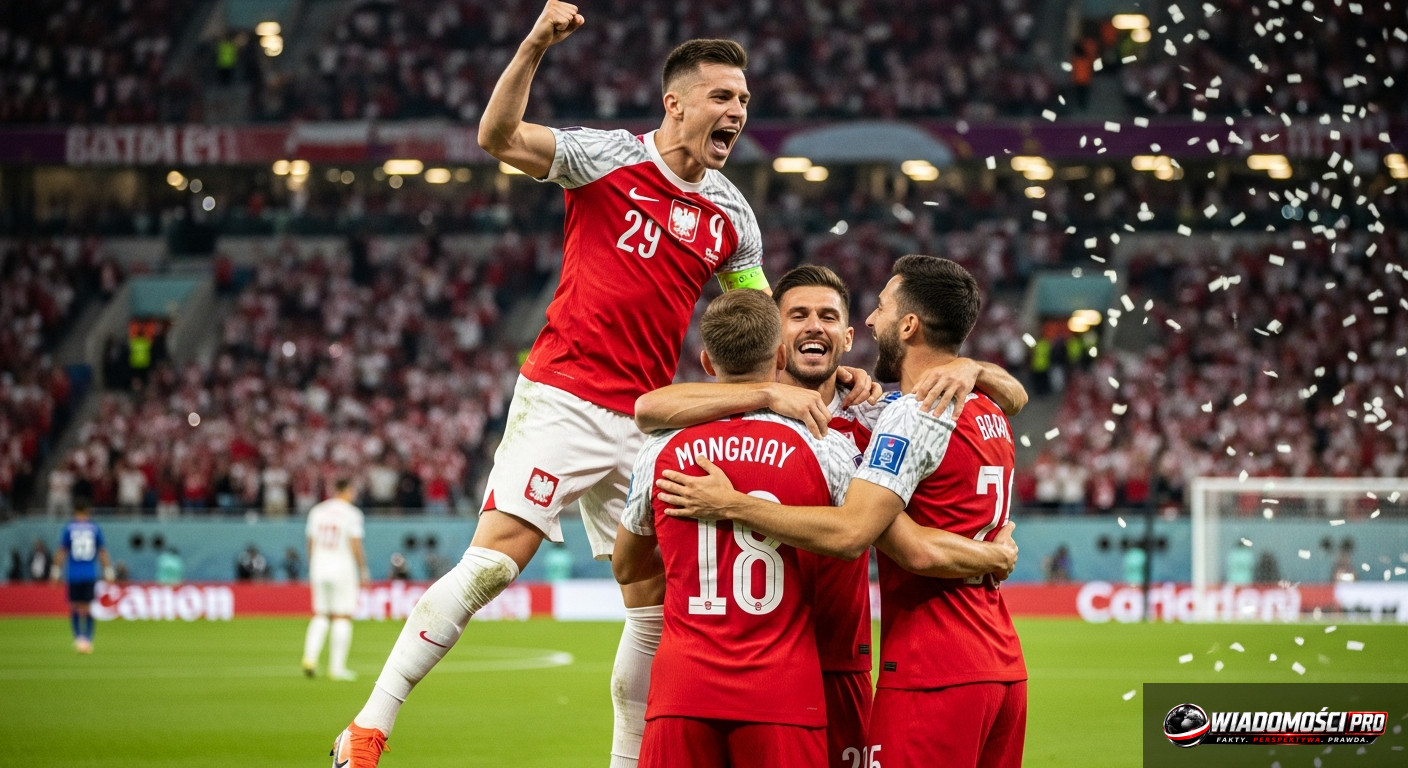
The Polish national team won 5:1 against Estonia in the semi-final of the Euro 2024 play-offs, dominating the pitch throughout the entire match. This result was a clear signal that the squad under the leadership of Michał Probierz had found its rhythm at a crucial moment in the qualifiers. The National Stadium in Warsaw witnessed a match where the difference in potential between the two teams was highlighted within the very first minutes of play.
The beginning of the match brought a picture that Polish fans had not been accustomed to in recent years – full control over the midfield and lightning-fast transitions to attack after winning the ball back. The Estonians set up very deep from the start, trying to congest the zone in front of their own penalty area, but the Polish team found a way around this through the wide positioning of the wing-backs. In the 22nd minute, Przemysław Frankowski opened the scoring, utilizing a through ball and precisely sending the ball past the goalkeeper. This goal lifted the pressure from the players that often accompanies matches against lower-ranked opponents.
After the break, the hosts' dominance became even more pronounced. In the 50th minute, Piotr Zieliński extended the lead to 2:0, effectively finishing a cross, which took the wind out of the Estonian defenders' sails. The following minutes were a showcase of Polish efficiency. Jakub Piotrowski showed off in the 70th minute with a long-range strike that flew into the very top corner of the opponents' goal. Four minutes later, in the 74th minute, an unfortunate Karol Mets directed the ball into his own net, and Sebastian Szymański extended the lead to 5:0 in the 76th minute. Martin Vetkal scored a consolation goal for Estonia in the 78th minute, which was the only moment of distraction in the Polish defense.
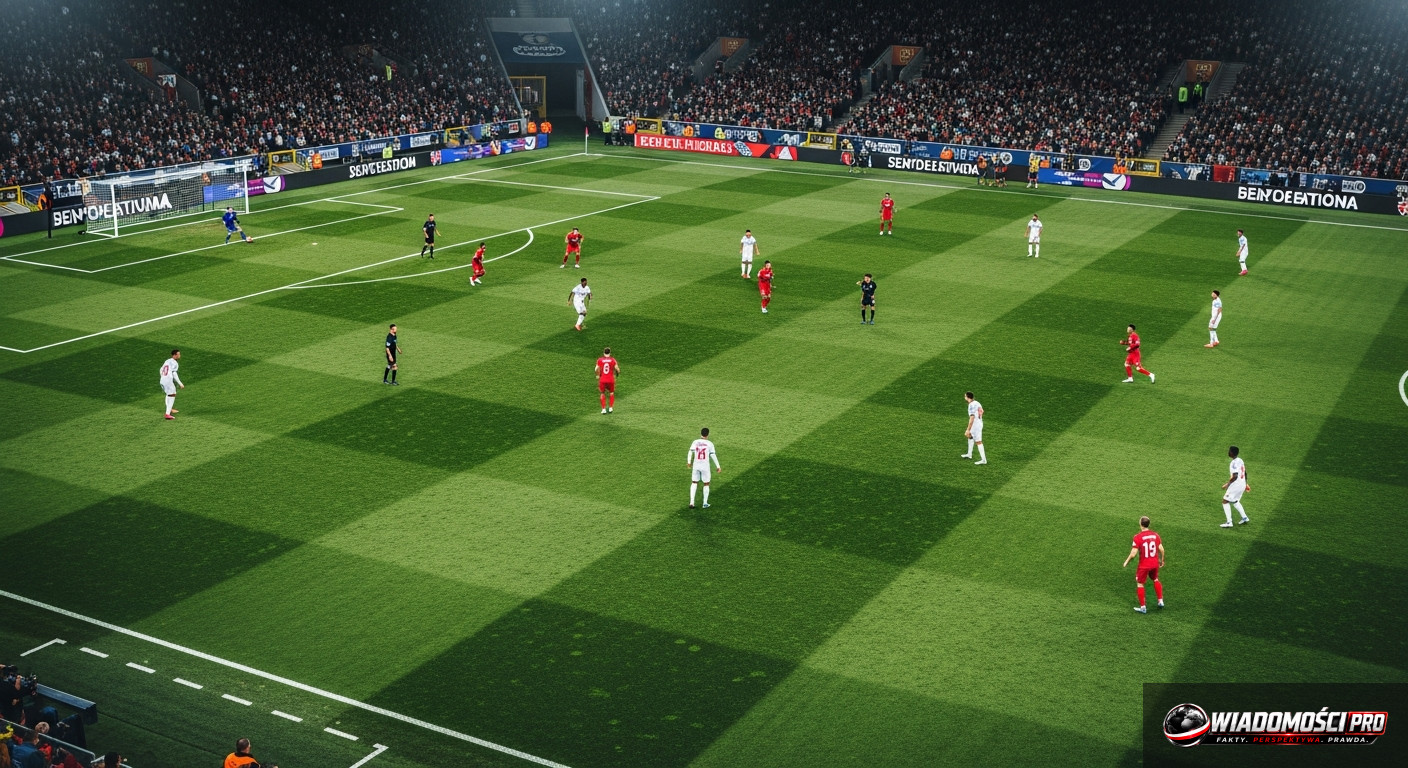
Dominance on the pitch: Progress of the Poland - Estonia match
The match on March 21, 2024, was a one-sided battle with high stakes. The Poles, playing in a formation with three central defenders, were able to skillfully manage space, not allowing Estonia to launch counter-attacks. In positional attack, the White-and-Reds used triangle passing, which forced the Estonian formation to constantly shift and open up corridors in the side sectors of the pitch. Frankowski and Zalewski on the wings created a constant threat, almost completely eliminating the opponents' activity in the transition phase.
Instead of chaotic crosses, Probierz's team opted for patiently building attacks from the defensive line. Jan Bednarek, Paweł Dawidowicz, and Jakub Kiwior exchanged short passes, drawing the Estonian strikers higher, which opened the way for Zieliński to operate between the lines. Such organization of play made it impossible for Estonia to impose their own tempo. Each of the five goals was the result of thoughtful movement off the ball and the technical superiority of the Polish players.
It is worth noting the role of Robert Lewandowski. Although the captain did not get on the scoresheet, his work off the ball was crucial. Lewandowski often dropped deep, drawing two center-backs with him, which created free space for Szymański or Piotrowski running into the penalty area. This was team play that had often been missing in the qualifiers. The Polish squad not only won individual duels but, above all, won the battle for space on the pitch.
The road to the play-offs: Context of the qualifiers
The Polish national team reached the play-offs after a disappointing group stage, in which they failed to overtake Albania and the Czech Republic. The lack of direct qualification forced the federation to change the coaching staff and seek a new identity for the team. The match against Estonia was a semi-final that was supposed to prove that the change of head coach had brought measurable results in the form of improved organization of play. The stakes were huge – a defeat would mean Poland's absence from the main tournament for the first time in many years, which would be associated with a massive image and financial crisis.
The aforementioned play-off path was a struggle, but also a chance for rehabilitation. Poland, thanks to its ranking from the Nations League, received the privilege of playing the semi-final at its own stadium. This was crucial, considering the support of the fans, who supported the team from the first to the last minute in such a difficult moment. The coaching staff focused on eliminating defensive errors that had cost us points in matches against Moldova or Albania.
The semi-final rivalry with Estonia was not treated as a formality, but as the first step towards the play-off final. The players were aware that any underestimation of the opponent could end tragically, which is why we saw immense tactical discipline from the first minutes. The Polish national team approached this match with respect, but also with full awareness of their own quality, which was visible in every aspect of the game.

Statements from leaders and team morale
After the final whistle, the atmosphere in the dressing room was full of calm, which testifies to the great maturity of the team. In post-match statements, Robert Lewandowski emphasized that the 5:1 result was the merit of consistent work on positional attack patterns, which had been polished in training for many days before the match. The captain noted that the most important aspect was emotional control – despite the high lead, the team did not stop executing tactical assumptions and did not allow themselves any relaxation that could have resulted in conceding goals.
Humility dominated the players' statements. Piotr Zieliński, who was one of the architects of the victory, pointed out that every goal was the result of the entire team's work, not individual flashes of brilliance. This is a change in communication that has been visible since Michał Probierz took over the squad. The team has become more compact, and the win over Estonia was confirmation that the hierarchy in the dressing room has been rearranged.
The mood among the players was far from euphoric. The awareness that they still had one more, more difficult match ahead of them deciding on the trip to the Euros made the players quickly turn their eyes to the future. There were no loud celebrations, but rather an analysis of what could have been done better, even with such a favorable result. This professional attitude is the foundation upon which hope can be built before the next challenges.
Technical and tactical analysis of the match
The 3-5-2 tactical system in which Poland played turned out to be perfectly matched to the weak points of the Estonian defense. The Estonians played very narrowly, which left plenty of room on the wings for Frankowski and Zalewski. Visual analysis from the TVP tactical camera showed how often our wing-backs were unmarked in the transition zone. Their runs allowed for a quick shift of the game's weight and the creation of a numerical advantage in the side sectors of the pitch.
The Polish defense operated high, which shortened the pitch and allowed for quick ball recovery in case of loss. The central midfielders, led by Jakub Piotrowski, won most of the aerial and physical duels in the middle of the field, which stifled any attempts at counter-attacks from Estonia in the bud. A key element was also the pressure on the opponent – at the moment of losing the ball, the Polish players immediately switched to pressing, which prevented the Estonians from calmly bringing the ball out of their own half.
In positional attack, the fluidity of position swapping was noteworthy. Szymański often dropped to the side, swapping with the wing-back, which disorganized the Estonian defensive line. Such tactical solutions, worked out under the watchful eye of the staff, were the key to breaking down such a low defense. There was no room for chance here. Each goal was the result of the assumption that there must be at least three Polish players in the opponent's penalty area at the moment of a cross. This consistency was the most visible sign of the progress the squad has made in a short time.
Schedule and key play-off dates
The play-off path to Euro 2024 was precisely defined by UEFA. The play-off semi-finals took place on March 21, 2024, which was a fixed deadline for all teams involved. The schedule did not allow for any delays or changes, which forced the coaching staffs to maximize concentration on this one specific day. Poland fulfilled this task flawlessly, finishing the match in regular time and saving energy for the final.
Play-off schedule:
- March 21, 2024: Play-off semi-finals (Poland – Estonia, other path matches).
- Next stage (final): Scheduled for March 26, 2024.
For the Polish squad, the schedule was very demanding because, after the match with Estonia, the players had only a few days to regenerate and prepare for the final clash. The medical staff and physiotherapists had their hands full during this time, ensuring that fatigue after the match with Estonia did not affect performance in the next game. Every day after the 5:1 victory was devoted to video analysis and correcting minor errors that appeared in the semi-final.
Statistics and significance for the future of the squad
The statistics of the Poland – Estonia match are not just goals, but above all data on ball possession and the number of passes, which show how much we controlled this match. Poland had the ball for the majority of the game, which in a clash with Estonia was a necessity, but also proof of improved quality of play. The number of shots taken by the Poles exceeded the guests' statistics several times over, which confirms that the dominance was not just visual, but had a real reflection in the threat under the opponent's goal.
Below is a summary of the key match parameters:
- Final result: 5:1 for Poland.
- Goalscorers: Przemysław Frankowski (22'), Piotr Zieliński (50'), Jakub Piotrowski (70'), Karol Mets (74' own goal), Sebastian Szymański (76').
- Consolation goal for Estonia: Martin Vetkal (78').
- Dominance in statistics: Poland showed a crushing advantage in ball possession and the number of accurate passes.
This victory was essential for building team morale. After difficult qualifiers, the team needed a match in which everything worked according to plan. For the fans, it was proof that the squad can win in a convincing style, even under great pressure. From the perspective of the coaching staff, 5:1 was an ideal test for the implemented tactical schemes, which proved themselves in combat conditions.
However, one must keep a cool head. Estonia is not a top European rival, and success in the play-offs required overcoming another obstacle, which was supposed to be much more difficult. This March evening was an important step, but only the play-off final was to answer the question of whether the Polish national team had truly returned to the right track and whether it was ready to compete with the best teams on the continent. The foundation was laid, but the construction still required many reinforcements before the decisive phase of the national team season.
What this means for you
For a fan, the 5:1 win over Estonia means, above all, peace of mind and hope for a better future for the squad. This victory allowed us to avoid shame and maintain dreams of participating in a major event, which for Polish football is a key issue both in terms of sports and finance. Remember, however, that the real challenges are still ahead of us – the match with Estonia was only a transitional stage, and the assessment of the national team's form should be made based on matches against stronger opponents who will not allow such freedom in constructing attacks. It is a success that brings joy, but it should not lull vigilance before the next challenges that await the White-and-Reds on the international stage.
Questions and answers
What was the exact result of the Poland - Estonia match in the play-off semi-final?
The Polish national team won 5:1 against Estonia.
Who scored the goals for Poland in this match?
Goals for Poland were scored by: Przemysław Frankowski, Piotr Zieliński, Jakub Piotrowski, Sebastian Szymański, and Karol Mets, who scored an own goal.
When did the Poland - Estonia match take place?
The match was played on March 21, 2024, at the National Stadium in Warsaw.
What did winning this semi-final provide?
The victory allowed the Polish national team to advance to the play-off final for Euro 2024, which was essential to maintain chances of going to the tournament in Germany.
Did Poland dominate Estonia tactically?
Yes, the Polish team dominated the opponent thanks to better positioning in the 3-5-2 formation, utilizing the advantage of wing-backs and patiently building positional attacks, which made it impossible for Estonia to engage in an even fight.
Did Robert Lewandowski play in the match?
Yes, the national team captain played in this match and took an active part in building offensive plays, although he did not get on the scoresheet himself.
What was the role of coach Michał Probierz in this victory?
Coach Probierz implemented new tactical schemes that allowed for greater fluidity of play and more effective use of the side sectors of the pitch, which was the key to breaking down the Estonian defense.
Why is this victory significant in the context of the history of the Polish squad?
This win allowed avoiding a slip-up at a crucial moment and maintaining chances for advancement, which after failed group qualifiers was a priority for maintaining team morale and fan trust.
What was the mood in the dressing room after the match?
The players remained very restrained and focused, treating the victory over Estonia as a stage of preparation for the play-off final, not as a goal in itself.
Did Estonia pose a real threat to Poland?
Estonia was unable to engage in an even rivalry, and the only goal for the guests was the result of a rare moment of distraction in the Polish defense, which only confirms the dominance of the White-and-Reds.
Was the match with Estonia the only stage of the play-offs?
No, the semi-final with Estonia was the first of two stages of the play-offs; it was followed by the final match for advancement to Euro 2024.
What was Poland's greatest asset in this match?
The greatest asset was tactical discipline and excellent use of the width of the pitch by the wing-backs, which allowed for easily tearing apart the Estonian defense.
Did this victory guarantee advancement to Euro 2024?
No, this victory only opened the path to the play-off final, in which the fate of advancement to the European Championships was decided.
What were the conclusions after the match for the coaching staff?
The staff gained confirmation of the correctness of the chosen tactics and valuable data regarding the cooperation between individual formations, which was important before the decisive final.
Did the 5:1 result reflect the difference in levels between the teams?
Yes, the progress of the match confirmed that Poland at that moment possessed significantly higher football and organizational potential than Estonia.
Could fans count on a similar style of play in subsequent matches?
The victory showed the team's potential, but every subsequent match required adaptation to a higher-class opponent, which made the future of the squad a mystery until the play-off final was played.
Could Poland feel confident before the final after this match?
The high victory boosted morale, but within the team, an approach focused on further work dominated, which prevented falling into dangerous complacency.
What were the main tactical tasks for the central midfielders in this match?
The central midfielders were tasked with winning the ball in the transition phase, controlling the tempo of the game with short passes, and supporting attacks, which was key to dominance in the central zone.
Were there any controversies in the match?
The match was conducted in a professional manner, without major controversies, and Poland's dominance was indisputable, which was also confirmed by post-match tactical analyses.
What role did the tactical camera play in the match analysis?
The tactical camera allowed for precise tracking of the movements of players without the ball, which became the basis for experts to assess the quality of the entire team's work in positional attack.
Did Poland have problems with finishing plays?
In this match, efficiency was at a very high level, which allowed for scoring five goals and confirmed that work on finishing plays had brought results.
What significance did playing at the National Stadium have for the players?
Playing at their own stadium in front of the Polish public was an additional motivator that helped the team impose a tempo from the first minutes and maintain concentration until the end of the match.
Did the way the media perceived the national team change after this match?
The 5:1 victory influenced a more positive reception of the team, although the media rightly noted that the real test of form was yet to come in the play-off final.
Could Michał Probierz be satisfied with the work of the defense?
Despite conceding one goal, the work of the defense was assessed positively due to rarely allowing the opponent into shooting situations and good organization in the pressing phase.
What did the communication between the lines look like during the match?
Communication was at a high level, which was visible in the fluid shifting of formations and covering, thanks to which Estonia practically had no room for constructing dangerous actions.
Was the 5:1 result the highest in the history of matches with Estonia?
It was one of the most convincing results in competitive matches in recent years, confirming the huge disparity in strength in this specific play-off match.
What were the main conclusions for fans after this match?
Fans could enjoy the spectacular play and certain advancement to the final, while maintaining moderate optimism before the decisive clash for Euro 2024.
What was the key to success in the clash with Estonia's low defense?
The key was patience, operating the ball in wide sectors by the wing-backs, and very good play inside the penalty area, which made it impossible for the Estonians to defend effectively.
Were there any warning signs for the team after the match?
The only sign was the need to maintain full concentration, because even with such a high result, in national team football, the margin for error is minimal, which the players understood well.
Did the Polish national team fulfill its plan 100%?
To a large extent, yes – the plan assumed taking an early lead and full control over the match, which was executed in an almost flawless manner, confirming the validity of the adopted strategy.
What was the most important lesson from this match for the squad?
The lesson was the value of tactical discipline and consistency, which allowed avoiding problems and fully utilizing the team's offensive potential against a lower-ranked opponent.
Sources
- Euro 2024 play-offs, semi-final: Poland – Estonia [HIGHLIGHTS] - sport.tvp.pl
- Poland - Estonia: When is the match? When are the play-offs? - www.polsatsport.pl
- Euro 2024 play-offs. When is the Poland - Estonia match? Where to watch? [LIVE BROADCAST] - Sport.pl
- Polish scoring show. One win separates them from the Euros - Eurosport Polska
- Poland – Estonia. LIVE: Fight for advancement to EURO 2024 - Sport Wprost
- Euro 2024 Qualifiers. Poland - Estonia match. Wonderful result. What did Robert Lewandowski say? - Jedynka - Polskie Radio
- Euro 2024 play-offs. What time is the Poland - Estonia match today? - Interia Sport
- Euro 2024 play-offs, Poland - Estonia semi-final: tactical camera [MATCH] - sport.tvp.pl
Article prepared by the Wiadomości PRO editorial team with the support of artificial intelligence. Facts come from the sources listed above.
Komentarze (0)
Ładowanie komentarzy...