In brief
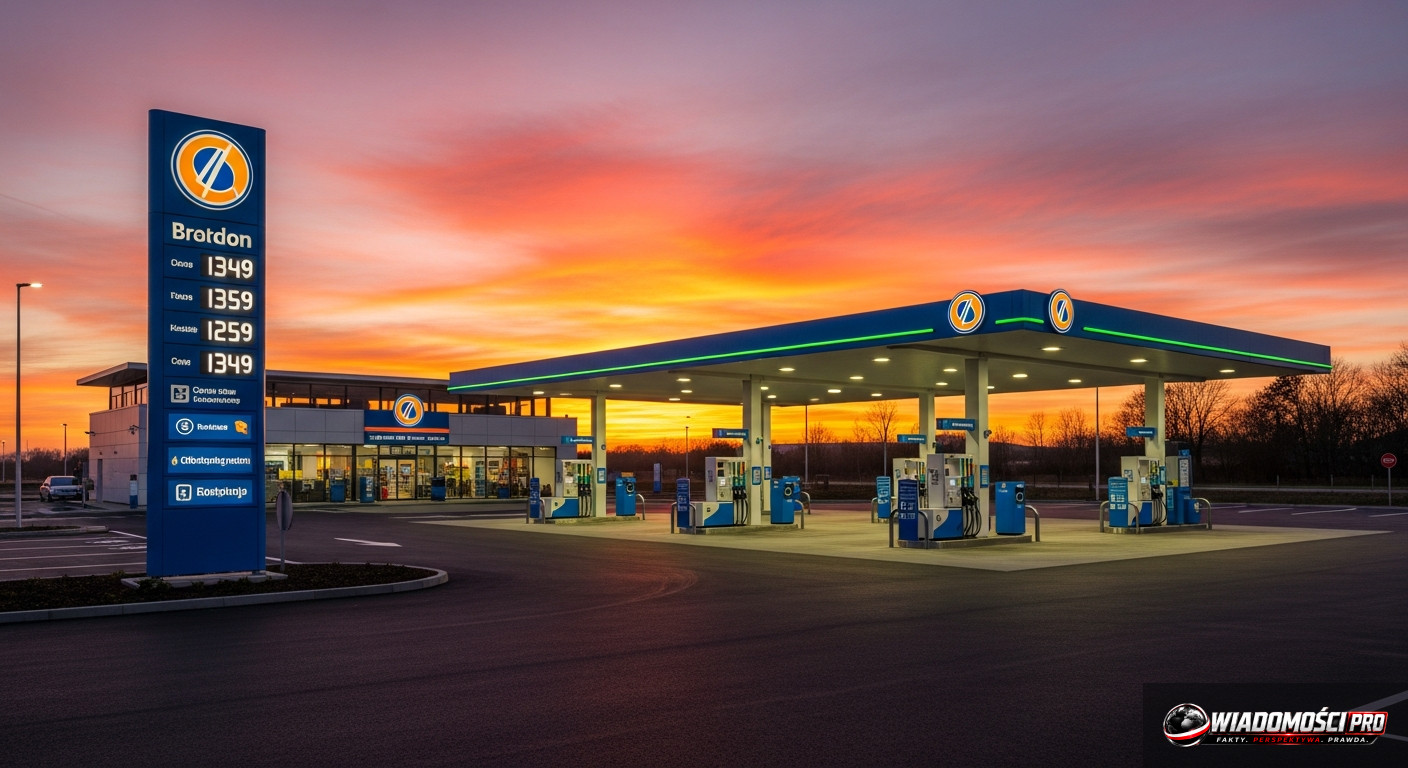
- The CPN (Lower Fuel Prices) program comes into effect on Monday, August 17, 2026.
- Government-mandated maximum fuel prices are expected to bring real savings of 1 PLN per liter.
- Analysts warn that rigid regulations could affect gas station margins and the potential availability of products.
The return of CPN: What did Prime Minister Tusk announce?
The return of CPN: What did Prime Minister Tusk announce?
According to an official government announcement, starting this coming Monday, August 17, 2026, top-down price regulations will apply at Polish gas stations. Prime Minister Donald Tusk announced the reactivation of a shield program called CPN. The direct goal of this intervention is to lower fuel prices by 1 PLN per liter for the end consumer. Information regarding the implementation of these mechanisms has been confirmed by numerous government and economic sources, ending several days of speculation regarding the cabinet's possible moves in the face of rising living costs.
The decision was made on August 13, 2026. The government package, referred to as "CPN-bis," is an attempt at direct interference in margins and retail prices. Although the name alludes to a historical chain of gas stations, the mechanism is based on a simple premise: introducing maximum fuel prices intended to curb drastic hikes. Prime Minister Tusk announced that starting Monday, drivers should feel relief at the pumps, paying one zloty less for every liter of gasoline or diesel.
The introduction of rigid price caps always sparks controversy among economists. On one hand, there is immediate relief for citizens' wallets; on the other, there is the question of the long-term effects of such a decision on supply liquidity and the profitability of gas stations. Will the market react to this administrative price imposition by attempting to limit supply, or will margins simply be shifted to other areas of business? We will know the answers to these questions once the first cars pull into stations after the weekend. For now, however, the government is betting on a concrete effect: a price reduction starting August 17. It is a move intended to provide immediate relief to household budgets at the peak of the holiday season.
The mechanism of maximum fuel prices
The mechanism of maximum fuel prices
Starting Monday, August 17, 2026, the rules of the game will change at Polish gas stations. The government is introducing strict maximum prices, which is intended to translate directly into a noticeable reduction of one zloty per liter for drivers. The decision was made on August 13, 2026, following a series of government consultations aimed at developing a quick response to market fluctuations.
The entire solution, referred to in corridors and official statements as the "CPN-bis" program, is intended to act as a protective shield against rapid price increases. It is an interventionist tool that sets top-down upper limits on the rates station owners can charge customers. Prime Minister Donald Tusk, in announcing the return of this formula, clearly indicated that the goal is to immediately ease the burden on Poles' wallets at the pumps.
Skeptics, however, point out that rigid limits are a double-edged sword. Although drivers will pay less in the short term, the fuel market is complex. Administratively imposing rates often leads to problems with supply liquidity, and in extreme cases, to empty pumps if wholesale purchase prices exceed the statutory sales limit. The question is whether the government has calculated this mechanism precisely enough to avoid chaos in supply chains.
The program comes into effect almost overnight. Entrepreneurs running stations have only a few days to adjust their IT systems and price lists. For the consumer, however, the concrete fact matters: Monday is to be the first day with new, lower rates. Whether this solution will manage to keep prices in check for a longer period or prove to be merely a temporary fire-extinguishing measure — time will tell. For now, the government is putting everything on one card, hoping that "CPN-bis" will restore the stability that has been lacking in recent weeks.

Impact on gas station margins
Impact on gas station margins
From Monday, August 17, 2026, gas station owners across the country will find themselves in a new operational reality. By introducing maximum fuel prices in accordance with Prime Minister Donald Tusk's announcements, the government is drastically limiting market freedom. This mechanism assumes a price reduction of one zloty per liter, which is a relief from the perspective of drivers, but represents a serious test of financial liquidity for station operators. Rigid price regulations drastically limit the room for maneuver in retail margins, which previously allowed for the amortization of operating costs and investments.
Market analysts point to a high risk of declining profitability, especially in the case of small, independent gas stations. While large chains may try to balance losses through sales volume or the diversification of non-fuel offerings, smaller outlets have limited room to maneuver. With imposed maximum prices, any increase in wholesale fuel purchase costs directly hits the margin. This is ruthless mathematics for a station owner who does not have a financial cushion.
In the face of top-down guidelines, strong pressure on distributors to maintain financial liquidity is possible. We can expect attempts to renegotiate supply contracts, as current retail margins will become marginal for many players. The question of whether distributors will be willing to make concessions remains open. Some stations may limit opening hours or reduce staff to offset the revenue loss resulting from the government intervention. This situation calls into question the long-term stability of the sector, which is becoming a hostage to a political decision to lower prices. The fuel market in Poland is entering a phase of margin rationing, the effects of which we will feel at the next refueling.
Are we at risk of fuel shortages?
Are we at risk of fuel shortages?
The market reacted to Donald Tusk's announcements by holding its breath. Drivers, encouraged by the vision of cheaper refueling, are en masse postponing visits to stations. Experts from Business Insider explicitly recommend holding off on refueling until Monday, August 17, when the regulated prices come into effect. However, this is a double-edged sword.
The fear of a "stockpiling" phenomenon before the new regulations come into force is becoming a real scenario. Gas stations, especially in smaller towns, may face the challenge of maintaining supply liquidity. If everyone decides to fill their tanks on the same Monday morning, distribution logistics will be put to an extreme test. A sudden spike in demand in a short time window is a crisis situation for fuel companies that is not always possible to handle immediately.
There is a lack of clear assurances from the government regarding the security of supply chains in the event of such a rapid increase in interest. On one hand, we have the promise of a one-zloty-per-liter reduction; on the other, potential emptiness at the pumps. The government's CPN program sounds attractive on paper, but in practice, the fuel market can be ruthless toward sudden price interventions. Drivers must be aware that on Monday, August 17, they might not only save money but perhaps spend hours in queues, provided fuel is available at all. This is a classic regulatory trap: the price is imposed, but supply remains a market unknown, which, in the face of artificially created demand, may collapse under its own weight.
Strategy for drivers: refuel now or wait?
Strategy for drivers: refuel now or wait?
If you are planning a visit to a gas station this weekend, skip it. This is not the time to fill up unless your tank is empty and the car is essential for work. Experts from Business Insider make it clear: it is better to wait with refueling. The savings awaiting drivers in just a few dozen hours are too significant to ignore.
The government's decision to introduce maximum fuel prices as part of the reactivated CPN program comes into effect on Monday, August 17, 2026. According to Prime Minister Donald Tusk's announcements, this is expected to bring a real price reduction of 1 PLN on every liter. For the average driver refueling 50 liters of gasoline or diesel, this means 50 PLN staying in their wallet. That is an amount for which you can buy a few more liters of fuel or simply save.
Despite optimistic announcements, common sense dictates caution. The introduction of top-down price regulations often causes nervousness in the market, and gas stations may face temporary supply problems. It is worth observing the situation in your area over the coming hours.
Here is what you should do before Monday:
- Hold off on filling up until Monday morning, unless the situation forces you to visit a station over the weekend.
- Monitor fuel availability at stations in your area, as a sudden surge in demand after the announcement could lead to temporary supply shortages.
- Prepare for potential queues at the pumps if stations are updating their price lists on Monday morning.
Remember that although a 1 PLN reduction is almost certain in light of government announcements, fuel distribution logistics can be unpredictable. If you notice lines of cars at stations on Monday morning, do not panic. The fuel in your tank will likely be enough to wait out the first day the new prices are in effect.
Market outlook after August 17
Market outlook after August 17
The government intervention in the form of the CPN program, announced by Prime Minister Donald Tusk, comes into effect on Monday, August 17, 2026. The mechanism imposing maximum fuel prices at stations is intended to bring drivers relief of about one zloty per liter. This interventionist tool is intended to stop skyrocketing costs, but the real challenge will begin once the dust settles after the initial announcements.
The main question mark remains the relationship between wholesale prices and the top-down set retail rates. If station operators' margins are squeezed too hard, the market may react in an unforeseen way. Sales outlet owners will find themselves in a vice: on one hand, the statutory duty to lower prices; on the other, the costs of purchasing fuel wholesale, which do not necessarily have to fall at the same rate. Economics is a system of connected vessels. A sudden cut in retail prices without support for wholesalers could lead to deficits at smaller stations that will not be able to subsidize the business.
Therefore, in the coming days, analysts' attention will focus on the behavior of the largest fuel chains. They dictate the pace of change and possess the largest logistics infrastructure. If market giants accept the new rules without a fight, the CPN program will last longer. Otherwise, we are in for a test of strength between the government and energy companies, the effects of which we will feel at the pumps sooner than government forecasts assume.
The key remains the question of the durability of this mechanism. The history of interventionism shows that artificially driving down prices is a stopgap measure. After August 17, we will see whether we are dealing with a well-thought-out stabilization strategy or merely a temporary silencing of social sentiment before a more difficult autumn period. The market does not like rigid brackets and will certainly try to test the tightness of the new regulations.
What this means for you
The CPN program is a classic state intervention in market mechanisms. Drivers who feel immediate relief in their wallets will benefit, but the cost may be gas station margins and the risk of periodic fuel shortages if the market does not adapt quickly enough to the new prices.
Questions and answers
From when will fuel be cheaper?
Government maximum prices come into effect on Monday, August 17, 2026.
By how much exactly will fuel get cheaper?
According to the announcements, the price is expected to fall by about 1 PLN per liter as part of the CPN program.
Is it worth refueling before Monday?
Media, including Business Insider, suggest holding off on refueling until Monday to take advantage of the full reduction.
Sources
- Cheaper at gas stations. Government launches "CPN" shield program - Gov.pl
- Fuel 1 PLN cheaper. Tusk announced the return of the CPN program - energia.rp.pl
- Government restores CPN package. Maximum fuel prices at stations announced for Monday, August 17 - biznes.interia.pl
- Better wait with refueling. Government significantly lowers fuel prices - Business Insider Polska
- Decision on fuel prices in Poland. The Prime Minister has just announced - money.pl
- CPN program and maximum fuel prices are returning. On Monday, Poles will refuel cheaper, we know the rates - Zero.pl
- CPN-bis starting Monday. Fuel will be cheaper by up to a zloty per liter - Bankier.pl
- Return of the "Lower Fuel Prices" (CPN) program. Prime Minister: cheaper fuel from this moment - Forsal.pl
Article prepared by the Wiadomości PRO editorial team with the support of artificial intelligence. Facts are derived from the sources listed above.

Komentarze (0)
Ładowanie komentarzy...