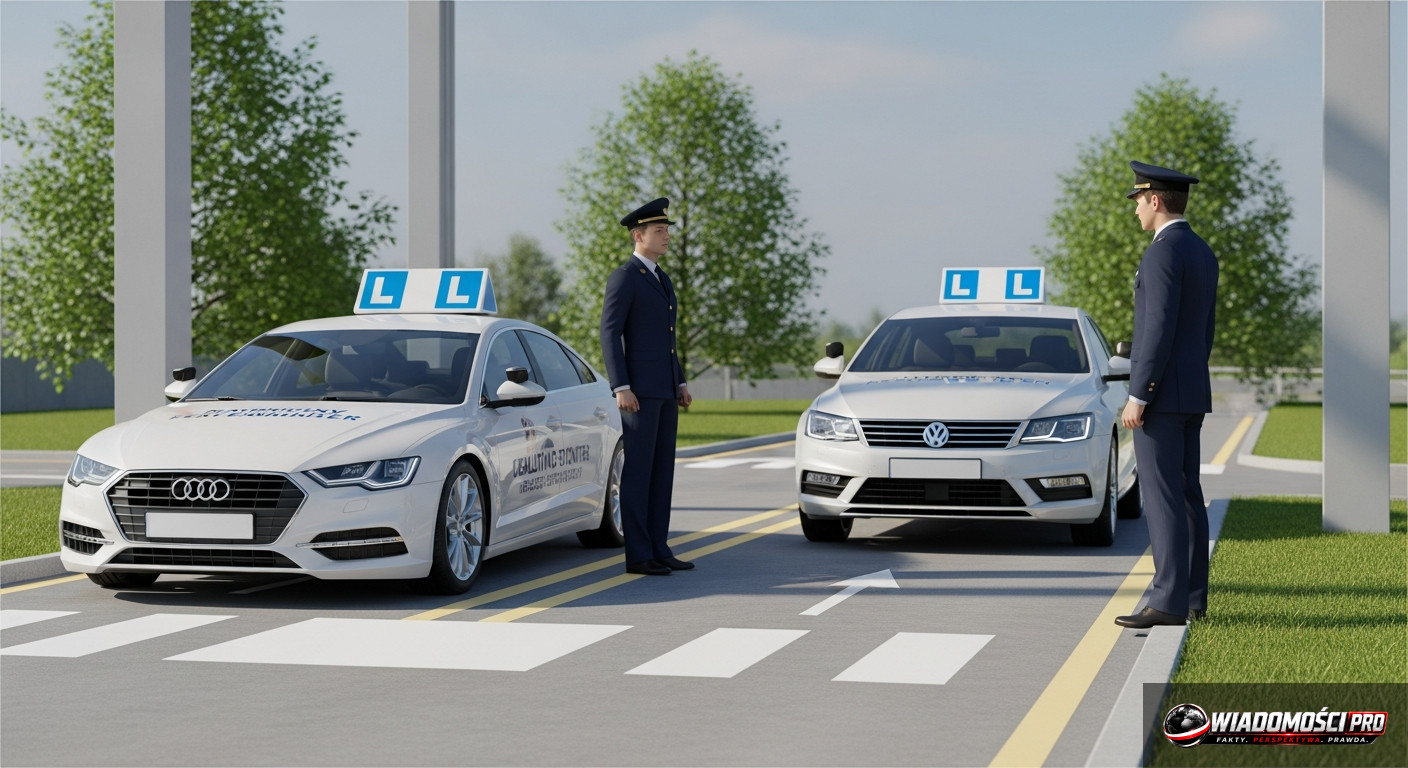
The introduced two-year probationary period imposes strict point limits on young drivers, and exceeding the speed limit by 50 km/h in a built-up area results in the mandatory and immediate loss of driving privileges. The regulations, which come into effect in stages starting January 1, 2024, eliminate any room for maneuver for those who disregard safety rules. Every mistake made during this time generates an automatic administrative decision that ends the driver's career before it has truly begun.
A driver who has just received their document becomes, from day one, a participant in a system where the state is moving away from educational methods in favor of the absolute elimination of risk. For years, the Polish system was based on the assumption that education behind the wheel was enough to improve safety. The amendments from 2024, 2025, and 2026 show that the Ministry of Infrastructure has stopped believing in soft methods. Responsibility rests entirely on the shoulders of the driver, and the driving license has become a contract that the administrative body terminates unilaterally in the event of a gross violation of regulations.
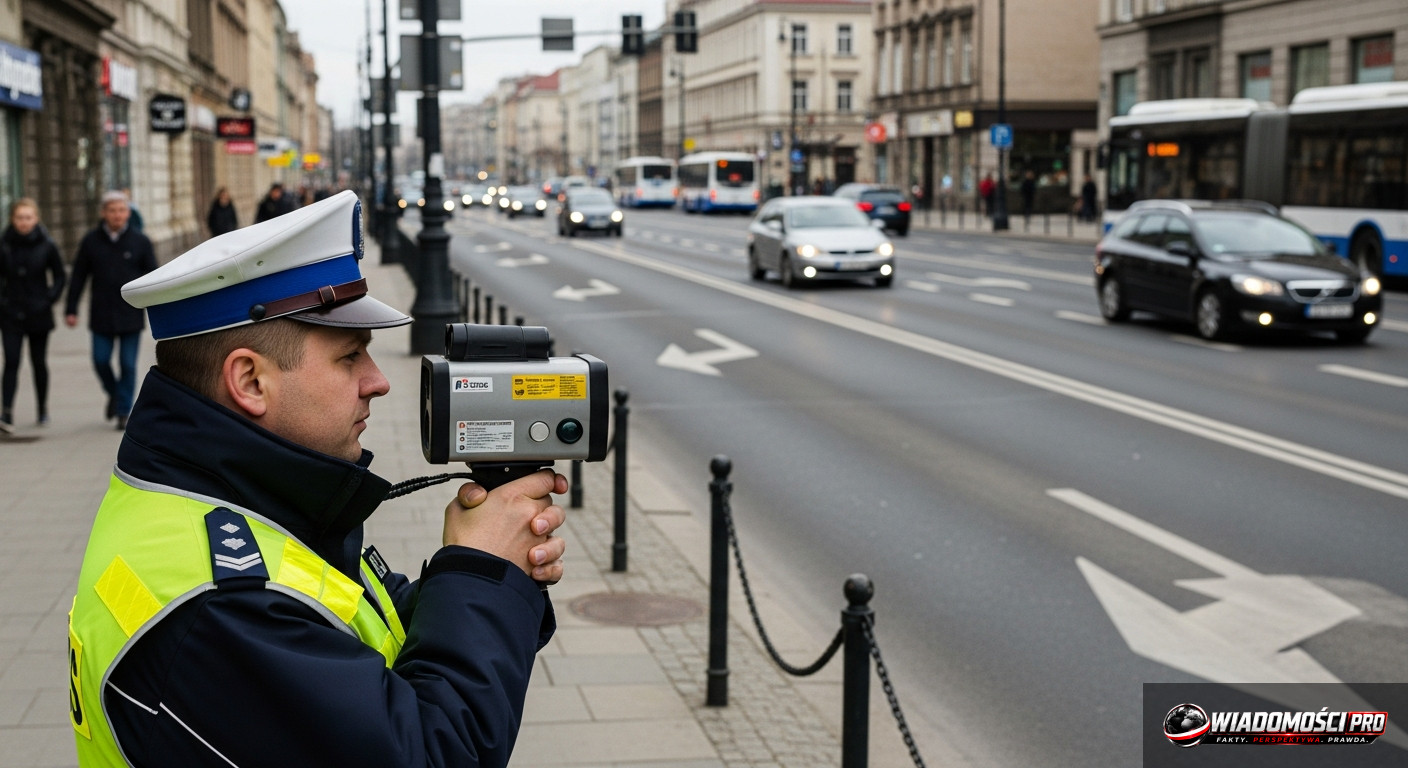
The example of Mr. Marek, a twenty-year-old from Warsaw, shows the brutal effectiveness of the new regulations. Just four months after receiving his driving license, he was stopped by a patrol in a built-up area. Speed on the speedometer: 102 km/h in a 50 km/h zone. There was no discussion with the police officer about a "too sensitive radar" or requests for a warning. The system worked in a binary, zero-one fashion. His privileges expired the moment he was stopped, and the receipt he received was merely a document confirming the fact that his consent to drive vehicles had been revoked. Marek didn't just lose a document – he lost months of sacrifice, the money spent on the course, and two probationary years, which he must now start from scratch, additionally undergoing mandatory, costly re-education courses.
The two-year probationary period is a mechanism that the legislator refined until August 2026. It was determined that the first 24 months are a time when habits are most susceptible to being shaped, but also most prone to degeneration under the influence of recklessness. The novice monitoring system was designed so that every traffic offense is recorded automatically. This eliminates officer subjectivity. If you exceed the penalty point limit, the administrative procedure starts automatically. Regaining privileges involves the necessity of undergoing additional, paid training, and in extreme cases – retaking the theoretical and practical exam.

The mechanism for regaining privileges was designed as a deterrent process. A driver cannot simply wait out the penalty. They must go through a resocialization path. A re-education course in road safety is an out-of-pocket expense. On top of that, there are exam fees, which together constitute a significant financial burden for a young person. In cases such as exceeding the speed limit by 50 km/h in a built-up area, the procedure is extended by the need to obtain a positive psychological evaluation. This is time and stress that is meant to be the final argument against repeating a mistake. The state clearly communicates: recklessness is unprofitable, and a driving license is a privilege, not an acquired right.
The situation for young drivers is complicated by changes to the exams themselves. Data from June 21, 2025, indicate that the list of errors resulting in the immediate termination of the exam has been significantly expanded. The examiner is no longer a partner to the student, but has become a strict auditor. A minor oversight in observing the surroundings or improper behavior toward vulnerable road users is enough for the exam to be terminated halfway through. This approach is intended to eliminate from the roads people who do not possess adequate divided attention. The student must be prepared for every scenario, not just standard maneuvers on the maneuvering yard. The evolution of exams, which has been ongoing since December 2023, shows a trend of constantly tightening requirements.
Driving schools, forced to adapt to the guidelines, have had to increase the scope of practical training. This translates into higher costs for students. Market reports from 2024 indicated that the costs of obtaining a driving license increased by 15-20% compared to 2023. This is due to the necessity of introducing additional training modules required by the regulations. The student must pay not only for standard driving hours but also for sessions devoted to defensive driving techniques. This is intended to directly translate into accident statistics, which remain concerning for young drivers.
The Ministry of Infrastructure is focusing on the full digitalization of oversight processes. Every decision to suspend a driving license is recorded in a central database, which is accessible to officers across the country. There is no talk of "working things out" or ignoring an official decision. The system works automatically, and the flow of information between law enforcement agencies and communication departments is almost instantaneous. For the driver, this means the end of the era of paper documents that could easily be hidden from inspection. Now, the digital footprint is permanent and difficult to erase.
The problem of recklessness, especially in built-up areas, has become the main target of the prosecutor's office. Guidelines from November 2025 introduced the possibility of adjudicating stricter penalties, including actual prison time, even in the absence of causing an accident, if the driver's behavior is classified as gross endangerment. This is a radical turn in Polish criminal law. It shifts the burden of responsibility from the "end result," i.e., an accident, to the "manner of driving" – i.e., driving style. Drivers who treat roads like race tracks must count on the fact that their behavior will be considered a crime, not just a traffic offense.
The transitional period, which is causing controversy, poses a challenge primarily for officials. The regulations coming into effect at the beginning of 2027 require the administration to efficiently handle a huge number of new driving license applications. The legislator provided that people who passed the exam before the new regulations came into effect will be subject to the old rules. This creates a two-track system on Polish roads. This may lead to social tensions, as "old-school" and "new" drivers will be held accountable according to completely different standards. Lawyers point out that such a legal structure could be challenged in administrative courts, but the government remains adamant in its assumptions.
The Ministry of Infrastructure argues that these actions are necessary to catch up with European road safety standards. Brussels has been pressuring Poland for years to more effectively eliminate road pirates. The introduction of lifetime loss of a driving license for the most serious offenses is another element of this puzzle. However, will such harsh law not become a tool that excludes from traffic people who made a mistake resulting from a lack of experience, and not from ill will? This is a question we will have to answer during the first years of the new regulations.
For a young driver, entering adulthood behind the wheel in 2027 will mean significantly greater psychological pressure. Every situation on the road, every failure to yield, or speeding will carry a weight that their older colleagues did not know. On one hand, this will increase caution; on the other, it may lead to paralyzing uncertainty in situations that require dynamic decision-making. Examiners are already noticing that students are more tense, which paradoxically may lower the quality of their driving under stressful conditions.
A completely separate issue remains the ban on organizing illegal street races, which was tightened in November 2025. These regulations strike at entire environments that until now had been taking advantage of a legal loophole by organizing via social media. Currently, the police have the right to requisition vehicles used for such purposes, which is the most severe penalty for owners of high-power cars. This is no longer just a matter of a fine, but the loss of property, which is intended to be the final argument for those who do not understand the difference between a public road and a race track.
Analyzing the costs, it should be pointed out that the 15-20% increase in course prices is not solely due to the desire for profit by driving schools. It is the effect of the necessity to invest in new technologies, including driving simulators, which have become the standard. The student, paying more, in theory receives better preparation, but in practice, they must also spend more time in the lecture hall. The 2024 training program change forced schools to teach driving techniques in conditions of simulated slipperiness or sudden braking, which was previously treated as an extra, but is now an element of the internal exam.
Will the system become fairer? This concept in the context of traffic regulations is very relative. For accident victims, any penalty will be too low. For drivers who lose their license for a minor speeding violation in a built-up area, the system will be unfair. The state has chosen the path of restrictions, counting on a chilling effect. Statistics from 2025–2026 are to be the litmus test for this policy. If the number of fatal accidents falls, the government will claim success. However, if the number of applications for the restoration of privileges clogs up the communication departments, alternative, perhaps more flexible, solutions will have to be sought.
Lifetime loss of a driving license, which appears in the 2025 amendment, is a last resort. It has been reserved for recidivists who have once again broken a driving ban or caused an accident while under the influence of alcohol or intoxicants. This is a clear message: a driving license in Poland has ceased to be an acquired right and has become a privilege that must be earned through one's behavior. Every subsequent act of breaking the law is analyzed through the prism of the driver's earlier history. The system does not give a second chance to people who grossly disregard public safety rules.
In the context of the changes, the question of the role of instructors becomes key. Are they able to teach a student not only technique but also maturity within a few dozen hours? One often hears opinions that the probationary period is just a cover for a lack of real education. Young drivers need mentors, not just controllers with a list of errors in hand. Unfortunately, the current system does not provide psychological support for newly minted drivers, focusing almost exclusively on punishing mistakes.
Every change in traffic law is a living process. The regulations that come into effect in 2027 will likely be subject to corrections during the first two years of operation. Already, there are voices from automotive industry experts pointing to the need to simplify administrative procedures while maintaining the severity of penalties for pirates. The government announces that it will monitor the situation on an ongoing basis, but for the time being, the priority remains a firm hand.
For the reader who plans to obtain a driving license in the near future, the most important advice is to be aware of the consequences. The two-year probationary period is a time when every kilometer driven in a built-up area at a speed 50 km/h over the limit can mean the end of dreams of driving a car for many years. This is not a time for testing the car's capabilities, but for learning humility toward the regulations. The system is merciless, but also predictable – if you follow the rules, you have nothing to fear.
One must also take into account the logistical aspect of the entire process. Many people wonder what the exam looks like in practice in 2024 after the changes from December 2023. Examiners across the country have received new guidelines that force a much more accurate assessment of driver behavior on the road. It is no longer just about correctly performing a maneuver, but about fluidity, situational assessment, and anticipating the behavior of other road users. If the student cannot demonstrate an appropriate level of maturity, the examiner has no choice – they must end the test.
An added value for drivers who feel the pressure of the new regulations is the development of driver-assistance technologies. Many car manufacturers are introducing ISA (Intelligent Speed Assistance) type systems, which warn against speeding. Although for many drivers this is an annoying extra, in the face of the new regulations, it becomes a tool for protection against the loss of privileges. A conscious driver will use every available technology to avoid crossing the line beyond which the privilege of driving a vehicle ends.
One cannot ignore the issue of costs, which are constantly rising. Driving schools, investing in modern simulators and additional hours of theory, must raise prices. For the student, this means the need for greater financial discipline. If you put huge funds into a course, losing your license during the probationary period hurts twice as much. However, this is the state's strategy – a financial hit to the pocket is meant to discourage more effectively than any warning.
The regulations from 2025 and 2026 are not just a "firm hand," but also an attempt to organize the chaos on Polish roads. Statistics show that Polish drivers are still learning driving culture, and the changes are intended to accelerate this process. Will it work? We will only know the answer after a few years, when enough data has been collected in the central database to assess the impact of the new regulations on the number of accidents. Until then, we must adapt to the imposed framework.
Questions and answers:
Does the probationary period apply to people who already have a category B driving license?
No, the regulations introducing the two-year probationary period apply only to people who obtain privileges after the amendment comes into effect, which is planned for the beginning of 2027. People who already have a driving license are covered by the current rules, unless special provisions state otherwise.
What exactly happens at the moment a driving license is suspended for exceeding the speed limit by 50 km/h in a built-up area?
The police officer at the scene of the inspection suspends the document electronically, which results in the immediate expiration of privileges. The driver receives a receipt that allows them to drive for a certain period, after which the decision on the formal revocation of privileges is made by the district governor (starosta). The process of regaining them requires going through a re-education course and retaking exams, which is a costly and long-term process.
Will exams look the same after 2027 as they do now?
Exams will be a continuation of the trend of tightening criteria started in 2024. The new errors introduced in 2025 that result in the termination of the exam remain in force, and examiners will take an even more rigorous approach to assessing driving technique, which means that the difficulty level of the exam will remain at a high level.
What are the main reasons for the increase in the costs of obtaining a driving license?
The 15-20% increase in costs is mainly due to the necessity of implementing expanded training modules, including training in defensive driving techniques and additional theoretical classes, which became mandatory in connection with the amendments to the regulations. Driving schools had to adjust their price lists to the increased expenditure of time and technical resources required by the legislator.
Is there a possibility to appeal against the decision to lose a driving license during the probationary period?
Yes, the driver has the right to file an appeal against the district governor's decision to the Local Government Appeal Board (Samorządowe Kolegium Odwoławcze), and then to an administrative court. However, it should be remembered that filing an appeal does not automatically suspend the execution of the decision on the loss of privileges, which means that the appeal procedure is long and does not guarantee a quick return behind the wheel.
Why did the Ministry of Infrastructure decide on such drastic steps toward young drivers?
This decision results from an analysis of accident statistics, which indicate that young drivers, due to a lack of experience and a tendency toward recklessness, are a high-risk group. The goal of introducing such rigid legal frameworks is to force greater responsibility upon them and to eliminate from road traffic people who do not show proper respect for the applicable regulations, which is intended to reduce the number of fatal accidents.
Sources
- Driving license exam 2024. New regulations introduced significant changes - Dziennik.pl
- Driving license exam rules at the last minute - Rzeczpospolita
- New regulations 2026: Lifetime loss of driving license, prison for recklessness, racing ban - Gazeta Prawna
- Changes in the driving license exam. Commit a new error, you fail immediately - Interia Motoryzacja
- Changes for drivers from June. Examiner explains - TVN24
- New driving license exam rules. Changes as of January 1, 2024 - Dziennik.pl
- Changes in driving license exams. Will the new regulations make it easier to obtain the document? - TVP Kielce
- Major changes in driving license law from 2024 - Strefa Biznesu
Article prepared by the Wiadomości PRO editorial team with the support of artificial intelligence. Facts come from the sources provided above.
Komentarze (0)
Ładowanie komentarzy...