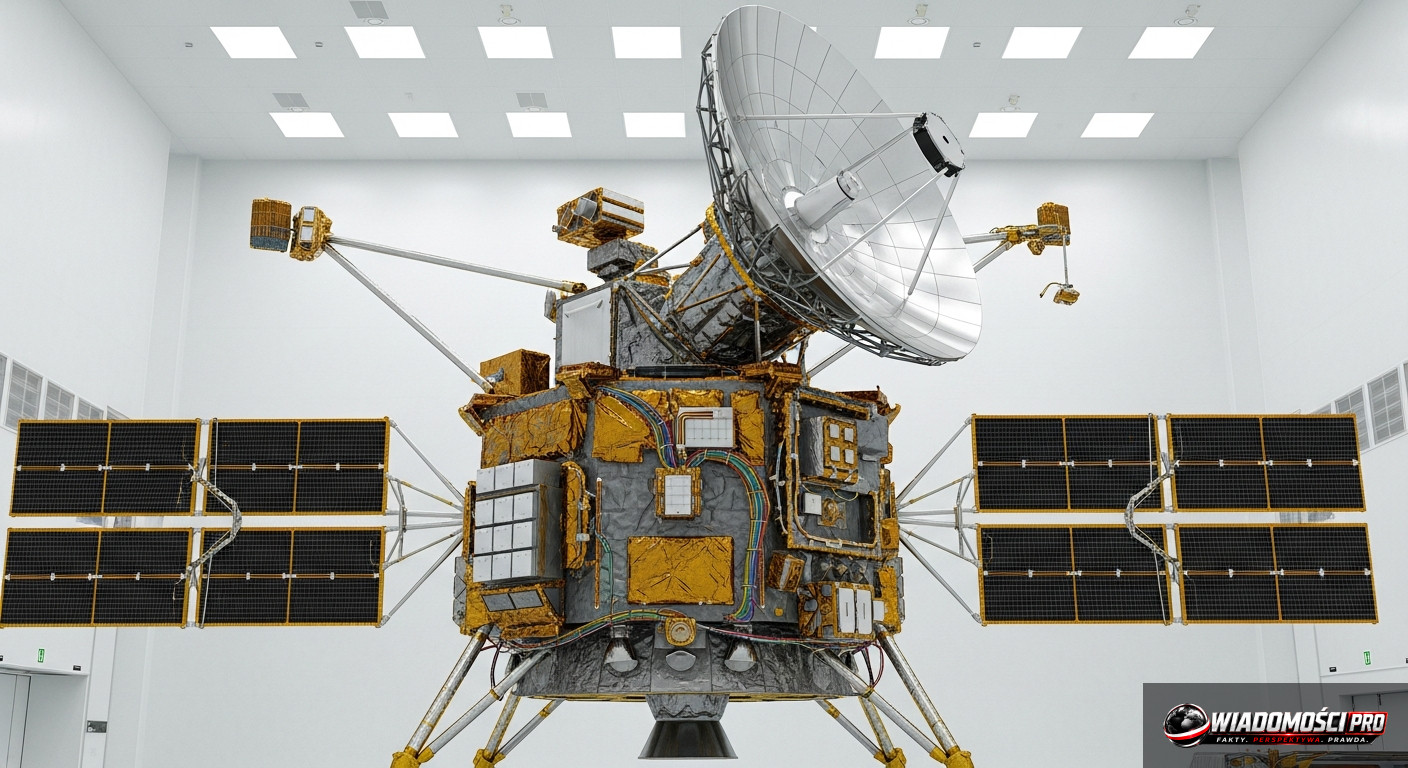
The total cost of the Europa Clipper mission is $5 billion. The probe launched in October 2024 aboard a Falcon Heavy rocket, beginning its multi-year journey toward Jupiter's icy moon. It is the most expensive planetary mission in NASA's history, and its success or failure will define the future of astrobiology for decades to come, changing our understanding of biological potential in the distant corners of the Solar System.
Flight engineering: why Falcon Heavy?
The choice of the Falcon Heavy rocket was not a coincidence or a result of selecting the cheapest offer on the market. NASA engineers needed a launch vehicle capable of placing the over-six-ton probe on a trajectory that would allow for gravity assist maneuvers around Earth and Mars. This is a complex flight geometry aimed at gaining the speed necessary to cover the vast distance separating us from the Jovian system. Falcon Heavy, with its three main cores and impressive thrust, provides the necessary launch mass to accommodate not only fuel but, above all, an extensive suite of research instruments.
The construction of the Europa Clipper probe itself is a pinnacle of space engineering. The span of its solar panels, which exceed 30 meters when deployed, makes it the largest vehicle ever built for an interplanetary mission. The choice of solar power instead of radioisotope thermoelectric generators (RTGs), commonly used in deep space missions, was dictated by the specifics of Jupiter's orbit. Although sunlight is much weaker there than near Earth, the surface area of the cells is sufficient to power all onboard systems without the need to rely on dwindling plutonium resources.
Instrumentation: the probe's eyes on Europa
The probe carries nine main scientific instruments, each serving a distinct function in the process of mapping and analyzing the icy world. REASON, or Radar for Europa Assessment and Sounding: Ocean to Near-surface, is the scientific heart of the mission. This radar is tasked with penetrating the ice shell, which scientists estimate could be anywhere from a few to several dozen kilometers thick. Thanks to it, we will find out if there are pockets of liquid water or so-called "lakes" trapped in the ice, which would be a key indicator of geological activity.
Another essential tool is MISE, or Mapping Imaging Spectrometer for Europa. This spectrometer will focus on analyzing the chemical composition of the surface, identifying organic compounds, salts, and other substances that may have been brought from the moon's interior to the surface as a result of tectonic processes or cryovolcanism. Understanding whether the basic building blocks of life are present on Europa is just as important as searching for the liquid ocean itself.
EIS, or Europa Imaging System, is a set of high-resolution cameras that will provide us with images of the surface with precision allowing for the detection of geological formations just a few meters in size. With these, scientists will create topographic maps that will allow for the identification of the most active regions of the moon. In addition, there is the ECM magnetometer and instruments such as PIMS, used to study Europa's interaction with Jupiter's powerful magnetic field. Each of these sensors has been designed to minimize the risk of errors during flybys, which will take place at enormous speeds.
Beneath the icy shell: searching for habitable environments
Europa is the number one target for astrobiologists in the Solar System. Hidden beneath the ice is an ocean that likely contains twice as much water as all of Earth's oceans combined. A key factor making this environment potentially habitable is the tidal interaction with Jupiter. The gravitational forces of the gas giant constantly knead the moon, generating heat in its interior. It is this heat that ensures a stable ocean temperature, preventing it from freezing completely.
Scientists do not expect to find fish or other complex organisms. The mission focuses on finding so-called biosignatures. We are looking for traces of metabolism in the form of specific chemical compounds that, under terrestrial conditions, are inextricably linked to life processes. If Europa's ocean has access to chemical energy—for example, through hydrothermal vents on the floor, similar to those known from Earth's oceanic trenches—the chance for the existence of simple life forms becomes real. Europa Clipper will not answer the question "is something swimming there," but it will provide the data needed to determine if the ocean is "alive" in a chemical sense.
The radiation challenge: a titanium shield inside the probe
Jupiter's environment is one of the most hostile places in our planetary system. The planet's powerful magnetic field accelerates charged particles to speeds close to the speed of light, creating deadly radiation belts. The electronics of the Europa Clipper probe could not survive in such conditions for the planned duration of the mission if not for special protections.
Inside the probe's structure, a so-called "vault" has been placed—an armored safe with walls made of titanium and aluminum. The most sensitive computer components and control units are hidden within this safe interior. Such a design drastically increases the vehicle's mass, which in turn necessitated an even more powerful launch vehicle, but it is the only way to protect against the degradation of electronics caused by ionizing radiation. Therefore, every flyby of Europa is carefully planned to minimize exposure to the strongest particle streams, which limits the duration of measurement windows. This is a balancing act on the edge of the technological capabilities of modern electronics.
The race to Jupiter: Europa Clipper vs. JUICE
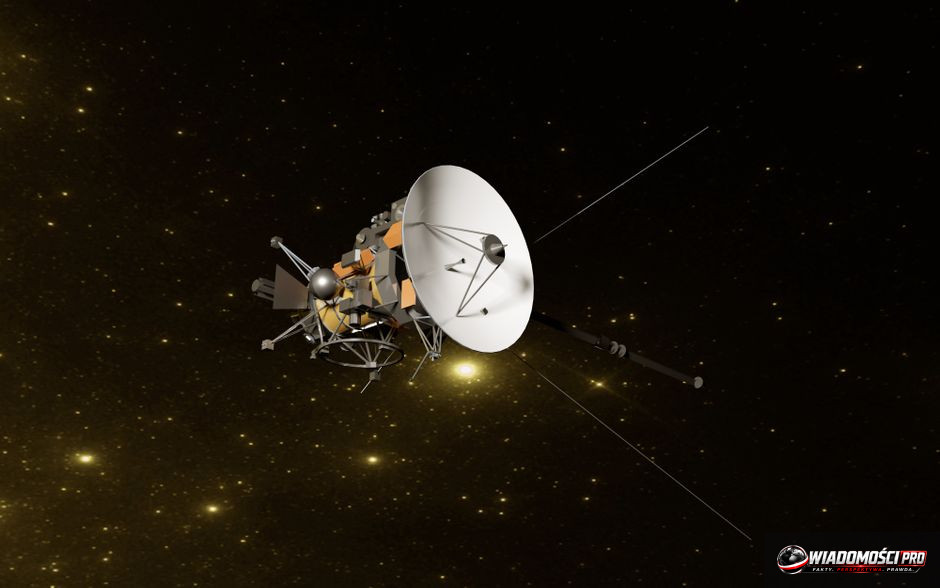
It is worth noting that Europa Clipper is not the only spacecraft sent toward Jupiter. The European Space Agency (ESA) is carrying out the JUICE (Jupiter Icy Moons Explorer) mission. Both missions complement each other, although they have different goals. JUICE will focus primarily on Ganymede, Callisto, and Europa, offering a broader view of the entire system of Jupiter's moons. Europa Clipper, on the other hand, is a dedicated mission, focused exclusively on Europa, with a greater number of flybys over this specific globe.
The rivalry between these projects has a financial and scientific dimension. NASA, by spending $5 billion on its project, is betting on a deep analysis of a single target. ESA, in turn, is diversifying its research. From a taxpayer's perspective, this NASA approach raises the most questions about efficiency. Wouldn't it be better to create one international cooperation that would reduce administrative costs? However, the history of space exploration shows that competition between agencies often stimulates innovation, forcing engineers to overcome technical barriers faster.
Risk and scientific uncertainty
The Europa Clipper probe is fully autonomous in terms of research operations, but it is precisely this autonomy that raises the most concern. Because of the vast distance, a radio signal takes several dozen minutes to travel between Jupiter and Earth. In the event of a failure, ground control cannot react in real-time. Every flyby maneuver must be programmed in advance, and onboard artificial intelligence systems must detect critical situations themselves.
If any of the key instruments are damaged during the first flyby, the loss of data could be irreversible. Given the cost of the mission, a potential failure would become a political burden for NASA. This is not a project where one can afford a mistake. Engineers have conducted thousands of hours of simulations, but space always has scenarios in store that cannot be predicted in the sterile environment of a laboratory. The ambition to understand Europa is enormous, but the stakes are not just the agency's reputation, but the entire budget that could have been allocated to other research goals.
Perspectives after reaching the Jupiter system
The probe's journey will take several years. After reaching the Jovian system, Europa Clipper will enter a high orbit around the planet and begin a cycle of close flybys of the moon. Each approach is a precisely calculated trajectory that will allow for the collection of telemetry, spectroscopic, and imaging data. This data will flow back to Earth in batches, and its analysis will take years.
What will happen after the mission ends? If the probe confirms the presence of an ocean with conditions favorable for life, the next logical step will be to send a lander. Europa Clipper acts as a scout, preparing the ground for a future, perhaps even more expensive, "lander" type mission. This is a long-term strategy in which each stage builds the foundation for the next. Spending $5 billion is therefore not the final cost, but an investment in a long-term plan for exploring the outer Solar System.
The success of the mission will depend on the quality of the data that will flow from instruments such as REASON or MISE. NASA scientists emphasize that even the lack of direct evidence of life will be a scientific success, provided we manage to fully characterize the conditions prevailing in the ocean. Knowing that the water under the ice is salty, warm, and rich in organic compounds will in itself re-evaluate our understanding of biology. However, if after years of research it turns out that the ocean is chemically dead, the agency will face a difficult reckoning with public opinion.
Questions and answers
Why does the mission cost as much as $5 billion?
The high price is due to the need to develop technologies resistant to Jupiter's extreme radiation, build an armored shield for the electronics, and design highly precise research instruments capable of working in deep space conditions.
When will Europa Clipper reach its destination?
The journey takes several years. After launching in October 2024, the probe uses planetary gravity assists to gain the speed necessary to reach Jupiter's orbit at the end of the current decade.
Will the probe land on the moon's surface?
No. Europa Clipper is an orbiter designed to perform a series of close flybys of Europa. Landing would be too technically complex and fraught with too much risk given the current state of knowledge about the moon's surface.
What are the biggest threats to this mission?
The main threat is the radiation in Jupiter's environment, which could damage the electronics, and the distance from Earth, which prevents direct control of the probe in real-time during emergency situations.
What exactly is Europa Clipper looking for on Europa?
The mission is searching for evidence of an ocean beneath the icy shell, analyzing the chemical composition of the surface in search of organic compounds, and studying the physical parameters of the moon to assess its potential to support life.
Does the mission have significance for the development of technology on Earth?
Yes, the development of autonomous systems, radiation-hardened electronics, and advanced spectroscopic instruments finds application in the space industry, telecommunications, and geological research, bringing long-term technological benefits.
What is the role of the REASON instrument in the mission?
REASON is an ice-penetrating radar tasked with studying the structure of Europa's shell and detecting any liquid water reservoirs located beneath the surface, which is a primary scientific goal of the mission.
Why did NASA choose Falcon Heavy instead of its own rockets?
The choice of Falcon Heavy was dictated by the need to ensure sufficient lift capacity for such a heavy probe and the availability of a commercial launch vehicle that met NASA's rigorous requirements for interplanetary flight trajectories.
What data will be sent to Earth after the flybys?
The probe will send data from instruments such as high-resolution cameras, spectrometers analyzing chemical composition, and magnetometers, which, after processing, will allow scientists to create maps and models of the moon's interior.
Are further expeditions planned after the Europa Clipper mission ends?
Yes, the success of Europa Clipper is intended to provide the foundation for future missions, including potential landers that could collect samples directly from the surface or from water vapor plumes emanating from the moon's interior.
Sources
- Start of the Europa Clipper mission to Europa - AstroNET – Polish Astronomical Portal
- Europa Clipper launches. A key task ahead of them - Geekweek Interia
- Europa Clipper probe to search for life on Europa - Urania - Polish Astronomical Portal
- Start of the Europa Clipper mission [TRANSMISSION]. Americans to outpace Europeans in the search for life on Europa - Wyborcza.pl
- NASA sends a probe to Europa. The Europa Clipper mission has launched - WP Tech
- Europa Clipper has launched. It will investigate whether there are conditions for life on Jupiter's moon - Polskie Radio 24
- Europa Clipper probe to search for life on Jupiter's moon, Europa - wszystkoconajwazniejsze.pl
- Flight to Jupiter for $5 billion. Europa Clipper launch aboard Falcon Heavy - Benchmark.pl
Article prepared by the Wiadomości PRO editorial team with the support of artificial intelligence. Facts are derived from the sources listed above.

Komentarze (0)
Ładowanie komentarzy...