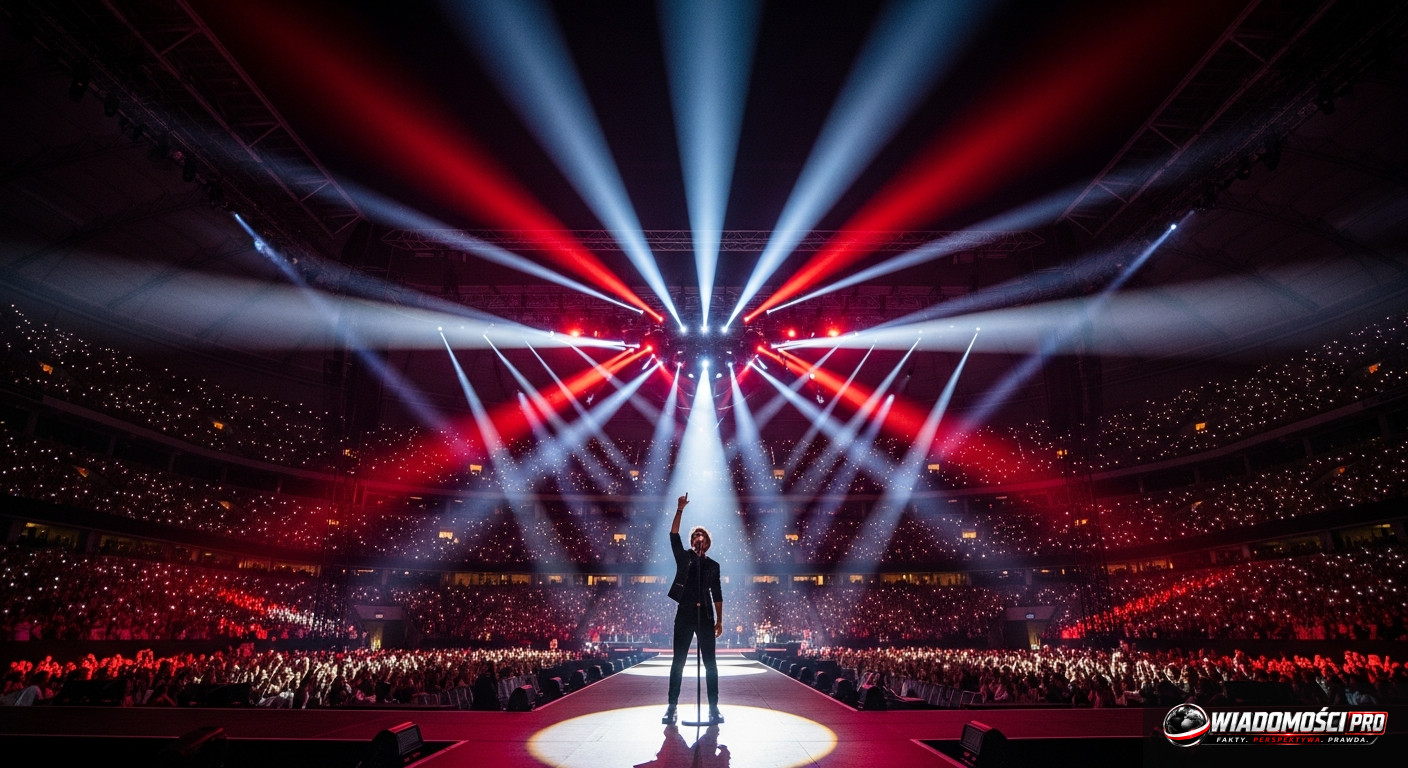
Dawid Podsiadło sold out a series of stadium concerts in 2024, gathering as many as 90,000 listeners at individual events, including in Chorzów. This result set a new benchmark for the Polish music scene, cementing the artist's position as the only domestic performer to dominate the country's largest venues on such a scale. This achievement was not a matter of chance, but the result of precise logistical planning that revolutionized the way mass spectacles are organized in Poland.
In 2024, the tour covering seven cities served as a logistical testing ground. Dawid Podsiadło, by announcing his concert plans as early as August 2023, set himself a challenge previously faced only by the world's biggest stars. The decision to engage seven stadiums in Poland's largest metropolises was risky, but interest exceeded the organizers' wildest expectations. In December 2023, while confirming the seventh date of the tour at Tarczyński Arena in Wrocław, the artist admitted that June 2024 would be the most important month of his career to date. This confession was not merely a marketing ploy, but a real reflection of the scale of the undertaking, which required coordination from the entire staff on a level previously unseen in the Polish concert industry.
Ticket sales for this tour resembled an operational game. The organizers did not release all tickets into circulation at once, using a technique of dosing information that effectively fueled insatiable demand. As soon as sales systems recorded that a pool was exhausted, new announcements appeared. The best proof of the effectiveness of this strategy was the situation in Gdańsk. At Polsat Plus Arena Gdańsk, interest was so enormous that it became necessary to add another performance. This mechanism allowed for avoiding the risk of empty seats in the stands, which at a stadium scale would have been a financial and image disaster.
However, a stadium is not a concert hall. The difference in acoustics is a chasm that every performer must face. While the tour was a triumph in terms of marketing, the technical aspects of sound reinforcement at venues with such enormous volume became a subject of discussion. With 90,000 spectators at a single event, the physics of sound becomes ruthless. Some listeners, occupying seats on the edges of the stands or in sectors furthest from the stage, pointed out deficiencies in sound clarity. For music lovers expecting studio precision, stadium realities were sometimes a disappointment. Podsiadło, however, proved that for a huge part of his audience, the authenticity of the experience and the community of participating in a historic event have greater value than perfectly tuned frequency bands.
In June 2026, the artist continued this path, proving that stadium performance series had become his natural working environment. During subsequent events, including the aforementioned concert in Chorzów, the number of fans hovered around 100,000 people. This is an increase that confirms that the audience is not bored with the stadium format. On the contrary, the demand for live music in the largest possible edition seems to be growing. An example of this bond was the situation in which the crowd spontaneously sang "Sto lat" (Happy Birthday) for Maja Chwalińska. Such moments build an almost mythological status for an artist who can bridge the distance between the stage and the last row in the stands, even if it is technically extremely difficult to achieve.
The logistics of success are based on constant comparison. Each subsequent concert is a gauge of the market's condition. After the successes of 2024, the "Obrotowy Tour" for 2026 was announced in September 2025. Dawid Podsiadło did not look for new, smaller spaces, but consistently stuck to stadiums, which is a bold and demanding strategy. It forces a constant raising of the stakes to avoid stagnation. Viewers expect that every subsequent tour will be bigger, better, and more spectacular than the previous one. This is a dangerous loop in which fan expectations grow faster than the technological capabilities of modern sports facilities.
Facilities such as Tarczyński Arena in Wrocław or Polsat Plus Arena in Gdańsk were designed for football matches, not symphonic concerts. Adapting these places for musical needs requires a huge amount of work, the installation of hundreds of speakers, and kilometers of cables so that the sound reaches every participant. Nevertheless, critical voices regarding the sound quality in Chorzów, where 90,000 people attended the event, suggest that the limit has been reached. Opinions appeared that half of the audience might not have heard the concert in a satisfactory way. This is a warning signal for the concert industry in Poland. Attendance success cannot come at the expense of reception quality, because in the long run, the audience's trust in stadium spectacles may begin to decline.
The concert market in Poland has gained a new category of artist thanks to Podsiadło: the stadium sure-bet. This is someone who no longer needs promotional tricks to fill the largest arenas. His presence at a stadium has become a sociological phenomenon. People do not come just to listen to songs they know from the radio. They come to be part of something big. This is a phenomenon that changes the rules of the game for the entire Polish show business. The competition must now face the result of 90,000 listeners at a single event, which remains an unattainable dream for most Polish performers.
It is worth taking a closer look at how ticket sales were managed. The mechanism of building tension through gradual announcements of dates and cities was key to maintaining interest for many months. Tarczyński Arena Wrocław, confirmed in December 2023, became the foundation of this strategy. Instead of putting everything in one basket, the organizers analyzed sales in real-time, which allowed for flexible reactions. This is the professionalization that the industry has needed for years. Polish artists have ceased to be just performers; they have also become economic entities that must manage huge financial risks.
The evolution of the tour from 2024 to 2026 shows that Podsiadło does not intend to slow down. The "Obrotowy Tour" is the next stage of the same process. The artist is not trying to reinvent the wheel, but is perfecting a model that has already worked once. This is a rarity in an industry where many performers return to arenas after one stadium success, fearing the next challenge. Podsiadło chose the opposite path. He maintains the stadium format as the foundation of his activity, which forces him to constantly ensure that every tour brings something new.
But is this scale sustainable? Looking at the data from June 2026, when nearly one hundred thousand fans participated in the events, one might get the impression that the limit of infrastructure endurance is being tested daily. The technical challenges written about in the context of the concert in Chorzów do not disappear on their own. They are an inherent element of stadium reality. Organizers must develop better solutions regarding acoustics if they want stadium concerts in Poland to stop being associated with quality compromises.
For the fan, the situation is clear. The opportunity to participate in an event that gathers such a huge community is attractive. It is the feeling of being part of something important, of singing together, of experiencing emotions together. Even if the sound is not perfect and the queues for entrances or catering points are long, the stadium atmosphere compensates for these inconveniences. Podsiadło understands this psychology perfectly. He knows that his brand is stronger than the technical imperfections of the facility.
In summary, the attendance success at stadiums in 2024 and 2026 is not just a matter of ticket sales. It is primarily proof of a change in the perception of a Polish artist. Once, the stadium was reserved for foreign legends such as Metallica or Coldplay. Today, it is a place where a Polish artist can feel like a host. Dawid Podsiadło proved that the barriers that seemed insurmountable for years actually existed mainly in the heads of organizers and the musicians themselves.
However, looking to the future, the industry faces a challenge. If stadium series are to become the standard, it is necessary to raise the quality of accompanying services. It is not just about sound, but also about communication logistics, crowd management, and participant comfort. Attendance success is a great starting point, but the quality of the experience will decide whether stadiums will still be sold out in two years.
It is worth citing the data that best illustrates the scale of this phenomenon in recent years:
- Chorzów — 90,000 spectators (naTemat.pl, 07.06.2026)
- 2024 concert tour — sold-out tickets at stadiums (Gdańsk - official city portal, 02.06.2024)
- Number of concerts — seventh stadium concert announced in June 2024 (Tarczyński Arena Wrocław, 21.12.2023)
All these numbers add up to a picture of a phenomenon that has no precedent in Polish mass culture. Podsiadło is not just breaking records; he is redefining what it means to be a music star in Poland. His success is a lesson for the rest of the industry, which must now answer the question: how to be so big and at the same time remain authentic in the relationship with the audience?
The answer to this question is not simple. It requires balancing business and art. A stadium requires huge financial outlays, which translates into ticket prices and fan expectations. On the other hand, the intimacy of Podsiadło's music, his personal lyrics, and the way he builds relationships with fans clash with the concrete emptiness of a stadium. The artist deals with this through small gestures, like the aforementioned "Sto lat" or direct communication, which makes the crowd stop being an anonymous mass and become a community.
Is this an attendance record? In Polish popular music, it is difficult to find official rankings that would be considered binding, but considering the scale of solo stadium tours, Podsiadło is certainly at the very top. No other Polish performer has sold out so many stadiums with such regularity in such a short time. This is an unofficial but indisputable record that will be a benchmark for all subsequent generations of musicians.
In the face of the 2026 "Obrotowy Tour," the eyes of the entire industry are on how the artist will handle the expectations he created himself. If he maintains the current momentum, he will cement his position for years to come. If, however, the scale proves to be too much of a burden for sound quality, perhaps we will witness a trend shift towards smaller, more technically refined venues. For now, however, the stadium remains the arena where Dawid Podsiadło feels best.

The logistics of success: How were ticket sales managed?
Dawid Podsiadło's stadium success in 2024 was not a matter of chance. It is the result of a complex logistical operation in which ticket sales played the role of the main driving engine. Instead of throwing all tickets onto the market, the organizers used a model of dosing information, which allowed for testing demand in real-time. Tarczyński Arena in Wrocław, confirmed in December 2023, became a key point of this strategy. The information about the seventh concert on the tour sparked a wave of speculation about the scale of the entire undertaking, which only heated up the atmosphere.
When demand exceeded supply, subsequent dates appeared immediately. An excellent example is the situation in the Tricity. Polsat Plus Arena Gdańsk, being one of the pillars of the tour, had to meet the gigantic interest, which forced the organizers to make a lightning-fast decision to add a concert. Such a strategy allowed for avoiding empty seats, which at a stadium scale is a logistical nightmare. Crowd management, concert equipment logistics, safety – all this had to be synchronized with the precision of a Swiss watch. Podsiadło proved that for the Polish fan, the artist's brand is stronger than the discomfort that inevitably accompanies such large events.
Tour evolution: From 2024 to the 2026 Obrotowy Tour
Dawid Podsiadło has permanently changed the landscape of the Polish concert scene, making stadium series his natural environment. The turning point was 2024, when the artist sold out a series of concerts, gathering as many as 90,000 listeners at individual events, including in Chorzów. This result set the bar extremely high, not only in terms of attendance itself, but above all in terms of logistics and audience expectations.
Scaling success required consistency. In September 2025, the "Obrotowy Tour" was announced, which hit the calendar for 2026. The artist maintained the stadium model as the foundation of his activity, giving up the search for alternative, smaller spaces. This is a bold strategy that forces a constant raising of the stakes to avoid artistic stagnation when repeating the same format. Market observers point to the risk of attachment to the largest facilities, but the numbers from 2024 confirm Podsiadło's dominance in this segment.
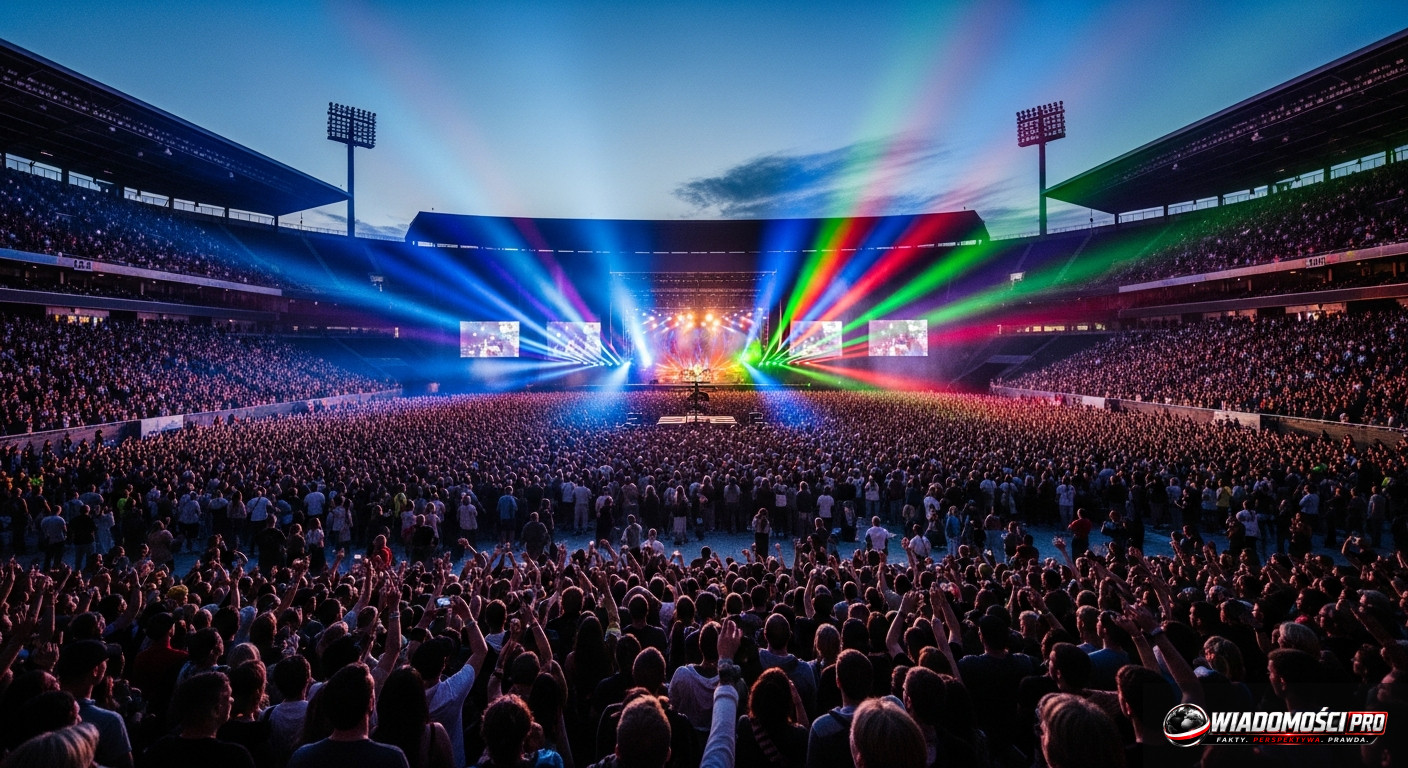
Bond with fans: 100,000 people during the June concerts
The phenomenon of Dawid Podsiadło is not based solely on numbers. In June 2026, nearly one hundred thousand fans took part in his concerts, which once again confirms the artist's status as a giant of the Polish scene. However, this success would not have been possible without the model of building relationships with the audience developed over the years. Podsiadło, despite the stadium scale, consistently focuses on moments that bridge the distance between the stage and the stands. An example was the crowd singing "Sto lat" together for Maja Chwalińska. This is not a scripted interaction, but a natural reflex of the audience, which in a large format looks for authenticity.
However, attendance does not always go hand in hand with reception comfort. Critics pointed to problems with sound reinforcement, which at such a huge scale becomes a technical challenge that is difficult to overcome. There were voices that for some viewers, especially those in the further sectors, the sound quality left much to be desired. Nevertheless, the balance of profits and losses seems clear – for the majority of participants, experiencing the moment together is more important than perfect sound.
What this means for you
Dawid Podsiadło's success means the full professionalization of the Polish concert market. Stadium organizers and fans benefit, receiving access to world-class spectacles. However, the growing scale of events brings technical challenges, such as the need to take care of the acoustics of facilities with enormous volume, which remains a key task for organizers for future years.
Questions and answers
How many stadium concerts did Dawid Podsiadło play in 2024?
As part of the stadium tour in 2024, the artist planned seven concerts in the largest cities in Poland.
How many spectators did the concert in Chorzów gather?
The concert in Chorzów attracted 90,000 listeners, which was one of the most important achievements of this tour.
Is the stadium tour being continued in 2026?
Yes, in September 2025, the 'Obrotowy Tour' was announced, which takes place in 2026.
Sources
- Nearly one hundred thousand Dawid Podsiadło fans sang "Sto lat" to her. How Maja Chwalińska reacted - cgm.pl
- Dawid Podsiadło and his stadiums. By the numbers - Red Bull
- Podsiadło put on a show in Chorzów for 90,000 people. It's a pity that half didn't hear it - naTemat.pl
- Dawid Podsiadło. Tickets sold out! There will be an additional concert at Polsat Plus Arena Gdańsk! - Gdańsk - official city portal
- Dawid Podsiadło announces seventh stadium concert on the tour! "I doubt that ever in my life, a month like June 2024 will await me" - Tarczyński Arena Wrocław
- Dawid Podsiadło returns to stadiums. "Obrotowy Tour" already in 2026 - Kultura Onet
- Dawid Podsiadło will play at Tarczyński Arena Wrocław in June 2024. Ticket sales start - wroclaw.pl
- Dawid Podsiadło on stadiums again. New tour in 2024 - Zwierciadło
Article prepared by the Wiadomości PRO editorial team with the support of artificial intelligence. Facts come from the sources provided above.

Komentarze (0)
Ładowanie komentarzy...