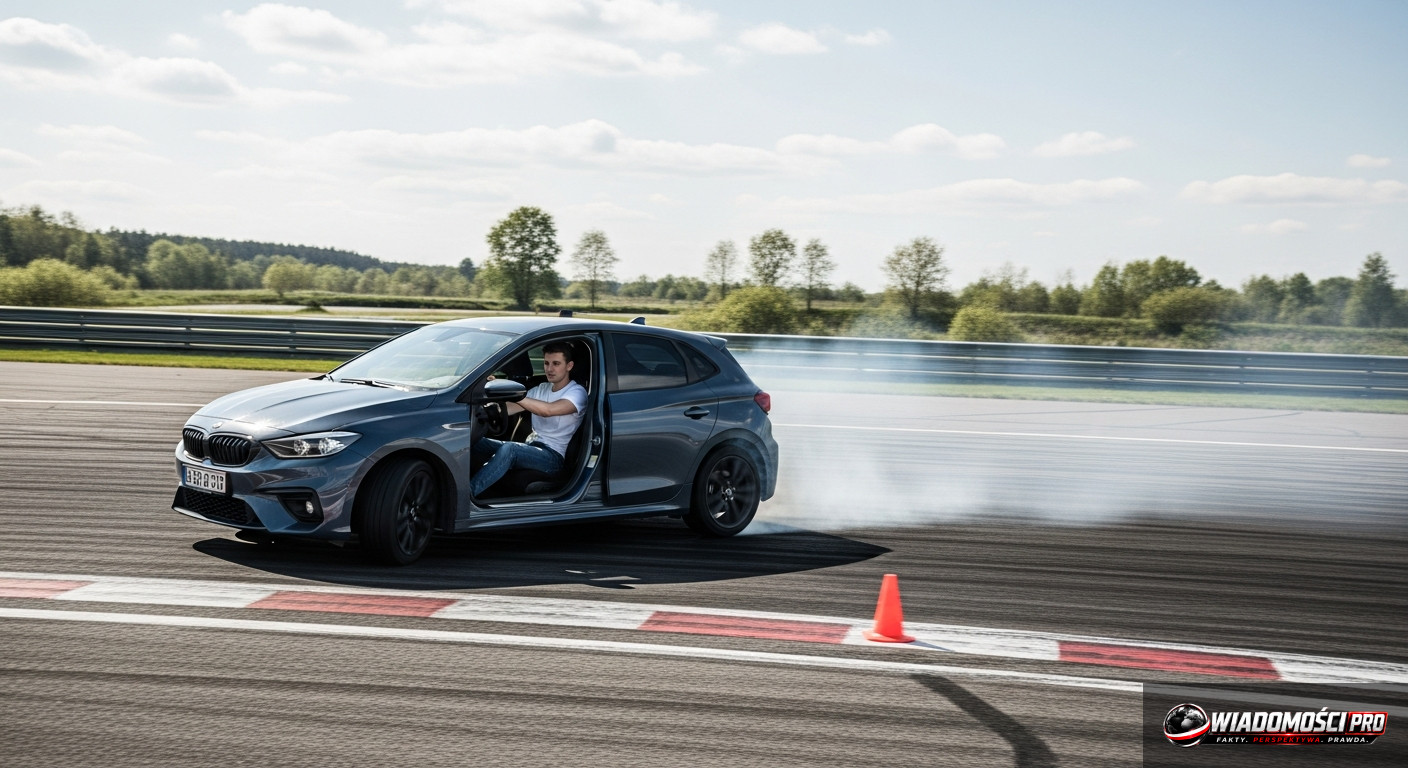
New regulations introduce a 2-year probationary period for individuals who have obtained a category B driver's license for the first time, including mandatory safety training and stricter speed limits. This solution will come into force on August 14, 2026. Every driver receiving their document on or after this date will become a participant in an administrative supervision system designed to curb reckless driving on the roads.
Characteristics of the probationary period
The two-year probationary period is a statutory mechanism that does not provide for exceptions based on the driver's age. A person obtaining their license at the age of eighteen is subject to the same restrictions as a driver who decides to take a course after the age of fifty. The deciding factor remains the date the document is issued. The twenty-four-month period is calculated from the date of physical receipt of the driver's license. During this time, the driver remains in the system under constant monitoring by control authorities.
The legislator determined that the first two years behind the wheel are crucial for establishing habits. The previous training model did not ensure the proper development of driving culture. Young drivers must prepare for the verification of their skills not only during the state exam but also during mandatory practical and theoretical training sessions held after receiving the document. Every traffic violation during this time is recorded in the central register. The margin of error for a novice has been minimized. Each subsequent offense brings the driver closer to losing their license.

Mandatory training and technique improvement
Obtaining a category B driver's license does not end the moment the document is collected from the communications department. New requirements impose on drivers the necessity of completing additional classes at Driving Technique Improvement Centers (ODTJ). These are certified facilities equipped with skid pads that allow for the simulation of difficult road conditions.
The training program consists of two pillars. The first is a supplementary course on road safety. During this, instructors emphasize the psychological aspects of driving and the dangers resulting from speed. The second pillar consists of practical classes. Participants must demonstrate the ability to control the vehicle in extreme situations, such as a sudden skid or the need to perform an emergency braking maneuver.
Failure to complete these training sessions by the specified deadline results in the revocation of driving privileges. A driver who ignores this obligation loses the right to drive vehicles according to the letter of the law. This solution is intended to ensure that every novice driver goes through a stage of practical training in controlled conditions before they begin to participate in road traffic independently under full rules.
Speed limits and vehicle markings
Speed restrictions during the probationary period are absolute. Drivers subject to supervision must adhere to strictly defined limits, which are more rigorous than those provided for experienced road users. This applies primarily to national roads and motorways. However, the current act does not specify concrete speed values in kilometers per hour, leaving this issue to be detailed in executive acts.
In addition to speed limits, a requirement for the visual identification of novice drivers has been introduced. For the first eight months after the document is issued, a vehicle driven by a person in the probationary period must display a marking in the form of a green leaf placed on the car's windshield. This solution is controversial. On one hand, it allows for greater understanding from other drivers; on the other, it creates a risk of young people being perceived as less confident road users, which may lead to aggressive behavior. The police have gained a tool allowing for faster verification of licenses during routine checks.
Consequences of violations: summary of penalties and costs
The penalty system has been constructed to act as a deterrent. The legislator has abandoned the lenient approach in favor of clear, mathematical consequences.
| Type of consequence | Mechanism details | Result for the driver |
| :--- | :--- | :--- |
| Extension of the probationary period | Two traffic violations within 2 years | Automatic extension of supervision by another 24 months |
| Loss of privileges | Third traffic violation | Revocation of driver's license and the need for re-examination |
| ODTJ training costs | Mandatory practical and theoretical classes | Expense of 300–500 PLN (depending on the center) |
| Increase in OC premiums | Insurer risk | Higher premium rates for initial OC policies |
Revocation of privileges means the full return path. A driver who loses their license must re-enroll in a course, undergo medical examinations, and pass the state exam under the same rules as a person applying for the document for the first time. There are no shortcuts. Every decision behind the wheel carries a high financial and administrative risk.

Economic aspects for beginners
The introduction of a two-year probationary period generates direct costs. In addition to standard fees for the course and exam, young people must reserve funds for mandatory training at ODTJ. Market estimates indicate that this amount ranges from 300 to 500 PLN for a full package. For many people, this is a significant expense.
The issue causing the most concern remains the impact of the probationary period on the cost of insurance premiums. Insurance companies treat young drivers as a high-risk group. The introduction of two-year supervision is a clear signal for insurers to revise existing tariff schedules. It can be expected that OC policies for drivers in the probationary period will be more expensive than before. The insurance industry is waiting for the first months of the regulations to take effect to establish rigid price brackets. However, an upward trend seems inevitable. The system promotes individuals with many years of accident-free driving, which means that gaining experience in the first years behind the wheel is becoming a costly investment.
Work schedule on the regulations
The Council of Ministers decided to finalize work on the act on August 14, 2026. This step initiated the formal legislative path that led to the introduction of significant corrections to the Act on Vehicle Drivers. The legislative process was long-term and included numerous consultations with road safety experts. Officials justified the changes with accident statistics. Data from 2024–2025 indicated that people with short driving experience are overrepresented in the group of perpetrators of road incidents.
Planning exams in the fourth quarter of 2026 requires students to take into account the new legal status. People who finish the course before August 14 will not be covered by the new rigors, provided they obtain their license before the regulations come into force. Others must count on a two-year probationary period. The introduction of such a short vacatio legis has sparked a discussion about the readiness of training centers to handle the large number of students who will need to undergo mandatory additional training. Training infrastructure is sometimes less flexible than legislation.
Impact on driving culture
The long-term goal of the introduced changes is to change the driving culture in Poland. The legislator focuses on an approach where mistakes made on the road result not only in a financial penalty but also in the loss of the privilege of holding a driver's license. Experts point out that the system is restrictive but may bring real results in the area of safety. The greatest risk occurs in the first months after receiving the document. It is then that a young driver, having felt confident, often takes risky maneuvers. Mandatory training at ODTJ, confronting them with vehicle physics in difficult conditions, is intended to cool this enthusiasm and make them aware of how easily one can lose control of a car.
For young drivers, this means the necessity of adaptation. Driving with a green leaf and the awareness that every violation is recorded creates pressure. It is felt as burdensome, yet from the legislator's point of view, it is necessary for improving accident statistics. Whether the system will actually affect the number of road incidents will become clear after the first years of the regulations being in force.
Perspective for those entering the system
For young people preparing for the exam in the coming months, 2026 means organizational changes. The necessity of planning a budget for additional training and adapting to stricter speed limits are becoming the new daily reality. The probationary period applies only to those who obtain their license after the amendment comes into force. People who already hold the document do not need to worry about additional burdens or mandatory training.
The Ministry of Infrastructure communicates that the grace period for novice drivers is becoming a thing of the past. Instead of a lenient approach, the system introduces a model of skill verification in road conditions. This is intended to be a guarantee of a higher level of safety for all road users. Will the bureaucracy associated with additional training overshadow the real goal, which is education? Statistics from the first two years of the system's operation will answer this question. Young drivers will have to approach the issue of holding a driver's license with more responsibility than previous generations.
Questions and answers
Does the probationary period apply to people who already have a driver's license?
No, the new regulations apply only to people who obtain a category B driver's license after the amendment comes into force.
Where will it be possible to complete the mandatory training?
Training will be carried out in certified Driving Technique Improvement Centers (ODTJ) across the country.
Is the green leaf on the windshield mandatory?
Yes, the regulations provide for the obligation to mark the vehicle for the first 8 months of the probationary period so that other road users know that the driver is a beginner.
What happens if a young driver commits two violations during the probationary period?
The system will automatically extend the probationary period by another 24 months, which means further administrative supervision and greater pressure for error-free driving.
What are the consequences of a third violation during the probationary period?
The third violation results in the automatic revocation of privileges. The driver loses their license and must go through the full procedure of obtaining the document from scratch, including the course and the state exam.
Is training at ODTJ paid?
Yes, mandatory road safety training and practical classes at ODTJ are paid for by the driver, and their cost is estimated at 300–500 PLN.
Since when exactly do the new regulations apply?
The amendment comes into full force in November 2026, while the key date for people receiving their driver's license is August 14, 2026, when the government adopted the draft act, triggering the final legal mechanisms.
Are there special speed limits during the probationary period?
Yes, the act introduces restrictive speed limits on national roads and motorways for drivers with short experience, which aims to reduce the number of accidents resulting from recklessness.
Will insurers change policy prices for people in the probationary period?
An increase in OC rates should be expected, as insurers treat the group of drivers in the probationary period as a higher collision risk, which results from statistical analysis.
Do you have to exchange the document after the probationary period ends?
The probationary period expires automatically after 24 months without the need to exchange the physical document, provided the driver has met all requirements, including completing mandatory training.

For those applying for a driver's license, the upcoming changes mean the necessity of changing their approach to learning to drive. It is no longer just an exam at the WORD (Regional Traffic Center), but real responsibility for safety that lasts for the first two years after receiving the document. The administrative approach to drivers is an attempt to eliminate the most dangerous road behaviors at their source.
The growing role of Driving Technique Improvement Centers (ODTJ) may in the future influence the standards of education in driving schools. Since the state exam is to be only an introduction to further education, the emphasis on practical skills will become even more visible. Young drivers who invest time and resources in this training may gain not only peace of mind during the probationary period but, above all, real skills useful in crisis situations.
The Polish driver training system is becoming more harmonized with solutions used in other European countries, where probationary periods for novices have been the standard for years. Although the introduction of these regulations stirs emotions, road safety requires modern solutions. Time will tell whether the rigorous approach will bring the expected results in the form of a decrease in the number of road accidents.
Every system is only as effective as the people who enforce it. The police, facing the challenge of controlling the new regulations, will have to demonstrate great efficiency in verifying the status of drivers in the system. In turn, drivers will have to get used to the fact that their history on the road is recorded more detailedly than ever before.
Giving up the current freedom in favor of a two-year supervision period is a new reality that must be adapted to. The debate around these changes is heated, but the legislator seems determined not to withdraw from the adopted assumptions. For future drivers, this means one thing: being behind the wheel in 2026 will require greater maturity, the ability to anticipate situations on the road, and a readiness to continuously improve one's qualifications. This is no longer just a matter of passing an exam, but a matter of a continuous, two-year learning process that verifies the character and skills of every novice.
In the face of such significant changes in the Act on Vehicle Drivers, it is worth following official government announcements and information published by communications departments. Every change in traffic regulations involves the necessity of updating knowledge, which should become a habit for novice drivers. Safety on the road depends on the awareness of participants, and the two-year probationary period is an attempt to build this awareness on solid, practical foundations. Whether this will succeed, we will find out in the coming months after the regulations come into force.
Anyone planning to obtain a driver's license in the near future should take these factors into account. It is not worth putting off the decision about the course until the last minute if one can avoid additional rigors, however, for those who pass their driving test after August 14, 2026, the probationary period will become a natural element of the adventure with motoring. Awareness of the challenges ahead will allow for better preparation for the new role, which is being a full-fledged, albeit system-monitored, road user.
The two-year supervision time is a period in which the driver undergoes a final test. It is a time to verify what was learned in the course with what the actual road offers. Using this time to learn humility behind the wheel is the most reasonable strategy a young driver can adopt. Regardless of opinions about the severity of the new regulations, safety remains a superior value for which it is worth adapting to new legal requirements.
The upcoming changes are undoubtedly one of the most important events in Polish road law in recent years. The introduction of a probationary period is a signal that the state is approaching the topic of young driver safety in a systemic way, abandoning ad-hoc actions in favor of permanent solutions. Whether these actions prove effective will only be shown by time and road statistics. Until that moment, young drivers must prepare for a new reality in which every decision on the road carries measurable consequences.
A driver's license is a privilege that can be easily lost if safety rules are not respected. The new regulations only remind us of this fundamental truth, adding concrete control mechanisms to it. For ambitious and prudent drivers, the probationary period should not be a cause for concern, but rather a time to consolidate safe habits that will pay off for years to come behind the wheel.
The system is entering a testing phase in real-world conditions. For all those interested, the key will be to remain vigilant and follow the new rules. Safety is a joint effort, and young drivers, through their behavior on the road, have a real impact on how they will be perceived by the legal system and other road users. The future of Polish motoring depends to a large extent on how effectively these changes can be implemented into daily driving.
Sources
- Driving test 2024. New regulations introduced significant changes - Dziennik.pl
- A revolution for drivers is coming. Better to get your driver's license quickly - Interia Motoryzacja
- Changes for drivers from June. Examiner explains - TVN24
- Drivers will breathe a sigh of relief. New regulations from September 10 - Gazeta Prawna
- Changes in driver's license. New regulations are coming - PolsatNews.pl
- Rules for the driving test at the last minute - Rzeczpospolita
- New rules for driving tests. Changes already on January 1, 2024 - Dziennik.pl
- Changes in driving tests. Will the new regulations make it easier to obtain the document? - TVP Kielce
Article prepared by the Wiadomości PRO editorial team with the support of artificial intelligence. Facts come from the sources provided above.

Komentarze (0)
Ładowanie komentarzy...