In brief
- The Fed cut interest rates by 50 basis points, setting a range of 4.75-5.00%.
- The decision is the result of falling inflation, as confirmed by data from August 2026.
- The Federal Reserve's move triggered immediate reactions on global stock exchanges and currency markets.
Fed decision: The move global markets were waiting for
Fed decision: The move global markets were waiting for
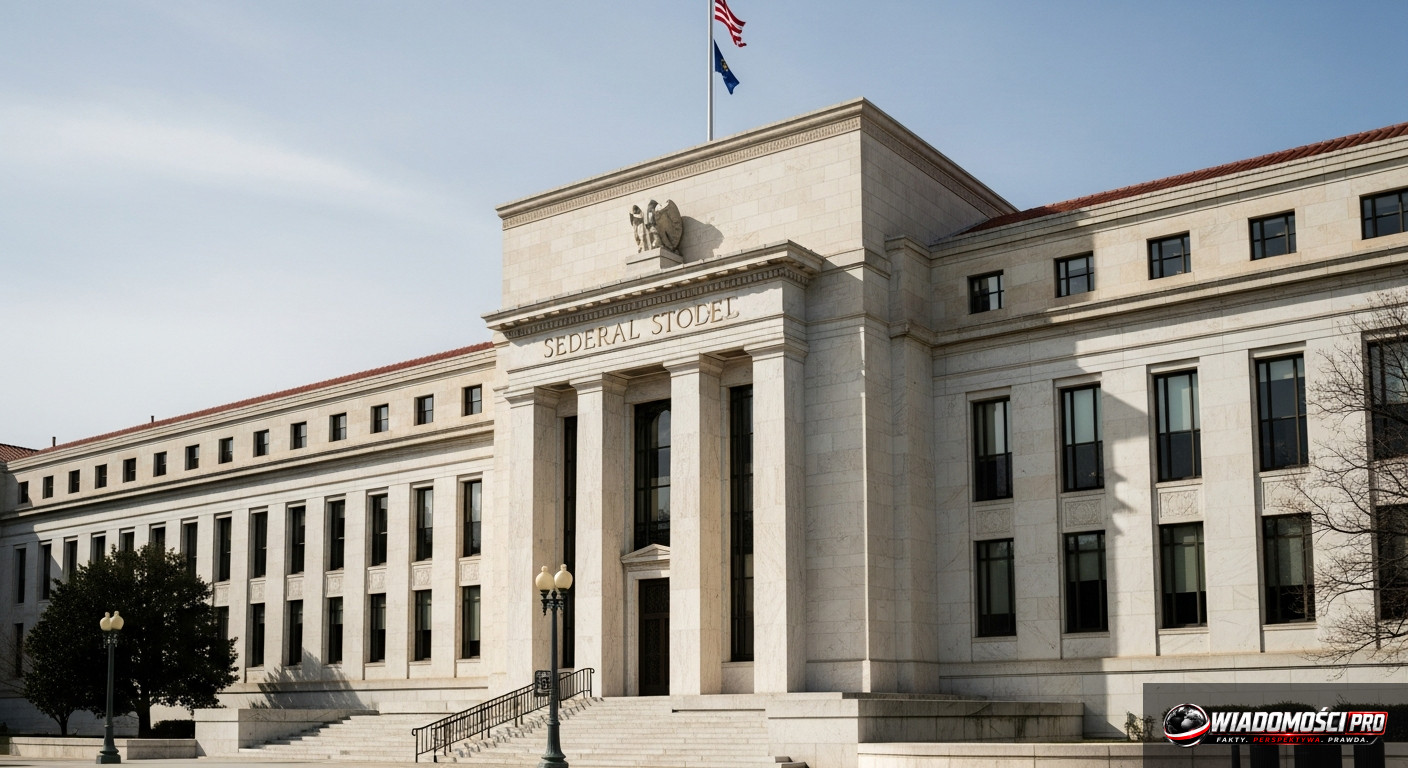
The US Federal Reserve has ended a period of uncertainty by deciding to cut interest rates by 50 basis points. This is a move that investors have been looking forward to for months, awaiting a clear signal from Washington. As a result of this move, the new interest rate range was set at 4.75-5.00%. The August announcement marks the end of speculation regarding monetary policy, which has dominated analytical reports and agency dispatches over the last few quarters.
The scale of this adjustment is significant. The market, which had long lived in a mode of waiting for stabilization, received a concrete cut rather than a cosmetic change. For the American economy, this means cheaper credit, but also a clear message from the central bank regarding its assessment of the country's financial health. Over the past months, the Fed has been under strong political and economic pressure, which meant that every statement was analyzed for hidden intentions. Now, the cards are on the table.
From the perspective of financial markets, 50 basis points is not just a technical adjustment. It is a signal that policymakers at the Fed have recognized that the room for maintaining a restrictive policy has been exhausted. Investors, who in recent years have become accustomed to uncertainty and frequent forecast changes, have received hard data. However, the question remains about the further path of inflation and whether this move will not prove to be too quick an opening of the door to renewed price pressure. For now, however, stock market bulls are celebrating, and capital is beginning to flow in a wide stream toward risky assets, counting on the fact that a cheaper dollar and lower cost of capital will drive corporate earnings in the coming quarters. Such decisions are rarely cost-free, although the market seems to be forgetting that today.
Why 50 basis points? Analysis of the fundamentals
The decision to cut rates by 50 basis points, bringing the cost of money to the 4.75-5.00% range, did not come from a vacuum. The key argument was the inflation data published on August 12, 2026. The market took it as a signal to celebrate because we finally received hard evidence of a lasting slowdown in the pace of price growth. After months of nervous waiting, the American central bank decided that continuing to maintain such a restrictive monetary policy was no longer necessary to protect the economy from overheating.
Pressure on Federal Reserve policymakers had been palpable for a long time. Already in analyses from July 2025, it was pointed out that the Fed was on the political defensive and had to respond to the growing expectations of economic circles. At that time, however, the institution preferred to adopt a wait-and-see strategy, often surprising markets with a lack of decisive moves. This time, the dynamics were different. A clear stabilization of inflation indicators gave the Fed board a mandate to make a more decisive cut, rather than the conservative quarter-point adjustments that characterized previous meetings.
Does this mean the end of the trouble? Not necessarily. Although markets reacted with clear optimism in the euphoria after August 12, it must be remembered that a sudden change of course often results from fears of recession, and not solely from success in the fight against high prices. The Fed has finally stopped clinging to high rates, but it did so at a moment when the US economy began to catch its breath. Investors who had been demanding monetary easing for months got exactly what they asked for. However, the question remains whether this move is a preemptive rescue action or just a delayed reaction to a real economic slowdown that could no longer be ignored.

Reaction of Wall Street and global markets
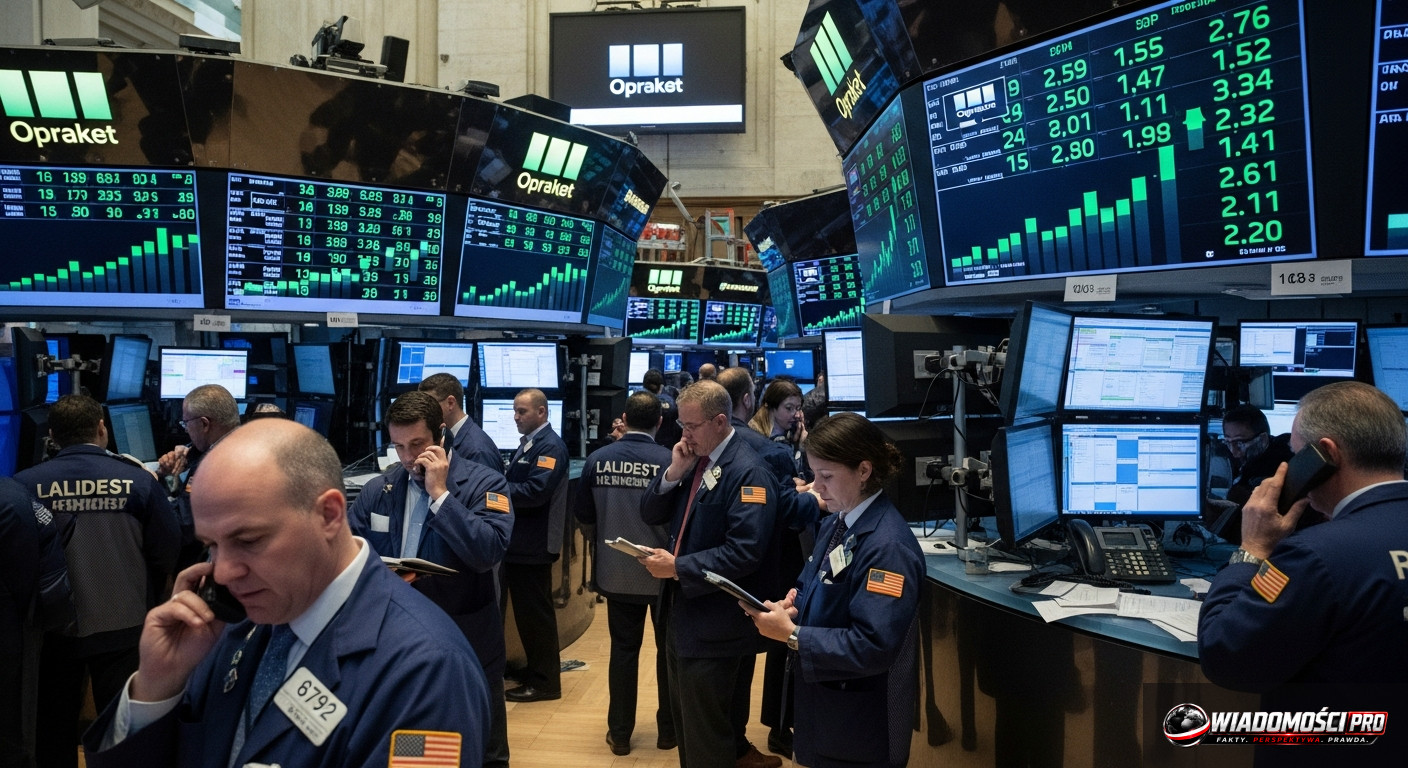
The US Federal Reserve has lowered interest rates by 50 basis points, setting a new range at 4.75-5.00%. Investors on Wall Street, who until recently recalled with dread the market skepticism of September 2024, this time accepted Jerome Powell's message with clear relief. Those fears of stock market disappointment, resulting from the stagnation in monetary policy, have become a thing of the past.
Today's decision on 50 basis points was received by the trading floors as a clear signal supporting liquidity. The market did not need a long time to adapt to the new conditions. Money, which until now was expensive and "frozen" in bonds, began to flow toward riskier assets. This is visible to the naked eye in the quotes of technology companies, which, after months of defensive strategy, are again gaining in valuation. A change in the monetary policy cycle is oxygen for them, which they have been waiting for since the Fed held its breath waiting for hard inflation data.
Financiers, however, have reasons for moderate concern. Although cheaper credit improves margins and facilitates operational financing, banks must now face pressure on their own interest income. Valuations in the financial sector are balancing on the edge of euphoria and cold calculation as to whether the Fed did not react too late to save the momentum of economic growth.
Global markets, from Frankfurt to Tokyo, followed the American S&P 500 index, treating the Fed's move as permission to loosen their own policies. This is not a simple path upward, however. Investors know that after such a cut, the margin of error for policymakers in Washington has decreased drastically. Every subsequent inflation reading will now be analyzed under a magnifying glass because the market has stopped believing in a "soft landing" as a certainty. Now it is a pure game of maintaining momentum.
What does this mean for borrowers and investors?
What does this mean for borrowers and investors?
The Federal Reserve's decision to cut rates by 50 basis points to the 4.75-5.00% range ends the waiting period that has plagued markets for the past months. It is a clear signal of a change in monetary policy, which immediately shifts the emphasis in investment portfolios and debtor calculations. Money has become cheaper, and financial mechanisms are reacting to this move almost in real time.
Here are the direct consequences of this change for the market:
- A reduction in the cost of money in the US translates directly into the yield of treasury bonds. A drop in their yield is a signal to investors that the safe havens used so far are no longer providing satisfactory rates of return.
- For investors, this is a strong impulse to revise portfolios toward riskier assets. Capital that until now was hiding in safe bonds is beginning to look for higher profits on stock exchanges or in commodities, which may trigger a wave of buying in stock markets.
- Borrowers can expect a decrease in the costs of servicing debt denominated in dollars. Every basis point less in the interest rate valuation is a real relief for companies and entities whose debt is based on the dollar reference rate.
The catch? The market had long been pricing in a similar scenario, so the euphoria may be short-lived. Investors who were counting on a faster and deeper scale of easing may feel some dissatisfaction. The real test for this decision will not be today's quotes, but the pace at which a cheaper dollar will influence the real investment decisions of corporations in the coming quarters. Borrowers have gained some breathing room, but they must still reckon with the fact that the cost of capital will not return to the levels known before the pandemic. This is not a return to the era of zero interest rates, but merely a course correction.
USA versus the rest of the world: Eurozone and Poland
The Federal Reserve's decision to lower interest rates by 50 basis points to the 4.75-5.00% range does not take place in a vacuum. It is a signal that the American central bank is ending the era of restrictive policy, forcing the rest of the world to revise its own plans. Financial markets are now looking at Frankfurt and Warsaw, wondering whether their policymakers will dare to take a similar step or rather remain on the defensive. The history of the last two years shows, however, that central banks rarely act in full synchronization.
When the Fed makes such a decisive move, other institutions are still stuck in decision-making paralysis resulting from different inflation priorities. Investors' expectations often diverge from the actual moves of central bank governors. Below is a summary of the latest significant decisions that show the scale of the divergence in the global approach to monetary policy:
- European Central Bank (ECB) — interest rates kept unchanged in September 2025 (Source: Analizy.pl, 11.09.2025).
- Monetary Policy Council (RPP) in Poland — decision to keep interest rates unchanged in September 2024 (Source: Miesięcznik Finansowy BANK, 04.09.2024).
The divergence between the actions of the USA and the rest of the world is clear. The Fed's actions set a new trend in global monetary policy that other central banks must deal with. If the United States enters an easing cycle, the pressure for the dollar to strengthen may begin to fade, which theoretically gives room for the ECB or the NBP to loosen monetary policy in the future. However, looking at the restraint shown so far by policymakers in Europe, it is difficult to expect them to copy Washington's moves automatically. In this game of interests, every central bank looks after its own backyard, and the American "big cut" is more of a challenge for local economies than an impulse for immediate imitation. Investors who were counting on a global wave of easing may feel disappointed by the pace of the reaction outside the US.
Outlook for the end of 2026
Outlook for the end of 2026
After a long period of waiting, which we remember perfectly from January 2026, when the market was desperately looking for any signs of stabilization, the situation has finally moved. Official data confirms: the US Federal Reserve has lowered interest rates by 50 basis points, setting a new range at 4.75–5.00%. This is a clear signal that the economy is entering a decisive phase of monetary policy easing, moving away from the restrictive belt-tightening that has weighed on investors over the last few quarters.
The question is what will happen after this move. Not all analysts are equally optimistic. Although the current Fed decision gives markets a breather, experts clearly point to the need for further, careful observation of inflation before taking any further steps in the fourth quarter. This is not an automatic start to a series of cuts. Jerome Powell and his associates remain in "wait and see" mode, and their next moves will be directly dependent on hard macroeconomic indicators flowing in from the end of the year.
For investors, this means one thing: a time of increased vigilance. On one hand, we have a retreat from high rates, which theoretically supports stock markets and cheaper credit. On the other – the specter of inflation still hovers over the American market, limiting the central bank's room for maneuver. Every consumer price index reading in the coming months will now be analyzed under a microscope. If the data does not confirm a lasting fading of price pressure, the Fed may quickly hit the brakes. Market optimism is therefore justified, but certainly not uncritical. Now we are waiting for the autumn reports from the American labor market. These will show whether the current cut was sufficient fuel for the economy or just a short episode in the fight for stability.

What this means for you
For the average investor, this is a signal that the era of expensive money in the US is coming to an end. Holders of stocks and bonds will gain, while holders of cash in dollars may feel a decrease in the attractiveness of deposits. The catch lies in the pace at which the US economy will react to this easing – if a recession occurs, the cut may only be the beginning of a deeper change.
Questions and answers
By exactly how much did interest rates in the USA fall?
The Federal Reserve lowered rates by 50 basis points, setting the range at 4.75-5.00%.
Why did the Fed decide on such a cut in August 2026?
The main reason is a clear drop in inflation, which allowed for the loosening of monetary policy.
How does the Fed's decision affect other central banks?
The Fed's decision often sets a global trend, although banks such as the ECB or the Polish RPP make decisions based on local macroeconomic data.
Sources
- September without a rate hike? Market celebrates inflation drop - Parkiet
- Trump got his way. Fed resumed interest rate cut cycle - Bankier.pl
- Fed holds its breath. Market expects rate stabilization in the US - Money.pl
- September Fed decision may disappoint stock markets. Debate around possible interest rate cut in the US - Strefa Inwestorów
- Rates in the eurozone unchanged for the second time in a row - Analizy.pl
- RPP did not change interest rates in September '24 - Miesięcznik Finansowy BANK
- Half the world was waiting for this decision. Fed indicated interest rates in the US - Money.pl
- Federal Reserve under pressure from Donald Trump. Time for a key decision - Business Insider Polska
Article prepared by the Wiadomości PRO editorial team with the support of artificial intelligence. Facts come from the sources listed above.


Komentarze (0)
Ładowanie komentarzy...