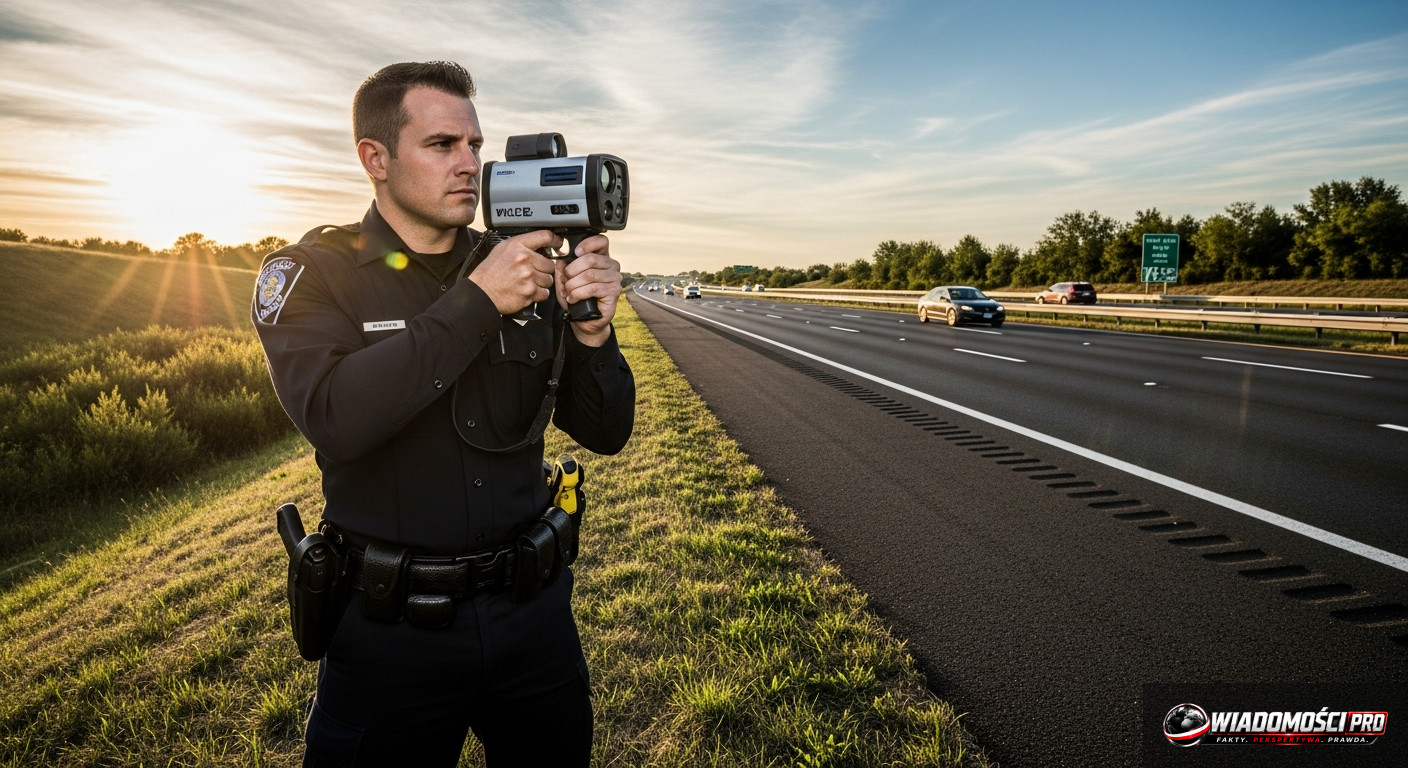
The amendment introduces a two-year probationary period for young drivers, during which any gross violation of regulations results in the immediate loss of driving privileges. For a gross violation, defined as exceeding the speed limit by at least 50 km/h in a built-up area or driving under the influence of alcohol, the driver's license is revoked for life. The legislator has also introduced an absolute prison sentence for participating in illegal street races, which constitutes a paradigm shift in Polish traffic law.
Probationary period: A new standard for novices
The two-year probationary period for those who have obtained category B driving privileges for the first time is not just a formal entry in the CEPiK system. It is a rigorous control mechanism that changes the status of a newly licensed driver for twenty-four months from the date the document is issued. During this time, every driver is under special supervision by law enforcement and the IT system that records offenses. The margin for error during this period is kept to a minimum.
The legislator has imposed an obligation to undergo additional training in road safety. These trainings take place in designated centers and include both theory and practical techniques for recovering from skids and reacting in emergency situations. Failure to confirm completion of these classes in the system results in the automatic expiration of privileges. A driver who ignores a summons to training loses the right to drive vehicles on the day the deadline for its completion expires.
The CEPiK system has been integrated with police databases in a way that precludes manual modification of a driver's history. Every offense recorded by speed cameras, section speed control systems, or traffic patrols is assigned to a specific profile. During the probationary period, penalty points are calculated according to a stricter scale. Exceeding the penalty point limit does not just lead to a referral for psychotechnical tests, but opens a path to the definitive revocation of the driver's license without the possibility of regaining it through a re-examination.
From a technical point of view, this supervision is intended to force defensive driving habits. The Ministry of Infrastructure assumes that early elimination of risky behaviors will translate into a long-term improvement in accident statistics. Data from 2024–2025 showed that the group of drivers aged 18–24 is overrepresented in statistics for high-severity traffic incidents. Therefore, during the two-year probationary period, the system does not provide for a gradation of penalties for offenses considered gross.
Speed under the microscope: New limits and rigor
Since August 14, 2026, Polish regulations define a gross violation of regulations in a way that leaves no room for interpretation. The main criterion is exceeding the speed limit by 50 km/h in a built-up area. This is the threshold beyond which the police are required to seize the driver's license, and the court, in an expedited procedure, rules for its lifetime revocation. The legislator concluded that in built-up areas, where pedestrians and cyclists are present, speed is the main factor determining the survival of road users.
The monitoring system has been equipped with algorithms that detect chronic speeding. If, during the two-year probationary period, a driver is caught twice exceeding the speed limit by 30 km/h, the system classifies this as recidivism. In such a case, the driver's license is suspended for a period of one year, and the driver must retake the full state examination. This regulation aims to eliminate from the roads those who intentionally ignore traffic signs.
The amendment also introduces stricter limits for young drivers on expressways. While for experienced users the limit on the motorway is 140 km/h, during the probationary period, the driver is subject to restrictions intended to develop vehicle control skills at lower cruising speeds. Any violation of these limits is treated as a serious offense, resulting in an entry in the register, which is verified during every traffic stop.
In practice, this means that a young driver must count on the verification of their status in the IT system every time. A police officer with a terminal has access to the driver's full history from the moment the document was received. Not physically having the document with you does not exempt you from liability, as verification is carried out via the PESEL number. The system automatically blocks the possibility of obtaining a duplicate driver's license in the event of a ruled ban.

Lifetime loss of privileges – when is the penalty threatened?
Lifetime loss of a driver's license is a sanction reserved for cases where public safety has been directly threatened. In addition to the aforementioned speeding by 50 km/h in a built-up area, a lifetime driving ban is ordered in situations of driving under the influence of alcohol (above 0.5 per mille in the body) or intoxicants. The regulations do not provide for the possibility of shortening the ban by demonstrating "good behavior."
Another area covered by an absolute penalty is participation in illegal street races. This phenomenon, previously punished with fines or temporary bans, was moved in 2026 to the catalog of crimes against traffic safety. Participation in a race, organizing such an event, or knowingly providing a vehicle for this purpose results in a prison sentence without suspension and a lifetime ban on driving any motor vehicles. This is the most radical change in Polish traffic law in decades.
In the context of gross violations, the legislator also included causing an accident in which another person suffered bodily injury resulting in a health impairment lasting more than seven days. In such a situation, the court mandatorily orders a lifetime driving ban, unless the circumstances of the event show a gross contribution of the victim to the accident. This is a mechanism intended to eliminate people whose driving style is characterized by a lack of any responsibility for the lives of others.
Courts have received guidelines regarding the interpretation of "gross violation." This is not an evaluative concept, but a closed catalog of offenses that, by definition, carry a high probability of a fatal traffic event. The lack of discretion in this regard is intended to reduce the number of appeals and shorten the duration of criminal proceedings. For the driver, this means that at the moment the act is committed, the penalty is essentially predetermined and automated.
Evolution of regulations: From 2024 to 2026
The process of tightening regulations began at the beginning of 2024, when the Ministry of Infrastructure initiated the first changes in examining candidates. At that time, modifications mainly concerned the theoretical part of the exam, which was expanded to include issues regarding modern driver assistance systems and rules of conduct in critical situations. Dziennik.pl already indicated in February 2024 that these changes were merely a prelude to a deeper reform of the entire licensing system.
The next stage was the summer of 2024, when TVN24 and PolsatNews reported on the growing pressure on examiners regarding the rigorous assessment of practical skills. New examination standards were introduced then, which placed greater emphasis on the ability to anticipate threats than on the maneuvering technique itself. Examiners were given the authority to interrupt the exam at any time if they observed behavior indicating a lack of maturity to drive a vehicle, even if no direct violation of regulations had occurred.
In August 2025, Interia Motoryzacja reported on plans for a complete reconstruction of the probationary period system. It was then that the first official drafts appeared, assuming the introduction of lifetime bans as a tool for fighting recidivism. Gazeta Prawna confirmed in November 2025 that legislative work on these solutions had entered a decisive phase. This was a signal to thousands of candidates that the old rules were becoming obsolete and that the new legal reality would require much higher discipline.
This entire process, lasting from December 2023, when Rzeczpospolita warned about the need for changes in exams, was a logical consequence of the growing number of accidents involving young drivers. Each subsequent year brought the tightening of regulations, until August 2026, when the final regulations came into force. The current legal status is the result of a compromise between social expectations regarding safety and the state's technical capabilities in terms of law enforcement.
Is it worth rushing with the exam?
An analysis of the changes in regulations over the last three years indicates a clear trend: obtaining a driver's license is becoming increasingly difficult, and keeping it – increasingly demanding. Candidates who delayed their course must face a system in 2026 that does not give a second chance. The rush to sign up for a course in previous years was dictated by the desire to avoid not only a more difficult exam but, above all, the rigorous two-year probationary period.
Currently, the situation is clear: everyone who takes the exam must be aware of the responsibility that rests on them. There is no longer room for mistakes resulting from a lack of experience, which were previously treated leniently. IT systems, such as the modernized CEPiK, eliminate the possibility of "hiding" offenses. Every traffic incident, even of low severity, becomes part of the driver's history, which can affect their professional or private future.
For those who already have privileges, it is crucial to understand that the law does not work retroactively regarding lifetime bans, but the probationary period applies to everyone who obtained a driver's license after the amendment came into force. This means that people who passed the exam in 2025 are still subject to transitional provisions, while new drivers from 2026 enter a regime of full responsibility. Every day of delay in making a decision about training increases the risk that further tightening of regulations – if introduced – will also affect those who are only thinking about starting their training.
It is also worth noting that the costs of third-party liability insurance (OC) for young drivers in 2026 are closely linked to their history in the probationary period system. Insurance companies have gained access to data on offenses, which makes "safe driving" no longer just a matter of ethics, but of pure economics. High premiums for people with penalty points effectively discourage a risky driving style, which is an indirect but very effective tool for social control.
Summary of changes – what must every driver know?
The 2026 amendment to the regulations fundamentally changes the Polish road landscape. A two-year probationary period, lifetime loss of privileges for gross violations, and real prison sentences for racing are the pillars of the new legal order. The state has ceased to act as an educator, becoming a rigorous enforcer of regulations. For a young driver, this means the necessity of full concentration and adherence to limits from the first trip on a public road.
Key changes that came into force in 2026:
- Introduction of a two-year probationary period for all new category B drivers.
- Mandatory road safety training under penalty of loss of privileges.
- Lifetime loss of driver's license for exceeding the speed limit by 50 km/h in a built-up area.
- Lifetime loss of driver's license for driving under the influence of alcohol or intoxicants.
- Absolute prison sentence for participation in illegal street races.
- Full integration of police systems with the CEPiK database to monitor driver history in real-time.
For every road user, this means that the era of "carefree driving" has definitively ended. The police have tools that allow for the instantaneous identification of drivers covered by the probationary period and verification of their previous offenses. Every mistake that previously ended in a fine can today become a reason to initiate a procedure for the revocation of privileges. The authorities make it clear: a driver's license is a privilege, not a right, and possessing it involves the necessity of adhering to rigorous rules.
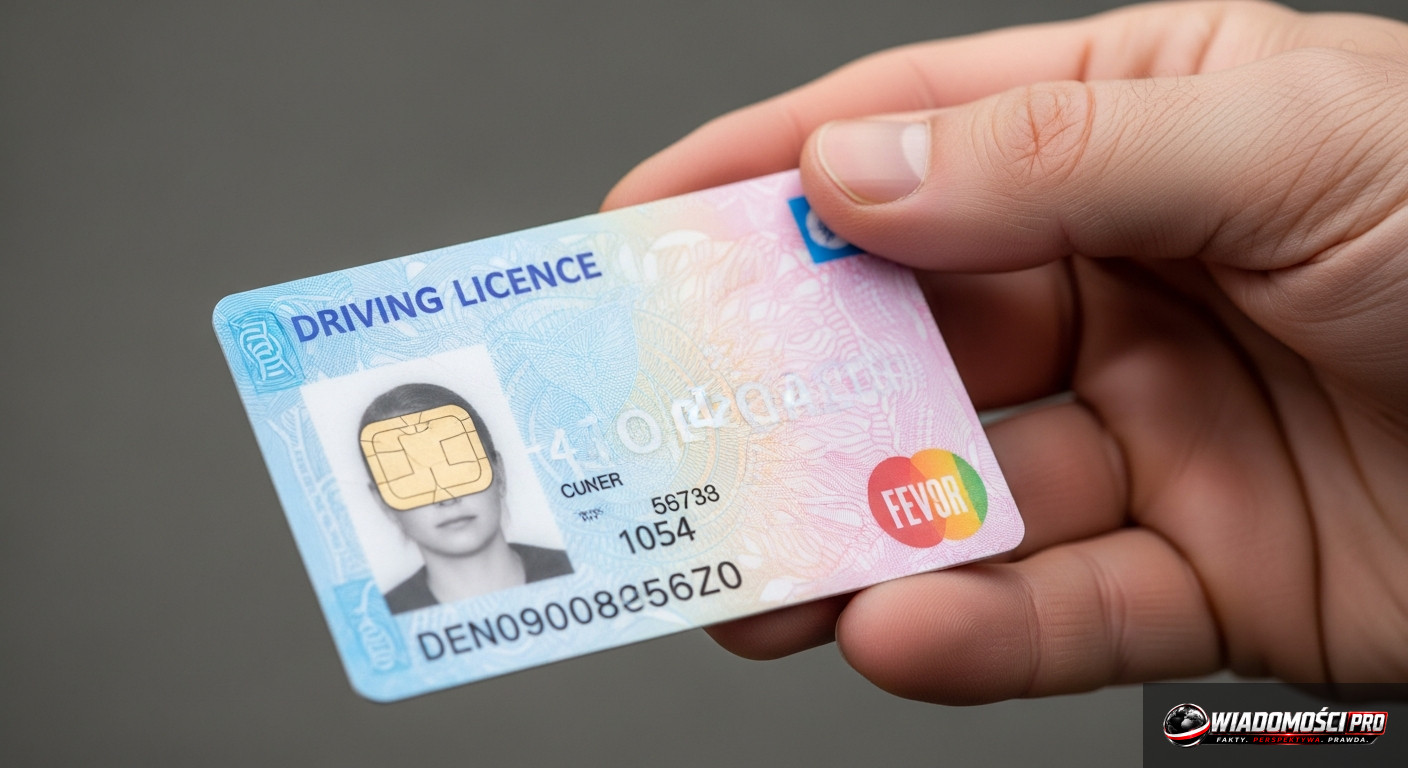
What this means for you
As a young driver in 2026, you must treat every trip on the road like an exam. The system does not forgive mistakes, and law enforcement agencies no longer have a margin for negotiation. You gain safety on the roads, provided you can adapt to the imposed pace and discipline. If, however, you count on the regulations being just a dead letter of the law, you risk the permanent loss of the ability to drive vehicles, which in today's realities is often an exclusion from many professional activities.
Questions and answers
How long does the probationary period last?
The probationary period for those who have obtained a category B driver's license for the first time lasts two years from the date the document is issued.
Do you lose your driver's license forever for exceeding the speed limit by 50 km/h in the city?
Yes, the new regulations provide for a mandatory lifetime loss of privileges to drive motor vehicles in such a situation.
Is participation in street racing punishable by prison?
Yes, participation in illegal races has been classified as a crime punishable by an absolute prison sentence.
Is training during the probationary period mandatory?
Yes, participation in additional road safety training is mandatory, and failure to do so results in the revocation of privileges.
When did these regulations come into force?
The final regulations were implemented on August 14, 2026, after the completion of the full legislative cycle.
Sources
- New regulations 2026: Lifetime loss of driver's license, prison for recklessness, ban on racing - Gazeta Prawna
- Driving test 2024. New regulations introduced significant changes - Dziennik.pl
- A revolution is coming for drivers. Better get your driver's license quickly - Interia Motoryzacja
- Changes for drivers from June. Examiner explains - TVN24
- Changes in driver's license. New regulations are coming - PolsatNews.pl
- Rules for the driving test at the last minute - Rzeczpospolita
- New rules for driving tests. Changes already on January 1, 2024 - Dziennik.pl
- Major changes in driver's license from 2024 - Strefa Biznesu
Article prepared by the Wiadomości PRO editorial team with the support of artificial intelligence. Facts are derived from the sources provided above.
Komentarze (0)
Ładowanie komentarzy...