
In brief
- A total of 40 parliamentarians were expelled: 38 deputies and 2 senators.
- Key politicians were among those expelled: Mateusz Morawiecki and Ryszard Terlecki.
- The official reason for the party court's decision is "serious violations" of the group's statute.
Scale of the purge: How many parliamentarians left the ranks of PiS?
The information chaos that gripped the media immediately after the announcement of the purges in Law and Justice shows how deep the confusion currently is within the party's structures. Editorial offices, trying to establish the actual balance of losses, provided contradictory data, which only increased the confusion in the eyes of the public. WP Wiadomości, citing sources, reported 38 deputies removed from the club. In turn, the websites Zero.pl and Fakt operated with the number of 39 parliamentarians. This discrepancy likely resulted from problems with classifying individual politicians within the party structures.
Gazeta Prawna
Mateusz Morawiecki and Ryszard Terlecki: End of an era in the party
Mateusz Morawiecki and Ryszard Terlecki: End of an era in the party
By the decision of the Peer Disciplinary Court, a total of 40 parliamentarians were excluded from Law and Justice. This is not a simple course correction; it is a political purge on a scale that Jarosław Kaczyński's formation has not seen in years. Among the removed names are politicians who, until recently, constituted the strength and image of the party. The official reason for the verdict is "serious violations," although no one in the corridors at Nowogrodzka has any doubts that it is about loyalty and an internal struggle for control over the structures.
For observers of the political scene, the biggest shock is the removal of the former prime minister. Mateusz Morawiecki, the face of the United Right governments, was officially excluded from the party, which was confirmed by almost all leading editorial offices, including Onet, Wprost, and WP. His departure closes a certain chapter in the history of PiS – the era of attempting to modernize the formation's image, which ultimately lost to the party "hardliners." Alongside him, Ryszard Terlecki was thrown overboard. Information about his removal was provided by the DTS24 service. He is a symbolic figure; for years, Terlecki was one of the chairman's most trusted men, a guardian of party discipline, who has now himself fallen victim to that very discipline.
The list of the excluded is long and has a specific structure, which shows the precision with which the operation was carried out. According to reports from PCH24.pl, the group of forty expelled politicians included:
- Mateusz Morawiecki, former prime minister,
- Ryszard Terlecki, long-time head of the parliamentary club,
- 38 deputies (according to WP Wiadomości data),
- 2 senators (information confirmed by PCH24.pl).
This is a strike at the very heart of the party's personnel base. The disappearance of such a large group of parliamentarians means for PiS not only a loss of influence in parliament but, above all, the destabilization of the regional structures from which the expelled politicians originated. The question remains about the legal and political consequences of this step – will the removed deputies create a new caucus, or perhaps move to other groups, weakening the position of their parent party in future votes? At this moment, PiS leaders have not provided a broader comment beyond a laconic statement about "serious violations." The lack of explanations only fuels the atmosphere of uncertainty, and the purge of August 13, 2026, will go down in the chronicles as the moment when the party decided to sacrifice its own foundations to save unity under Kaczyński's leadership.

Justification of the party court: What are 'serious violations'?
Justification of the party court: What are 'serious violations'?
By the decision of the Peer Disciplinary Court, a total of 40 parliamentarians were excluded from PiS. Among them were people who, until recently, co-created the party's image, including former Prime Minister Mateusz Morawiecki and the influential Ryszard Terlecki. The scale of this operation leaves no illusions. This is not a simple correction of the party's course, but a radical cut that changes the balance of power within the group in an instant.
The official reason cited by the court is "serious violations" of the statute and party discipline. These two words are a legal skeleton key that, in the political practice of PiS, shuts down any discussion. The court did not attempt broader explanations. No specific votes, speeches, or private conversations that were supposed to tip the scales were publicly indicated. In party newspeak, this formulation functions as a final verdict. The lack of detailed argumentation makes the ruling perceived more as an act of political will rather than the result of a reliable legal procedure.
Among the forty excluded are deputies and senators. Such a number means a serious shock to the parliamentary club, which suddenly loses a significant part of its personnel base. The mechanism in which the peer court merely legitimizes the purge clearly shows that there is no longer room for a plurality of opinions within the group.
Skeptics will note that "serious violations" is an extremely flexible concept. It can cover both open rebellion and simple lack of enthusiasm during important votes. For a rank-and-file party member, this is a clear warning signal. For the expelled politicians, it is an exclusion from the life of the formation they helped create for years.
Will the party withstand such a loss without damage to its strength in parliament? This question remains unanswered. At this moment, it is only known that the doors to Nowogrodzka have been definitively closed to this group. The entire procedure, which was supposed to look like an independent court, resembles more of a brutal execution of political ambitions. The excluded were not given a chance for public debate, and their removal overnight shows that in PiS, the concept of "unity" has gained a completely new, ruthless meaning. If anyone was under the illusion that there was room for differences of opinion within the party, today's court decision dispels those doubts.
Mechanism of exclusion: How did the Peer Disciplinary Court work?
Mechanism of exclusion: How did the Peer Disciplinary Court work?
By the decision of the Peer Disciplinary Court of August 13, 2026, a total of 40 parliamentarians were removed from Law and Justice. Among the excluded names were people with the greatest political weight in the formation's structures, including former Prime Minister Mateusz Morawiecki and Ryszard Terlecki. The court's ruling, which was issued on Thursday afternoon, ends long-standing speculation regarding the party's internal unity. The scale of the purge surprised even party veterans, because we are not talking about isolated cases here, but about an almost complete personnel composition that in recent months had been pointed out as a faction distancing itself from the party line.
The court, being an internal oversight body, justified its harsh ruling by the politicians committing "serious violations" of the party statute. Although the evidentiary details presented before the arbitrators remain confidential, the mode of proceeding itself indicates a desire to close the dispute instantly. The exclusion mechanism worked in an almost immediate mode. On Thursday, August 13, media such as Onet, Gazeta Prawna, and Wprost reported almost simultaneously on the finale of the deliberations, which confirms that the decision-making process was carried out in a centralized manner and without allowing the public or the interested parties themselves to have a say at the final adjudication stage.
For observers of the political scene, the action of the peer court in this form is a clear signal – the era of internal negotiations in PiS has ended. Reports indicate that apart from Morawiecki and Terlecki, the group of excluded included 38 deputies and two senators. This statistic, cited by WP Wiadomości among others, shows that the strike was aimed at a precisely defined internal electorate. The fact that the court dealt so drastically with such a large group of politicians suggests that the role of this body has ceased to be merely conciliatory and has become a tool for enforcing loyalty.
It is worth asking what this means for the functioning of the party itself. The removal of forty parliamentarians is not just a personnel reshuffle; it is, above all, the destabilization of the base that built the party's narrative for years. In this way, the party cuts itself off from its own past, risking the loss of its ability to rebuild influence in the near future. The Peer Disciplinary Court, in issuing this verdict, left no room for appeal or political negotiations. This is a purge that changes the balance of power in parliament.
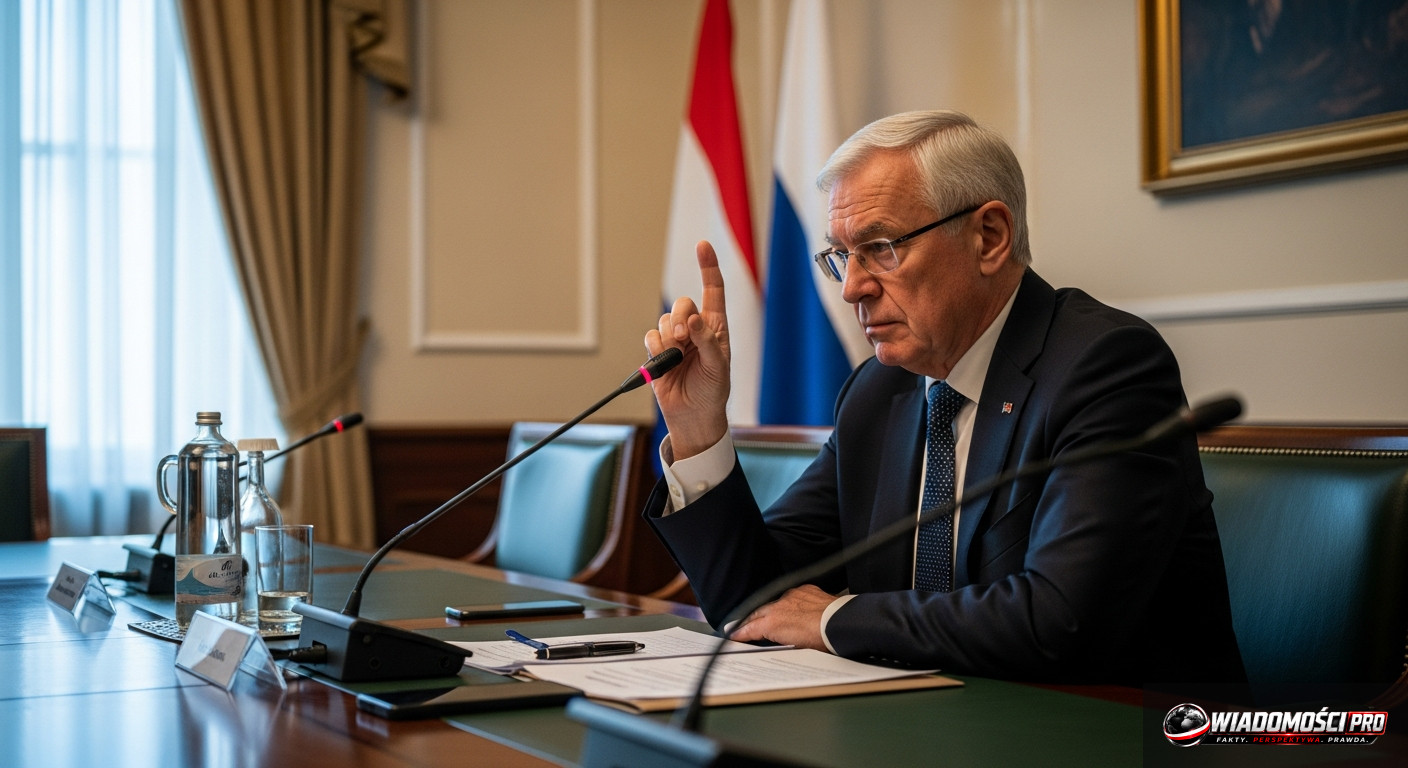
Who loses and who gains? Analysis of the balance of power in PiS
By the decision of the Peer Disciplinary Court, a total of 40 parliamentarians were excluded from PiS, including former Prime Minister Mateusz Morawiecki and the influential Ryszard Terlecki. The reason is "serious violations." This is a mathematical fact that shakes the foundations of the opposition party. The loss of such a large group of parliamentarians significantly changes the voting power of PiS in parliament and, above all, drastically weakens Jarosław Kaczyński's ability to discipline his own ranks.
A personnel analysis of this move points to an unprecedented intra-party brain and influence drain. Here is the balance sheet of the purge based on available data:
- Total number of excluded parliamentarians — 40 (Zero.pl, Gazeta Prawna, Fakt)
- Number of deputies and senators in the excluded group — 38 deputies and 2 senators (PCH24.pl)
- Main names of the excluded — Mateusz Morawiecki, Ryszard Terlecki (Wiadomości Onet, DTS24, Fakt)
The question is no longer whether PiS will survive, but in what form. The split has become a fact that not only reduces the party's holdings in the parliamentary benches but creates a new political center that may start poaching the electorate from the same conservative root. The exclusion of Terlecki, a long-time guardian of party orthodoxy, sends a signal to other activists: no one is safe. For local structures, this is a paralyzing message.
Paradoxically, Kaczyński's entourage gains from this, as they can now fill vacancies with loyalists, but they pay a high price in terms of image and strategy. The party is becoming hermetic, which in the long run almost always ends in marginalization. Now that 40 mandates are no longer part of PiS's iron parliamentary electorate, every bill will require painful negotiations or seeking votes outside their own club. This is no longer the same formation that ruled Poland for eight years. It is a hollowed-out structure that must redefine its identity in conditions of deep weakness. The excluded politicians, led by Morawiecki, will not disappear from the political map. The question of whether they will forge this "serious violation" into a new political project remains open. Kaczyński chose ideological purity at the cost of real power in parliament. This is a risky gamble that in 2026 may turn out to be the beginning of the end of PiS's hegemony on the right.
Reactions within the party: Silence or storm after the decision?
The decision of the Peer Disciplinary Court hit Nowogrodzka like a bolt from the blue. On Thursday, August 13, 2026, a total of 40 parliamentarians were excluded from Law and Justice. The justification sounds short and ruthless: "serious violations." Among those thrown out were political heavyweights: Mateusz Morawiecki and Ryszard Terlecki. This is not a simple course correction; it is a political amputation that forces one to ask about the future of the club's unity.
Inside the party, there is an atmosphere reminiscent of the calm before the storm. Many activists are afraid to speak out so as not to share the fate of the former prime minister. The communication chaos is visible to the naked eye. Karol Karski, in an interview with Wirtualna Polska, confirmed that 38 deputies were excluded. This number differs slightly from general reports speaking of 40 parliamentarians, including two senators, whose names are still not fully officially confirmed in the headquarters' statement.
The future of the 'excluded': Will a new formation be created?
The future of the 'excluded': Will a new formation be created?
By the decision of the Peer Disciplinary Court, a total of 40 parliamentarians were excluded from PiS, including Mateusz Morawiecki and Ryszard Terlecki, for "serious violations." This earthquake on the right leaves no doubt: the former leaders of the formation have found themselves in a political vacuum. Overnight, they lost not only their party cards but, above all, the organizational base they had built for years in the structures of Nowogrodzka. Now the question is what happens next with the former prime minister's political career.
The lack of party affiliation of 40 parliamentarians forces a quick reaction. Mateusz Morawiecki, who was one of the most important names in the party just that morning, must now face the question of his own future. In the parliamentary corridors, speculation immediately revived about building a new political entity. A group of 38 deputies and 2 senators is a sufficient number to create a strong parliamentary caucus in the Sejm, and with the right financial backing – also the foundation of a new center-right party. However, numbers alone are not enough.
An experienced politician knows that loyalty in crisis situations is a scarce commodity. Morawiecki may try to capture the electorate disappointed by Jarosław Kaczyński's hard line, counting on draining the party's grassroots. This is a risky strategy. Building structures from scratch, without the party machine that previously provided funding and access to the media, is a task for logistics titans. Former party members no longer have access to party funds, and the 2026 election campaign does not forgive mistakes.
The unanswered question remains Morawiecki's own attitude toward a possible split. Will he decide on an open war with Kaczyński, or will he choose political retirement, waiting for a better moment? For now, the 40 excluded politicians are in limbo. The lack of party affiliation makes them free electrons whose votes will be valuable for every parliamentary bill. For the rest of the political scene, this is an opportunity to attract well-known names. Morawiecki now has a few days to decide: does he intend to become the leader of a new force, or will he simply disappear from the front pages of newspapers, pushed out by younger players who remained in their places in PiS? Time is working against him.
What's next for PiS? Kaczyński's strategy for autumn 2026
What's next for PiS? Kaczyński's strategy for autumn 2026
By the decision of the Peer Disciplinary Court, a total of 40 parliamentarians were excluded from PiS. This group included political heavyweights: former Prime Minister Mateusz Morawiecki and Ryszard Terlecki. The official reason for such a radical step, announced on August 13, 2026, is "serious violations" of the party statute. This is not a course correction. It is a surgical cut that, in the middle of summer, changes the party's architecture before the upcoming election season.
For Jarosław Kaczyński, this is ground zero. By getting rid of such a large group of deputies and senators, the PiS chairman sends a clear message to rank-and-file members: there is no room in the party for factions that undermine central control. The scale of the expulsions, covering 38 deputies and 2 senators, suggests that tension had been building for months within the group's structures that could no longer be defused by internal debates. Now, as the dust settles, a personnel vacuum is created in the most important regions. The question of whether Nowogrodzka will manage to fill it with loyalists who will not only be obedient but also capable of conducting campaigns in the field remains open.
The strategy for autumn is becoming brutally simple. Instead of building a broad, inclusive front, Kaczyński is betting on a consolidated, ideologically pure activist base. This is a risky gambit. Removing Morawiecki, who for years was the face of the liberal-conservative wing, may discourage voters with centrist roots, on whom PiS still had to rely to dream of returning to power. On the other hand, the purge is meant to cut off speculation about internal rebellion and show voters the leader's firm hand.
The political consequences of this decision will be felt at the very next vote in parliament. PiS loses its status as a monolith, and the 40 excluded parliamentarians become free electrons who may seek a new political home or try to build their own formation. If they create a competing project, the right-wing electorate will become even more fragmented. Kaczyński, however, prefers to look at empty benches after former collaborators than at conspirators within his own ranks. Autumn 2026 will show whether this was a rational decision to heal the structures or the beginning of the end for the party that dominated Polish politics for a decade.
What this means for you
This political earthquake means the definitive end of the Morawiecki faction's dominance in PiS. Kaczyński is betting on full loyalty, but risks losing the majority in future votes. The catch lies in whether the excluded will create their own political project, which could permanently divide the right-wing electorate.
Questions and answers
How many deputies were exactly expelled from PiS?
38 deputies and 2 senators were removed from the party, totaling 40 parliamentarians.
Why was Mateusz Morawiecki excluded?
The official reason is "serious violations," adjudicated by the Peer Disciplinary Court.
Did Ryszard Terlecki also lose his membership?
Yes, Ryszard Terlecki was in the group of excluded politicians, which is confirmed by reports from August 13, 2026.
Sources
- Earthquake in PiS. Mateusz Morawiecki and 39 parliamentarians out of the party - Zero.pl
- Mateusz Morawiecki expelled from PiS. We know the ruling of the party's peer court - Wiadomości Onet
- Kaczyński expels them from PiS. 40 parliamentarians with a court decision - Gazeta Prawna
- Mateusz Morawiecki excluded from PiS. There is a court decision - Wprost
- Morawiecki expelled from PiS. Karski: a total of 38 deputies excluded - WP Wiadomości
- Morawiecki and 39 politicians expelled from PiS. "Serious violations" - Fakt
- Morawiecki officially excluded from PiS. Along with him 38 deputies and 2 senators - PCH24.pl
- Split in PiS has become a fact. Ryszard Terlecki excluded from the party - DTS24
Article prepared by the Wiadomości PRO editorial team with the support of artificial intelligence. Facts come from the sources provided above.



Komentarze (0)
Ładowanie komentarzy...