Starting in 2027, young drivers will be subject to a two-year probationary period. This system introduces additional road safety training and rigorous speed limits. Every holder of a category B driving license who receives their document after January 1, 2027, will be subject to twenty-four months of administrative supervision.
Assumptions of the amendment to the Act on Vehicle Drivers
The Sejm adopted the amendment to the Act on Vehicle Drivers in August 2026. The legislator determined that the existing training model is insufficient to prepare students for real-world road hazards. The document enters into force in 2027, and from that moment on, anyone who receives a category B driving license enters a new, two-year legal regime. This is not just a formal entry in the CEPiK system, but a specific set of restrictions and obligations. Legislators have made it clear: a lack of appropriate training during this time means an extension of the probationary period or other severe administrative consequences.
The official goal of the amendment focuses on reducing the number of accidents caused by people with little experience behind the wheel. Statistics show that a lack of experience in crisis situations is the most common cause of road incidents. Additional hours of theory and speed limits are intended to develop imagination in young people, which is often lacking on maneuvering grounds. The introduced changes exert enormous pressure on instructors and training centers, which must implement new programs at an express pace. The act becomes a solid legal foundation for every beginner driver.
The new system changes the philosophy of holding a license. Previously, the exam was the end of the road to becoming a full-fledged driver. Now, it becomes merely a pass to a two-year period in which every mistake is penalized. The Ministry of Infrastructure assumes that a rigorous approach from the very beginning will build habits that will stay with the driver for decades. From an administrative perspective, this also means full integration with the CEPiK system, where every offense will be immediately recorded.
Two-year probationary period: practical restrictions
The latest regulations, entering into force at the beginning of 2027, place young drivers in a completely new legal and road reality. After receiving a driving license, learning does not end; instead, a two-year period of special supervision begins, intended to enforce a higher level of responsibility. The legislator leaves no room for negotiation here, introducing rigid frameworks that every document holder must accept.
The freedom to which drivers with many years of experience have become accustomed will be just a dream for novices. The Ministry is focusing on a radical reduction in speed, which is intended to translate directly into accident statistics. Here are the specific restrictions that drivers in the probationary period must reckon with:
- 50 km/h in built-up areas – without exceptions, regardless of the time of day or night.
- 80 km/h outside built-up areas.
- 100 km/h on motorways and expressways.
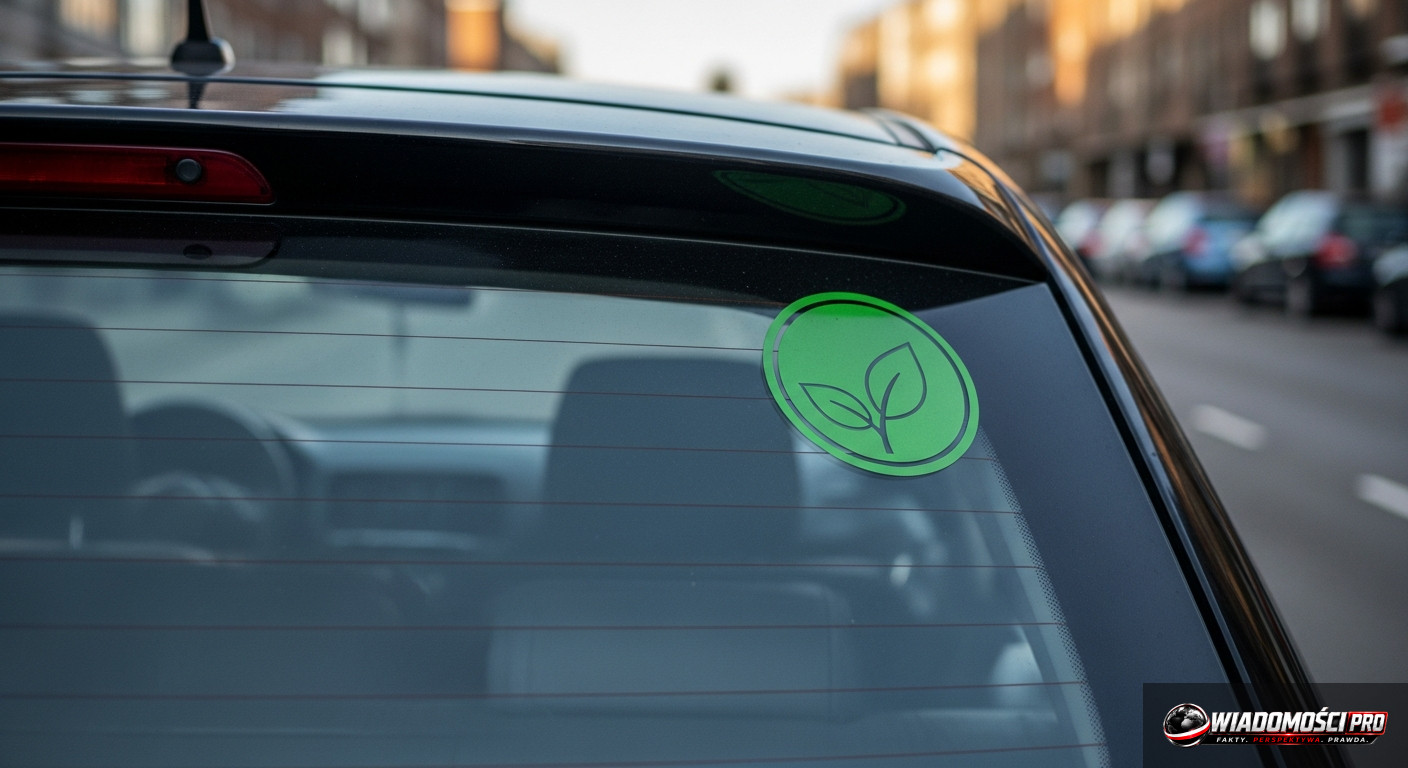
- Mandatory vehicle marking with a "green leaf" symbol sticker.
- A total ban on taking up paid work as a driver for the first 8 months after obtaining a license.
The last restriction hits particularly hard at young people planning to earn extra money as couriers or drivers in transport companies. The state cuts them off from professional driving at the start. From a safety perspective, this is an understandable move, but for many, it means the necessity of postponing earning plans. The "green leaf" requirement is intended to facilitate the identification of novices by other road users. The question remains whether other drivers will show understanding toward them or rather treat it as a signal for aggressive behavior on the road. The system is entering a live testing phase, and its real effectiveness will be verified in the first months of 2027.
Training and exams: what awaits students?
The driving license exam ceases to be the final test of skills and becomes the first stage of a long path of driver verification. From 2027, young adepts of the steering wheel will not breathe a sigh of relief immediately after picking up the document from the communications department. The Ministry of Infrastructure, aiming to eliminate recklessness among the least experienced road users, is introducing a two-year probationary period in which theory must meet brutal practice.
The systematics of the changes are rigid. Every freshly minted driver will be obliged to pass a supplementary course on road traffic hazards. This will not be another boring theory class in a lecture hall. The legislator imposes mandatory practical exercises at a Driving Technique Improvement Center (ODTJ), where, in controlled conditions, students are to see how a car behaves in extreme situations. This is an attempt to smuggle in knowledge about vehicle physics, which is missing on standard maneuvering grounds.
The catch lies in the deadlines, which leave no room for maneuvering. A young driver cannot postpone these classes indefinitely. Training must be completed within a strictly defined time window: between the 4th and 8th month from the moment of obtaining the driving license. Missing this deadline is associated with severe consequences, primarily the revocation of driving privileges.
For instructors and owners of driving schools, this is a revolution in logistics, and for students – an additional expense and time-consuming obligation. The promise of improved safety sounds noble, but in practice, a driving license will become a privilege that will have to be fought for in the months following the passed state exam. The system is becoming more restrictive, and the margin of error for beginner drivers is shrinking drastically. Every hour at the ODTJ will be monitored, and the certificate of completion of training will go directly to the IT system.
Tightened penalties for offenses
The lack of a grace period is the foundation of the new regulations entering into force from January 2027. The legislator makes it clear: mistakes behind the wheel during the two-year probationary period will be costly, and in extreme cases, irreversible. A driver with little experience will not be able to count on the understanding of the system if their driving style becomes a threat to other road users.
If, during these two years, a freshly minted driver commits two offenses against road safety, their probationary period will be automatically extended by another 24 months. This means four years under strict supervision, during which every subsequent incident may result in a referral to a mandatory re-education course. The Ministry leaves no illusions regarding gross violations. In the case of recidivism, in accordance with the tightening of regulations adopted in 2025, the driver must even count on the lifetime loss of driving privileges. This is a brutal lesson intended to eliminate recklessness from Polish roads, but for many candidates, it means the end of dreams of driving right at the start.
The legal situation of drivers in light of the new regulations:
- Extension of the probationary period: 2 years (with the possibility of extension to 4 years in case of offenses).
- Permissible number of offenses before extending the probationary period: 2.
- Penalty for gross violations: mandatory re-education course.
- Maximum penalty for recidivism: lifetime loss of driving privileges.
Such a strict approach means that every decision behind the wheel will have measurable legal consequences. Officials are counting on a deterrent effect, but for young people, this is enormous pressure that can lead to uncertainty behind the wheel. The question remains whether such a rigorous system will actually improve safety or merely exclude many drivers from traffic for minor mistakes often resulting from a lack of experience. The Ministry of Infrastructure has prepared tools that will allow traffic police to immediately verify a driver's status during every inspection. One check in the system is enough for the officer to receive information about the "probationary period" and the restrictions imposed on a given person.

Schedule for implementing changes
The introduction of a two-year probationary period for young drivers became a legal fact in August 2026. After months of discussion, the project was formally adopted, which closes the stage of uncertainty and opens the way to enforcing the regulations from the beginning of next year. For people planning to obtain a license, the date of January 1, 2027, is the final deadline when the new rigors will enter into force.
The Ministry of Infrastructure did not decide on a radical cut and introduced a safety valve in the form of a transitional period. This mechanism is intended to avoid administrative chaos in driving schools and communications departments. Thanks to it, the legal situation will depend on exactly when the document authorizing the driving of vehicles was picked up.
Key dates and rules:
- August 2026: date of official adoption of the draft act, ending the legislative stage.
- January 1, 2027: date of entry into force of regulations introducing a two-year probationary period for all new drivers.
- Transitional period: applies only to people who obtained a driving license before the end of 2026. They will not be covered by the new rigors, including additional road safety training and tightened speed limits.
For thousands of young people who fail the exam at the end of the year or whose document is issued just after New Year's Eve, January 1 will become the day they fall into a completely different supervision system. Officials and examiners signal that dates for December 2026 will fill up instantly. When planning a course, one must keep in mind that for many people, a difference of just a few days in the date of issue of the driving license will mean either full freedom or two years of life under special supervision.
This situation raises controversy in student circles. Many of them believe that it should not be the date of issue of the document that decides about being a "young driver," but the actual experience behind the wheel. However, the law is relentless. If the examiner signs the document on December 31, the driver will avoid additional training. If they do it on January 2, they will enter a system that will apply to them for 24 months.
Position of institutions and experts
The Ministry of Infrastructure leaves no illusions about the reasons for the planned amendment. The ministry directly points to alarming accident statistics, in which drivers with the shortest experience behind the wheel play the main role. Officials argue that the current training system, despite numerous modifications introduced in recent years, cannot keep up with the drastically increased traffic intensity on Polish roads. From 2027, young drivers will be subject to a two-year probationary period, which introduces additional road safety training and rigorous speed limits.
Road safety experts look at these announcements with moderate optimism, although they point to specific shortcomings in the current teaching model. They emphasize that theory and a maneuvering ground alone are not enough to develop habits that allow one to survive in real city traffic or on a motorway. They point to the need to popularize practical training at Driving Technique Improvement Centers (ODTJ), where a driver can test the vehicle's reaction to skidding or emergency braking in controlled conditions. According to specialists, it is this component that has a chance to actually reduce the number of errors resulting from a lack of experience.
The systemic approach to the problem, however, has a hidden side. Critics point out that shifting the burden of responsibility onto young drivers is merely an attempt to treat the symptoms, not the causes of the problem. Additional hours behind the wheel at an ODTJ may become just another costly administrative obligation before issuing a driving license. This obligation will hit students' wallets, which forces reflection on whether the state will sufficiently support this group in financing the required supplementary training.
Institutions dealing with driver training point to logistical problems. The capacity of ODTJs nationwide may prove insufficient to accept thousands of young drivers in a short time. There is a risk that young people will have to wait months for an available training date, which will block their path to full use of their privileges. The Ministry of Infrastructure ensures that it is monitoring the situation and planning subsidies for centers that decide to expand their offer to include courses for drivers in the probationary period.
What this means for you
For young drivers, this means a higher cost of obtaining full privileges. Additional training becomes a real financial burden that must be factored into the process of obtaining a driving license. All road users gain, because statistics have a chance to improve thanks to better preparation of novices. The catch remains the rigorous approach to offenses, which can very quickly end an adventure behind the wheel.
A driver who is just taking the exam must prepare for a mental shift. It is no longer just about passing the state exam, but about maintaining a clean record for two full years. This is a challenge that not everyone will be able to handle, especially in an era of increasing traffic intensity and ubiquitous road monitoring. Every young driver will face a choice: either adapt to the new standards or quickly say goodbye to dreams of driving a car.
It is worth looking at this more broadly. A driving license ceases to be an acquired right and becomes a conditional privilege. If a young driver does not understand that the probationary period is a time to learn humility on the road, the system will quickly eliminate them from traffic. For many, this will be a signal that a car is not just a means of transport, but a responsibility behind which stands a specific legal provision.
Questions and answers
Does the probationary period apply to people who already have a driving license?
No, the new regulations apply only to people who obtain a category B driving license after January 1, 2027. People who already hold privileges will not be covered by these rigors.
How much does additional training at an ODTJ cost?
Estimated costs of training at Driving Technique Improvement Centers range between 200–300 PLN. Final amounts, however, will be determined in executive regulations, which will specify the hourly and program scope of the classes.
Is the green leaf on the windshield mandatory?
Yes, during the probationary period, a vehicle driven by a young driver must be appropriately marked with a sticker with the "green leaf" symbol. This is intended to serve the identification of novices by other services and road users.
What happens if I don't complete the training on time?
Missing the training deadline (between the 4th and 8th month from obtaining the driving license) results in severe consequences. The legislator has provided for the possibility of revoking privileges for failure to fulfill this statutory obligation.
Can the probationary period be shortened?
No, the act does not provide for the possibility of shortening the two-year probationary period. It is a rigid term that ends only after 24 months from the date of issue of the document.
Which offenses most often lead to an extension of the probationary period?
Extension of the probationary period by another 24 months occurs after committing two offenses against road safety. This can be speeding, failure to yield, or other violations of regulations that will be classified as a traffic hazard.
Is professional work as a driver completely prohibited?
For the first 8 months from the issuance of the document, there is a total ban on taking up paid work as a driver. After this period, a young driver can already apply for employment in the transport industry, provided that they are still in the probationary period (up to 24 months from the issuance of the document).
Will the CEPiK system automatically inform about the end of the probationary period?
Yes, data in the CEPiK system will be updated on an ongoing basis. After 24 months from the date of issue of the driving license, information about the probationary period will be automatically removed from the register, which will restore the driver's full rights belonging to experienced road users.
Who finances the training at the ODTJ?
The cost of training is covered by the driver. The Ministry of Infrastructure considered a subsidy system, but in the final shape of the act, the financial burden rests on the person learning.
Why was 80 km/h chosen outside built-up areas for young drivers?
This limit results from statistical analysis. The speed of 80 km/h is intended to increase the young driver's reaction time to potential hazards, such as animals running onto the road or unexpected maneuvers of other road users.
How will the police check if a driver is in the probationary period?
Police officers check driver data in the electronic system during every road inspection. The system will automatically display information on whether the driver has privileges in the probationary period and what restrictions apply to them.
Will it be possible to take a driving test in another country after 2027?
Regulations regarding the probationary period in Poland apply to people who obtain a driving license in accordance with the Polish act. If someone obtains a driving license abroad, the rules for recognizing these privileges in Poland are subject to other international regulations, but the Polish legislator strives to seal the system to avoid so-called "exam tourism."
Is training at the ODTJ repeatable?
No, training at the ODTJ is a one-time obligation provided during the two-year probationary period. There is no need to repeat it, unless the driver receives a referral to a re-education course as a result of road recidivism.
What are the chances of changing speed limits before 2027?
The schedule for implementing changes has already been approved. Any modifications to speed limits would require another amendment to the act, which in the current political and legislative situation is unlikely before the regulations enter into force.
Does the "green leaf" have standardized dimensions?
Yes, the dimensions and appearance of the "green leaf" sign will be determined in an executive regulation to ensure a uniform form of vehicle marking throughout the country.
Do I return to normal rules after the 4-year probationary period?
Yes, after 4 years (in case of extension of the probationary period) or 2 years (in case of no offenses), a young driver automatically becomes a full-fledged road user, and restrictions regarding speed and paid work cease to apply to them.
Can one appeal against the decision to extend the probationary period?
Yes, every administrative decision issued based on the Act on Vehicle Drivers can be appealed in the mode provided for by the Code of Administrative Procedure.
Do the new regulations limit engine power in a car?
The current amendment does not introduce restrictions regarding engine power, but only imposes speed limits. A young driver can drive a car of any power, as long as they observe the speed limits set for them.
Does training at the ODTJ end with an exam?
Training at the ODTJ is practical in nature and is focused on gaining experience. It does not end with an exam in the traditional sense, but with the issuance of a certificate of completion of classes, which is required to maintain privileges.
Will the system work retroactively?
No, the regulations do not work retroactively. Anyone who obtained a driving license before January 1, 2027, is treated according to the old rules and is not subject to the rigors of the probationary period.
Why was the 4-8 month period chosen for training?
This is the time when a young driver will have already managed to get used to driving a car independently, but is still at the stage of shaping key habits. This allows ODTJ instructors to work on specific examples of behaviors that the driver has already developed in road conditions.
Will the prices of driving courses increase after 2027?
This is highly probable. Driving schools will have to adapt their programs to new requirements, which involves infrastructure and personnel costs. Also, the cost of mandatory training at an ODTJ will have to be paid by the student, which will increase the total expense associated with obtaining privileges.
Will the police check young drivers more often?
It can be expected that having the "green leaf" marking will more often attract the attention of traffic police patrols. This is natural in the context of verifying compliance with tightened speed limits.
What if I change my driving license category during the probationary period?
The probationary period applies to category B. Obtaining other categories during this period does not exempt the driver from the obligations imposed on a category B holder.
Do the new regulations affect third-party liability insurance (OC)?
Many insurance companies are already analyzing accident statistics. It is possible that after 2027, young drivers in the probationary period will have to reckon with higher OC premiums, although final decisions on this matter belong to the pricing policy of individual insurers.
Is there any appeal path against the lifetime loss of a driving license?
Lifetime loss of privileges is the most severe sanction. In the Polish legal system, an appeal against such a decision is possible before administrative courts, but the grounds for overturning such a penalty in the case of recidivism are extremely difficult to meet.
Will it be harder to pass a driving test after 2027?
The state exam itself remains at a similar level of difficulty, but the awareness of the consequences that await after obtaining the document poses a new psychological and organizational challenge for students.
Will the system also cover drivers from abroad coming to Poland?
The regulations apply to people obtaining a Polish driving license. The issue of recognizing the probationary period for drivers from abroad is regulated by appropriate international agreements, but the Polish legislator emphasizes that Polish roads should be safe for everyone, regardless of the country of issue of the document.
Will the way the state exam is conducted change after 2027?
The Ministry of Infrastructure does not rule out changes in training programs that will better prepare for the two-year probationary period. The exam may evolve towards a greater emphasis on assessing attitudes and driving culture, and not just technical maneuvers on the ground.
Can I change the ODTJ where I perform the training?
Yes, the choice of the center belongs to the driver, as long as it has appropriate privileges and accreditations to conduct training for drivers in the probationary period.
What if I lose my driving license for a moment for penalty points during the probationary period?
In such a case, the duration of the probationary period is not suspended. It still runs from the date of issue of the document, and the driver must meet all requirements, including undergoing training at an ODTJ, to maintain their privileges after the end of the probationary period.
Will all training centers have access to an ODTJ after 2027?
Most centers will cooperate with an ODTJ to ensure their students have the opportunity to undergo mandatory training. This will be a key element of their market offer.
Will the new regulations affect the sale of used cars by young people?
It is possible that young drivers will more often choose cars with lower power to make it easier for them to maintain speed limits. The city car market may see an increase in interest from this age group.
Does the green leaf have to be permanently glued?
The regulation will specify the method of mounting to ensure the visibility of the sign, but not restrict the driver's field of vision. Most likely, it will be a sticker on the windshield or magnetic marking.
Will there be more accidents involving young drivers after 2027?
The goal of the amendment is precisely to reverse this trend. Whether this succeeds will be shown by the first years of the regulations being in force, when statistical data collide with the new legal reality.
Sources
- New regulations 2026: Lifetime loss of driving license, prison for recklessness, ban on racing - Gazeta Prawna
- Driving license exam 2024. New regulations introduced significant changes - Dziennik.pl
- A revolution is coming for drivers. Better get your license quickly - Interia Motoryzacja
- Changes for drivers from June. Examiner explains - TVN24
- Changes in driving license. New regulations are coming - PolsatNews.pl
- Rules for the driving license exam at the last minute - Rzeczpospolita
- New rules for driving license exams. Changes already on January 1, 2024 - Dziennik.pl
- Big changes in driving license from 2024 - Strefa Biznesu
Article prepared by the Wiadomości PRO editorial team with the support of artificial intelligence. Facts come from the sources provided above.
Komentarze (0)
Ładowanie komentarzy...