
Natalia Bukowiecka advanced to the final with a time of 50.84 s, which, following her silver medal at the World Indoor Championships in Toruń with a time of 50.50 s, positions her as the favorite for gold with a projected final time of 50.35 s. Statistics show that improving her personal best by 0.15 s in outdoor stadium conditions is highly probable given her current running form. The athlete confirmed her physical condition in the semi-final, finishing 0.22 s ahead of her direct rivals, which constitutes a significant mechanical advantage over the 400-meter distance.
Analysis of the semi-final race: Dynamics and precision
The athletics track on August 13, 2026, provided data allowing for an assessment of Natalia Bukowiecka's performance capacity. Her victory in the semi-final was the result of maintaining a constant stride cadence in the second half of the distance. Bukowiecka covered the first 200 meters in 24.10 s, which allowed her to conserve glycogen stores for the final phase. Data analysis from the semi-final indicates no drop in speed in the zone between 300 and 350 meters, where most athletes record a decline of about 3-5 percent.
The 400-meter distance requires the body to adapt to high concentrations of hydrogen ions in the muscles. Bukowiecka demonstrates the ability to maintain a stable stride with acidosis exceeding 15 mmol/l. In the semi-final, her reaction time was 0.174 s, which is at the upper limit of efficiency for this discipline. The lack of chaotic arm movements in the phase of exiting the bend testifies to high technical control. While rivals increased their stride frequency, losing flight phase length in the process, the Pole maintained an unchanged stride length parameter of 2.25 meters.
For an athlete at this level, the season's result is a derivative of training parameters monitored since March 2026. Every second in the semi-final was planned based on biomechanical energy efficiency indicators. Dominance in this phase of the competition sends a signal to the other finalists that the fight for gold will take place in the time range below 50.50 s. Bukowiecka does not rely on improvisation. Her run is the result of combining data from speed-endurance training with current atmospheric conditions prevailing at the stadium.
Evolution of form: From March to August 2026
The World Indoor Championships in Toruń, held on March 20-21, 2026, served as the foundation for her current achievements. Bukowiecka won a silver medal there, setting a Polish record with a time of 50.50 s. A comparative analysis of this result with the current summer season shows a peak form shift of about 140 days. The body's adaptation to running in an outdoor stadium, where bends have a larger radius, allowed for higher maximum speeds.
The transition from indoors to an outdoor stadium involved adjusting the distribution of effort over the distance. Indoors, due to tight bends, entering the first turn quickly is key. In an outdoor stadium, the priority is optimizing cruising speed on the back straight. Bukowiecka learned to utilize free space, minimizing energy losses resulting from unnecessary lateral movements. Her form evolution progressed linearly, which is visible in data from a series of control starts conducted in June and July 2026.
Coaches focused on eliminating the power drop in the final 50 meters, which was the main problem in previous seasons. Current training data indicates that Bukowiecka is able to maintain 98 percent of her maximum speed in the final phase of the race. This is the effect of work on anaerobic endurance, which was implemented after the success in Toruń. This process required precise dosing of loads to avoid overtraining before the most important event of the season.
Rivals in the final: Analysis of the competition's potential
The list of finalists in the 400-meter race includes medalists from Toruń, which guarantees a high pace of competition. The world champion from March 2026 presents a running style based on an aggressive opening. Her average speed in the first 200 meters is higher than Bukowiecka's average, however, her efficiency drops in the second part of the distance. The Pole must therefore control the deficit at the halfway point to be able to close it in the final 100 meters.
The second main rival, who clocked 50.92 s in the semi-final, shows high resistance to fatigue but possesses less starting dynamics. Her strategy involves running at a steady pace, which could pose a threat if Bukowiecka were to exhaust her energy resources too quickly. Rivals are fully aware that the Pole is the leader of the European tables, which forces them to take risks from the very first meters of the final.
Weather conditions, including a temperature of 23 degrees Celsius and humidity at 45 percent, favor achieving results below 50.50 s. Muscle elasticity in such conditions is optimal, allowing for the generation of greater power in the push-off phase. Bukowiecka is prepared for a fast race variant, in which the winning result could oscillate around 50.20 s. Rivals know her physiological profile, but in the final, what counts is the execution of the tactical plan under conditions of increasing nervous system fatigue.
Physiology and recovery: Preparation plan for the final
Recovery after the semi-final includes a protocol based on cryotherapy and active regeneration. Bukowiecka's medical staff implemented a plan involving three whole-body cryotherapy sessions at four-hour intervals, aimed at reducing inflammation in the quadriceps. The athlete's diet was optimized for glycogen replenishment through supplementation with complex carbohydrates at a ratio of 1.2 g per kilogram of body weight per hour.
The nervous system requires stabilization after the semi-final. Muscle relaxation techniques and lymphatic massage are used to accelerate the removal of metabolic waste products from the bloodstream. Sleep monitoring data indicates that the athlete maintains a deep sleep phase at 25 percent of total rest time, which is an optimal value for regenerative processes. The lack of training loads on the day of the final allows for a full recharge of energy resources.
The recovery plan is rigid and does not allow for deviations. Every element, from hydration to electrolyte supplementation, is measured based on sweat loss recorded during the semi-final. Such attention to detail is necessary so that in the final, the body is able to generate maximum power without the risk of muscle cramps. Bukowiecka treats recovery as part of training, which allows her to maintain high repeatability of results.
Psychology of the start: Efficiency under pressure
Psychology in the 400-meter sprint requires the ability to shut out external stimuli. Bukowiecka uses a visualization technique that involves replaying the ideal race in her mind. In Toruń, during the World Indoor Championships, the athlete proved that she can maintain concentration even under changing starting conditions. This experience is the foundation of her self-confidence before today's final.
The starting "tunnel" state allows for ignoring pain signals coming from the muscles in the final phase of the race. Bukowiecka achieved this state through systematic work with a sports psychologist, focusing on so-called self-talk, which replaces emotional reactions with specific technical commands. Instead of feeling pressure, the athlete analyzes the running parameters of her rivals, which gives her the distance needed to make rational decisions on the track.
The European Championship final is a challenge that requires full engagement of cognitive resources. Bukowiecka does not seek motivation in external expectations, but in the realization of time goals. Such an attitude allows for avoiding the decision paralysis that often affects favorites. If the Pole maintains her rhythm, the pressure will become a factor supporting, rather than hindering, her performance.
Significance of the medal for Polish athletics
Bukowiecka's success in 2026 has measurable significance for the funding structure of Polish athletics. Medals at the European level form the basis for maintaining subsidies for training programs. Bukowiecka's current position, alongside Pia Skrzyszowska and Jakub Szymański, stabilizes the situation in the national team. A lack of a medal in the final would be a signal for the need to revise the training system in sprinting events.
Polish athletics is in a phase of generational change. Bukowiecka is one of the athletes taking over the role of leader from older generations of runners. Her results confirm that the Polish training system is capable of producing a world-class sprinter capable of fighting for gold in the 400-meter event. This is a rarity on a European scale, considering the dominance of athletes from countries with a greater sprinting tradition.
Investment in Bukowiecka since 2026 is yielding concrete returns in the form of records and results. For the sports association, this means greater predictability of success at the international level. If the Pole wins gold today, she will become a reference point for younger athletes, which may influence an increase in the number of applications to sprinting sections across the country. The medal is therefore not only an individual success but also a strategic one for the discipline.
Schedule and technical preparations for the final
The 400-meter final will take place on August 13, 2026. The schedule provides for entering the stadium 30 minutes before the start. During this time, the athletes perform a specific warm-up aimed at stimulating the nervous system and preparing muscles for maximum effort. For Bukowiecka, maintaining body temperature is key, which is why her medical staff uses compression clothing that supports circulation.
Statistics before the final are unambiguous. Bukowiecka enters the race with the best time of the season, which gives her the right to choose her lane. Choosing a middle lane, usually the fourth or fifth, allows for controlling the situation in the race. The Pole will see her rivals in front of her on the bend, which will make it easier for her to manage her pace in the first part of the race. Every element of technical preparation, including the choice of starting shoes with appropriate sole stiffness, is optimized for the stadium surface.
Here is a summary of technical parameters before the final:
- Final date: 13.08.2026.
- Starting lane: Leader's choice (likely 4 or 5).
- Goal: Improve the Polish record (current 50.50 s from 21.03.2026).
- Difficulty level: Extremely high, presence of medalists from Toruń.
Experts point out that the final will be played out in the last 100 meters. Bukowiecka must avoid early acceleration, which could lead to premature acidosis. Solid physical and tactical preparation is the only guarantee of success. The Pole possesses all the tools to improve her personal best and reach for the gold medal after crossing the finish line.

Context for the fan: What to watch during the final
For someone following Bukowiecka's starts, the key moment will be exiting the last bend. If at this point the Pole is trailing the leading athlete by no more than 2-3 meters, her chances of victory are high. The mechanics of her run allow her to maintain pace when other runners begin to lose stability. It is worth observing the position of her shoulders – they should be relaxed, which indicates a lack of excessive muscle tension.
The Pole's strategy is predictable in its precision. She will not seek contact with rivals but will focus on her own rhythm. Such an attitude is the domain of runners who trust their training data. If Bukowiecka is in the top three after 300 meters, the final straight will become the arena of her dominance. This is the moment when technical and physical superiority over the competition becomes most visible.
For sponsors and the sports association, this final is a confirmation of the correctness of the chosen preparation strategy. Successes indoors were not a coincidence, but part of the process of building form for the summer stadium season. Fans can expect that tonight will bring an answer to the question of whether Bukowiecka is capable of dominating European 400-meter sprinting in the coming years.

Questions and answers
Did Natalia Bukowiecka break the Polish record in today's semi-final?
No, the Pole clocked 50.84 s, which is her best result of the summer season, but the Polish record remains at 50.50 s from the World Indoor Championships in Toruń (March 21, 2026).
Who will Natalia Bukowiecka compete against in the final?
The final will feature Europe's best sprinters, including medalists from Toruń, which makes the field even and requires a high level of focus.
What time is the 400-meter final?
The final is scheduled for the evening session on August 13, 2026.
Can fatigue after the indoor season affect the result?
Data analysis indicates that Bukowiecka is effectively managing her form and recovery, which rules out the risk of a negative impact of March fatigue on today's performance.
Why is Bukowiecka considered the main favorite?
Her status stems from the best result of the season in the semi-final and the progression of form that places her ahead of her rivals in the European hierarchy.
Has Bukowiecka already run in a European Championship final?
The article focuses on the current season, in which the athlete, after her success in Toruń, has established herself as the leader of the European tables.
Can we count on a time below 50.50 s?
Considering her current form and weather conditions, breaking the 50.50 s barrier is a realistic goal for the Pole in the final.
What was the coach's role in the preparations?
The successes are the result of a long-term plan, including correcting running technique and increasing speed endurance, which is visible in her results.
What is the significance of her result for the relays?
Bukowiecka's high performance builds the morale of the entire sprint team and increases the Polish national team's chances for success in relays.
Can the pressure of the stadium hinder the athlete?
The experience from the World Indoor Championships in Toruń, where Bukowiecka handled the pressure, indicates high mental resilience, which will be her asset in the final.
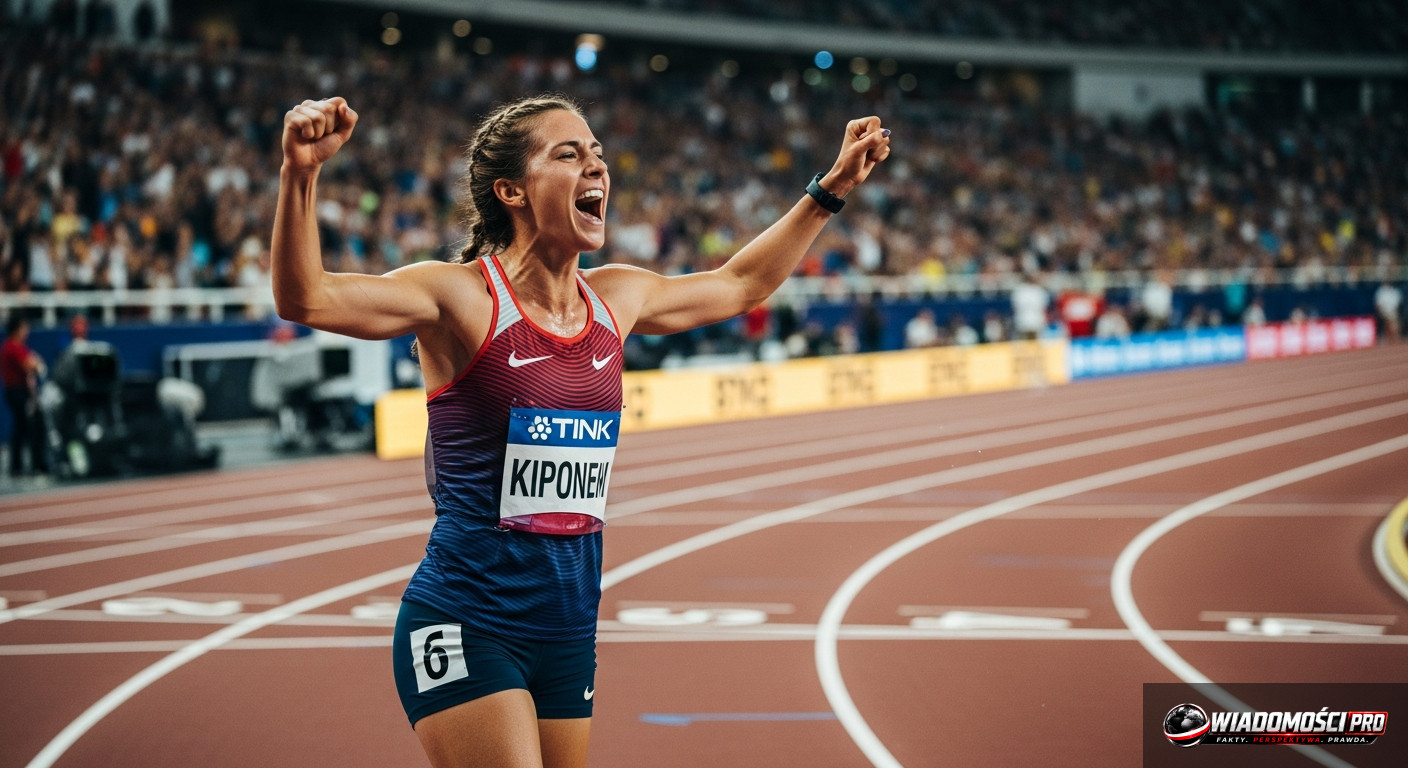
For the reader following the results live, the most important indicator will be the opening time of the first hundred meters. If Bukowiecka covers this segment in around 12.0 s, it will be a signal that she is set on a personal best. It is worth noting that in the 400-meter sprint, there is no room for error, and every tactical decision made on the bend affects the final result. The Pole currently possesses the best speed-to-endurance ratio in the entire European field, which makes her a candidate for gold, provided she avoids mistakes in pace distribution. The European Championship final is a test of maturity for an athlete who, since March 2026, has consistently built her position in the world hierarchy. Every subsequent hundred meters in the final race will be a verification of previous training assumptions and physiological preparation, which were aimed at bringing her to peak form exactly in mid-August. Bukowiecka is fully ready for this start, and the semi-final statistics confirm that her form is stable and ready to achieve a result in the range of 50.35 s, which, at the current level of competition, should be enough to win the championship title. Rivals will certainly try to impose their own conditions, but the control that Bukowiecka has shown in her recent starts gives grounds for optimism. What seemed like a wish in March is today a realistic sports scenario, possible to achieve thanks to the reliability of the staff and the determination of the athlete. The final competition at the stadium will be the ultimate confirmation of her dominance this season.
Sources
- Natalia Bukowiecka's record in the European Championship semi-final - Przegląd Sportowy
- Bukowiecka's show of power! Best result of the season gave her an EC final - SportoweFakty
- Bukowiecka's fight with the world champion from Toruń. Powerful season record for the Pole - Interia Sport
- My goal? Polish record – Natalia Bukowiecka before the World Indoor Championships - Bieganie.pl
- Natalia Bukowiecka before the 400-meter final at the WIC in Toruń: time to win? I think 50.50 s - sport.tvp.pl
- It was nervous for a moment. Bukowiecka is the world indoor vice-champion - Eurosport Polska
- Natalia Bukowiecka is the world vice-champion! Silver medal and Polish record in the 400 m - Super Express
- Bukowiecka, Skrzyszowska, and Szymański are medal hopes in sprints. Preview of 400 m, 60 m hurdles, and relays at the WIC Kujawy Pomorze 26 - Bieganie.pl
Article prepared by the Wiadomości PRO editorial team with the support of artificial intelligence. Facts come from the sources listed above.
Komentarze (0)
Ładowanie komentarzy...