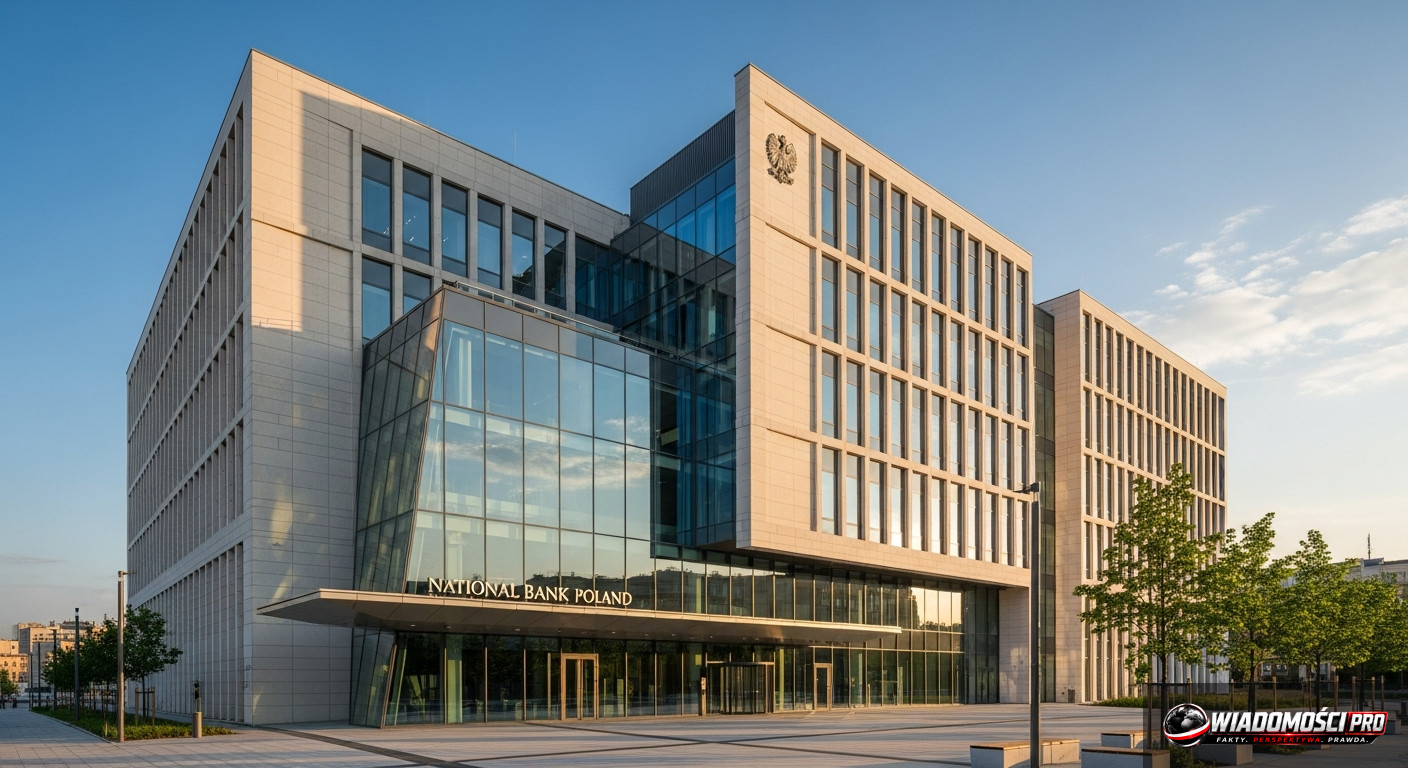
In July 2026, the Monetary Policy Council (MPC) kept interest rates at an unchanged level. This decision means there will be no changes to the amount of loan installments in August 2026. The reference rate remained at 5.75 percent, which for borrowers means an extension of the period of debt servicing cost stabilization, without the cuts expected by the market.
MPC decision from July 2026: Stabilization instead of easing
The Monetary Policy Council meeting on July 8, 2026, ended with no modifications to monetary policy parameters. The Council members, analyzing current macroeconomic data and external conditions, decided to leave the reference rate at 5.75 percent. In practice, this means that the interest rate on mortgage loans based on a variable rate, determined by WIBOR 3M or 6M indicators, will not undergo any correction in August resulting from the NBP's decision.
For borrowers with a liability of 300,000 PLN, taken out for a period of 25 years, the current decision means maintaining the installment at the previous level. Assuming a bank margin of 2 percentage points and the current reference indicator, the capital-interest installment oscillates around 2400–2500 PLN. Each change in rates by 25 basis points up or down translates in such a case into a difference in the installment of about 50–70 PLN per month. August 2026, however, will not bring this change, which for household budgets means no additional burden, but also no expected relief in the form of lower repayment costs.
This stabilization is the result of the strategy adopted by the MPC, which, in the face of macroeconomic uncertainty, chooses a wait-and-see attitude. Policymakers assess that inflation risks, although partially limited, do not yet provide sufficient justification for a return to the easing cycle. In the discussion of the Council members, there is a recurring fear of an impulse that is too early, which could be read by the market as permission for price pressure to become entrenched.
Geopolitics and pressure on the zloty
The international situation, and in particular the escalation of the conflict between the USA and Iran, has become a key point of reference for decisions made in Warsaw. The currency market is reacting to these reports with nervousness, which directly hits the zloty exchange rate. The Polish currency, as an asset from emerging markets, is particularly sensitive to capital outflows during periods of increased geopolitical risk. When investors look for safe havens, the zloty loses value, which forces the central bank to maintain a higher cost of money.
Maintaining rates at 5.75 percent serves a defensive function. A weaker domestic currency means higher costs for importing energy raw materials, which automatically translates into higher consumer inflation. The MPC, by freezing rates, sends a signal that it does not intend to tolerate further depreciation of the zloty, which could undermine the achievements made so far in the fight against price dynamics. The conflict in the Persian Gulf affects global crude oil prices, which, combined with exchange rate fluctuations, creates an explosive mixture for price stability within the Polish economy.
Economists point out that for the Monetary Policy Council, any easing of monetary policy under these conditions would be a risky move. A rate cut amid the current nervousness in commodity markets could be interpreted as a lack of determination in the fight against inflation. Consequently, there would be a further weakening of the zloty, which would ultimately hit the wallets of Poles through rising prices in stores and at gas stations. The strategy adopted by the MPC is therefore a form of protecting the purchasing power of money at the cost of no cuts for borrowers.

Historical perspective: From cuts in 2025 to waiting
The current stagnation in MPC decisions contrasts with the autumn of 2025, when the central bank decided on more decisive steps. In November 2025, the Council carried out the second autumn quarter-point interest rate cut. It was a period in which the market was convinced of a lasting downward trend in the cost of credit. At that time, the MPC's decisions were perceived as the beginning of the end of the era of high rates, which translated into improved sentiment among borrowers.
An analysis of that period shows how dynamically external conditions have changed. In the autumn of 2025, the global environment favored monetary policy easing, and inflation in Poland was in a downward trend. Comparing those actions with today's communications indicates a change in priorities. In 2026, external factors – mainly geopolitical – dominated the central bank's agenda, pushing credit stimulation issues into the background.
For a borrower who took out a loan during the boom, the difference between November 2025 and July 2026 is noticeable in the wallet. Back then, every subsequent MPC decision carried the hope of a real reduction in monthly obligations. Currently, after a series of cuts from the end of 2025, this process has been stopped. The Council decided that a reference rate of 5.75 percent constitutes an optimal balance point between supporting the economy and protecting currency stability.
It is worth noting the argumentation coming from the NBP. Representatives of the Council emphasize that the decisions from the autumn of 2025 were adequate to the data at that time, but the current situation requires a revision of assumptions. From the perspective of borrowers, this means that one should not treat that path of cuts as a guarantee of further declines. The financial market is currently pricing in stabilization, and economists' forecasts suggest that by the end of 2026, the chances of significant downward movements are small.
Forecasts: What awaits borrowers by the end of the year?
Forecasts prepared by Direct Money analysts and services such as TotalMoney.pl indicate great uncertainty. Experts unanimously note that although the July decision to keep interest rates at 5.75 percent was predictable, the prospects for the coming months remain hazy. The main variables that will determine MPC decisions in the near future are primarily core inflation and the condition of the zloty against the backdrop of global tensions.
Analysts point to the fact that the Polish economy is in a phase of slowing growth dynamics, which theoretically opens up space for cuts. However, the barrier in the form of geopolitical tensions, including the escalation of the USA-Iran conflict, is difficult for the Council to overcome. Any attempt to stimulate credit could be countered by financial markets, which would force higher yields on treasury bonds, which in turn would increase the cost of financing for the entire economy.
In the scenario assumed by most financial institutions, interest rates in Poland will remain at the current level at least until the end of 2026. This means that borrowers with mortgage loans based on variable interest rates should prepare for a continuation of the current situation. No sudden movements should be expected unless there are unforeseen events in the geopolitical sphere that force the NBP to react ad hoc.

For a borrower's wallet, it is crucial to monitor WIBOR indicators, which react to market expectations even before the MPC meeting itself. If markets start pricing in the possibility of hikes, these indicators may rise, increasing installments even with an unchanged reference rate. On the other hand, if inflation starts to fall significantly, the market may start pricing in future cuts, which will allow for a drop in WIBOR and a slight reduction in installments. At this moment, however, the stabilization scenario prevails.
Mechanism of the decision's impact on debt servicing costs
Understanding why the MPC decision from July 2026 is so important requires looking at banking mechanics. When the Council announces that rates are being maintained, commercial banks receive a signal that the cost of money on the interbank market will not change. The WIBOR indicator, which is the base for most mortgage loans in Poland, is closely linked to the NBP reference rate. Maintaining the rate at 5.75 percent means there is no incentive to change this indicator.
The percentage values of NBP rates are the foundation on which the entire structure of credit costs is built. When the reference rate is 5.75 percent, banks, when granting loans, must add their margin and risk cost. For a borrower with an example loan of 300,000 PLN for 25 years, the difference between the current state and a scenario in which rates fall to 5.25 percent would be about 120 PLN per month on the installment. Although this amount may seem small on the scale of a single installment, on an annual scale it is nearly 1500 PLN in savings.
The decision from July 2026 closes the door to such savings in the third quarter of the year. Central banks, including the NBP, operate based on econometric models, which in the current situation point to the so-called "stickiness" of inflation. This means that the prices of services and goods are not falling as quickly as expected, which forces the MPC to maintain a restrictive policy. Any attempt at "cheap money" in current realities would be considered premature.
For holders of savings accounts and deposits, the situation is a mirror image of the situation of borrowers. Maintaining interest rates at 5.75 percent means that the interest on deposits will remain at a relatively attractive level. From the saver's perspective, this is positive information, although it is worth remembering about inflation, which still eats up part of the real profits from savings.
Impact on the real estate market and household budgets
The stabilization of credit costs has a direct impact on the real estate market. The high cost of debt servicing limits the creditworthiness of Poles, which translates into lower demand for apartments. Developers, seeing that the MPC is keeping rates unchanged, must revise their investment plans. The lack of an impulse in the form of cuts means that the real estate market remains in a wait-and-see phase, and transaction prices show a tendency to stabilize instead of further dynamic growth.
For the average household that is paying off a mortgage, this situation forces budget discipline. The lack of hope for quick installment cuts means that planning expenses for the second half of 2026 must take into account a constant, high cost of debt servicing. Many people who were counting on the summer months to bring relief will have to adjust their vacation or investment plans.

Furthermore, one must remember about interest rate risk. Borrowers with variable interest rates are fully exposed to MPC decisions. Even if there was no change in July 2026, every subsequent decision – depending on the aforementioned geopolitical situation – could change the situation within just one month. This uncertainty is the most painful element of current monetary policy.
Summary of the credit situation
The decision made on July 8, 2026, by the Monetary Policy Council to keep interest rates at 5.75 percent is a signal to the market that the fight against inflation and care for the exchange rate remain an absolute priority. For borrowers, this means the necessity of continuing to accept high installments, which will not change in August 2026.
It is worth remembering that monetary policy does not operate in a vacuum. The impact of tensions between the USA and Iran on the zloty exchange rate is proof of how global processes shape local lending costs. The Monetary Policy Council, by choosing stabilization, protects the economy from the negative effects of excessive volatility, although the price for this stability is the lack of relief for people paying off debts. In the near future, no breakthroughs should be expected. The financial market remains in a state of suspension, and every subsequent MPC decision will be closely watched through the prism of macroeconomic data and events on the international arena. Borrowers must therefore remain cautious in planning household finances, preparing for a scenario in which the current debt servicing costs will remain with us for longer.
Questions and answers
Will loan installments increase in August 2026?
No, due to the MPC maintaining interest rates at 5.75 percent in July 2026, loan installments remain at a stable level, identical to the previous month.
Why didn't the MPC cut rates in July 2026?
The decision is dictated by the uncertain geopolitical situation, including the escalation of the USA-Iran conflict, which exerts pressure on the zloty, and the need to protect price stability within the country.
When were interest rates last changed?
The last significant changes took place in November 2025, when the MPC carried out a series of interest rate cuts, followed by a period of monetary policy stabilization.
What impact does the situation in the Middle East have on loans?
Tensions in this region affect global energy prices and investor risk aversion. This weakens the zloty, which forces the MPC to maintain higher interest rates to counteract imported inflation.
What can borrowers expect in the remainder of 2026?
Forecasts indicate the maintenance of the current MPC strategy. Most experts assume interest rate stabilization until the end of the year, unless unforeseen macroeconomic or geopolitical shocks occur.
Sources
- See what's happening with your loan! MPC has made a decision - wGospodarce
- MPC keeps rates unchanged – will the escalation in Iran bring hikes? (ANALYSIS) - Parkiet
- Interest rate forecasts in 2026 - Direct Money
- Interest rate value August 2026. Forecasts and current information about interest rates in Poland - TotalMoney.pl
- USA and Iran are at daggers drawn, and the MPC is not cutting rates. Zloty under pressure - INNPoland.pl
- There is an MPC decision on interest rates. It is already known what's next for loan installments - Business Insider Polska
- The Monetary Policy Council lowered interest rates. This is the second autumn quarter-point - Bankier.pl
- Interest rates down again. But it's too early for joy. When is the next MPC decision? - Forbes
Article prepared by the Wiadomości PRO editorial team with the support of artificial intelligence. Facts come from the sources provided above.


Komentarze (0)
Ładowanie komentarzy...