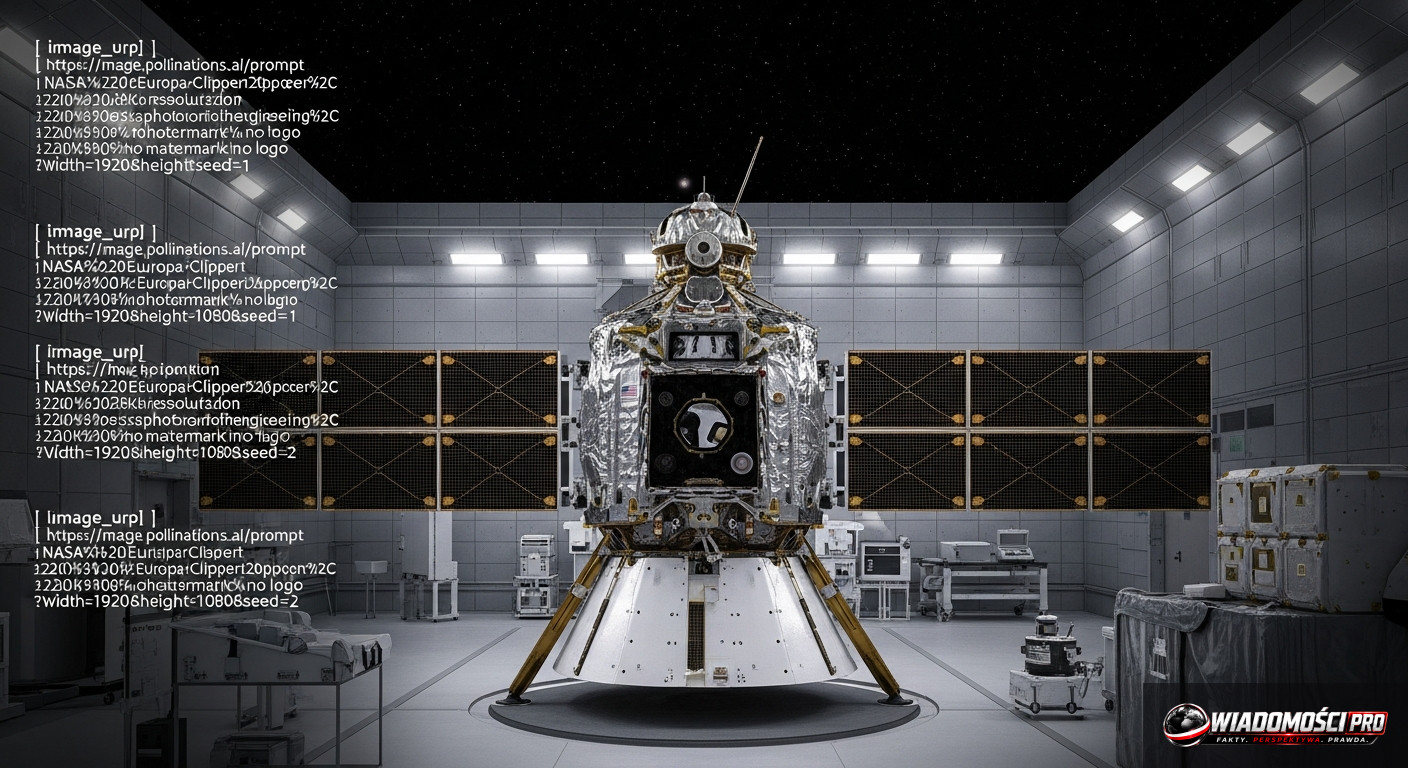
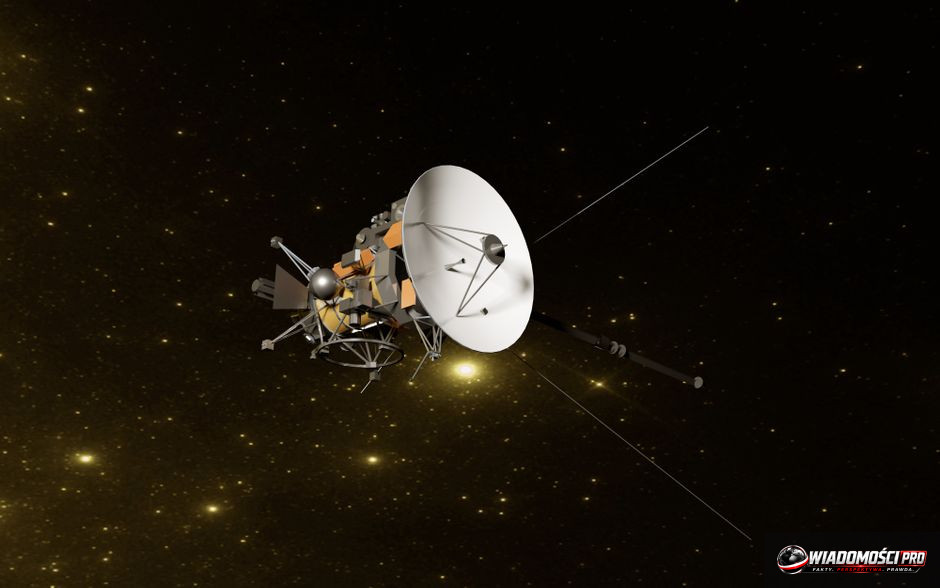
The Europa Clipper probe, which launched on October 14, 2024, will conduct 49 close flybys of Europa to check whether the conditions necessary to sustain life exist beneath its icy shell. The mission is not searching for organisms directly, but rather analyzing the chemical composition and geological structure that could favor the development of biological processes. It is the largest planetary probe in NASA's history, and its construction and launch into space represent an attempt to answer one of the most intriguing questions of modern science: is there a place in our Solar System beyond Earth capable of sustaining biological activity?
Behind the scenes of the mission: From Hurricane Milton to orbit
The mission's launch was marked by uncertainty. Original plans called for the probe to be launched earlier, but the elements disrupted the agency's schedule. Hurricane Milton, which struck Florida, forced engineers at the Kennedy Space Center to immediately halt preparations and secure the valuable equipment. Operations at Cape Canaveral were suspended for several days. Each hour of delay in the launch window meant the necessity of recalculating the flight trajectory, which is extremely precise.
The team of engineers had to face the logistical challenge of protecting a multi-billion dollar investment from the destructive force of wind and rain. When weather conditions improved and the launch window allowed for a safe departure from Earth, the rocket with the probe on board finally ascended into the atmosphere. The successful launch was the result of many years of preparation, in which the margin for error was near zero.
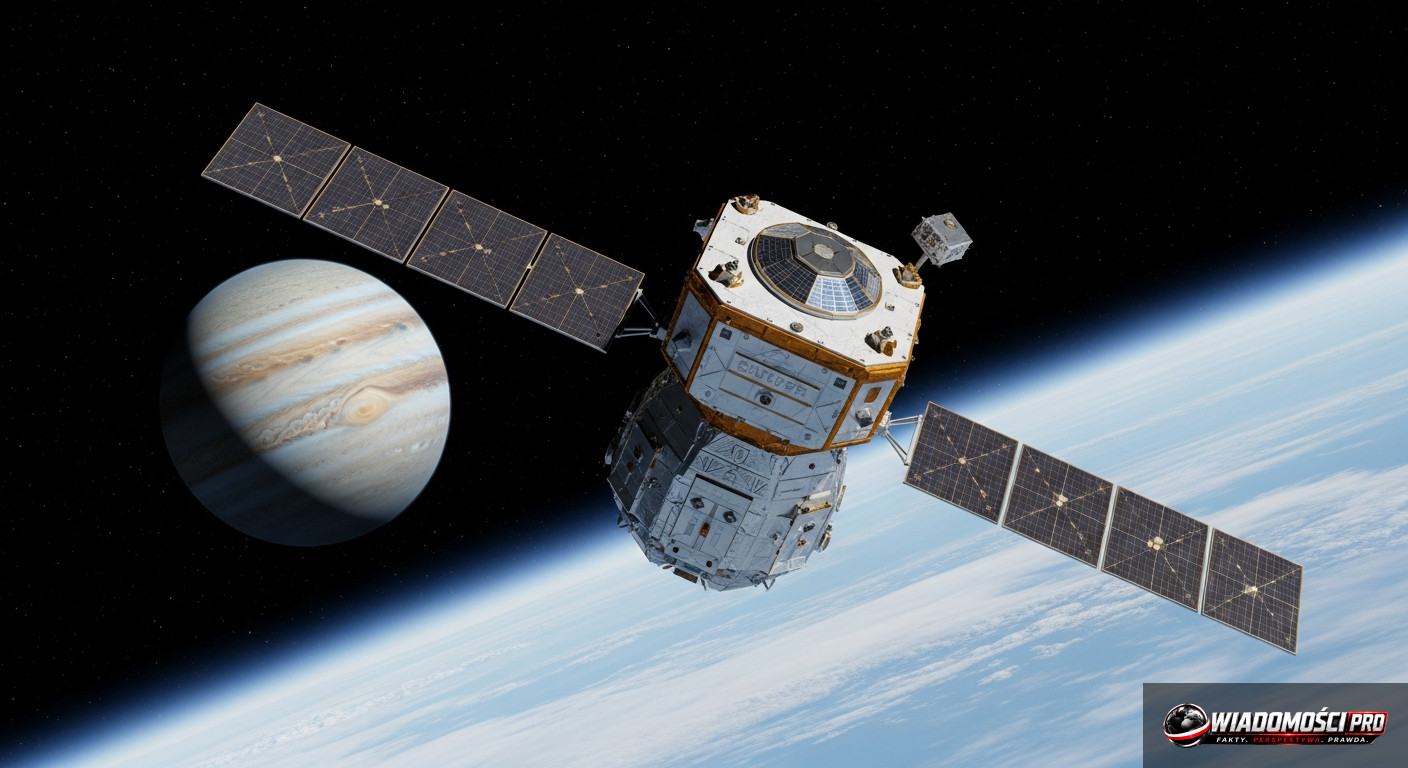
Once in orbit, the device began its long journey toward Jupiter. Engineers were tasked with safely guiding the machine through the gas giant's radiation belts, which constitutes the most dangerous stage of the entire expedition. Europa, the moon that is to be the target of the research, is located within Jupiter's strong magnetic field, which means the probe's electronics are constantly exposed to bombardment by high-energy particles. To survive, the probe has been equipped with a specialized "vault" protecting the most sensitive components, which will allow it to function for years in such extreme conditions.
Technology in the service of astrobiology
Europa Clipper is a structure that, once its solar panels are deployed, resembles the size of a basketball court. JPL, or the Jet Propulsion Laboratory, opted for advanced apparatus that does not resemble anything sent toward Jupiter in past decades. The probe does not have one single, main tool for detecting life, because such an approach would be burdened with too high a risk of error. Instead, on board is a suite of instruments designed to study the physicochemical environment.
The main goal of the engineers was to create a machine capable of mapping the composition of the moon's surface in high resolution. Spectrometers installed in the probe's body will analyze light reflected from the surface, which will allow for the determination of the presence of minerals, salts, and potential organic compounds. Without this precision, any information about the subsurface ocean would be mere speculation. The probe also possesses a radar capable of looking beneath kilometer-thick layers of ice. It is thanks to this that scientists hope to learn the thickness of the icy shell and check whether pockets of liquid water exist within it.
Geological research will be supported by a magnetometer, which will measure Europa's induced magnetic field. This is one of the most effective methods for confirming the existence of a saltwater ocean, because liquid, electrically conductive water reacts to changes in Jupiter's magnetic field. If the measurements show appropriate deviations, it will be the strongest evidence that a huge reservoir of water actually exists beneath the ice.
49 close flybys: Logistics and strategy
The number of flybys was not chosen by accident. It was calculated by mathematicians and astrophysicists so that the probe could optimally study almost the entire surface of the moon, while simultaneously avoiding areas with the most lethal radiation from Jupiter. Each approach is planned with an accuracy of a few kilometers above the ice surface. It is during these short moments that the probe will work with its measuring instruments under maximum load.
During each flyby, navigation systems must correct the course with extreme precision. Jupiter's gravity and the influence of other Galilean moons mean that the flight trajectory is variable. The probe must be prepared for constant maneuvers, which requires not only a huge amount of fuel but, above all, perfect software that predicts the ship's behavior in every second of the approach.
Data collected during these maneuvers will be sent to Earth at time intervals that will allow the scientific team to conduct ongoing analysis. This is not a fast process. Each data packet, due to the distance, travels a long way before it reaches the Deep Space Network antennas. Scientists must come to terms with the fact that research results will not appear in the form of a sudden discovery, but will be the result of painstakingly assembling chemical and geological maps into one coherent whole.
Why Europa?
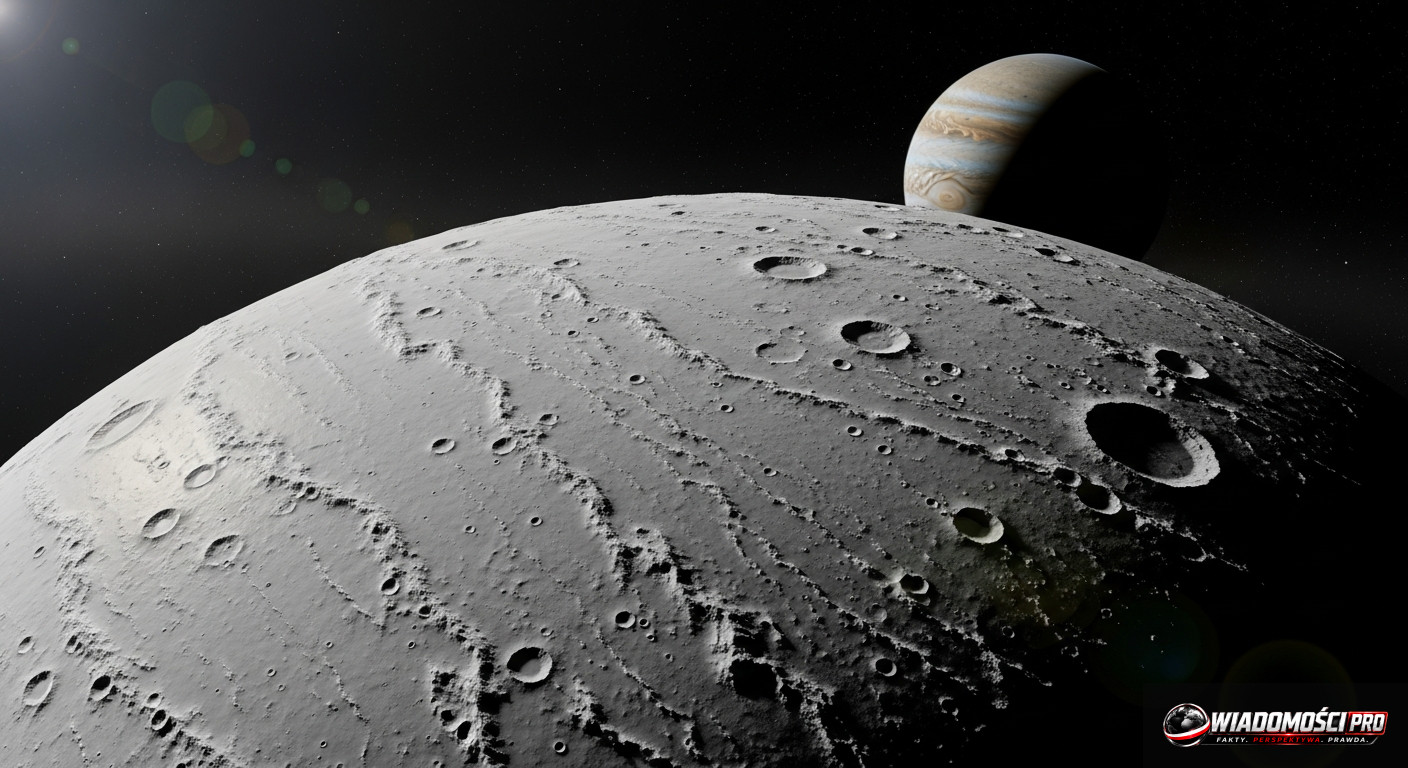
The choice of Europa as the main research target stems from the unique features of this moon. Compared to other objects in the Jovian system, Europa appears to possess all the necessary ingredients for life to exist: liquid water, an energy source, and the appropriate chemical elements. The ocean beneath the ice is not merely a theoretical model; data from the Galileo mission suggested that there is a layer of water beneath the surface reaching depths of up to one hundred kilometers.
For astrobiologists, this environment is fascinating for one more reason: the contact between the icy surface and the depths of the ocean. If water vapor plumes, which have been reported in the past, occur on the surface, the probe will be able to attempt to fly through them, analyzing their chemical composition directly from orbit. This would be an invaluable source of information about what is happening inside the moon, without the need to drill into the ice.
Skeptics note, however, that just because Europa is habitable does not mean it is inhabited. The existence of "building blocks" of life, such as carbon or nitrogen, is one thing, but the formation of biological structures is a process about which we still know little. Europa Clipper will not answer the question of whether there are organisms swimming in the ocean. It will, however, answer the question of whether that ocean is an environment in which life could theoretically survive.
American dominance or a joint effort?
NASA, by committing to such an expensive and complicated mission, has strengthened its position as a leader in the exploration of the Jovian system. The race for who would be the first to study Europa has been present in the discussions of space agencies for years. The Americans relied on their own resources, building a probe that is technologically ahead of the projects of other agencies. This is not, however, just a manifestation of power, but above all the implementation of a long-term research strategy.
Investment in this project is a signal to the scientific world that Europa is a priority. Funding this mission from the federal budget required political approval, which shows how important the search for signs of life beyond Earth is to the American administration. Did competition with other countries accelerate this process? Certainly, however, it is the scientific value of the data that ultimately counts for future generations.
Behind the scenes, it is said that after the Clipper mission ends, our perception of the Solar System will change forever. If it turns out that Europa is dead, science will have to look for answers in other places, perhaps on Saturn's moons, like Enceladus. If, however, it turns out that the ocean is full of organic compounds and hydrothermal activity, the door to subsequent, more invasive missions will be thrown wide open.
What does this mean for the future of science?
The success of the Europa Clipper mission will allow for the verification of theoretical models upon which astrobiology is currently based. For years, scientists have built computer simulations of subsurface oceans, relying on data from telescopes and flybys of the Voyager and Galileo missions. Now, these models will be confronted with reality. If the probe's data confirm predictions regarding geological activity, it means that our understanding of the mechanisms driving life in extreme conditions is correct.
There is a risk, however, that the results will be ambiguous. In planetary sciences, it often happens that one anomaly in readings triggers decades of disputes. The probe will provide thousands of gigabytes of data, the interpretation of which will take years. For the reader, this means that one should not expect sensational headlines in the first months after the probe reaches its destination. The true value of the mission will be revealed at the moment the first complete geological maps of the surface are published.
For taxpayers and the public, this project is a lesson in patience. In an era of instant information, a space mission lasting years reminds us of the scale of the challenges humanity faces. If the probe confirms that Europa possesses the chemical conditions for life, we will have to ask ourselves: what next? Do we send a lander? Do we try to drill through the shell? Each of these decisions will require billions more dollars and decades of work.
Questions and answers
Will the probe land on the surface of Europa?
No, the Europa Clipper probe is not a lander. It was designed as an orbiter that will conduct 49 close flybys of the moon, studying it using remote sensing instruments from a safe distance.
When will we know the first research results?
The probe is on its way to the Jovian system. The first key data will begin to flow after the probe reaches its destination and begins the series of planned flybys, which will happen in the coming years.
Why was Europa chosen instead of another moon?
Europa possesses a subsurface ocean of liquid water, which makes it one of the most promising places to search for conditions conducive to life in the entire Solar System.
Is the probe capable of directly detecting life?
No, the probe does not have tools for the direct detection of organisms. Its task is to assess habitability, i.e., to check whether the appropriate chemical and geological conditions exist in the subsurface ocean that could support biological processes.
What is the greatest difficulty in this mission?
The greatest challenge is the probe's survival in the extreme radiation environment of Jupiter and precisely conducting 49 close flybys while simultaneously avoiding the destructive influence of the gas giant's magnetic field on the device's electronics.
What will happen if the probe does not find evidence of habitability?
A lack of confirmation of conditions conducive to life will be significant scientific information that will allow for a paradigm shift in the search for extraterrestrial life and the redirection of resources to other targets in the Solar System, such as Saturn's moons.
How long will it take to complete all the flybys?
The execution of the planned 49 flybys is spread over several years of intensive operational work, during which the probe will gradually collect data, correct its trajectory, and send information to Earth.
What instruments are on board the probe?
The probe is equipped with an advanced set of instruments, including spectrometers for analyzing chemical composition, radar for studying the structure of the moon's interior, and magnetometers measuring the induced magnetic field, which allows for a comprehensive assessment of Europa's environment.
Is the mission threatened by radiation?
Yes, radiation around Jupiter is a huge threat, which is why the probe has been secured with a special protective vault for the electronics, which is intended to enable it to work throughout the entire duration of the mission.
What is the significance of this mission for the average person?
The Europa Clipper mission pushes the boundaries of human knowledge, answering the fundamental question about our place in the cosmos. If we confirm that life can exist in such extreme conditions, it will change our perception of biology and the potential of the universe.

Sources
- Europa Clipper mission launch to Europa - AstroNET – Polish Astronomical Portal
- Europa Clipper launches. A key task lies ahead - geekweek.interia.pl
- Europa Clipper probe to search for life on Europa - Urania - Polish Astronomical Portal
- Europa Clipper mission launch [TRANSMISSION]. Americans will outpace Europeans in the search for life on Europa - Wyborcza.pl
- NASA sends probe to Europa. Europa Clipper mission has launched - WP Tech
- Europa Clipper has launched. It will study whether there are conditions for life on Jupiter's moon - Polskie Radio 24
- Hurricane Milton delays the launch of NASA's largest space probe, Europa Clipper, until October 14 - Notebookcheck.pl
- Europa Clipper probe will search for life on Jupiter's moon, Europa - wszystkoconajwazniejsze.pl
Article prepared by the Wiadomości PRO editorial team with the support of artificial intelligence. Facts come from the sources listed above.

Komentarze (0)
Ładowanie komentarzy...