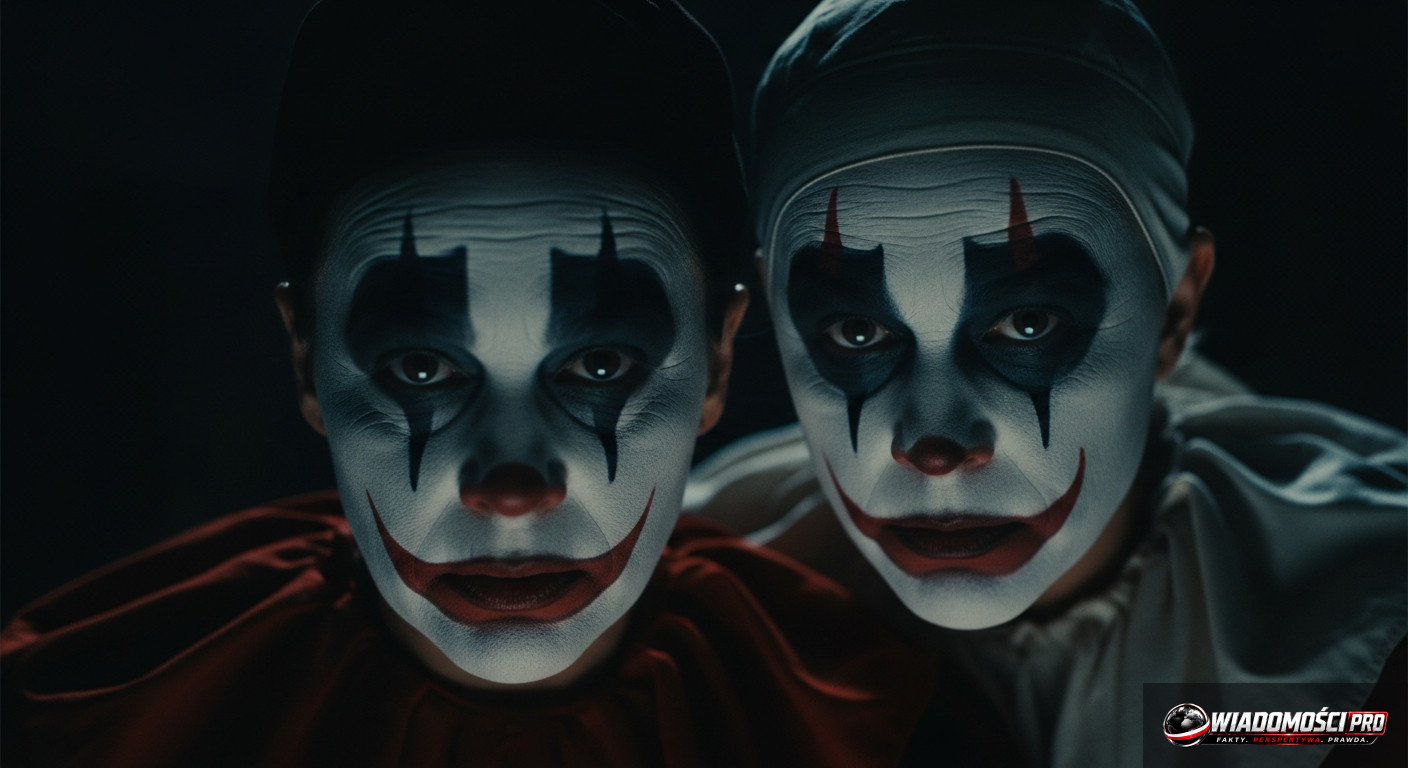
The film "Joker: Folie à Deux," with a production budget of $200 million, earned only $121.1 million worldwide during its opening weekend, a result significantly below industry expectations. Experts point out that such a poor debut was caused by the misguided decision to transform a dark thriller into a musical, combined with a wave of scathing reviews that effectively discouraged viewers. The audience, expecting a repeat of the gritty atmosphere of the first installment, felt deceived by the artistic form, which translated into a drastic drop in interest within the first few days of release.
An investment of $200 million is usually reserved for spectacles that have the ambition to dominate the global box office. In the case of the sequel to Arthur Fleck's adventures, Warner Bros. opted for a risky combination of psychological drama and Broadway-style aesthetics. The market reacted allergically. When a budget exceeds the hundred-million mark, the margin for error shrinks almost to zero. Every additional million spent on the promotional campaign required audiences to flock to theaters in numbers reminiscent of 2019. Instead, we ended up in a situation where the prestige of the brand began to work against the film itself.
Pre-premiere sentiment analysis indicates that the industry was not blind to the coming problems. As early as the beginning of October 2024, websites such as naEKRANIE.pl published forecasts warning that "Folie à Deux" would not repeat the financial triumph of its predecessor. Experts noted that viewer interest was far from euphoric. Warner Bros. entered this period with a burden of high expectations that it failed to meet. The money pumped into the production turned into a financial liability rather than an engine driving profits.
Hard data from October 2024 left no illusions. Comparing "Joker 2" to low-budget productions revealed the scale of the failure. While the multi-million dollar Warner Bros. promotional machine slowed down, the horror film "Terrifier 3" showed that one could beat a Hollywood giant with minimal resources. This comparison exposes the brutal truth about the modern market. Viewers no longer automatically buy into big brands if they don't feel authentic quality. "Terrifier 3" became a symbol of efficiency, while "Joker 2" became a cautionary tale against excessive budgetary optimism.
The comparison with "Morbius" is particularly painful. A film considered by critics and fans to be one of the weakest installments in the Marvel and Sony universe actually looks favorable in a direct clash with "Joker 2." If a production that became the object of internet mockery can pull in financial results exceeding Todd Phillips' ambitions, it is hard to call it a coincidence. This is a clear signal for decision-makers in Hollywood. Viewers have less and less patience for projects that seem disconnected from the actual needs of the market.

Why, however, did such an expensive project fail to defend itself in theaters? The answer should be sought in the genre itself. A musical is an artistically bold choice, but commercially deadly if the target audience expected a brutal study of an individual's downfall. Warner Bros. tried to mix fire with water. As a result, we got a film that did not satisfy fans of the first part, and at the same time, did not attract musical lovers. The result of $121.1 million worldwide is not just numbers in a table. It is proof of a complete mismatch with the viewer's intentions.
It is worth looking at the mechanisms that govern today's box office. The success of the third "Venom," which dominated the charts in October 2024, shows that audiences still want comic book spectacles as long as they offer predictable entertainment. "Joker: Folie à Deux" tried to break away from this pattern by offering dark introspection instead of action. This experiment, while theoretically interesting, proved to be financial suicide. The theatrical market, exhausted after pandemic turbulence, does not forgive such expensive mistakes.
This situation opens a painful discussion about the state of high-budget spectacles. If a brand with as much potential as Joker cannot generate profits, what awaits less recognizable titles? Industry analysts point out that we are witnessing the end of the era of "guaranteed hits." Every project must fight for the viewer from day one. If marketing or initial online reviews fail, even the most famous face on the poster won't save the budget.
In the context of later premieres, such as "Toy Story 5," a clear shift in preferences is visible. Viewers are voting with their wallets for safe, proven entertainment. The toy series, which is breaking records, contrasts with the failure of Arthur Fleck's adventures. This shows that the theatrical market has become extremely harsh. A studio that invests $200 million in a project with such high risk must be prepared for the consequences. In the case of "Joker 2," those consequences came faster than anyone at Warner Bros. could have imagined.
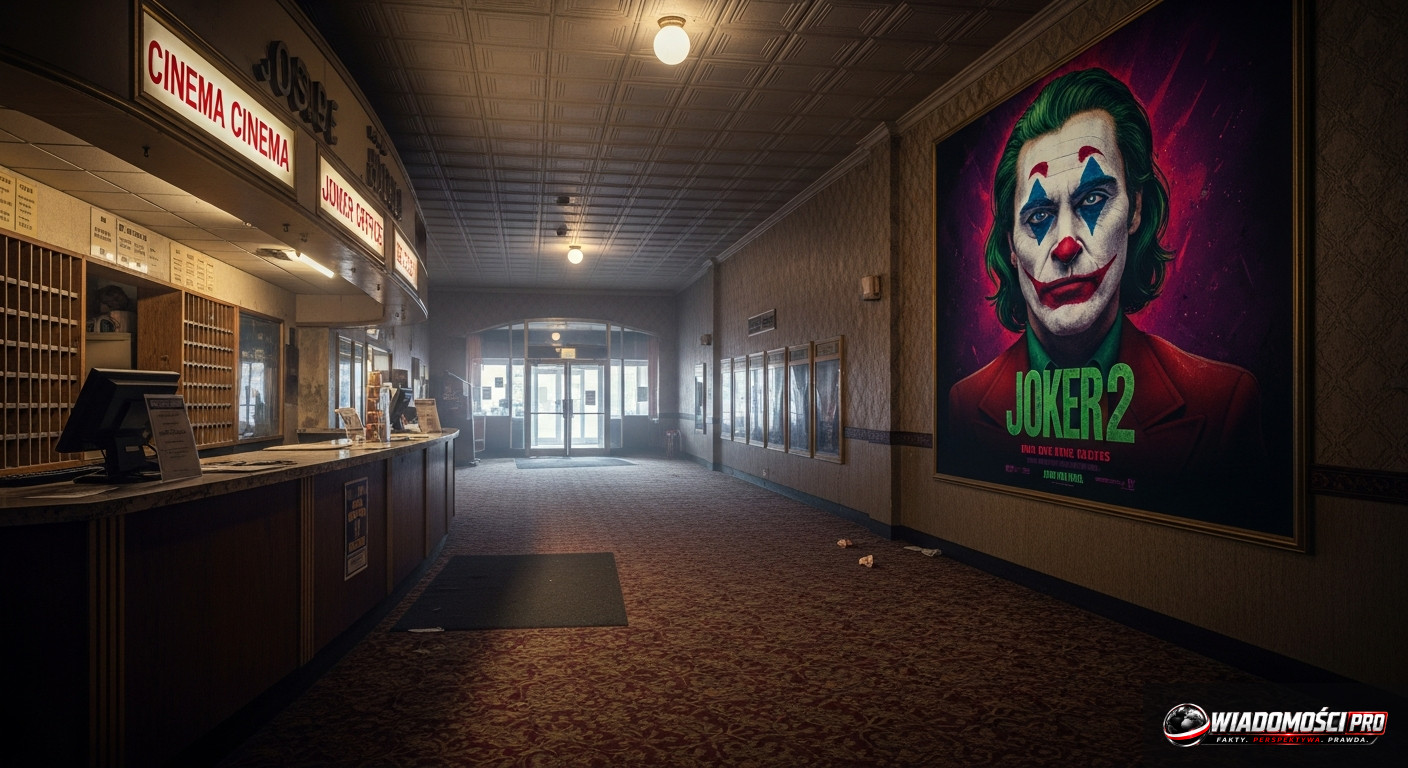
The key decisions of the institutions financing the project seem incomprehensible today. Did no one foresee that changing the convention to a musical would meet with resistance? Industry media, such as Eurogamer and Filmweb, emphasized from the first days after the premiere that the results were drastically worse than assumed. It is hard to be optimistic when, at the same time, low-budget horror films like "Terrifier 3" are attracting viewers, while a $200 million spectacle is losing momentum. The narrative of an "unfunny joke" at the box office has become a symbol of how much the project missed expectations.
This is not a statistical error. It is a clear signal that the era of brands that guaranteed success on their own is coming to an end. Investors in Hollywood must revise their approach to budgeting. Pumping money into productions that do not have a clear viewer profile leads to losses that cannot be made up in the second or third week of release. The failure of "Joker 2" is a lesson in humility that will be talked about in film studio hallways for a long time.
If one were to analyze Warner Bros.' spending structure, it is clear where the mistake was made. Marketing was focused on a success that had no chance of coming. Instead of building a narrative around a new, bold artistic direction, the studio tried to sell the product as a continuation of the previous hit. Viewers who bought tickets in the hope of a repeat of 2019 felt cheated. That trust is the hardest thing to rebuild.
What does this mean for you as a viewer? First and foremost, it means that studios will be even more reluctant to fund bold, niche projects with huge budgets. Money that could have gone to original scripts will be redirected to safe sequels and remakes. "Joker 2" not only failed financially but likely closed the door for many creators who would like to try something new within major franchises.
The conclusions from the Joker lesson are brutal. Money cannot buy viewer loyalty if the project is poorly tailored to the requirements of the modern audience from the start. The market verified Warner Bros.' assumptions without sentiment. Losing to productions with a fraction of the budget calls into question the sense of pumping funds into further sequels that only pretend to be grand. Will the decision-makers learn their lesson? History teaches that in Hollywood, the memory of failures is short, but losses of $200 million leave a lasting mark on the accounting books.
Viewers in 2024 have become more quality-conscious. The comparison with low-budget projects shows a clear shift in cinema consumption trends. Viewers are increasingly turning away from big spectacles if they do not offer value commensurate with the ticket price. "Joker 2" was a victim of its own ambitions and a huge budget that set the bar so high that any result below a massive success had to be read as a failure.
The role of social media must also be mentioned. It largely shaped the negative reception of the film even before its wide distribution. The first reviews from festivals hit the web instantly, creating an aura of disappointment. In this day and age, this process is irreversible. Warner Bros. was unable to counter this wave of negative opinions, which only deepened the crisis.
Financial analysis shows that even decent results in selected markets were not enough to balance the costs of the global campaign. "Joker: Folie à Deux" is a textbook example of how not to manage expectations in the internet age. Every dollar invested in promotion that did not translate into ticket sales was money down the drain. For analysts, this is clear proof that the theatrical market has become extremely harsh for projects that cannot win over the mass audience in the first days of being on screens.
Could "Joker 2" have been a success? Perhaps, if the budget had been half as much and the film had been advertised as a niche psychological musical rather than a big comic book spectacle. But that is speculation. The facts are that with a $200 million investment, a result of $121.1 million at the start is a catastrophe that will become a reference point for years for everyone who dreams of "big cinema" without foundations in the form of a solid script and an understanding of the audience's needs.
Finally, it is worth asking about the future of the Joker brand. Will Warner Bros. decide to make further attempts to explore this world? Given the financial result and the cold reception by the public, this seems unlikely. The brand, which was supposed to be the crown jewel in the DC portfolio, has become a symbol of a failed strategy. This is not just a matter of one film. It is a matter of the entire business model, which simply stopped working halfway through the decade.
One cannot ignore the fact that "Joker 2" was an attempt to go outside the box, which in itself deserves some recognition. The problem is that in the film business, intentions count for less than return on investment. The creators were given a free hand, which they could not translate into commercial success. It is a painful lesson for artists and producers that in the world of big budgets, a compromise between art and commerce is inevitable.
In 2024, cinephiles' sympathies shifted toward productions that do not require astronomical financial outlays. The comparison with low-budget projects, such as "Terrifier 3," which cost "pennies" and yet attracted crowds, shows a clear shift in trends. Viewers are increasingly looking for authenticity. Even if it is brutal and cheap to produce.
The failure of "Joker 2" exposes a crack in Hollywood's current strategy. The studio bet everything on one card, hoping to repeat the success of the first part, but the market verified these assumptions without sentiment. The question remains whether the decision-makers at Warner Bros. will learn their lesson, or whether subsequent projects will be created based on outdated business models. The result of $121.1 million became a symbol of missing market expectations. It is a clear signal that the era of guaranteed hits based on well-known brands is coming to an end.
For the film industry, the result of "Joker 2" is a warning signal. Investing huge budgets in sequels that do not meet fan expectations leads to quick losses at the box office. Conversely, low-budget productions that can beat Hollywood giants with minimal financial outlay are gaining ground, which is changing distributors' strategies for the coming years.
Questions and answers
How much exactly did Joker 2 earn on its opening weekend?
The film earned $121.1 million worldwide on its opening weekend.
What was the budget of Joker 2?
The film's production budget was $200 million.
Did Joker 2 turn out to be a financial success?
No, industry media unanimously considered the opening result a "big flop," especially compared to the production's high budget.
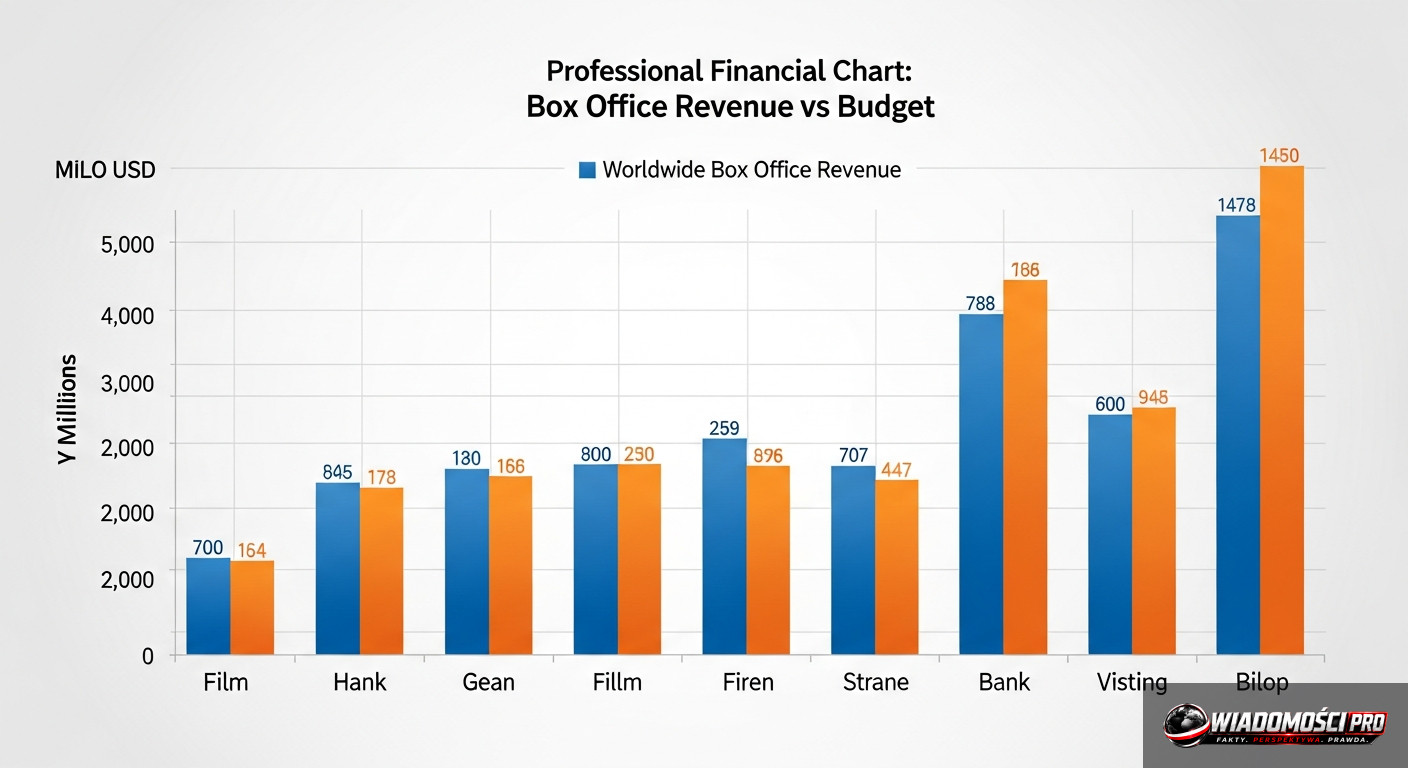
In the world of cinema, where success is measured in hundreds of millions of dollars, "Joker: Folie à Deux" will be remembered as a warning. It was not just a matter of cinephiles' taste, but primarily a miscalculation of risk by the studio. The attempt to turn a dark drama into a musical, while maintaining a blockbuster budget, proved to be a decision that sank the project. Everyone who was counting on a repeat of the 2019 phenomenon had to swallow a bitter pill.
The film market in 2024 showed that there is no longer room for error with such huge amounts. Every million spent on production is subjected to strict evaluation by the viewer, who has access to information in real-time. If quality does not go hand in hand with expectations, no marketing campaign can save a project. "Joker 2" became a symbol of how quickly great ambitions can collide with the wall of reality. This is a lesson that Warner Bros. will be analyzing for years, while the competition learns and adjusts its strategies to the changing requirements of the modern viewer. It remains to be seen what the studio's next steps will be, which will certainly be much more cautious in investing in artistically risky experiments. The "Joker" era in its current form has come to an end, and its place has been taken by productions that are better at listening to their viewers. Does this mean the end of great, auteur visions in comic book cinema? Not necessarily. It does, however, mean that they must be created in a way that respects both the investors' money and the time and expectations of the viewers paying for a ticket. The story of Arthur Fleck thus ends not only with a financial flop but also with a paradigm shift in thinking about what makes a film a success.
Sources
- Box Office USA: Shocking debut of the film "Joker: Folie à Deux" - Filmweb
- Joker 2 is an unfunny joke at the box office. Results are even worse than assumed - Eurogamer.pl
- How much will Joker 2 earn on its opening weekend? Predicted result significantly worse than the 1st part - naEKRANIE.pl
- Third "Venom" is the leader of the North American box office - Polish Press Agency SA
- This is how much "Joker: Folie à deux" earned on its opening weekend! A big flop for the creators and cast? - eska.pl
- Joker 2 lost even to Morbius. The worst Marvel and Sony films earned more - Gram.pl
- Box Office USA: Massacre of new releases. "Toy Story 5" is going for the series record - Filmweb
- Budget horror laid Joker 2 to rest. Terrifier 3 cost "pennies" and still wins - Eurogamer.pl
Article prepared by the Wiadomości PRO editorial team with the support of artificial intelligence. Facts come from the sources listed above.

Komentarze (0)
Ładowanie komentarzy...