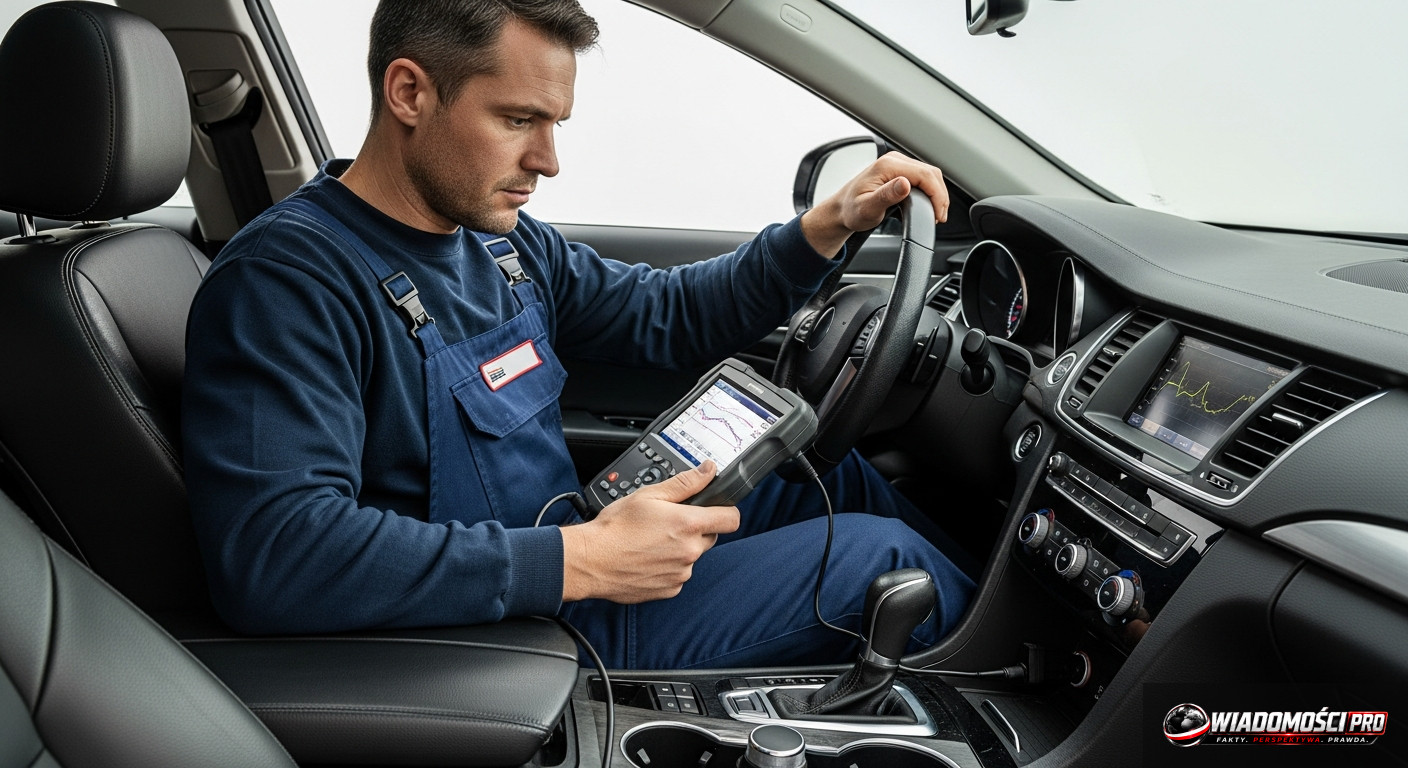
According to new EU regulations, the permanent deactivation of the start-stop system will result in a failed technical inspection. During the inspection, the technician will check the correct operation of this system, and its inactivity will prevent the vehicle registration document from being stamped. This procedure includes verifying communication with the engine control unit and functional tests under real-world conditions, which definitively ends the era of unpunished interference with vehicle factory software.
New EU guidelines: The end of the era of self-made modifications
Brussels is introducing rigorous inspection standards that hit practices popular among Polish drivers. The changes, reported by, among others, "Rzeczpospolita" (April 11, 2026) and Interia Motoryzacja (April 7, 2026), are a direct consequence of tightening emission policies. EU officials have decided that every vehicle must meet homologation requirements throughout its entire service life. If the car's factory documentation provides for the presence of a start-stop system, its intentional deactivation is treated as a technical defect.
In practice, this means that a car with such a modification will not be allowed to continue in traffic. The technician, while performing their duties at a vehicle inspection station, will no longer be able to turn a blind eye to "courtesy" toward the customer. According to Directive 2014/45/EU, which is currently being updated regarding stricter environmental requirements, the exhaust aftertreatment system and emission reduction support systems must be fully functional. For owners of cars with installed modules that remember the last setting of the button, a time of costly corrections is coming.
Chiptuning workshops have so far offered the removal of the start-stop function as a standard service. Now, this model is becoming risky. If the engine control unit (ECU) shows communication errors with the start-stop module or has modified software maps, the technician will identify this fact during a routine check. Information provided by "Auto Świat" on April 8, 2026, leaves no illusions: there is no room for the technician's interpretation here. This is an absolute legal requirement intended to eliminate vehicles from the roads that emit more pollutants than the manufacturer declares in the homologation.
How will the technician verify the system?
Drivers are wondering how the technician will "catch" a modification that is not always visible to the naked eye. The key tool will be the OBD (On-Board Diagnostics) port. Every car manufactured after 2001 (gasoline engines) or 2004 (diesel engines) has this standard. New technical inspection procedures force diagnostic stations to fully utilize the potential of diagnostic devices connected to a central database.
The technician will connect a diagnostic tester to the vehicle's OBD port. The system will check the so-called readiness codes. If the engine control unit has been reprogrammed to permanently deactivate start-stop, the tester will show a lack of communication with the energy management module or incorrect engine idle parameters. In the case of physical emulators that trick the switch button, the technician will perform a functional test. If the engine does not turn off under conditions required by the procedure (e.g., during a short stop at idle with a warmed-up engine), the inspection result will be negative.
Dziennik.pl, in a publication from August 9, 2026, points out that for technicians, this will become one of the most important points of the inspection. A quick glance at the dashboard will no longer be enough. Diagnostic devices will be integrated with exhaust control systems, which will allow for the automatic detection of software interference. For the car owner, this means the necessity of restoring factory settings in a professional service beforehand. The cost of such an operation, depending on the brand and the complexity of the controller, can range from several hundred to even several thousand zlotys, which for many drivers will be a painful penalty for their previous desire to "improve" on the factory engineers.

Why is Brussels tightening technical regulations?
The motivation for officials in Brussels is the sum of emissions generated by the vehicle fleet under real-world operating conditions. As reported by "Filary Biznesu" on April 19, 2026, these plans had been in preparation for a long time. Start-stop was designed with dense urban traffic in mind, where frequent stopping causes unnecessary fuel consumption and excessive carbon dioxide emissions. In the eyes of EU regulators, any interference with this system is an act detrimental to the environment.
Car owners argue that frequent engine shutdowns destroy the starter and turbocharger. This is true, but from the perspective of technical certification, these arguments are secondary. The European Union is striving for full digitalization and control of the technical condition of vehicles. If a car does not behave as defined in the homologation documentation, diagnostic systems will simply reject it. This is a mechanism intended to force users to take care of the car's ecological systems.
Telepolis.pl, in its material from April 11, 2026, warned that the detection of any interference with the engine electronics control system is synonymous with the loss of inspection validity. This approach does not take into account the aging of the vehicle fleet, where these systems fail due to battery exhaustion. Owners of technically sound cars in which start-stop has stopped working naturally may find themselves in a trap. If the failure results from a worn-out AGM or EFB battery, the technician will not stamp the registration document until these parts are replaced with new ones that meet the manufacturer's specification. This generates further, often unplanned, service costs.
Consequences for car owners: what about modifications?
The approaching date of the technical inspection will become a moment of truth for many drivers. The changes introduced by the European Union are absolute. There is no longer any talk of the technician "turning a blind eye" to a disabled Eco button. Any interference, whether in the form of a memory module or changes in ECU maps, will be detected during computer diagnostics.
For car owners who decided on popular "coding" or the installation of physical emulators, the situation is becoming critical. They must make a decision: whether to risk a negative inspection result and a costly re-inspection, or invest in restoring the factory state of the installation. A "decoding" service at a workshop often costs as much as the previous deactivation of the system. This is an additional expense that for many people is completely unjustified.
The service naTemat.pl already indicated on April 9, 2026, that for the diagnostic industry, this is a significant burden. Instead of a fast track, the technician gains a new responsibility for verifying systems that previously remained outside the main focus. If the car does not meet the standards, the owner is sent away empty-handed. This means a ban on driving the vehicle on public roads, which drastically changes the quality of life for car owners. It is worth noting that in the event of a negative result, the driver must repair the defect within 14 days and report back to the station.
New rules at Polish vehicle inspection stations
Owners of vehicle inspection stations in Poland must face logistical and technical challenges. Reports from Dziennik.pl on August 9, 2026, suggest that these facilities must update their software to support diagnostic testers. This means that the technical inspection will take longer than before. Every vehicle must undergo a full verification of communication with onboard systems.
For entrepreneurs running stations, investment in new procedures is inevitable. Will the driver ultimately pay for it? Everything points to it. The prices of technical inspections, which have remained frozen in Poland for years, may rise to cover the costs of new EU requirements. This is not just a technical issue, but a real change in the costs of maintaining a car in Poland.
Drivers who have become accustomed to permanent modifications in their cars must reckon with the fact that they will be sent away empty-handed for a faulty or disabled system. The diagnostic industry is facing the necessity of investing in employee training. The technician must now possess knowledge about the logic of start-stop systems in various car models. This is the end of the era of "tinkering" with electronics, which until now allowed many people to permanently disable fuel-saving functions that annoyed them.
How to prepare the car for inspection and avoid problems?
Preparing a car for inspection in the face of new regulations is becoming a complicated process. Drivers who in the past decided to permanently disconnect a module or interfere with the software must restore the factory state of the installation. Ignoring the new regulations involves a real risk of the car not being allowed on the road, which was confirmed by reports from Interia Motoryzacja as early as April 7, 2026.
To avoid stress and additional costs for a re-inspection, it is worth following a few technical rules:
1. Restore the factory settings of the start-stop system before visiting the inspection station. This is a priority issue, indicated by experts from Interia Motoryzacja on August 12, 2026. Any interference with electronics that "tricks" the engine controller will be detected during verification by the technician using the OBD port.
2. Check the operation of the switch button in the cabin. It must react according to the vehicle's owner's manual. If the button is physically blocked or permanently disconnected, the technician will treat this as a system defect and will not stamp the document.
3. Ensure the battery is fully functional. The start-stop system often does not activate when the voltage is too low or when the battery does not have the appropriate parameters (this applies especially to cars with Start-Stop systems supported by BMS sensors). The technician may consider a faulty battery as the reason why the system does not work, which in light of the new requirements also results in the interruption of the inspection.
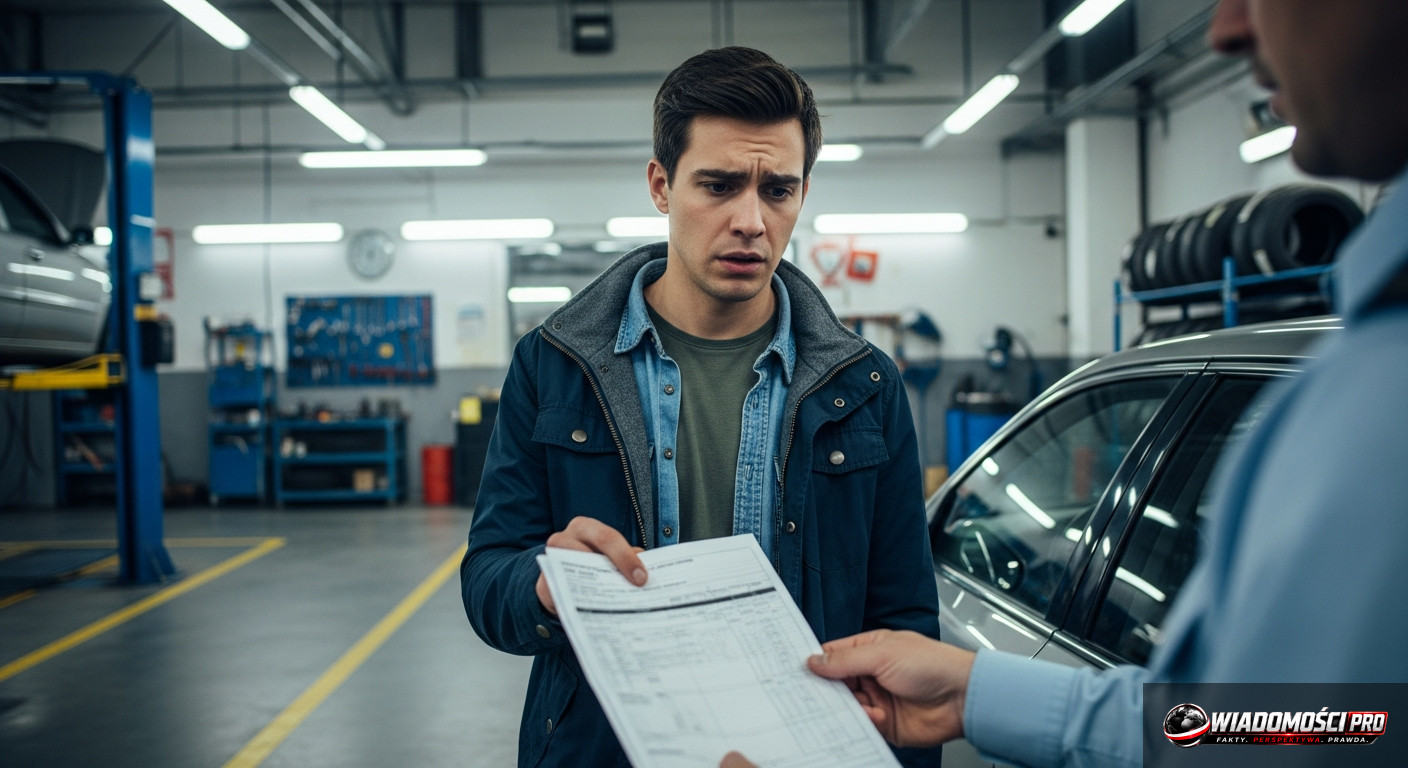
Brussels is closing the door on modifications that were popular among drivers wanting to bypass ecological restrictions. Now, the driver takes responsibility for the technical condition of the car. If your car left the factory with a start-stop system, it must work exactly as the manufacturer intended. Otherwise, you simply won't leave the station with a valid inspection.
What this means for you
For drivers, this means the necessity of returning to factory settings; for technicians, it is an additional checkpoint that increases the responsibility for allowing a vehicle into traffic. The catch lies in the fact that many people disabled the system for convenience, and now it will become a legal obstacle. This radical approach by EU legislators means that every modification that was previously "unofficially tolerated" now becomes grounds for a ban on using the vehicle.
Drivers must now assess the cost-effectiveness of owning a car. If the costs of restoring the factory engine operation logic at a specialized service exceed the value of the car, this may lead to the mass withdrawal of older vehicles from use. This is a phenomenon that no one in Brussels officially names, but which results directly from the financial burdens imposed on car owners.
Questions and answers
If I disabled start-stop with the button, will I also fail the inspection?
The regulations refer to the permanent deactivation of the system. If the system is active and works according to the homologation after starting the engine, there should be no problem. However, any interference with electronics (e.g., memory modules) will result in a negative result.
Since when exactly do the new rules apply?
New requirements regarding the verification of start-stop systems in technical inspections are being implemented successively in 2026 based on EU directives regarding technical inspections.
Do I have to repair the system at an authorized service center (ASO) to pass the inspection?
The system must be functional according to the vehicle's homologation. It does not have to be an authorized service center (ASO), however, the repair must restore the factory logic of the system's operation. If the system has been permanently disabled or modified, it is necessary to restore it to its factory state before the inspection by professionals knowledgeable about automotive electronics.
What if my car is too old to have advanced diagnostic systems?
The regulations apply to cars that were factory-equipped with a start-stop system. If your vehicle did not have it, the new requirements do not apply to you. However, if the system was in the car, it must work.
What are the estimated costs of restoring the system?
Prices depend on the car model and the scope of the modification. In the simplest cases, where the system was disabled by coding (e.g., VCDS), the cost is about 200-500 PLN. If an emulator was installed or electronics were interfered with at the hardware level, costs can rise up to 2000 PLN, especially if electrical wiring was damaged.
Can the technician check only visually if the system works?
No. New guidelines impose an obligation to check the system via the OBD port. Only electronic verification gives certainty that the system has not been "tricked" by software.
Can I refuse to connect the car to a computer at the station?
No. Connecting to the OBD port is part of the mandatory technical inspection. Refusal results in the interruption of the inspection and the inability to allow the vehicle into traffic.
Do the new regulations also apply to hybrid cars?
Yes. All vehicles equipped with systems aimed at reducing exhaust emissions while stopped must undergo verification of their operation.
What if start-stop does not work due to an error I didn't know about?
This is a common problem in older cars. The technician will treat this as a technical defect. The car owner must remove the failure to pass the inspection. It is therefore worth checking the state of the system before visiting the vehicle inspection station.
Do I have to return to the same station after repairing the defect?
You can return to the same one or choose another, however, a trace of the negative inspection will already be in the central system, which may prompt the technician at another station to verify this particular component even more thoroughly.
In summary, the upcoming changes in technical inspections are a real challenge for every car owner in Poland. Brussels is consistently tightening the screws, and Polish vehicle inspection stations must adapt to requirements that until recently seemed impossible to enforce. Every driver should check the condition of their vehicle now to avoid an unpleasant surprise. Investing in a functional car is now not only a matter of safety but, above all, a legal necessity. If your car does not meet EU standards, it will not go on the road. This is the brutal truth that every owner of a car with a start-stop system must face. Modifications that were supposed to improve comfort are now becoming a source of serious legal and financial problems. It is worth remembering this before we decide on further "improvements" in a home workshop or at local tuners. The future of automotive in the EU is increasingly less freedom for the user in deciding how the engine works. Whether this is good or bad – we leave the assessment to the readers. The fact is, however, that the times of the "wild west" in automotive electronics have come to an end. The technician is now becoming a guardian of EU standards, and their verdict is final. Every driver should approach this change with due seriousness, because the stakes are high – the possibility of legally using the vehicle in public traffic. The lack of functionality of the start-stop system is not just a technical problem; it is now a legal obstacle that will effectively stop every car in the queue for diagnostics. Drivers must prepare for the coming months, in which vehicle inspection stations will become a place for verifying not only safety but, above all, the ecological compliance of the car with factory specifications. This is a change that will affect millions of people across the country, changing the way we approach the daily servicing of our cars. There is no turning back from this policy. Every attempt to bypass the regulations, whether via emulators or software changes, will sooner or later be detected. This is the moment to rethink the sense of any modifications that do not result from pure technical necessity. Understanding this process is the basis for avoiding unnecessary stress during the next inspection. Let us remember that these regulations are intended to improve air quality in our cities, even if it happens at the expense of driver comfort. This is a compromise we must accept to continue using our vehicles legally. Anyone who thinks they will manage to bypass these rules is in a big mistake. Diagnostic technology is increasingly advanced and leaves no room for interpretation. If you want your car to pass the inspection without unnecessary complications, ensure that the start-stop system works according to the manufacturer's assumptions. This is the only right path in the new automotive reality, where ecological systems are just as important as functional brakes or lighting. Let us be aware of these changes and prepare accordingly so as not to be surprised during a visit to the station. Every detail matters, and ignorance in this case can cost us not only money but also the ability to use our own car. The time for change has come, and we must adapt to it to avoid problems on the road. Let's take care of our vehicles according to the latest standards, because this is the only way to avoid unpleasant surprises at inspection stations. This is our duty as conscious drivers who want to be part of a modern and ecological transport system in Europe. Let this text be a warning to all who have hitherto ignored the importance of the start-stop system in their cars. From today, it is one of the foundations of your vehicle's legality. Do not underestimate this aspect, because the consequences can be really severe. Take care of service, check the electronics, and be ready for new challenges that EU legislation poses for us. This is the only way to enjoy driving without worrying about the result of the technical inspection. Each of us has a choice – either adapt to the new rules or bear the consequences of being outside the system. The choice is yours, but remember that at the vehicle inspection station, there will be no room for negotiation. Only a fully functional car will obtain a positive inspection result, which should be a priority for every responsible driver in 2026. Do not wait until the last minute, act now and be sure that your car is fully prepared for all the challenges that the new reality brings. It is an investment in your peace of mind and the certainty that you will always reach your destination without any obstacles. Remember that knowledge is the basis, and awareness of legal changes allows for proper preparation for any situation on the road. Let this be your priority in the coming time. Only thanks to this will you avoid stress and unnecessary expenses that may appear during a routine technical check. Be prepared and always one step ahead of potential problems. This is the key to success in today's times, where regulations change so dynamically. Follow the information on an ongoing basis, be vigilant, and take care of the technical condition of your car. This is the only way to enjoy trouble-free car operation in all conditions. Remember this every time you get behind the wheel and plan another route. Your safety and peace of mind are the most important, so do not let any oversights spoil your joy of driving. Be professional in taking care of your car, and it will repay you with reliability on every route you choose. This is a simple rule that always works everywhere. It is worth remembering it in every aspect of owning and using a car, especially in the face of such significant changes in technical regulations that currently await us. Let this be your motto for the coming years. Good luck on the roads and during technical inspections! Remember that knowledge is power, and preparation is the key to avoiding all problems. Never underestimate the regulations, because they are created for the good of us all, even if sometimes they seem burdensome to us. Be a responsible road user and ensure that your vehicle always meets all technical requirements. Only in this way can we together take care of safety on Polish roads and enjoy driving without any obstacles or unnecessary worries. This is our common good, so let's take care of it every day. Good luck!
Sources
- You will disable start-stop permanently, you won't pass the inspection. EU changes law - Interia Motoryzacja
- Here is the new car inspection. EU: Technician will check one thing and won't stamp the document - Dziennik.pl
- There will be new technical inspections in the EU. Whoever permanently disabled start-stop won't pass them - Auto Świat
- Many drivers may not pass new inspections. EU wants to tighten controls - Rzeczpospolita
- EU introduces changes. No more disabling start-stop - Interia Motoryzacja
- Union will change technical inspection. Drivers will be sent away empty-handed - Telepolis.pl
- EU is preparing new rules for technical inspections. You disabled these functions in the car, you have a problem - naTemat.pl
- A revolution in technical inspections is coming. We know Brussels' plans - Filary Biznesu
Article prepared by the Wiadomości PRO editorial team with the support of artificial intelligence. Facts come from the sources listed above.
Komentarze (0)
Ładowanie komentarzy...