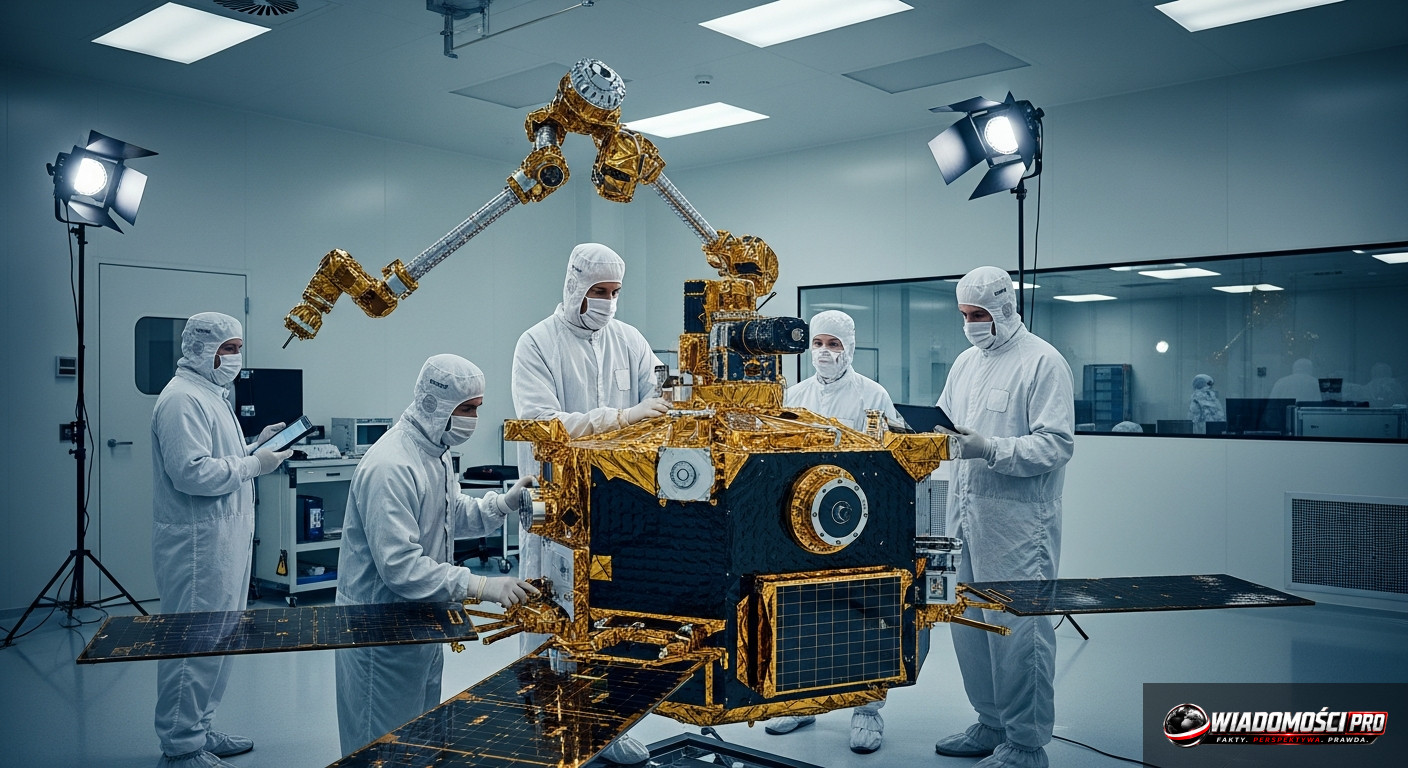
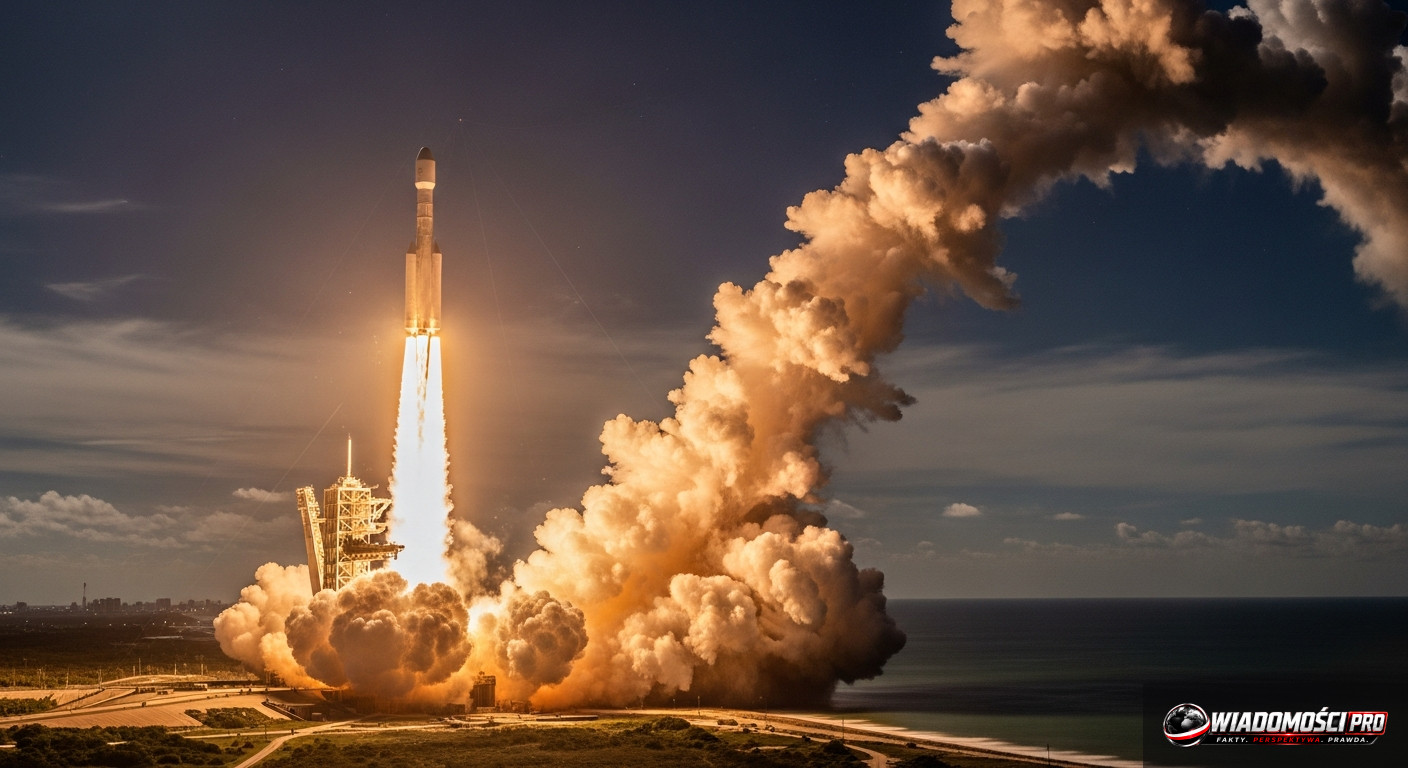
The Europa Clipper mission costs approximately 5 billion dollars and aims to investigate whether the ocean beneath the icy crust of Jupiter's moon possesses the chemical conditions necessary to support life. The probe launched from Cape Canaveral on October 14, 2024, after a nervous wait for the passage of Hurricane Milton, which paralyzed work at the NASA center for several days. The team at the Jet Propulsion Laboratory (JPL) faces a task of unprecedented scale, intended to determine whether an environment conducive to biology exists beyond Earth.
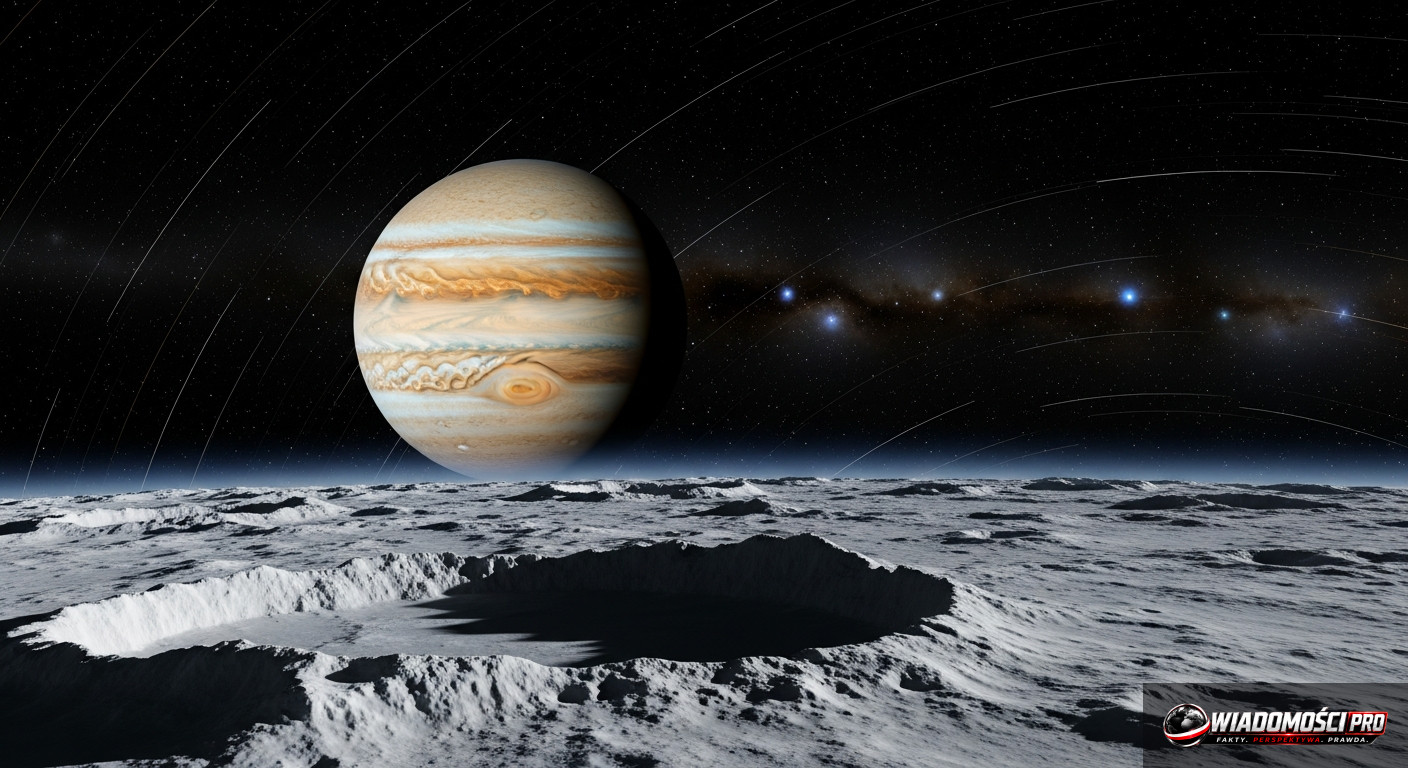
Europa is one of Jupiter's moons that has an ocean beneath an icy crust. For astrobiologists, it is the most interesting point in our planetary system because a global reservoir of liquid water is hidden under a thick layer of ice. It is there that we are looking for answers to questions about the origins of life beyond Earth. NASA assumes that liquid water may contain the chemical compounds necessary for the development of living organisms. The Europa Clipper mission is set to check the biological potential of this object.
The fascination with this moon stems from its extraordinary geological activity. Tidal forces generated by Jupiter's powerful gravity stretch and compress Europa, which causes internal friction and heat generation. Thanks to this, despite the enormous distance from the Sun, the water beneath the surface remains in a liquid state. It is a heating mechanism that makes Europa unique in the Solar System. Scientists such as Bonnie Buratti, who serves as the deputy project scientist, point out that these very processes may drive chemical cycles that became the foundation of biology on Earth.
The probe will not land on the surface. Instead, it will fly past the moon multiple times, scanning its structure and attempting to look under the icy crust using measuring instruments. This approach is dictated not only by technical issues but, above all, by the safety of the equipment in conditions of extreme radiation. The flybys will allow for the collection of data while avoiding prolonged stays in the most dangerous zones of Jupiter's magnetosphere.
If the hypotheses regarding the ocean are confirmed, we will be forced to redefine the definition of a habitat in space. This is not just a search for water; it is a search for the chemical foundations of biology that could have existed in total isolation from sunlight. Currently, this is the only way to verify whether our ideas about life are universal or limited solely to Earth-like conditions. The scale of this undertaking goes beyond simple planetary exploration – it is an attempt to find an answer to the question of whether we are the only civilization in this corner of the galaxy.

The launch of Europa Clipper was a high-risk logistical operation, determined by the unpredictable weather over Florida. Originally, NASA planned to send the probe into space at a different time, but the meteorological situation thwarted those plans. Hurricane Milton, which hit the region, forced the suspension of all operations at the spaceport. This was a decision dictated by the safety of the equipment, which is the most expensive and largest space probe built by the American agency for a planetary mission.
Engineers from JPL, led by project manager Jordan Evans, had to secure a structure the size of a basketball court, which was a challenge in itself under the conditions of an approaching hurricane. It is worth remembering that every day of delay in the launch window generates additional complications in the flight trajectory. The probe must use gravity assists from Earth and Mars to gain the appropriate speed necessary to reach Jupiter in the allotted time.
The goal of this expedition remains to verify whether the ocean hidden under Europa's icy crust actually possesses the chemical conditions necessary to support life. This is not a mission that will immediately point to aliens in the depths, but a complex study of the environment. If the probe shows that the water there has the right composition, it will open a completely new chapter in astrobiology. All this complex logistics – from fighting the hurricane to precise maneuvers in interplanetary space – serves this one, fundamental question. The probe is now on its way, and scientists must arm themselves with patience, waiting for data that will define our understanding of the possibility of life beyond Earth.
The total costs of the Europa Clipper mission amounted to approximately 5 billion dollars. This is a gigantic sum, even by the standards of space agencies, but in this case, every dollar has a specific operational justification. This amount is not just the price of the rocket launch itself. It includes a complex design process, the precise construction of a probe capable of surviving in Jupiter's extreme environment, and a multi-year research operation that is only just getting started.
The Americans have bet everything on one card. Instead of sending a simple lander, they designed an advanced orbital laboratory. The probe must not only reach its destination but also fly near the moon multiple times to investigate whether the ocean hidden under kilometers of icy crust possesses the chemical conditions necessary to support life. It is this necessity for multiple flybys and remote analysis of the composition of matter that drastically increased the complexity of the onboard systems, and consequently, the final bill for the American taxpayer.
For an outside observer, five billion dollars is an abstract number. In the realities of the space sector, however, it is an investment in the answer to the question of whether we are alone in our Solar System. Skeptics point out that such high expenditures on a single mission may limit funding for other research projects at NASA. However, it remains a fact that Europa Clipper is currently the most ambitious undertaking that humanity has sent toward Jupiter. Will the knowledge about the potential habitability of this moon prove to be worth these billions? Only the data flowing from the instruments in the coming years of operation will answer this question. Every stage of this mission is subjected to meticulous scrutiny, because in public budgets, such amounts always require a solid justification before Congress.
Europa Clipper is the most advanced probe that NASA has ever sent toward Jupiter. Engineers from the Jet Propulsion Laboratory faced a task that goes beyond standard interplanetary missions. To understand what is happening under the thick layer of the moon's icy crust, the device had to gain exceptional resistance.
The probe was designed to survive the extreme radiation conditions near Jupiter, which are lethal to most typical space electronics. The designers enclosed key instruments in a specially reinforced, thick-walled vault. This is the only way for the components to function long enough to perform the planned series of flybys. Without this shield, the systems would have fallen victim to the destructive influence of the gas giant's magnetic field within just a few weeks.
The equipment on board is impressive. The probe has the REASON (Radar for Europa Assessment and Sounding: Ocean to Near-surface) instrument, an ice-penetrating radar that will allow it to look under the surface and map the moon's internal structure. Another key device is MISE (Mapping Imaging Spectrometer for Europa), whose task is to study the chemical composition of the surface, including the distribution of salts and organic compounds. Surface imaging will be provided by the EIS (Europa Imaging System), delivering high-resolution photos.
MASPEX (Mass Spectrometer for Planetary Exploration) and PIMS (Plasma Instrument for Magnetic Sounding) will also assist in studying the chemical composition. MASPEX will allow for extremely precise analysis of gases and particles that may be ejected from the moon's surface, while PIMS will study the interactions between Europa and Jupiter's magnetic field. Complementing this data is E-THEMIS (Thermal Emission Imaging System), which will look for warm areas on the surface, indicating recent geological activity or water leaks. The whole is completed by the ECM (Europa Clipper Magnetometer), measuring the induced magnetic field, which is direct evidence of the existence of a saltwater ocean under the ice.
Each of these instruments was designed to work in conditions that cannot be fully recreated in Earth laboratories. We are not just paying for fuel or a launch vehicle here, but primarily for technology capable of surviving in one of the most hostile environments in the Solar System. Skeptics, however, remind us that even the most advanced sensors can fail if we do not find exactly what we are looking for under the surface. The investment is huge, and the margin for error in such conditions is practically non-existent. Each flyby must be perfectly timed to avoid collision with ice blocks or excessive exposure of the equipment to radiation.
In a geopolitical context, the launch of this mission was a clear signal. NASA beat European agencies in the implementation of a project dedicated directly to the study of Europa. For years, the debate about primacy in the study of the Jovian system was lively, and Washington finally cut it short with concrete action. The Americans did not wait for European consortia to finalize their plans, relying on their own resources and technology.
Despite this dominance, isolation in today's astronomy practically does not exist. The space sector is based on a complex network of dependencies. International cooperation remains the foundation of success, even if the USA finances most of the operations and leads the main project. Data flowing from the onboard instruments will reach the global scientific community, because the analysis of such unique samples requires the involvement of experts from many countries.
There is a natural synergy with the European JUICE mission, which is also studying the Jovian system. Scientists from both sides of the Atlantic exchange experiences, which allows for better planning of observations. The question is whether the financial outlays are the price for knowledge or for prestige. In an era of budget constraints, every such mission is an investment burdened with huge political risk. If Clipper does not deliver concrete results, subsequent projects of a similar scale may face resistance from the American Congress. This is a high-stakes game. The result depends on several sensors traversing Jupiter's orbit, which must survive years in the cosmic vacuum.
Europa Clipper will not orbit the moon itself continuously, as the Cassini probe did around Saturn. Instead, the NASA vehicle will take an elliptical orbit around Jupiter, which will allow for safe flybys near Europa itself. The plan assumes dozens of close encounters, during which the probe will collect key data, spread over years of operation. This is a precisely designed strategy that is intended to minimize the risk of damage to the equipment by Jupiter's powerful radiation belts.
During this time, the onboard instruments will engage in titanic work. The main task is to create detailed maps of the surface that will reveal the structure of the icy crust, and to analyze the chemical composition of potential water vapor plumes, if they are detected. Scientists hope that thanks to this, it will be possible to confirm whether an ocean possessing the chemical conditions necessary to support life actually exists under the ice. This is not a simple task, however. Europa's atmosphere is extremely thin, and the nature of the plumes themselves remains a matter of debate.
From the perspective of astrobiology, this is still a gamble where the stake is the answer to one of humanity's most important questions. The probe is already on its way, but we will only know the final verdict after years of analysis, when Clipper finishes its cycle of flybys and sends the last packet of data to Earth. Each flyby is a new chance to collect data that could change biology textbooks. It must be remembered, however, that even if we do not find life, the very characterization of the ocean will be a huge scientific achievement. We will learn the chemistry of this world, which will allow us to better understand the evolution of planetary systems.
Mission planning is years of work by hundreds of engineers and scientists for whom Europa has become a life goal. The program, led by Curt Niebur, who serves as the program scientist, is one of the best-planned undertakings in NASA's history. Every aspect of the mission, from power supply via solar panels to communication systems, has been tested in conditions simulating Jupiter's environment. Now that the probe is already in space, we have to wait for the first signals from the depths of the Jovian system.
From the taxpayer's perspective, billions of dollars is a huge expense, but from the perspective of science, it is an investment in a discovery that could change our understanding of humanity's place in the universe. If the mission confirms the presence of conditions for life, scientific institutions around the world will benefit, while the risk remains equipment failure in Jupiter's extreme environment, which would mean the loss of huge capital. However, one cannot put a price on the knowledge that comes from understanding the nature of another world. Is humanity ready for the information that we are not alone? This question remains open.
Many experts emphasize that Europa Clipper is an "all or nothing" type of mission. We do not have a plan B in case the probe stops responding. That is why such great importance was attached to system redundancy and radiation resistance. The team at JPL prepared software capable of self-diagnosis and repairing faults, which is intended to increase the chances of the operation's success.
Regardless of the result, data from Europa Clipper will serve scientists for decades to come. Even if we do not find life there, we will discover how an ocean works in such extreme conditions. This is knowledge that may be useful in studying other icy moons, such as Enceladus or Ganymede. We are on the threshold of a new era in space exploration, where attention is shifting from rocky planets to icy oceanic worlds.
Questions and answers:
When will the probe reach Europa?
The journey will take several years, and the probe will begin collecting key data after entering the Jovian system, which will happen in the years following the 2024 launch.
Will the probe land on the surface?
No, Europa Clipper was designed to perform a series of flybys near the moon, which will allow for safe scanning of the surface and ocean without the risk of landing.
Is the mission threatened by Jupiter's radiation?
Yes, which is why the probe was equipped with special radiation shields that are intended to protect its advanced equipment from the destructive influence of Jupiter's magnetic field.
What are the most important instruments on board?
The most important include the REASON ice radar, the MISE spectrometer, and the EIS camera system, which together will allow for a full investigation of Europa's composition and structure.
Who manages this project?
The mission is carried out by a team from the Jet Propulsion Laboratory (JPL) in close cooperation with NASA, with the participation of many international research centers.
Is this the only mission studying Europa?
Currently, Clipper is the most powerful tool directed at Europa, complementing data from other projects studying the Jovian system.
In summary, this mission represents the pinnacle of today's technological thought. It remains to wait for the fruits of the work of engineers and scientists who decided to challenge Jupiter. If life exists in the depths of Europa, Europa Clipper is our best chance to know about it. Every packet of data sent will bring us closer to answering the question that has intrigued humanity since the first astronomical observations. In a world where we are increasingly looking for answers in the stars, Europa seems to be the closest and most promising target. Regardless of whether we find a simple microbe there or only chemical traces of life, the mission itself has already gone down in history as one of the most ambitious engineering challenges. The probe is rushing through the darkness, carrying the hope of a discovery that will change our perception of biology. Is that enough? Time will tell. With each day, we are closer to Jupiter and the moment when Europa's ocean will cease to be a mystery to us. Science requires patience, and this mission is its best example. There is nothing left to do but follow further communications from JPL.
Sources
- Launch of the Europa Clipper mission to Europa - AstroNET – Polish Astronomical Portal
- Europa Clipper launches. A key task ahead of them - Geekweek Interia
- Europa Clipper probe to search for life on Europa - Urania - Polish Astronomical Portal
- Launch of the Europa Clipper mission [BROADCAST]. Americans will overtake Europeans in the search for life on Europa - Wyborcza.pl
- NASA sends a probe to Europa. The Europa Clipper mission has launched - WP Tech
- Europa Clipper has launched. It will investigate whether there are conditions for life on Jupiter's moon - Polskie Radio 24
- Europa Clipper probe to search for life on Jupiter's moon, Europa - wszystkoconajwazniejsze.pl
- Hurricane Milton delays the launch of NASA's largest space probe, Europa Clipper, until October 14 - Notebookcheck.pl
Article prepared by the Wiadomości PRO editorial team with the support of artificial intelligence. Facts come from the sources listed above.


Komentarze (0)
Ładowanie komentarzy...