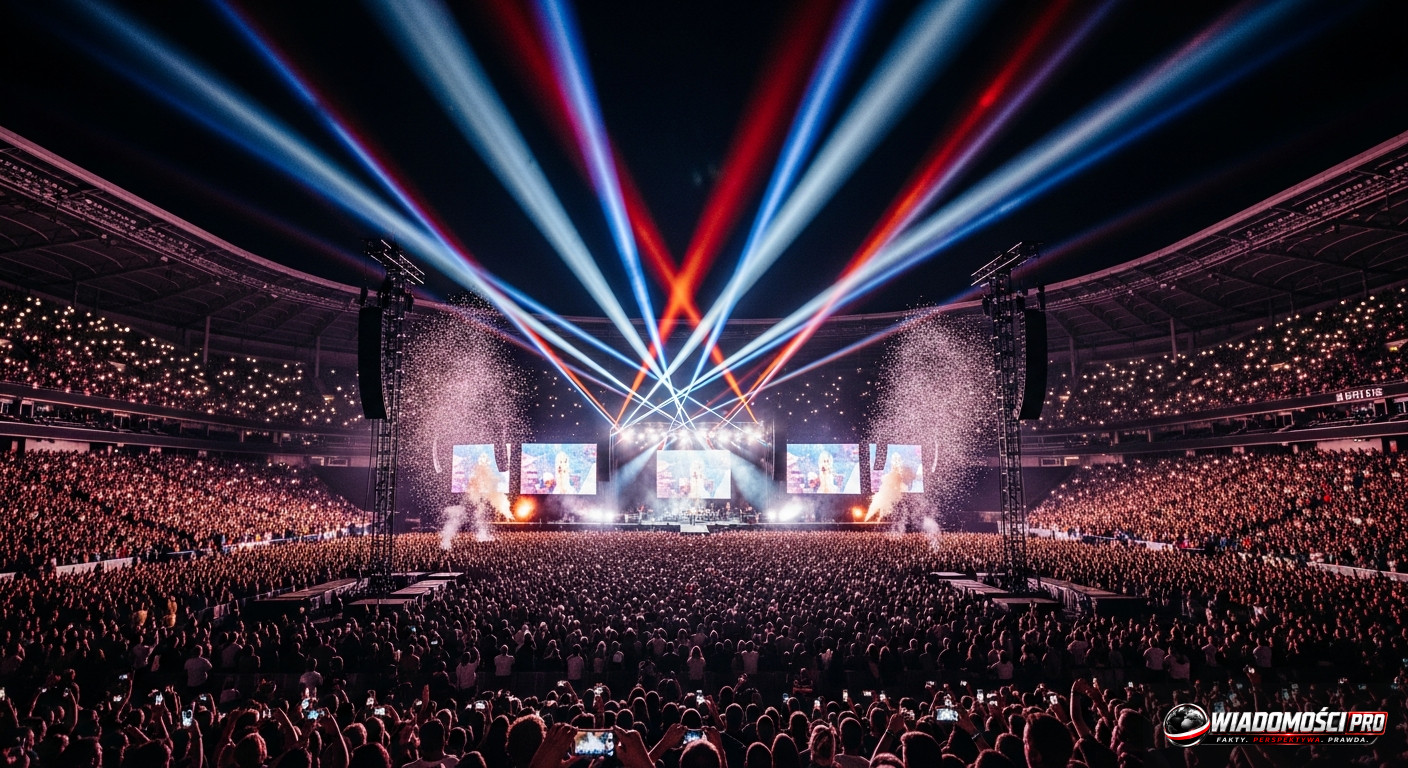
Dawid Podsiadło's stadium concerts attract hundreds of thousands of fans, with 90,000 people attending just one show in Chorzów in June 2026. Such a massive scale of events forces organizers to go beyond the standard logistical solutions that have dominated the Polish music industry until now. The collision of a multi-thousand-strong audience with the physics of sound at sports facilities has become a central point of discussion regarding the state of contemporary spectacles.
Attendance records and their price
June 2026 went down in the history of Polish music as the moment when the limits of concert possibilities were pushed to new levels. The Silesian Stadium in Chorzów, filled with 90,000 spectators, became the arena for an event that became a nationwide benchmark for many. This number is not just a result of ticket sales. It is a signal to the market that the demand for mass spectacles featuring domestic artists has entered a new phase.
However, this success has a flip side, often overlooked in enthusiastic press releases. The phenomenon of acoustics in such vast spaces remains a challenge that even the most modern sound systems struggle with significantly. Some of the audience gathered in the stands of the Silesian Stadium explicitly signaled that the quality of music reception was far from expectations. Voices of disappointment resulting from problems with sound clarity call into question the direction in which the organization of large stadium tours is heading.
During the concert in Chorzów, a symbolic moment occurred when nearly one hundred thousand people sang "Happy Birthday" to the artist as a birthday gesture for Maja Chwalińska. This unique act of audience unity momentarily covered up the technical imperfections of the venue, creating a sense of community. Nevertheless, the fact that half of the event's participants may have had difficulty clearly hearing the concert casts a shadow over the uncritical enthusiasm associated with attendance records.
Evolution of the stadium model
The foundations of Podsiadło's current dominance were laid back in December 2023, when the artist announced a seventh stadium concert for the tour scheduled for June 2024. At that time, no one expected that the intensity of that month would become the starting point for regular, nationwide stadium tours. The choice of Tarczyński Arena in Wrocław or Polsat Plus Arena in Gdańsk was not a coincidence, but the result of a well-thought-out strategy for building reach.
The 2024 tour acted as a testing ground for the management team. The organizers had to prove that the Polish market was capable of absorbing such a large number of tickets in a short time. The avalanche of interested fans in Gdańsk forced the addition of another date, which became a recurring pattern in later years. The success of that period confirmed to everyone that Podsiadło's stadium brand is self-sufficient and resistant to economic fluctuations.
In retrospect, it is clear that 2024 was a transition period. The artist tested the durability of the venues, getting fans accustomed to regular, mass performances. The speed with which tickets sold out became a clear signal to the industry. The competition had to acknowledge that Podsiadło operates in a different league, where concert logistics cease to be a task for subcontractors and become a key element of business strategy.

360-degree technology as a production foundation
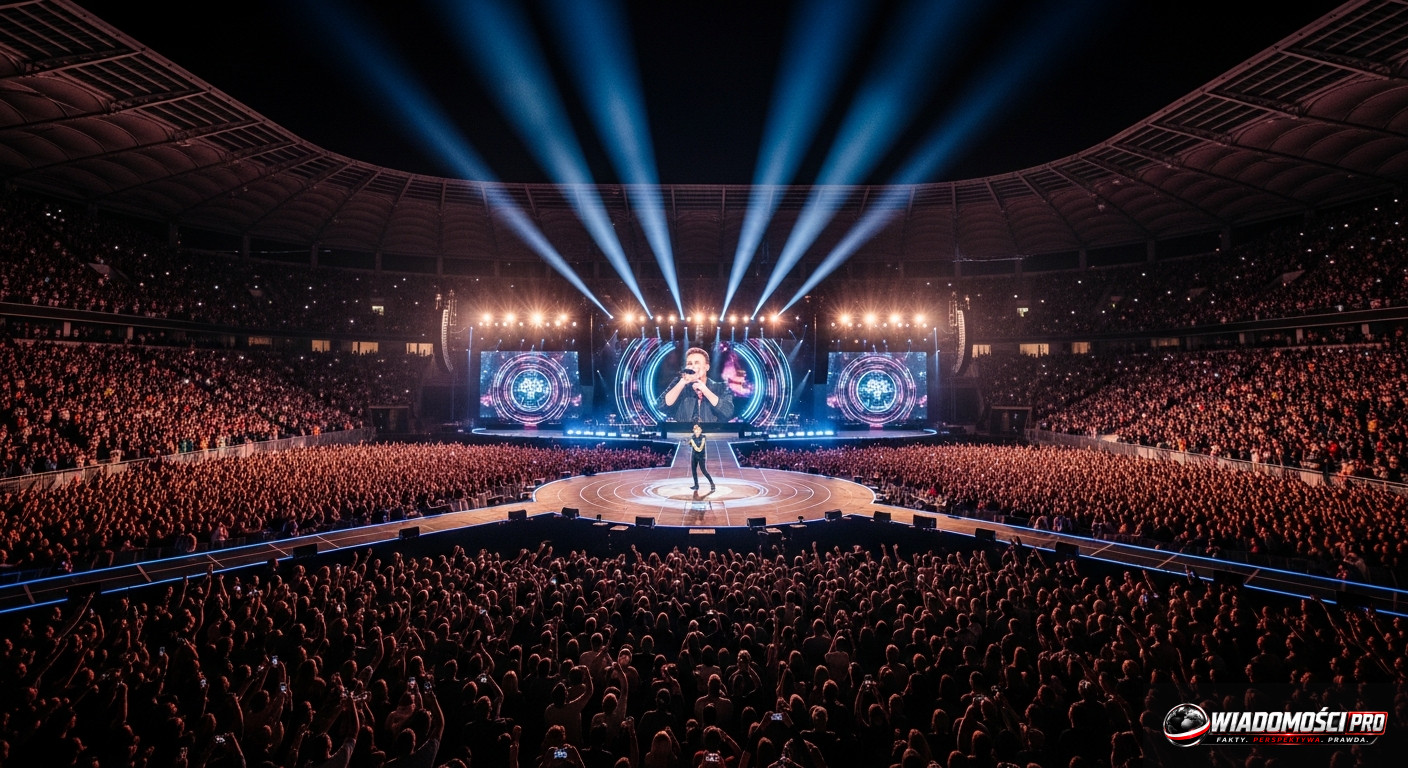
The 360-degree formula has become a hallmark of Podsiadło's performances, introducing a new quality in the way live music is presented. The first attempts to implement this solution at the Silesian Stadium in April 2025 required organizers not only to be precise in setting up the stage in the middle of the pitch but, above all, to synchronize sound for every section of the stands. This solution, while visually attractive, generates huge technical risks.
In theory, a centrally placed stage is supposed to provide every participant with equal access to the artist. In practice, however, with 90,000 spectators in Chorzów, physics proved relentless. The distance between the speakers and the furthest rows of viewers creates sound delays that are difficult to eliminate without losing sound selectivity. Anyone who has participated in such an event knows that a stadium is a place where the image precedes the sound, and audio quality is often a victim of the venue's size.
Podsiadło and his team, by promoting the tour in a 360-degree format, bet on spectacle, which by definition is meant to overshadow technical shortcomings. But is this a long-term strategy? Fans accustomed to the studio quality of the artist's recordings may feel disappointed when they receive only mass noise live. The risk of losing a portion of the loyal audience to the mass consumer is real, even though current financial results seem to ignore this problem.
Obrotowy Tour 2026: planning an empire
September 2025 brought the announcement of the "Obrotowy Tour" (Rotary Tour), which was to be the culmination of his concert activities to date. These announcements left no room for compromise. The artist clearly defined his expectations: the largest stadiums in the country, full logistical support, and maintaining the highest visual level. It was a signal that 2026 would be entirely subordinated to the stadium concert machine.
The scale of this undertaking became visible at every stop of the tour. The Chorzów performance, attracting 90,000 people, was merely the culmination of a strategy that assumed dominance over the music market in Poland. Podsiadło not only fills stadiums, he sets the pace at which other artists try (with varying success) to follow. This is a model where the number of tickets sold is more important than the intimate character of a concert.
From the perspective of an industry observer, the "Obrotowy Tour" is proof of how effectively popularity can be turned into a hard business product. Each concert involves hundreds of staff members, tons of equipment, and logistics resembling major sporting events. However, behind all these elements lies the question of the price the performer himself pays. Maintaining such an intense pace of work while maintaining top artistic form is a challenge that, in the long run, could lead to the burnout of the format.
Stadium challenges: between success and acoustics
In June 2026, when the Silesian Stadium was bursting at the seams under the weight of 90,000 fans, the portal naTemat.pl published a piece that openly pointed out the weaknesses of this success. The article's title about half the audience not hearing the performance became the most accurate review of that event. This criticism did not strike at the artist, but at the very idea of packing such huge crowds into facilities that were not designed with music in mind.
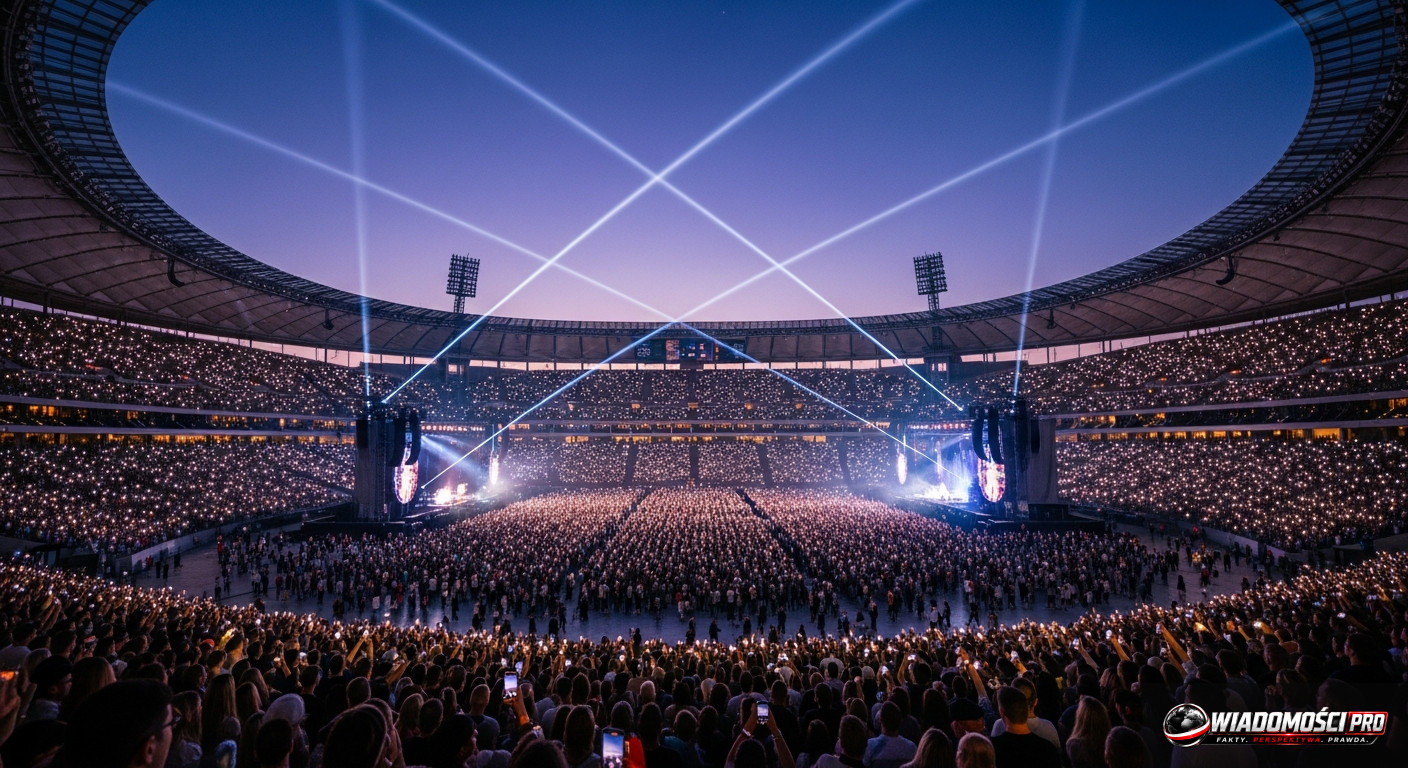
When the audience exceeds 50,000-60,000 people, acoustics cease to be a priority for organizers and become merely a background for the spectacle. Sound engineering is unable to overcome the laws of physics in an open space where sound waves disperse across tens of thousands of bodies. Ticket-paying participants often only receive the impression of participating in something big, not necessarily a quality musical concert.
A fundamental dilemma arises: is presence in the crowd more important to fans, or the quality of sound transmission? Experiences from Chorzów suggest that for the majority, this is a secondary issue. The atmosphere of the crowd, experiencing hits together, and the feeling of being part of something massive wins out over technical deficits. However, this does not exempt organizers from the duty of continuously improving technology, so as not to treat listeners as a "mass" filling the facility, but as conscious recipients of art.
Data that says it all
Analyzing data from recent years allows for clear conclusions about the scale of the operation that Dawid Podsiadło is running. It is worth looking at the specific numbers that define this phenomenon:
- 2024 Tour: 7 cities.
- Status: completely sold out (confirmed, among others, by the Gdańsk portal).
- Maximum attendance: 90,000 people during a single concert (Chorzów, June 2026).
- Additional dates: the necessity to add concerts in Gdańsk (June 2024).
These numbers verify not only the strength of the Podsiadło brand but also the capacity of Polish infrastructure. Many facilities in the country had to undergo an adaptation process to meet the technical requirements of the tour. The situation in December 2023, when the seventh stadium was announced, was a signal to skeptics that the market had not yet reached its ceiling. The data confirms that each subsequent tour was larger than the previous one, which is a rare achievement in the world of music.
The question about the limits of this growth remains open. Will we hear about a tour covering 10 or 12 stadiums in 2027? Looking at the current trend, it is likely. However, every step toward increasing the number of viewers distances the artist from the original intimacy of his music. For fans, it is emotional fulfillment; for organizers, it is a logistical success; and for Podsiadło himself – perhaps a trap of his own format, from which it will be difficult to exit without losing gigantic revenues.
What this means for you as a listener
Podsiadło's success is primarily a triumph of professional logistics over chaos. Fans have gained the opportunity to participate in events of global scale, and the event industry has received proof that Poles are ready to pay for production quality. However, as a listener, you must count on the risk. By buying a ticket to a stadium, you are not buying a guarantee of studio sound. You are primarily buying the experience of being in a crowd, a visual spectacle, and the feeling of participating in a historic moment.
Expecting the sound quality that smaller concert halls or clubs accustom us to is unrealistic in a stadium. If your goal is to analyze every guitar note or vocal precision, the stadium will likely disappoint you. However, if you are looking for the energy generated by 90,000 people singing with one voice, Podsiadło's tours remain the best choice in Poland.
It is also worth remembering that every such tour is an opportunity for local markets. Cities like Gdańsk or Wrocław gain not only in prestige but also in tourist traffic generated by thousands of visiting fans. This is the economic aspect of the phenomenon that often escapes discussions about acoustics. Podsiadło drives the entire service sector, which makes him not only an artist but also an important player in the country's event economy.
Questions and answers
How many cities did the 2024 stadium tour cover?
The 2024 tour covered a total of seven of the largest cities in Poland, which was the result of a strategy of maximum exposure for the artist's brand.
Are tickets for Podsiadło's concerts easily available?
Interest is so high that tickets sell out instantly, and organizers are often forced to add more dates, as was the case in Gdańsk in June 2024.
What distinguishes the 'Obrotowy Tour'?
This tour is based on an innovative 360-degree formula, which allows for handling a record number of viewers, although it simultaneously generates technical challenges related to sound reinforcement for such huge facilities.
What were the main problems during the concert in Chorzów in 2026?
The main problem was acoustics; with 90,000 viewers, part of the audience complained about difficulties with clear music reception, which sparked a discussion about the limits of the technical capabilities of stadiums.
Why is the 360-degree formula so important for production?
It allows for a central stage setup, which is intended to increase visual comfort for a larger number of people, but in practice, it requires advanced sound synchronization, which is extremely difficult to achieve at a stadium scale.
Does Podsiadło's stadium success have negative effects?
Critics point to a decline in sound reception quality at such mass attendance and the risk of losing the intimacy of the musical message, which is the price for stadium dominance and record profits.
Sources
- Nearly one hundred thousand fans of Dawid Podsiadło sang "Happy Birthday" to her. How Maja Chwalińska reacted - cgm.pl
- Dawid Podsiadło and his stadiums. In numbers - Red Bull
- Dawid Podsiadło - stadium tour in 360 format - Superauto Silesian Stadium
- Dawid Podsiadło. Tickets sold out! There will be an additional concert at Polsat Plus Arena Gdańsk! - Gdańsk - official city portal
- Dawid Podsiadło announces seventh stadium concert on the tour! "I doubt that there will ever be a month in my life like June 2024" - Tarczyński Arena Wrocław
- Podsiadło put on a show in Chorzów for 90,000 people. It's a pity that half of them didn't hear it - naTemat.pl
- Dawid Podsiadło returns to stadiums. "Obrotowy Tour" already in 2026 - Culture Onet
- Dawid Podsiadło on stadiums again. New tour in 2024 - Zwierciadło
Article prepared by the Wiadomości PRO editorial team with the support of artificial intelligence. Facts come from the sources listed above.

Komentarze (0)
Ładowanie komentarzy...