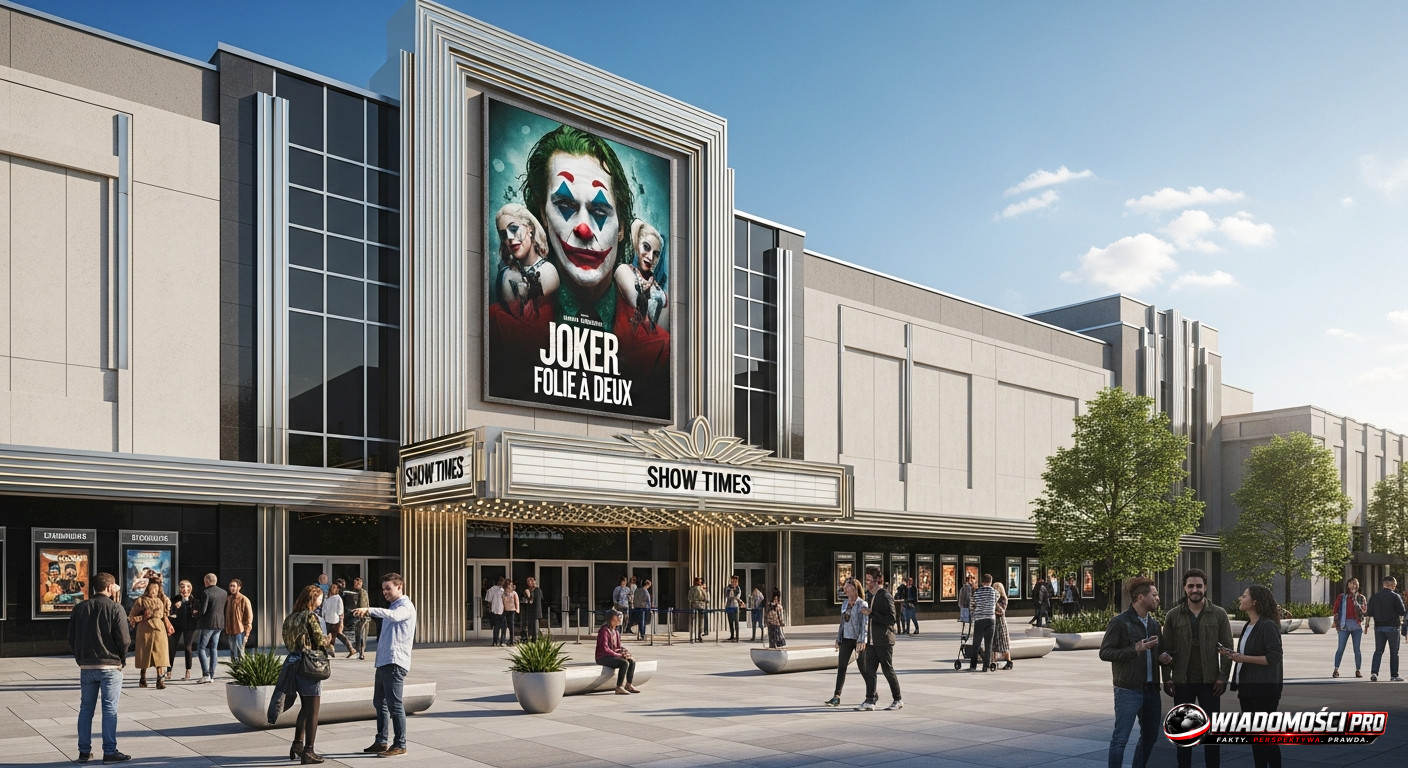
The film 'Joker: Folie à Deux' earned just $40 million during its opening weekend in the USA, a result significantly below analyst forecasts that puts it in the shadow of even poorly-rated productions like 'Morbius'. The decision to turn a dark psychological drama into a musical scared off a wide audience, as confirmed by negative viewer ratings in CinemaScore surveys. Warner Bros. studio's expectations collided with the brutal market reality, where a comic book brand is no longer an automatic guarantee of high revenue.
A cold shower: Opening results versus expectations
Warner Bros. invested huge resources into the continuation of Arthur Fleck's story, hoping to repeat the massive financial success of the first installment from 2019. Instead of billion-dollar earnings, the market mercilessly verified these ambitions. Forty million dollars during the opening weekend is a figure that serves as a warning signal to industry analysts of deep consumer disappointment. Viewers who flocked to cinemas years ago to learn the origin of the iconic antagonist showed great restraint this time.
The problem lies not only in the numbers but in the structure of the product itself. Todd Phillips, director of both parts, decided on a bold, artistic experiment, replacing brutal realism with a musical format. The US cinema market reacted to this with a withdrawal of capital. Customers buying tickets for "Joker" expected a continuation of the suffocating, realistic story about a man's downfall, not a psychological game with songs in the background. This discrepancy between the brand's promise and the final shape of the film became the main reason for the audience exodus.
Box office analysts, examining data from cinemas, point out that "Folie à Deux" failed to build a so-called "long tail" of sales. This means that after the first weak weekend, interest in the production began to drop sharply instead of stabilizing due to positive viewer feedback. The lack of enthusiasm was visible in every market segment – from large multiplexes to smaller art-house cinemas. For investors, this means a painful redefinition of what a "safe hit" means in today's cinema. The success of the first part was a result of a unique time, place, and social mood; the attempt to mechanically repeat this pattern in a different aesthetic proved to be a financial mistake.
Joker 2 in the shadow of Morbius: Comparison with other productions
Comparing the opening results of Todd Phillips' latest film with the production "Morbius" has sparked a wave of commentary in industry media. This comparison is not accidental. "Morbius" in the common consciousness of comic book fans became a symbol of a qualitative failure, a film that served as the definition of a cinematic flop in internet memes. The fact that "Joker 2" debuted with worse results than the Sony production is a slap in the face to the brand's prestige for Warner Bros.
It is worth looking at the dynamics of this decline. "Morbius," despite its obvious narrative flaws, at least possessed the genetics of a classic, albeit failed, superhero film, which attracted a loyal base of genre fans. "Joker: Folie à Deux," on the other hand, alienated both fans of comic book cinema and viewers looking for a more ambitious drama. This attempt to straddle two worlds ended in a fall into a vacuum. Market observers note that when a production with such a high budget becomes an object of ridicule and comparisons to the worst works of the competition, rebuilding trust in the brand is a long and costly process.
There is no denying that for distributors, such comparisons are devastating. In the film industry, prestige is a currency just as important as cash. When a brand becomes synonymous with disappointment, every subsequent day in the cinema brings losses because viewers, influenced by reviews and social media opinions, simply choose other titles. "Joker 2" not only lost financially but lost its status as a "must-see" event. It is this loss of status that is most dangerous for producers, as it prevents the effective promotion of a sequel in the future.

Unexpected leader: The Terrifier 3 phenomenon
While major film studios were desperately trying to save the sales results of "Joker 2," a player appeared on the American market that no one had considered in the context of box office records. The horror film "Terrifier 3" showed that the audience is hungry for authenticity, even if it is brutal, cheap, and niche. Damien Leone's production, which cost "pennies" compared to the budgetary colossalism of the Joker sequel, became a lesson in humility for the industry.
The economic efficiency of "Terrifier 3" exposed the weakness of a business model based on astronomical star salaries. Viewers, tired of polished, predictable blockbusters, flocked to a horror film that didn't pretend to be anything it wasn't. In popularity rankings, it was Art the Clown who started winning over Arthur Fleck. For Warner Bros., this situation is humiliating: a company with huge financial backing was overtaken by an independent project made on a minimal budget.
This phenomenon testifies to a profound change in consumer habits. Viewers have stopped equating a high budget with high artistic quality. In the age of widespread content access, it is authenticity and "community belonging" that have become the main drivers of ticket sales. Fans of "Terrifier" form a tight-knit group around the series that feels appreciated by creators who are not afraid to cross boundaries. On the other hand, "Joker 2" feels like a product calculated in corporate offices, which for the modern, conscious viewer is a clear signal to reject the offer. This failure is proof that in today's market realities, "penny" horror films can be more effective at attracting attention than franchises with long-standing traditions.
Analyst forecasts vs. market reality
The predictive models on which forecasts were based before the film's premiere proved useless. Analysts assumed that the "Joker" brand was strong enough that even with a radical genre change, viewers would show up in cinemas in numbers close to the original. Reality brutally verified these assumptions. The discrepancy between the numbers in Excel spreadsheets and actual ticket sales was so large that it forced experts to publicly admit their mistake.
The main problem was an incorrect assessment of audience "moods." Analysts overlooked the fact that after the first part of "Joker," the audience expected an aesthetic continuation, not a musical pivot. When the first reviews began to arrive from festivals, viewer interest dropped drastically. Models that do not take the "emotional factor" into account proved blind to this change. Instead of a record, we received a painful lesson that algorithms cannot predict artistic disappointment.
The scale of this error is symptomatic of modern Hollywood. The industry believed that the brand was stronger than the content itself. This assumption, which worked during the era of Marvel universe dominance, failed completely in the case of "Folie à Deux." When viewers felt that the film did not meet their expectations, "word-of-mouth" marketing on social media worked to the detriment of the production. Instead of building attendance, online discussions became the main reason why undecided viewers gave up on going to the cinema. This is a situation where forecasts were destroyed by real public opinion, which can no longer be controlled by advertising budgets.
Drastic decline compared to the first part
Comparing the opening weekend earnings of "Joker" from 2019 and "Folie à Deux" from 2024 reveals the scale of the collapse this universe has found itself in. Todd Phillips' original film was a phenomenon that crossed the billion-dollar revenue barrier worldwide, becoming one of the highest-grossing comic book-based films in history. The sequel, instead of leveraging this capital, squandered it within just a few days of being on screens.
The gap between these two projects is gigantic. The original was raw, dirty, and realistic. The sequel is aesthetically blurry, musical, and distant from the problems that resonated so strongly with the viewer five years ago. Someone at Warner Bros. must have decided that the success of the first part was a result of the character's strength, not the specific atmosphere of the film. This misdiagnosis led to the creation of a picture that became incomprehensible to most viewers.
This failure is not just about money. It is a capitulation of an artistic vision that had aspirations to be more than just "another DC film." Instead of a great event, we got a production that in the eyes of fans became a "joke" – which is particularly ironic given the main character's name. Hollywood has once again reminded us that big names like Joaquin Phoenix or Lady Gaga cannot save a project if it lacks a coherent story that would captivate the mass audience. This is a financial flop whose effects will be felt in the studio's strategy for years to come.
Conclusions for the industry: What's next for the universe?
The financial flop of "Joker: Folie à Deux" is not just a one-time problem for Warner Bros.; it is a turning point for the entire strategy of managing large comic book brands. Investors who until now believed in the constant growth of revenue from this sector have had to confront the brutal truth. If a production with such a high budget loses to horror films at a fraction of the price, it is a sign that the old rules of the game no longer apply.
In the offices of Hollywood decision-makers, a frantic search for those to blame has begun, but the real problem is much deeper. The industry must answer the question of whether viewers have had enough of the "superhero" aesthetic, even in its darker varieties. Here are the main conclusions experts are drawing after the October market collapse:
- Budget verification: The studio will likely significantly limit funding for niche, risky projects based on well-known licenses. The market has stopped guaranteeing a return just by having a name on the poster.
- The end of the "sure thing" era: The feeling that every production from the DC universe would automatically attract millions of viewers was finally buried by the 2024 results. From now on, every project will have to prove its value from the first day of release.
- Pressure on creativity: If "Joker" fails, safe, formulaic sequels become the only path to survival. Paradoxically, this may kill the artistic courage that this cinema so desperately needs to survive in the face of competition from streaming.
From an analytical perspective, Warner Bros. has hit a dead end. They need hits that will drive quarterly figures, but every subsequent attempt to experiment with the brand could end in a financial hangover. The market no longer forgives sentiment. The time of large, ill-considered budgets for projects that ignore audience expectations has just come to an end. The future will belong to those who can better listen to their audience instead of imposing costly and incomprehensible artistic visions on them.

What this means for you
For Warner Bros., this result means the necessity of a radical verification of the budget strategy for sequels to the biggest hits. Smaller studios producing horror films at a fraction of the cost, which better hit the mood of the viewers, are gaining, while large franchises based on high production costs are losing. The viewer gains more influence on the market – if a film does not meet expectations, they vote with their wallet, which forces studios to change their approach.
Questions and answers
Did Joker 2 really earn less than 'Morbius'?
Yes, box office reports confirm that the opening results of 'Joker: Folie à Deux' were lower than those of the film 'Morbius', which is considered a historic image and financial failure.
Why is the $40 million result considered a flop?
This result is drastically below analyst expectations and the production budget. Such an amount makes it impossible to recoup costs at the assumed pace, considering the huge spending on marketing and star salaries.
Did the horror film 'Terrifier 3' really beat Joker?
Yes, despite the huge difference in budgets, 'Terrifier 3' proved to be more financially efficient and better received by viewers during its opening weekend, as confirmed by data from American cinemas.
Does the studio plan to learn from this failure?
The financial flop of a picture that was supposed to be a sure thing for the studio has shattered the existing strategy for managing DC brands. This failure is not just an accident at work, but a warning signal for corporate boards that have accustomed investors to constant growth in the comic book cinema segment in recent years.
What did the genre change to a musical do to the film?
The decision to transform a dark psychological drama into a musical scared off the general public, who expected a continuation of the realistic story. This discrepancy between the brand's promise and the final shape of the film became the main reason for the audience drain and low ratings in CinemaScore surveys.
What impact did the 'Joker' brand have on the result?
The brand, which previously guaranteed billion-dollar revenues, lost its magnetism. In direct comparison with the brutal aesthetics of other productions, the Hollywood giant looks like a product that is not only expensive but, above all, unnecessary in the eyes of the modern viewer.
Did analysts predict this result?
No. Predictive models completely ignored expert expectations because analysts failed to see how quickly viewer enthusiasm evaporated, giving way to indifference. No one assumed such a spectacular collision with reality.
What does this mean for fans of the DC universe?
This failure calls into question further investments in similar, risky formats. The studio may become more conservative, which in the long run could kill the artistic courage that this cinema needs.
Did Joaquin Phoenix and Lady Gaga save the film?
No. Big names in the cast proved insufficient to attract crowds when a coherent artistic vision that would interest the mass audience failed.
What is the biggest lesson from this failure for Hollywood?
The lesson is simple: a brand is a currency that cannot be valued in a spreadsheet, and viewer trust is the most valuable resource that cannot be bought with high actor salaries.
Sources
- Box Office USA: Shocking debut of the film "Joker: Folie à Deux" - Filmweb
- Joker 2 is an unfunny joke at the box office. Results are even worse than assumed - Eurogamer.pl
- How much will Joker 2 earn in its opening weekend? Predicted result much worse than part 1 - naEKRANIE.pl
- Third "Venom" is the leader of the North American box office - Polish Press Agency SA
- This is how much "Joker: Folie à deux" earned in its opening weekend! A big flop for the creators and cast? - Radio ESKA
- Joker 2 lost even to Morbius. The worst Marvel and Sony films earned more - Gram.pl
- Box Office USA: New releases massacre. "Toy Story 5" is heading for a series record - Filmweb
- Budget horror film puts Joker 2 on its back. Terrifier 3 cost "pennies" and is still winning - Eurogamer.pl
Article prepared by the Wiadomości PRO editorial team with the support of artificial intelligence. Facts come from the sources listed above.

Komentarze (0)
Ładowanie komentarzy...