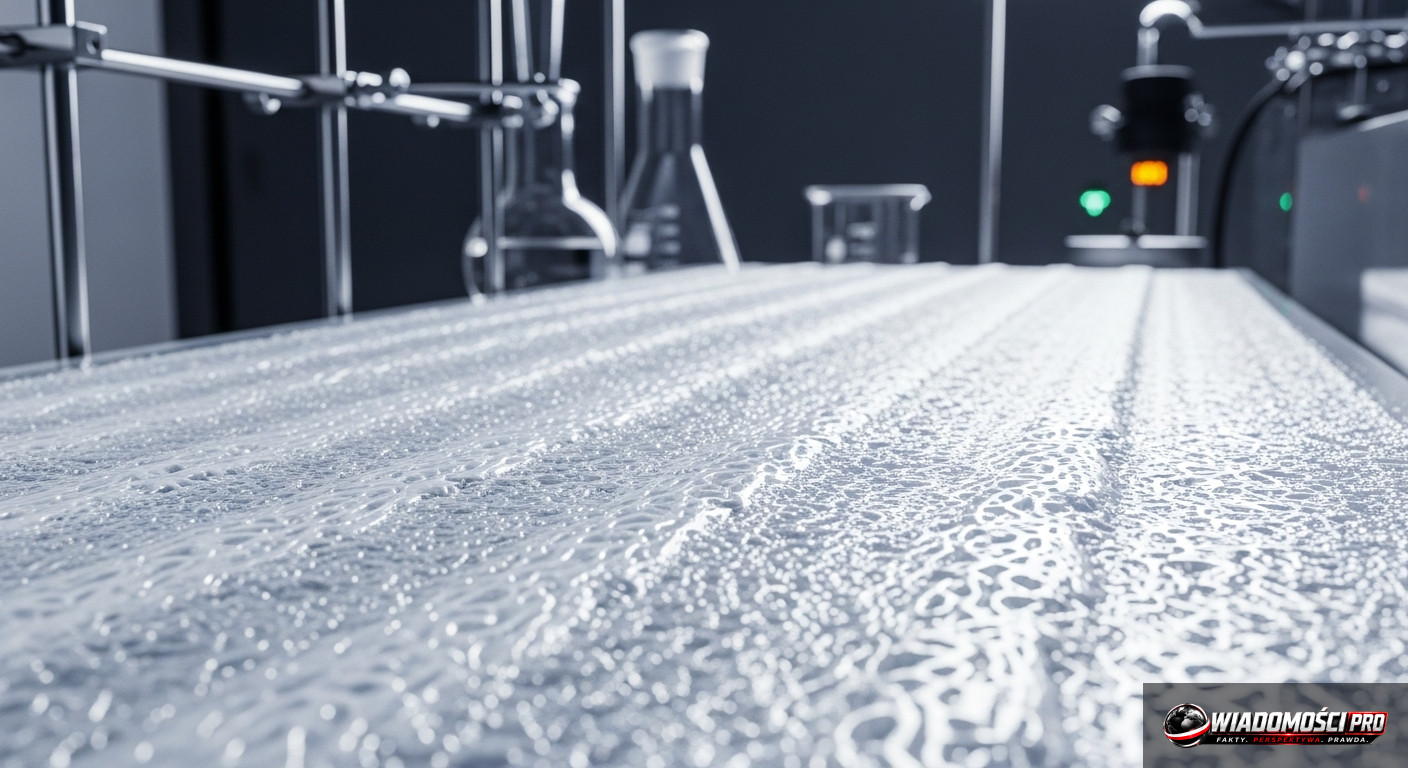
Passive radiative cooling technology uses special coatings that reflect sunlight and emit heat in the infrared spectrum through the so-called atmospheric window, which in laboratory tests allows for a temperature reduction of 2°C without electricity consumption. However, effectiveness depends on weather conditions and building insulation, and precise market data for 2026 requires an individual audit.
How physics replaces air conditioning: the mechanism of action
Passive Daytime Radiative Cooling (PDRC) is not a magical solution, but the result of precise materials engineering. Instead of forced circulation of refrigerant in a compressor, these systems utilize a physical phenomenon where the building's surface becomes a thermal energy emitter. The key to success is utilizing the atmospheric "window," which is the spectrum of electromagnetic waves in the range of 8 to 13 micrometers. In this range, the Earth's atmosphere becomes almost completely transparent. Heat emitted by the material at this frequency is not trapped by clouds or greenhouse gases, but escapes directly toward the cold outer space.
Materials used for this purpose must meet two strict criteria. First, they must be characterized by an extremely high solar reflectance, exceeding 95 percent. This ensures the surface does not absorb short-wave radiation, which is the main source of building heating on sunny days. Second, the material must exhibit high emissivity in the mid-infrared band, which allows for efficient "pushing" of heat accumulated inside the building structure to the outside.
In laboratory conditions, engineers achieve a surface temperature reduction of 2°C, and in ideal conditions, even a few degrees more. It should be noted, however, that a laboratory is not a building roof in the middle of July. The effectiveness of the method drops drastically in high humidity conditions. Water vapor molecules in the atmosphere close the aforementioned window, which causes infrared radiation to reflect off lower atmospheric layers and return to the building. Physics is not one-sided in this case.
Implementations in 2026 show that this technology is not a universal replacement for air conditioning. In places with high humidity, such as coastal areas or river valleys, the energy gain resulting from the use of PDRC coatings may be negligible. Conversely, in dry and sunny climates, this technology shows the greatest potential. The lack of standardized market data means that every installation must be preceded by an analysis of local meteorological conditions. We do not yet have hard evidence on how these coatings will behave after three years of exposure to Polish acid rain and urban pollution.

Materials of the future: from foils to advanced coatings
The first commercial solutions are appearing on the market that attempt to translate PDRC theory into a construction product. An example is panels produced by the company SkyCool Systems, which use optical dielectric layers to reflect light and emit heat. Another approach is nanocomposite thermal insulation paints, which, thanks to an appropriate structure of pores or particles, reflect solar radiation in a way that exceeds the capabilities of traditional white facade paint.
The costs of such solutions are currently high due to the lack of mass production scale. Estimated prices per square meter of advanced PDRC coatings in 2026 range from 150 to even 400 PLN per square meter, depending on the application technology and the durability declared by the manufacturer. For comparison, standard facade paint costs a fraction of this amount. The investor must therefore answer the question of whether energy savings will compensate for the higher initial cost within a predictable time.
Most materials available on the market are multi-layer systems. The bottom layer is responsible for reflecting visible and ultraviolet light, while the top structure, often based on polymers with an admixture of glass or ceramic microspheres, is designed to emit energy in the 8–13 micrometer band. Such solutions require precise application. Even minor execution errors or uneven layer thickness can drastically reduce the effectiveness of radiative cooling.
Currently, there is a lack of reliable, long-term reports confirming whether, after two summer seasons in conditions of heavy dust, the emissivity of these materials remains at the declared level. Dust and atmospheric deposits can "clog" the coating's ability to emit heat, making it just an ordinary, expensive paint. Investors should approach manufacturer promises with caution and demand test results conducted in conditions similar to the building's target location.
How to check if your building is ready for PDRC?
Applying radiative coatings to a building that does not meet basic insulation standards is a waste of money. Before making an investment decision, the first step must be an energy audit based on the U-value (heat transfer coefficient) for external partitions. If the partitions have high U-values, heat from the building's interior will penetrate the walls faster than the coating can release it into space.
The U-value of external partitions in modern construction should be below 0.20 W/m²K for external walls and about 0.15 W/m²K for roofs. If the building is older, has numerous thermal bridges, or insufficient insulation thickness, passive radiative cooling will have a marginal impact on indoor thermal comfort. In such a case, every zloty spent on PDRC coatings will be less effective than the same zloty spent on insulating the attic or replacing window joinery.
Another factor is the building's thermal inertia. Buildings with high mass, for example, those made of brick or concrete, work better with passive technology than light, frame structures. The building's mass acts as a buffer that stabilizes the temperature. In light buildings, where partitions heat up quickly, the radiative coating must operate with very high efficiency to keep up with the influx of thermal energy.
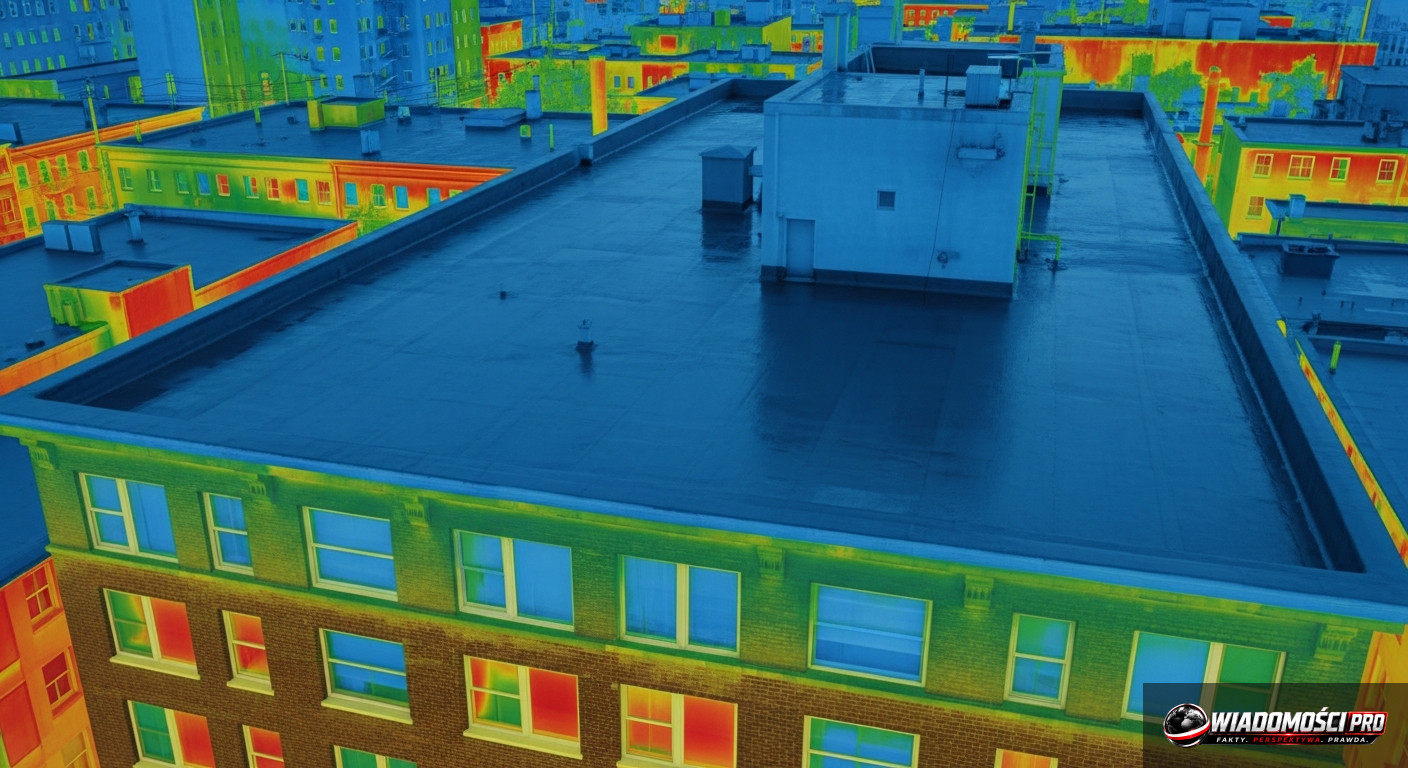
To independently assess the implementation potential, an investor should conduct a simple test. During a sunny day, measure the surface temperature of the roof or wall in full sun. If, after performing a thermal imaging audit, it turns out that the building has numerous points of cold air leakage or heats up through leaky roof windows, passive radiative cooling should be treated as the final stage, not the initial one, of modernization. Without a tight envelope, the building will "overheat from the inside," which will neutralize the physical gains from using advanced coatings.
Potential in the face of heatwaves in 2026
August 2026 clearly showed that energy infrastructure is not prepared for extreme temperatures. Peak energy demand in the afternoon hours, driven by the operation of millions of air conditioners, puts transmission systems on the verge of capacity. In this context, the concept of passive radiative cooling ceases to be a laboratory curiosity and becomes an element of the energy security strategy for commercial facilities.
Property managers who are looking for ways to reduce the carbon footprint of their buildings are increasingly looking toward PDRC materials. The main advantage is the lack of moving parts that could fail, and the complete elimination of energy consumption during system operation. Unlike air conditioners, which lose efficiency during heatwaves, radiative systems work most effectively when the sky is cloudless and sunlight is at its strongest.
However, the scale of implementation in 2026 remains limited. The lack of market data on the durability of coatings over a decade discourages investment funds managing real estate portfolios. Investors expect hard numbers, and these are still lacking. The manufacturer usually presents results from controlled tests that take place in optimal conditions. Transferring these results to an urban environment, full of smog and pollution, is risky.
Passive cooling will not replace HVAC systems in buildings with high internal gains, such as office buildings with a large number of server rooms or densely packed desks. However, it can act as a supporting system that lowers the temperature of the air supplied to air conditioning systems by a few degrees. This is enough to reduce the load on compressors during summer peak demand, which translates into real financial savings for the facility owner.

Limitations and implementation challenges
Technology based on the atmospheric window encounters a barrier that cannot be overcome by physics alone: nature. In the Central European climate, where we often deal with muggy days of high humidity, the effectiveness of infrared emission drops. A coating that lowers the temperature by 5 degrees in the dry climate of Arizona may be barely noticeable on a humid day over a Polish city.
Another challenge is cleanliness. Radiative coatings are extremely sensitive to dirt. Dust, soot from chimneys, or plant pollen settling on the surface change the optical properties of the material. This forces regular cleaning of the surface, which for many property managers is an additional, unplanned operating cost. The lack of market data on the life cycle of these materials in Polish climatic conditions makes the investment carry a significant risk.
It is also worth paying attention to formal and aesthetic issues. Many PDRC materials are available only in white, which results from the necessity of maximizing the reflection of solar radiation. In Polish conditions, where spatial development plans often impose the color of facades or roofs, the use of such coatings may be impossible without obtaining official permits. Architects must reconcile the requirements of energy functionality with rigorous aesthetic requirements.
Currently, there are no reliable long-term studies conducted in Poland that would confirm the profitability of these solutions in single-family housing. Investors who decide on such a solution become pioneers, risking their own funds for promises that sound excellent in laboratory conditions but may prove difficult to maintain in everyday operation.
The economics of passive cooling: is it worth it?
From a financial point of view, passive radiative cooling is a promise that in 2026 has still not seen market standardization. There is a lack of unified price lists that would allow for an easy calculation of return on investment (ROI). Each case is treated individually by contractors, who often do not have data on the durability of their products in Polish conditions for a period longer than three years.
Initial costs are high, and the lack of savings on operation in the winter months (coatings do not help with heating, and sometimes can even increase heat loss through the facade) makes the payback period difficult to estimate. If an investor is considering implementation, they must perform their own calculation, taking into account the cost of purchasing the material, the cost of professional application, and the projected maintenance costs.
Owners of warehouses with temperature-sensitive products, such as food or medicine, may see the benefits faster. For them, every degree of temperature reduction without the risk of mechanical system failure is a value in itself. Conversely, for the owner of a single-family house, an investment in PDRC at current prices may be unprofitable compared to installing a well-designed photovoltaic system with an air-to-water heat pump, which provides active cooling.
Below we present a summary that shows where the problem lies:
- Operating costs: 0 PLN.
- Initial costs: from 150 to 400 PLN/m².
- Durability: no data confirmed for the Polish climate.
- Certification: no unified standards for PDRC materials in construction.
Who will benefit? Primarily technological pioneers and owners of large-area facilities, where the sum of saved electricity on an annual scale allows for the amortization of costs in a reasonable time. Who will lose? Anyone who treats this as a simple alternative to air conditioning, ignoring the technical condition of their building's partitions.
The future of passive architecture
The future of radiative cooling lies in material integration. Currently, coatings are an additional layer applied to finished structures. In the coming years, we should expect roof membranes, plasters, and ceramic tiles that will have PDRC properties in their molecular structure. Manufacturers want the technology to become invisible to the architect and investor.
This integration would allow for the avoidance of additional application and maintenance costs. If the building material itself cools, there will be no need to worry about cleaning the outer layer or polymer degradation. In 2026, however, we are at the stage of prototyping such solutions on a mass scale. The industry still has to go through the stage of verifying the durability of these materials in the face of harsh environmental conditions.
It is worth noting that the development of passive architecture is not limited only to cooling. A real revolution will happen when building materials begin to dynamically react to environmental conditions. For example, coatings that reflect radiation and cool in the summer, and change their emissive properties in the winter to keep heat inside. This is the holy grail of building physics that today's research centers are striving for.
For the average investor, this means it is worth waiting. The technology is promising, but it is currently in the early access phase, where implementation costs are exorbitant and the risk of unforeseen operational problems is real. Before radiative coatings become a standard, the industry must go through a standardization process that will allow for comparing offers from different manufacturers based on hard data, not marketing promises.
What this means for you
If you manage a commercial property or are planning to build a house, do not treat radiative cooling as a system that will solve the heat problem on its own. It is a supporting technology. Those who have buildings with very high insulation and are not afraid of experiments will benefit from it. The catch remains air humidity – on muggy days the system can be practically useless. Before making a decision, invest in a reliable thermal audit, which will show whether your building can even effectively "release" heat into the atmosphere.
Questions and answers
Does this technology work at night?
Yes, radiative cooling is more effective at night because the lack of direct sunlight allows the coating to more effectively release heat into outer space through the atmospheric window, without simultaneously absorbing solar energy.
Can this be installed on an old roof?
Most solutions are specialized coatings that can be applied to existing roof coverings, however, this requires perfect surface preparation and certainty that the roof structure will withstand the additional load and material layer.
What are the real energy savings?
In optimal weather conditions and with a very high standard of building insulation, passive radiative cooling allows for a reduction in the operation of traditional air conditioning systems by 20 to 40 percent, however, in a humid climate, savings can drop to almost zero.
Do I have to clean the facade for it to work?
Yes, keeping the surface clean is crucial. Even a small layer of dust or urban pollution drastically reduces the material's emissivity, which translates into a decrease in its effectiveness in lowering the temperature.
How do I check if my building qualifies for this technology?
The most important step is to assess the U-value for external partitions. If this value is higher than the recommended standards for energy-efficient construction, passive radiative cooling will not bring the expected results due to heat penetration from the building's interior.
Are PDRC coatings available in different colors?
Currently, most solutions available on the market are based on the color white, which is physically determined by the necessity of maximum reflection of solar radiation. Colored solutions are the subject of research, but their effectiveness is significantly lower than white versions.
Article prepared by the Wiadomości PRO editorial team with the support of artificial intelligence. Facts come from the sources provided above.


Komentarze (0)
Ładowanie komentarzy...