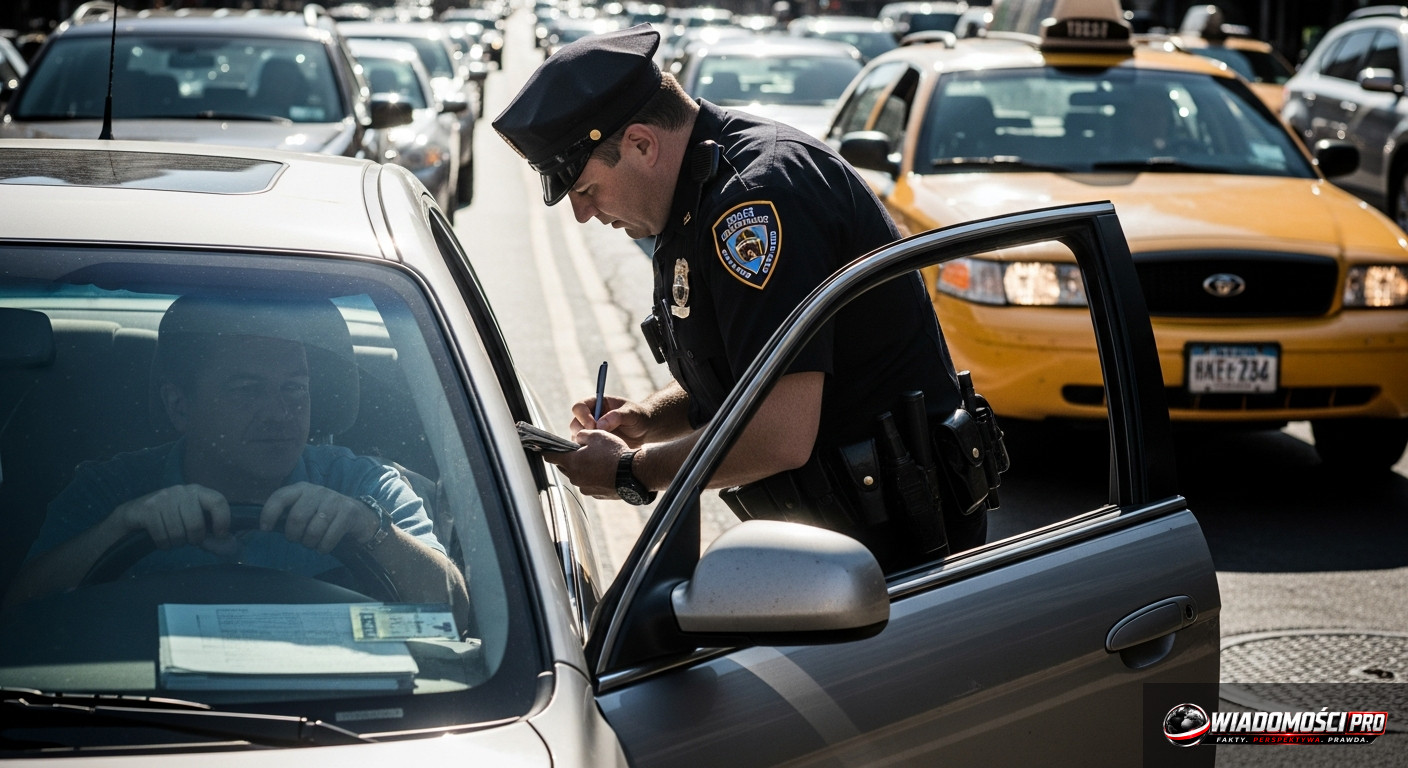
In the first half of 2026, the Police suspended over 11,000 driver's licenses, a result of the intensive enforcement of new regulations aimed at improving road safety. Officers have gained broader powers that allow for the elimination of dangerous behavior not only in urban areas but also on transit routes. The scale of these actions is a direct response to the growing number of accidents, and hard data from police reports prove the uncompromising approach of uniformed services toward road pirates.
Scale of the phenomenon: the balance of the first six months
From January 1 to June 30, 2026, Polish roads became the arena for the most radical driver discipline operation of this decade. The suspension of over eleven thousand documents is a result that has ceased to be merely an official note and has become a real challenge for transport logistics and the daily mobility of thousands of citizens. Analyzing this result, it is worth noting that this is not a coincidence, but the result of a conscious change in police doctrine. Until now, actions focused on spot checks during peak hours. Today, the police have shifted the focus to long-distance patrols that show no mercy to those ignoring speed limit signs.
Looking at the distribution of these interventions, there is a clear division between regions with high service activity and those where statistics seem almost stable. In the Chrzanów district, only 18 cases of license suspension were recorded. This comparison with the nationwide result of 11,000 shows how varied the situation is in the field. Chrzanów is an example of an area where the local specificity of roads and lower transit traffic translate into a smaller number of violations. Drivers in the Masovian or Silesian voivodeships are in a completely different situation, where motorways and national roads are under constant, almost unlimited supervision by measurement systems and unmarked police cars.
However, this is not just a matter of the number of suspensions, but primarily a change in the nature of inspections. Police officers have received guidelines that mandate treating every offense as a potential spark for tragedy. Instead of warnings, officers are resorting to the most severe sanctions. This approach has made drivers who felt confident in their vehicles for years now look anxiously for every unmarked car. This phenomenon has ceased to apply only to those blatantly breaking the law. Increasingly, documents are being lost in situations that would have resulted in a fine a year ago.

New regulations in practice: where is the police most strict?
The regulations introduced in 2026 are not just a collection of paragraphs. It is a system that automatically and mercilessly enforces zero tolerance for speeding. A key element of the new strategy is the expansion of powers to suspend documents outside built-up areas. Historically, it was in non-built-up areas that the highest number of tragic accidents caused by excessive speed occurred. Now, the police are using tools that allow for the immediate immobilization of a driver who ignores restrictions on a national road.
These actions are particularly visible during weekend operations, when traffic intensity increases, and with it, the risk of bravado. The police do not wait for reports. Officers proactively address threats by organizing ambushes in places where drivers usually "step on the gas." This is not a witch hunt, but a precise strike in areas that are statistically the most dangerous. Using the new regulations allows for the removal of a driver from traffic the moment they pose a real threat, without waiting for a tragedy.
The surprise of drivers is enormous. Many people still live in the belief that it is enough to slow down before entering a city to avoid inspection. However, reports from July 2026 show that this tactic has become obsolete. Inspections take place on transit sections, on exit roads, and on roads bypassing main communication routes. It is precisely there, where the driver feels most at ease, that the risk of losing a driver's license is currently the highest. Uniformed services are consistently building an image of the inevitability of punishment, which forces motorists to maintain permanent concentration, not just momentary attention in places marked as speed measurement zones.
Why are drivers losing their licenses? Analysis of causes
The reasons for losing licenses in 2026 are closely linked to the two main sins of Polish drivers: speed and sobriety. Although speed dominates the statistics, irresponsible behavior during overtaking maneuvers also plays an increasingly important role. The police no longer divide offenses into less and more dangerous ones. If a maneuver creates a hazard in road traffic, the reaction is immediate.
Let's analyze the structure of these violations. More than 70 percent of suspensions result from blatant speeding by more than 50 kilometers per hour in a built-up area. The remaining 30 percent is a result of other offenses, including driving under the influence of alcohol or drugs and dangerous behavior at intersections. Importantly, documents are increasingly being lost by people who have committed multiple offenses in a short time, which, thanks to the police's integrated IT system, is detected almost in real-time.
The role of the IT system that supports officers in the field cannot be ignored. Every police officer has access to a database where they can see a driver's history. This makes road recidivists caught much more effectively than in previous years. This system eliminates the possibility of making excuses about a lack of awareness of the committed act. A driver who notoriously ignores the rules cannot count on leniency. Every inspection ends with a verification in the central database, and the information gathered there becomes the basis for issuing a decision to suspend the document.
What many commentators call a "driver's license pogrom" is actually a process of organizing traffic. For years, Polish roads were a place where regulations were treated as a suggestion, not an obligation. The current situation is a return to the foundations of safety. It is worth noting that while the number of suspensions is high, the level of awareness of threats among drivers is slowly but gradually increasing. Changing behavior behind the wheel will not happen overnight, but the inevitability of punishment is the most effective teacher one can imagine.
Forecasts for the second half of the year: are we heading for a record?
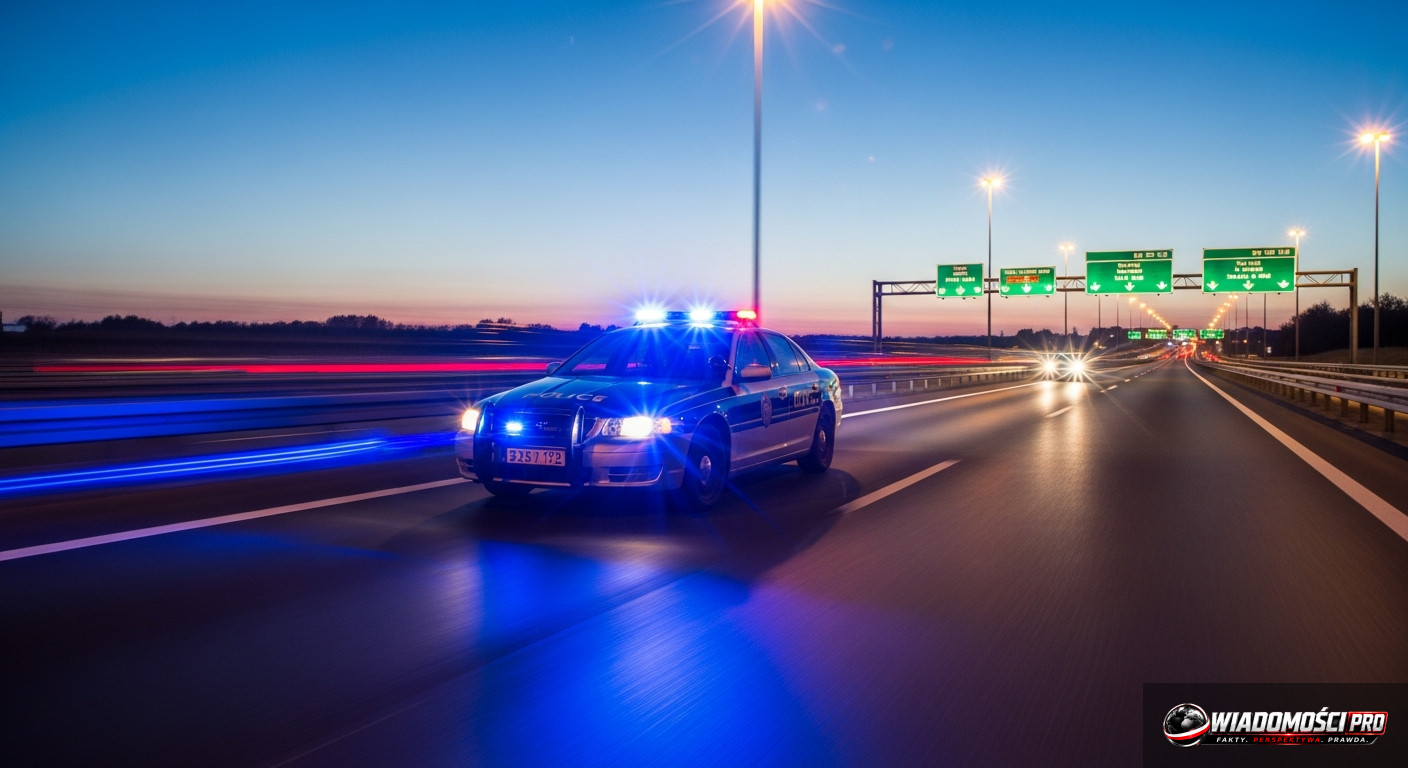
Looking at the dynamics of police actions in the first half of 2026, one can risk the statement that the peak of activity is still ahead of us. Many indications are that in the coming months, the number of suspensions could reach a level close to 35,000 for the entire year. Such an estimate does not result from a desire to punish drivers, but from an analysis of trends that show that the number of inspections will not decrease. Uniformed services have received a clear task: roads must become safer, and the price for bravado must be high.
Experts point to several factors that may influence the further increase in statistics. The first is the weather and road conditions in the autumn-winter period. Rain, fog, and early dusk are factors that, combined with excessive speed, drastically increase the risk of accidents. The police usually increase patrols during this period, which naturally translates into a higher number of revealed offenses. The second factor is the growing number of unmarked police cars equipped with video recorders, which allow for documenting offenses in difficult conditions.
For drivers, this means that the second half of the year will be a period of increased pressure. Every trip, whether it is a commute to work or a weekend getaway, will involve the risk of encountering a patrol. The projected 30-35 thousand suspended documents per year is a result that for many people will mean the necessity of switching to public transport. This is the price that society pays for years of allowing irresponsible behavior behind the wheel.
The system that has been implemented is self-propelling. The more drivers lose their licenses, the more awareness grows among other road users that the regulations are being enforced. This, in turn, should lead to a decrease in the number of accidents. Although for now we only see an increase in the number of suspensions, in the long term, this process should bring measurable benefits in the form of fewer fatalities. Safety is not a gift, but the result of a joint effort, of which the police are only the executor.
Local perspective: the example of the Chrzanów district
A nationwide analysis is needed, but it is at the local level that one can see how new regulations affect daily life. The Chrzanów district, with a result of 18 suspended documents in half a year, is an interesting point of reference. In this region, the police focused on education and prevention, which brought measurable results. Instead of escalating penalties, they focused on the presence of officers in sensitive places, which in itself acts as a disciplinary measure.
Local commanders emphasize that success in the fight for safety is not always measured by the number of tickets issued. Sometimes the presence of a police car in a place where drivers notoriously speed is enough to calm traffic. In Chrzanów, such a strategy proved effective. Residents of the district see that the police are present and reacting, but are not looking for opportunities to punish for petty offenses. This approach builds trust in the uniform, which is so lacking in large agglomerations.
However, it should be remembered that the Chrzanów model cannot be replicated everywhere. In regions with much higher transit traffic intensity, where drivers pass through the district without feeling connected to it, prevention is more difficult. Where anonymity is greater and the risk of encountering the same patrol is lower, severe penalties remain the only effective tool. Local police in such places have no choice – they must use the full range of sanctions to force compliance with the law.
Is the Chrzanów example proof that it can be done differently? It is certainly proof that prevention is just as important as repression. However, on a national scale, with the current traffic intensity and the mentality of many drivers, a system based solely on education would be insufficient. The police must balance between ensuring safety and maintaining common sense, which in practice is the most difficult task for every officer.

Summary: a new reality on Polish roads
In the first half of 2026, the Police suspended over 11,000 driver's licenses, which is a clear signal to all road users. The era of impunity on the road has come to an end. The new regulations are no longer just a theoretical entry in the code, but a daily practice that all drivers must reckon with. The "soft" approach has been withdrawn from use, and every offense is treated with the full severity allowed by law.
The new reality on Polish roads knows no leniency. A driver who breaks the rules must be prepared for the fact that their adventure with motoring can be interrupted at any moment. Regardless of whether they are moving on a motorway or a local road in the Chrzanów district, the police are present and ready to act. This is a qualitative change that, in the long term, must bring an improvement in accident statistics.
All signs in the sky and on earth indicate that the coming months will be even more intense. The police are not slowing down, and the IT system that supports officers is becoming more and more precise. For the average driver, this means the need to adapt to new requirements. If anyone was counting on a summer relaxation, reports from July and August are brutally verifying these expectations.
Does this mean we will all lose our driver's licenses? Of course not. It only means that we must change our habits. Obeying speed limits, maintaining a proper distance, and respecting other road users are not just slogans from educational brochures. This is the only way to keep the right to drive in a world where mistakes cost more and more. The police are not the enemy of drivers; they are the guarantor of safety, and their actions are only a response to how we behave behind the wheel ourselves.
Questions and answers
How many driver's licenses were suspended in the first half of 2026?
During this period, the Police suspended over 11,000 driver's licenses nationwide.
Do the new regulations apply only to cities?
No, the new regulations are effectively enforced also outside built-up areas, and officers are increasingly checking national and transit roads.
What are the forecasts regarding the number of suspended driver's licenses at the end of the year?
It is estimated that on an annual scale, this number could range from 28,700 to as many as 35,000 cases, depending on the intensity of police control activities.
Why do statistics from the Chrzanów district differ so much from the rest of the country?
This is due to the local specificity of traffic and the adopted preventive strategy, which in this region places greater emphasis on education and the presence of officers, rather than just repression.
What is the main cause of license loss in 2026?
The main cause remains blatant exceeding of the permissible speed, especially in built-up areas, which constitutes the foundation of all police preventive actions.
Does the police have a "soft" approach for drivers?
Currently, the police apply a zero-tolerance strategy for dangerous behavior, which in practice means no leniency during traffic stops.
Does the police IT system really help in catching recidivists?
Yes, the integrated database allows officers in the field to immediately verify a driver's history of offenses, which significantly increases the effectiveness of law enforcement against people who repeatedly violate the rules.
What should a driver do to avoid problems?
The key to keeping a driver's license is obeying the rules, paying attention to road signs, and adjusting speed to the conditions on the road, not just to the limits imposed by regulations.
Are further changes to the regulations planned?
The police are currently focusing on fully utilizing existing legal tools, which provide a wide range of maneuvers in eliminating dangerous behavior on the roads.
What are the consequences for drivers in the second half of the year?
Drivers must expect a continuation of the strict control policy, which involves a high risk of losing their license if they continue to ignore traffic regulations.
Will autumn road conditions affect the number of suspensions?
Yes, difficult road conditions combined with a larger number of patrols in the autumn-winter period usually lead to increased police activity and more frequent detection of offenses.
Why does the police focus so much on roads outside the city?
Accident statistics indicate that it is precisely on roads outside built-up areas that the most tragic events caused by excessive speed occur, which is why the services have shifted the focus of their actions there.
Does every mistake on the road mean losing a driver's license?
Not every one, however, the new regulations are designed to allow for a severe reaction to behavior that poses a real threat, which in practice means that the margin for error has become much smaller than in previous years.
Are unmarked police cars the main method of control?
Unmarked police cars with video recorders are one of the most important tools in the hands of the police because they allow for discreet observation and documentation of offenses in places where drivers feel they are immune to punishment.
Are the forecasts regarding 35,000 suspensions realistic?
Given the current pace of police actions and the fact that the system is still gaining momentum, reaching this level before the end of the year is very likely.
What does the "zero tolerance" strategy mean?
It means that every offense that, in the officer's assessment, poses a threat to other road users is treated with maximum severity, without the possibility of negotiating the penalty on the spot.
Are pedestrians benefiting from the current police policy?
Yes, more effective enforcement of regulations against drivers translates into greater safety for pedestrians, especially in the vicinity of crossings and intersections, where the highest number of accidents occurs.
Is every driver potentially at risk?
Anyone who consciously or blatantly irresponsibly breaks traffic rules must reckon with the consequences, regardless of their experience or seniority behind the wheel.
What is the importance of weekend driver activity for the police?
The weekend is a time when many "Sunday drivers" and people returning from trips appear on the roads, which increases the risk of bravado and forces the services to be more vigilant.
Is the fight for road safety a finished process?
It is a continuous process that requires constant adaptation of regulations, modern equipment, and, most importantly, a change in the mentality of the road users themselves.
Sources
- New regulations are already working. Drivers are losing their licenses even outside the city - Warszawa w Pigułce
- This is how the new law works. Almost 4,000 suspended driver's licenses - Interia Motoryzacja
- A big police operation after Sunday. Driver's licenses will "fly" - Dziennik.pl
- Almost 4,000 suspended driver's licenses in half a year. Police use new regulations - Ścigacz.pl
- New regulations will clear the roads. Up to 28,700 drivers may lose their licenses - Warszawa w Pigułce
- There was supposed to be a driver's license pogrom. New data is very surprising - otomoto.pl
- 18 driver's licenses suspended in the Chrzanów district. Police appeal for common sense - Przelom.pl
- 35,000 people will lose their driver's licenses in Poland. This is how the new regulations work - Interia Motoryzacja
Article prepared by the Wiadomości PRO editorial team with the support of artificial intelligence. Facts come from the sources provided above.
Komentarze (0)
Ładowanie komentarzy...