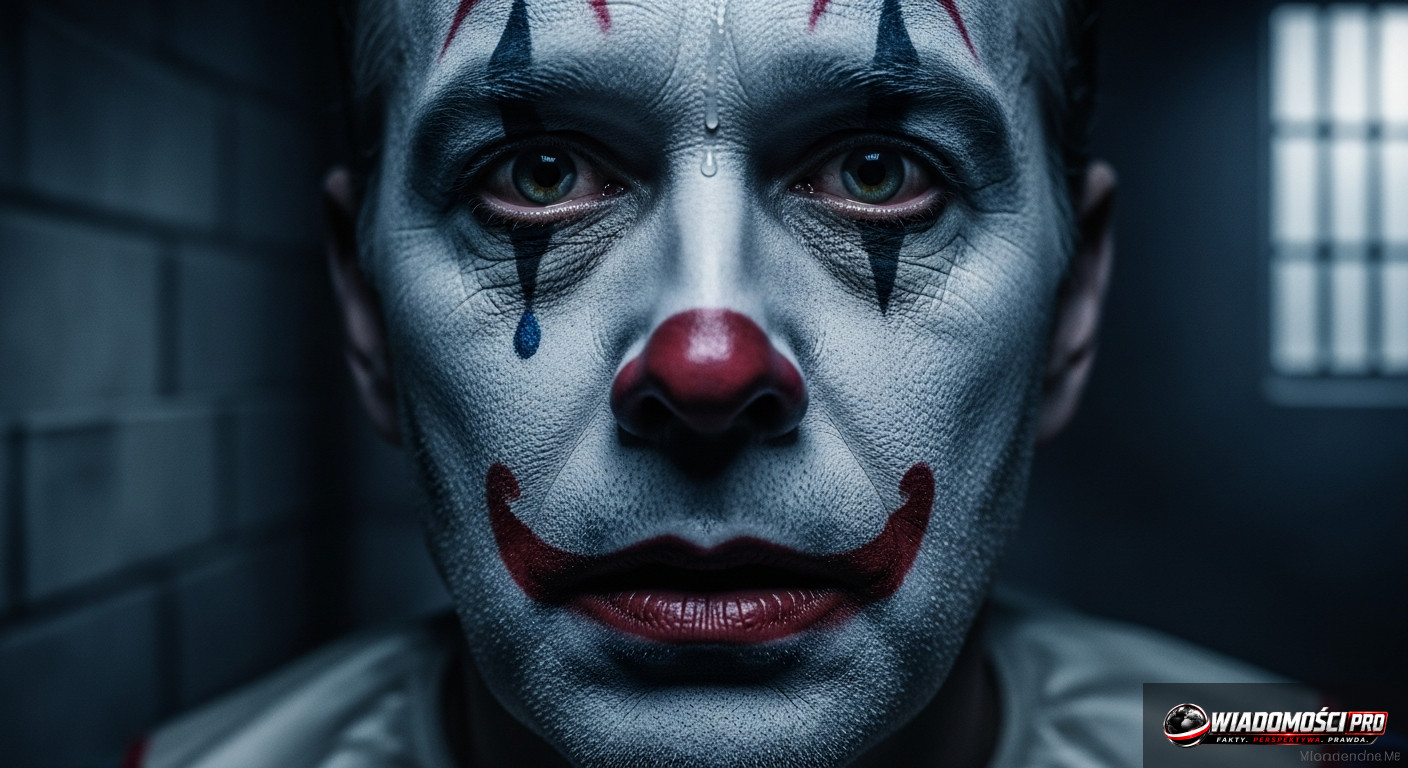
The film *Joker: Folie à Deux* earned $121.1 million at the global box office during its opening weekend against a production budget of $200 million, a result significantly below industry expectations. This disparity between massive financial outlays and a cold reception from the audience has sparked a wave of speculation in Hollywood regarding the state of the DC universe. Analysts have no doubt that we are witnessing one of the most severe financial failures of recent years, forcing the studio to revise its strategy.
A disappointing debut: Analysis of the opening weekend
Warner Bros. approached the premiere hoping to repeat the success of the first part, which became a cultural phenomenon. Instead of another billion-dollar result, we received a cold shower that exposed deep cracks in the film's artistic concept. Audiences, accustomed to the dark, brutal atmosphere of the original, were met with a musical format that proved unacceptable to most. The marketing machine, set for maximum reach, failed to convert expectations into ticket sales.
Warning signs appeared as early as the pre-sale stage. Market forecasts published a few days before the debut suggested that fan enthusiasm had waned. Even so, the final receipts from the first weekend proved even more disappointing than pessimists had assumed. This was not a case where a few foreign markets lowered the average. It was a mass retreat by an audience that felt deceived by the sequel's narrative form. Investors, looking at the sales charts, received a clear signal: the Joker brand is no longer a guarantee of financial security.
In the film industry, success is measured by the return on investment in the first days of release. When a project on which hundreds of millions of dollars have been spent fails to generate the expected interest, the entire distribution strategy crumbles like a house of cards. There is no room here for sentiment or defending a creative vision. What counts is the math, which in the case of this project is ruthless. The lack of viewer interest became proof that even the strongest franchises can be buried by failed creative decisions that completely miss the audience's expectations.
The math of failure: Budget vs. revenue
A standard rule in Hollywood is that for a film to break even, it must earn at least two to three times its production budget. In the case of *Folie à Deux*, we are talking about $200 million in production costs alone. If we add the expenses for the global promotional campaign, which in this segment of production usually consume another $100–150 million, the scale of the problem becomes obvious. The film did not even come close to the break-even point during its most important period of theatrical release.
The problem also lies in how profits are distributed between the cinema and the distributor. The studio does not receive every dollar from the ticket price. After deducting commissions for theaters, about half of the receipts usually go to the producer's coffers. With such a weak start, the mathematical chances of recouping losses in theaters became close to zero. Each subsequent week on the marquee only deepened the operating deficit. The studio found itself in a trap where the cost of keeping copies in theaters exceeded ticket revenue.
Box office analysts warned from the beginning that budgeting a sequel at such a high level was risky. However, decision-makers at Warner Bros. believed that the brand was stronger than any artistic risk. This was a flawed calculation that ignored signals from the market. From an accountant's perspective, every dollar spent on promoting this title was, in reality, a loss that could no longer be recovered. The project, which was supposed to be the jewel in the studio's crown, became a burden that had to be shed as quickly as possible, leading to desperate moves in managing distribution windows.

Joker vs. the rest of the world: Market comparisons
The success of the first part in 2019 created the illusion that every subsequent production featuring this character was destined for triumph. Reality brutally verified these assumptions. Comparing the sequel's results with other projects that were also considered commercial flops shows just how deep this collapse is. The production even lost in comparisons to *Morbius*, a film that was considered a symbol of the failure of the Sony brand in industry media. The fact that Joker managed to perform worse in its debut than a film that became an internet meme is embarrassing for the producers.
Even more striking is the contrast with the success of *Venom 3*. While *Folie à Deux* was fighting for survival in theaters, the third installment of the symbiote's adventures was confidently holding the title of North American box-office leader. This shows that the market is still receptive to comic book cinema, provided it delivers what the viewer expects: entertainment in a specific tone. Joker 2 did not fulfill this simple promise. Viewers felt that the film was detached from the character's roots, which is visible in comparison with other studio productions.
Here is how these disparities look in hard numbers and market realities:
- Production budget: $200 million USD (market data).
- Opening result: $121.1 million USD (market data).
- Competition in the same period: *Venom 3* as the box-office leader (PAP data).
- Financial status: A failure surpassing the results of *Morbius* (Gram.pl data).
The market does not forgive such expensive mistakes. While other productions managed to maintain audience interest, Joker 2 struggled with a drastic exodus of fans. The studio was counting on a repeat of the cultural phenomenon, but instead, it got a lesson in humility. This project simply did not deliver on the promise of a return on investment. Every comparison with other titles operating in the same period worked to the detriment of Phillips' production.
The low-budget phenomenon: Terrifier 3 beats the giant
When the film hit screens in October 2024, no one expected that the low-budget horror *Terrifier 3* would become a more important reference point for the industry than the high-budget Joker. The contrast between these two productions is striking and constitutes the essence of today's crisis in Hollywood. While Warner Bros. pumped hundreds of millions into an all-star cast and a promotional campaign, the creators of *Terrifier* bet on a niche, dedicated group of recipients and extremely low production costs.
The result? The film cost literally pennies compared to the budget of Joker 2, and yet it managed to attract the attention of viewers and dethrone the giant in popularity rankings. This is not a matter of chance, but a warning signal for major studios. This situation shows a change in the preferences of the cinema audience, which is increasingly turning away from predictable blockbusters in favor of productions with a distinct, even if controversial, character. The main reasons for this shift are fatigue with the material in the high-budget sequel segment and the high cost-effectiveness of horror films.
For investors, this is a hard math lesson. Hollywood has stopped understanding that a larger budget does not mean a bigger hit today. Viewers voted with their wallets, choosing authenticity instead of a polished, expensive aesthetic. The success of *Terrifier* is proof that in the era of digital distribution and social media, fan dedication is more valuable than tens of millions spent on television advertising.
VOD strategy: Why did Warner Bros. accelerate the premiere?
The decision to move the film to digital platforms was made in October 2024, at a pace that was alarming for such a large title. The Warner Bros. studio bet everything on one card, trying to save the financial result through rapid monetization in the home entertainment segment. For Hollywood decision-makers, this move is a classic emergency mode action. The goal of moving the title to VOD is to recover at least some of the costs from viewers who opted out of a trip to the cinema.
When attendance in theaters drops drastically and reviews do not encourage ticket purchases, digital platforms become the only lifeline. However, an early introduction to VOD is not a neutral logistical move. It is a signal to the market of the film's very poor theatrical condition. The industry reads this unequivocally as an admission of failure. Shortening the theatrical window takes away the distributors' argument about a "unique experience on the big screen." If a viewer knows that they will watch the production at home in two weeks, they see no need to stand in line at the box office.
In this case, Warner Bros. is not so much managing distribution as trying to limit losses, which after the disappointing debut began to grow at a rate difficult for investors to accept. This is a desperate step that, instead of building brand prestige, ultimately weakens it in the eyes of the viewer. The quick online premiere became a stamp on documents testifying to a financial fiasco. Every day the film was available in theaters generated costs that ticket receipts could not cover, so the decision to move to VOD was the only way to stop the budget bleeding.
The future of the franchise: Did the sequel derail DC's plans?
The weak opening casts a long shadow over future investments in the Joker universe and calls into question subsequent projects based on this brand. The studio is currently facing the need for a thorough revision of its strategy regarding high-budget comic book productions. Hopes of repeating the success of the first part proved futile, and even intense fan speculation linking the new production to Christopher Nolan's iconic *The Dark Knight* did not translate into real ticket sales.
Viewers were not tempted by the theory of a "shocking finale," which was supposed to be a magnet attracting them to theaters. Empty seats in the halls show that the Joker brand itself is no longer a guarantee of financial security, especially in an era of growing competition. Studio executives must now face a painful lesson. The market has verified assumptions about the infinite potential of this universe. The decision to direct the film to VOD platforms in a record-short time from the theatrical premiere only confirmed that the management was trying to save the financial result instead of building long-term value for the series.
For DC, this means a difficult time. Every subsequent dollar pumped into projects based on this world will now be analyzed under a microscope. The era of thoughtless financing of expensive comic book spectacles has just come to an end, and past successes no longer provide a protective shield against modern market requirements. The studio must now answer the question of how to repair viewer trust, which has been seriously damaged by this financial blunder.

What this means for you
For Warner Bros., this is a financial alarm signal – a $200 million investment with such a poor reception means the necessity of drastic changes in publishing policy. Viewers gain faster access to content at home, but lose the chance for spectacular cinema, which is ceasing to be profitable. If the downward trend continues, we can expect fewer risky auteur projects within known universes and a greater focus on safe, proven formats. Ultimately, it is the consumer who decides what kind of cinema will be produced in the coming years, and this case is the best proof that the viewer's wallet is the most important judge in Hollywood.
Questions and answers
Why did Joker 2 earn so little?
The film did not meet viewer expectations, which is confirmed by financial results of $121.1 million on its opening weekend. The lack of interest resulted from an ill-conceived production format and strong market competition.
Is Joker 2 more expensive than the first part?
Yes, the production budget was $200 million, which significantly exceeds the costs of the first part. This investment proved disproportionate to the revenues achieved.
Where can you watch the film after it is withdrawn from theaters?
The studio decided on a very quick premiere on VOD platforms, which took place as early as October 2024, in order to limit financial losses resulting from poor cinema attendance.
Does the film have connections to other DC productions?
Despite fan speculation about connections to Christopher Nolan's *The Dark Knight* and theories about a "shocking finale," the film failed to use these threads to improve financial results.
What significance did other films have on the result at that time?
The production lost the direct competition for viewer attention, among others, to the low-budget horror *Terrifier 3*, which shows a shift in audience preferences toward less predictable but more authentic content.
Sources
- Box Office USA: Shocking debut of the film "Joker: Folie à Deux" - Filmweb
- Joker 2 is a humorless joke at the box office. The results are even worse than assumed - Eurogamer.pl
- How much will Joker 2 earn on its opening weekend? Predicted result significantly worse than the 1st part - naEKRANIE.pl
- The third "Venom" is the leader of the North American box office - Polish Press Agency SA
- Joker 2 lost even to Morbius. The worst Marvel and Sony films earned more - Gram.pl
- Are Joker: Folie à Deux and Nolan's The Dark Knight connected? Speculation about a shocking finale - moviesroom.pl
- "Joker: Folie à Deux" on VOD! Faster than you think - Filmweb
- Budget horror laid Joker 2 to rest. Terrifier 3 cost "pennies" and is still winning - Eurogamer.pl
Article prepared by the Wiadomości PRO editorial team with the support of artificial intelligence. Facts come from the sources provided above.

Komentarze (0)
Ładowanie komentarzy...