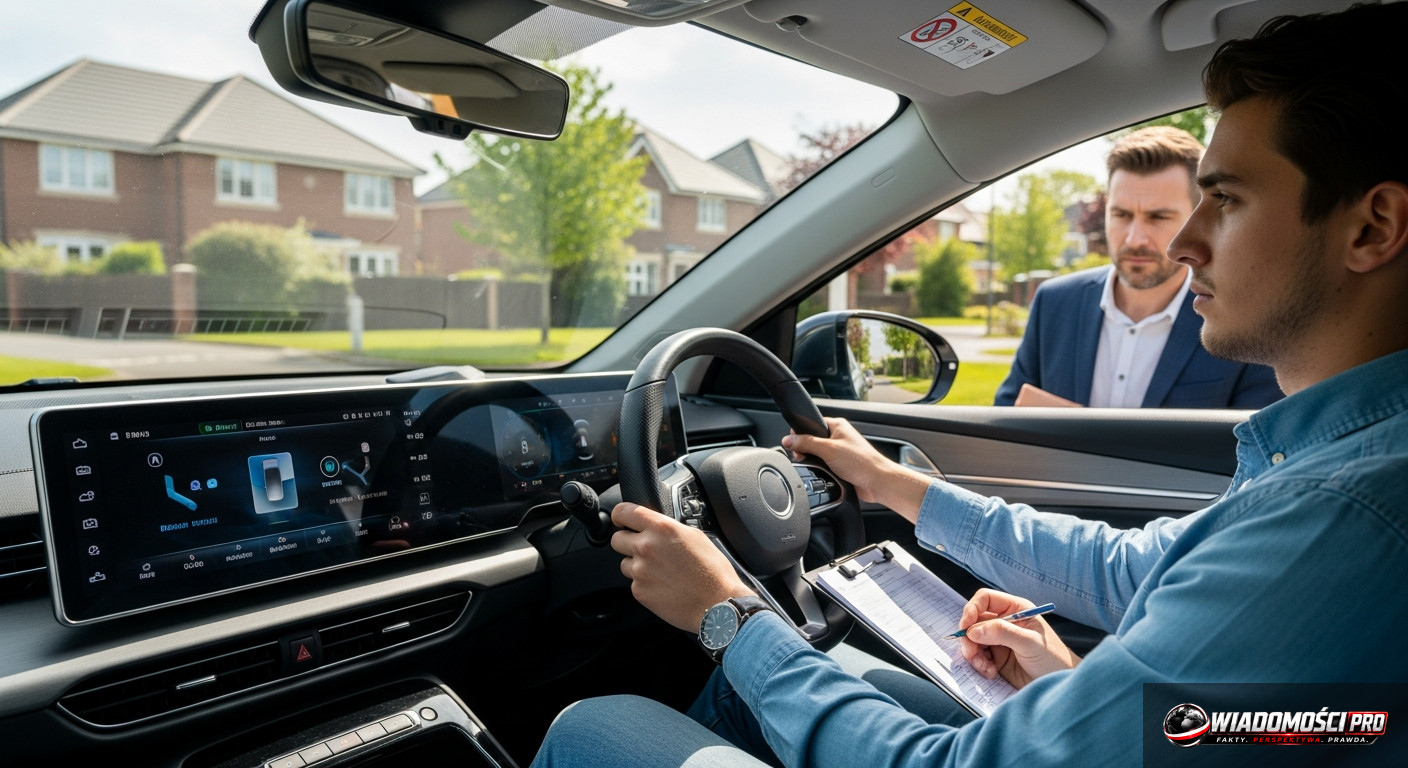
The government has adopted an amendment to the act introducing a probationary period for young drivers in 2026, which combines stricter penalties for reckless driving with new examination requirements. This period lasts for two years, during which the driver is subject to restrictive speed limits, a total ban on alcohol consumption, and mandatory road safety training. Any flagrant violation of regulations during this time carries the risk of losing driving privileges, and in extreme cases, leads to a lifetime ban on driving vehicles.
Assumptions of the probationary period for young drivers
The amendment to the Act on Vehicle Drivers from August 2026 constitutes the foundation of a change in the approach to road safety. Every person who receives a driver's license for the first time automatically enters a two-year probationary period. The legislator introduced this mechanism to permanently eliminate habits that lead to accidents. The system is not limited to an entry in the CEPiK database. It is a rigorous mode of supervision in which mistakes made by a novice are punished more severely than in the case of people with many years of experience.
A key element of the probationary period is the speed limit for newly licensed drivers. In built-up areas, the limit is 50 km/h, outside them 80 km/h, and on expressways and motorways 100 km/h. Every driver covered by this period must also comply with an absolute ban on alcohol consumption, which means zero tolerance in exhaled air. Exceeding these standards automatically triggers administrative procedures, which in many cases end in a referral to a re-education course or a re-examination.
The Ministry of Infrastructure, based on statistical analyses, has decided that theoretical education must be supported by practical workshops on improving driving technique. As part of the probationary period, every young driver is required to undergo additional training designed to make them aware of the consequences of recklessness. The legislator has opted for a "zero tolerance" method. If a driver commits safety offenses during the probationary period, they will be referred for psychological testing and repeat training, which in practice means high financial costs and a waste of time.
The structure of the regulations forces a change in mentality. A young driver ceases to be an anonymous road user and becomes a participant in a system where every traffic stop can verify their aptitude for holding a driver's license. If, within two years of the document being issued, the driver commits two safety offenses, their privileges will be revoked. This solution is intended to be a barrier for people who cannot adapt their driving style to the conditions on the road. The ministry hopes that the awareness of easily losing one's driver's license will effectively eliminate dangerous behaviors before they turn into tragic road events.

Stricter penalties: Lifetime loss of driver's license
The legislator has ended the era of leniency for people who treat public roads like a racetrack. The amendment coming into force in 2026 introduces a catalog of stricter penalties that leave no doubt as to the state's intentions. The most serious tool in the hands of law enforcement becomes the possibility of imposing a lifetime ban on driving vehicles. This measure is aimed at perpetrators of extreme recklessness who, through their behavior, endanger the lives of other road users.
Prison sentences for participating in illegal races are becoming a reality. The legislator specifies that criminal liability applies not only to the drivers but also to the organizers of such events. People involved in preparing illegal rallies on public roads must face criminal charges, which carry the threat of actual jail time. This is a direct response to the growing wave of phenomena where young drivers, often without experience, test their limits in areas with high traffic volume.
The regulations include specific fine amounts intended to hit the perpetrators' wallets hard. For flagrant speeding, especially in built-up areas, financial penalties reaching thousands of zlotys are provided, combined with the mandatory suspension of the driver's license for three months. In the case of recidivism, this period is extended, and the perpetrator is added to the "high-risk" driver database. Such a solution is intended to prevent further law-breaking without facing full consequences.
Judges are gaining tools to impose harsher sentences in cases involving accidents caused by people under the influence of alcohol or intoxicants. The amendment assumes that in such cases, a ruling for a lifetime driving ban will be the standard, not an exception to the rule. It is worth emphasizing that these regulations are deterrent in nature. The state is sending a clear signal: recklessness on the road is not treated as a youthful mistake, but as a conscious threat to public order. Each case will be analyzed in terms of the degree of danger the driver created for their surroundings, which is intended to ensure fair but inevitable punishment for perpetrators.
New standards for state exams
The driving test has undergone an evolution that reached a stage of full rigor in 2026. Candidates can no longer count on accidental mistakes that were previously treated as minor lapses. The systematic tightening of examination procedures, which began in June 2025, has led to the creation of a catalog of errors that result in the immediate termination of the exam at the scene.
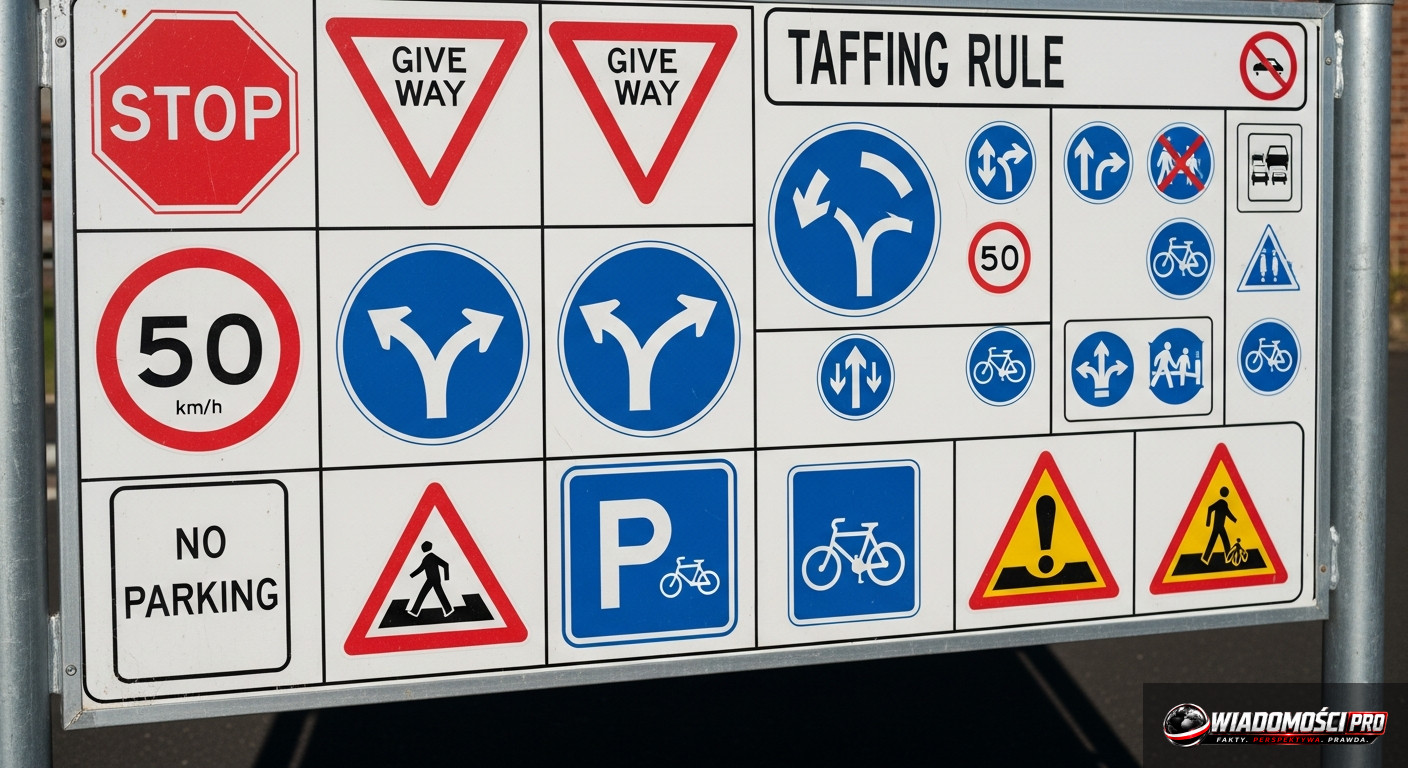
The first example of such an error is failing to yield the right of way. Any situation in which the examiner must intervene to avoid a collision or danger results in an automatic failure. The second example is failing to stop at a STOP sign. In previous years, many students treated this sign as a signal to slow down significantly, which was often overlooked by examiners. Now, every wheel must be completely immobilized, and a lack of a full stop means the end of the exam. The third example, which definitively ends the attempt, is overtaking at or directly before a pedestrian crossing. This behavior is now treated as critical and is not subject to any discussion.
The exam has become a sieve through which only those demonstrating full concentration and knowledge of the regulations pass. Instructors emphasize that the bar has been raised not only in terms of theory but, above all, in the practical assessment of the situation on the road. Students must now demonstrate the ability to predict the behavior of other drivers, which is an extremely difficult task under examination stress. Examination centers across the country are reporting an increase in the number of failed exams, which is a direct result of the introduction of rigid requirements.
It is worth noting that these changes are not just an attempt to make life difficult for candidates. It is a mechanism designed to prepare drivers for the real challenges of modern road infrastructure, which is increasingly saturated with traffic. Examiners have received new guidelines that mandate the absolute enforcement of regulations without taking the student's "good will" into account. Such an attitude is intended to eliminate from the roads people who, despite having a license, cannot handle situations requiring quick and correct reactions. This is a response to the growing number of accidents, the cause of which is usually human error resulting from a lack of proper preparation.
App-based and professional driver market
The introduction of the probationary period in 2026 caused an earthquake in the passenger transport sector, especially in companies using ride-hailing apps. The industry, which until now relied on the rapid recruitment of young people, faced an operational problem. Every driver covered by the probationary period is a high-risk investment for the employer. If an employee loses their privileges after two offenses, the company loses a driver overnight, which affects the continuity of services provided.
Carriers must now invest in advanced driving style monitoring systems for their employees. It is no longer just about punctuality, but about strict compliance with regulations by people with short tenure. Companies are implementing internal control systems that analyze routes and detect violations before the police take an interest in them. This is an additional cost that directly translates into the prices of transport services. The market is becoming increasingly professional, which forces entrepreneurs to select staff based on responsibility, not just availability.
For people starting a career in transport, the situation is becoming more demanding. The app-based industry, which was considered an easy way to earn money, is becoming an environment where a mistake costs the loss of a source of income. Transport companies have begun to require young drivers not only to possess a document but also to have a high culture of driving, confirmed by internal certificates. This phenomenon leads to natural selection, where only those most aware of the legal consequences remain on the market.
Concerns about labor shortages are justified, but the legislator has clearly indicated the priorities. The safety of passengers and other road users is more important than labor market flexibility. Companies that do not adapt to the new verification requirements can expect problems with insurers. Insurance companies have raised premiums for carriers employing young drivers, which forces fleet owners to exercise even stricter control. The era of cheap and easily accessible inexperienced drivers has definitively come to an end, forcing the entire industry to undergo deep restructuring.
Implementation schedule and what awaits drivers
The process of change, which reached its finale in 2026, was not a sudden move but a well-thought-out strategy implemented in stages. It all started on June 17, 2024, when the first changes in traffic regulations began the process of tightening the system. The next step was the implementation of stricter examination requirements on July 1, 2025, which eliminated leniency toward mistakes. The year 2026 is the culmination of these efforts through the full implementation of the probationary period for young drivers.
This system is consistent and predictable for control authorities. The police, equipped with modern IT tools, receive information about a driver's status in real-time. If a person covered by the probationary period is stopped for inspection, the system will automatically show whether it is their first or second offense. Such data transparency is intended to prevent officers from applying a "lenient tariff."
Drivers who think that a driver's license is just a formality must prepare for a strict verification of their skills. No transition periods have been provided for those who break the new rules. Every person entering the system must realize that the margin for error is zero. The Ministry of Infrastructure emphasizes that the "zero tolerance" strategy is the only effective way to change dangerous habits.
It is worth noting that these regulations apply to all young drivers, without exception. It does not matter whether the driver's license was obtained for personal needs or for commercial purposes. Anyone who gets behind the wheel as a novice is subject to the same restrictions. This means that young people must get used to the constant pressure that accompanies every kilometer covered during the first two years. This is not just a change in regulations; it is a change in the philosophy of using public roads, where responsibility becomes the main determinant of being a full-fledged driver. The system is merciless to those who cannot adapt to it, which is intended to lead to a significant decrease in the number of fatal accidents in the future.
What this means for you
For young drivers, the probationary period means going through a system in which every decision behind the wheel is carefully analyzed. All road users benefit from the elimination of the most reckless individuals from the roads, which directly affects safety statistics. However, for the transport industry, this means the need to introduce expensive control systems, and for the drivers themselves – the need for continuous improvement of skills under the pressure of losing privileges. This is a time when a driver's license ceases to be a "lifetime privilege" and becomes a conditional authorization that must be confirmed every day by one's attitude on the road.
Questions and answers
Does the probationary period apply to people who have held a driver's license for more than a year?
No, the probationary period applies only to people who obtain driving privileges for the first time after the regulations come into force in 2026. People who held the document earlier are not subject to these rigors.
What specific errors cause the immediate termination of the exam?
The regulations introduced in 2025 strictly treat errors that threaten road safety. These include, among others, failing to yield the right of way, failing to stop at a STOP sign, and dangerous overtaking at pedestrian crossings.
Do the new regulations on the lifetime loss of a driver's license apply to everyone?
These regulations are aimed primarily at perpetrators of flagrant recklessness, participants in illegal races, and people driving while intoxicated. The court has the right to impose such a ban on any driver if it deems that their behavior constitutes a permanent threat to public safety.
Are there different speed limits during the probationary period than for other drivers?
Yes, drivers in the probationary period are required to comply with stricter limits: 50 km/h in built-up areas, 80 km/h outside them, and 100 km/h on expressways and motorways.
What are the consequences of committing two offenses during the probationary period?
Two violations of road safety regulations during the two-year probationary period lead to the automatic revocation of driving privileges.
Is additional training during the probationary period paid?
Yes, the costs of additional road safety training and re-education courses are borne by the driver. This is an element of the system of financial responsibility for one's own behavior on the road.
Does the monitoring system for drivers in the probationary period also apply to professional drivers?
Yes, the regulations regarding the probationary period are universal. If a young driver has taken a job in transport, they must comply with the same limits and rules as a private driver.

For every young person planning to obtain a driver's license, 2026 will be a year of final verification. The state has stopped treating the acquisition of privileges as a formality, turning the process into a multi-stage challenge. Every student must be aware that passing the exam is only the beginning of the road, not its end. A lack of knowledge about the new regulations does not exempt one from responsibility, and the systematic tightening of regulations means there is no longer room for mistakes resulting from ignorance.
It is worth remembering that the severity of the regulations is directly correlated with the dramatic statistics of previous years. Every decision to tighten penalties was preceded by an analysis of events in which young people lost their lives or caused the death of others. This approach is intended not only to punish but, above all, to educate through fear of the consequences. Will it work? Time will tell, but it is already clear that driving schools are modifying their programs, placing greater emphasis on psychology and predicting threats, not just technical maneuvers.
Ultimately, the responsibility for road safety rests with the driver. The new law only sets boundaries, the crossing of which becomes very costly for young people. Anyone who gets behind the wheel must count on the fact that their behavior is evaluated through the prism of strict standards intended to ensure the safety of all public road users. In 2026, being a driver is not just the ability to operate a vehicle; it is, above all, maturity, which the system will require from every novice in a ruthless and consistent manner.
For the transport and passenger transport industry, these changes mean the need to build completely new management structures. Companies that are unable to verify their young employees will quickly fall out of the market. The loss of privileges by a driver in the probationary period is not only a problem for the individual but a real financial loss for the company that invested in their training and implementation into work. Therefore, the market is becoming a place where experience is gaining importance in a way not seen before.
All these changes create a coherent picture of the new road reality. There is no longer a "lenient tariff," there is no room for recklessness, and there is no space for people who do not treat safety as a priority. For a young driver, the probationary period is the period of the greatest test, in which the right to drive vehicles is at stake. Each subsequent kilometer driven without an offense brings them closer to full privileges, but also teaches humility toward the power of the machine that is a car. This is a lesson that many will have to learn in a very short time to avoid unpleasant consequences.
The question remains whether the training infrastructure will meet the challenge. Driving schools that have functioned in the old system for years must now quickly adapt to the new standards. Instructors are becoming mentors who must develop not only technical skills in students but, above all, proper attitudes. This is a difficult task, requiring a great deal of work and patience, but necessary in the face of the changes that have come into force. Will the system of adjudication and supervision of drivers prove efficient? This will be the main test for the Ministry of Infrastructure in the coming months.
Social expectations are clear: roads must be safer. The 2026 amendment is a response to these expectations, even if the price is a drastic limitation of the freedom of young drivers. Each subsequent year will bring new data that will allow us to assess whether the chosen path was correct. For now, however, for anyone intending to get a driver's license, the only way is full acceptance of the new rigors. There is no alternative, there is no shortcut. In 2026, a driver's license is a privilege that must be earned and maintained through responsible behavior on the road, which is a challenge for every beginner driver.
Sources
- New regulations 2026: Lifetime loss of driver's license, prison for recklessness, racing ban - Gazeta Prawna
- Changes in the driving test. Make a new mistake, you fail immediately - Interia Motoryzacja
- Changes in driver's license law. New regulations are coming - PolsatNews.pl
- Driving test rules at the last minute - Rzeczpospolita
- Will seniors lose their driver's license in 2026? Final decision on medical examinations has been made. Here are the new rules - Dziennik.pl
- For this offense, you will lose your driver's license. There will be new regulations - TVN24
- Harder driving test from July 1st? We are checking - Onet
- Driver's license – changes from June 17, 2024. Minor problems or complete paralysis? What awaits app-based drivers and their clients? - INFOR.PL
Article prepared by the Wiadomości PRO editorial team with the support of artificial intelligence. Facts come from the sources listed above.


Komentarze (0)
Ładowanie komentarzy...