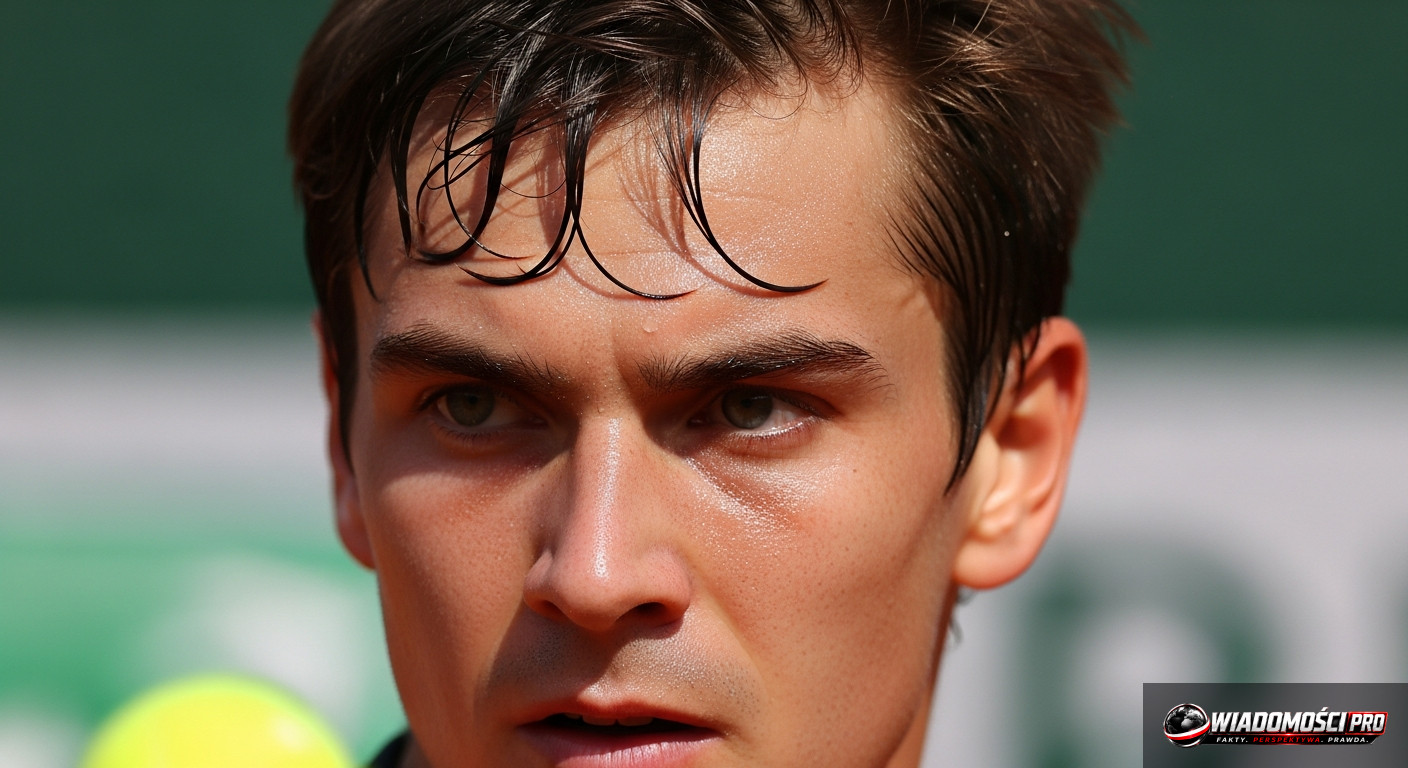
In August 2026, Iga Świątek successfully navigated through the subsequent phases of the National Bank Open tournament in Toronto, securing victories over Marta Kostyuk and Diana Shnaider. The Pole recorded a total of two match wins, which secured her a spot in the tournament's quarterfinals. These two triumphs represent a significant turning point in her preparations for the final part of the tennis season.
Dynamics of play on the courts in Toronto
The 2026 Toronto tournament requires players to have a specific approach to the hard surface. Entering the quarterfinal phase, Świątek presented a model of play based on high tactical discipline. The match against Marta Kostyuk, played on August 8, 2026, was the first serious test for the world number one. The Pole dominated her opponent, setting a pace that the Ukrainian was unable to maintain for long stretches of the rallies. Statistics from this match, as well as live reports available from August 8, point to the high efficiency of Świątek's serve, which was crucial for avoiding unnecessary risks in her service games.
The next step, a clash with Diana Shnaider on August 10, 2026, was a continuation of this strategy. Świątek did not allow her opponent to take the initiative, consistently building an advantage in every service game. Observers note that in Toronto, the Pole was not looking for quick solutions, but patiently waited for Shnaider's errors. This attitude differs from her performances a year ago, where she more often relied on aggressive winners after just the second shot. Świątek's current form in Canada is the result of an evolution in her playing style, which in 2026 focuses on pragmatism and controlling court space rather than pure physical power.
Comparison with Riyadh 2025
An analysis of Świątek's performance in August 2026 requires a comparison with the results from November 2025, when the Pole triumphed at the WTA Finals in Riyadh. Back then, her playing style was almost brutal for her opponents. An example is the match against Madison Keys, which ended in just 61 minutes. This result became a benchmark for fans and experts regarding Świątek's tennis endurance. Comparing that "blitzkrieg" to the current struggles in Toronto, one can conclude that the world number one has learned to manage her energy in the long term.
In Riyadh 2025, Świątek played with a confidence that allowed for risky shots at every opportunity. Today in Toronto, we see a player more aware of her physical resources. Although the matches against Kostyuk and Shnaider did not last as short as the one against Keys in 2025, the level of control over the flow of events remained equally high. The difference lies in the way the advantage is built. In 2025, Świątek set a pace that pushed opponents into defense immediately. In 2026, on the courts in Toronto, the Pole prefers to exert pressure gradually, forcing opponents to run and commit errors in longer rallies.
WTA ranking after the quarterfinals
The ranking published on August 11, 2026, reflects the situation after the quarterfinal results in Toronto. Świątek, thanks to two won matches, has strengthened her position at the top. Every point earned in Canada is of great importance in the context of defending the number one spot before the upcoming major tournaments. The pressure from the chasing players is palpable, which is visible in the way Świątek approaches every game.
Stabilizing her position in the ranking after August 11 did not come easily. The Toronto tournament is extremely demanding in terms of logistics and physicality. Observing her performances from August 8 and 10, one can see that the Pole has minimized the fluctuations in form that occurred in previous seasons on hard surfaces. It is precisely this repeatability of results that is currently the most important factor deciding her advantage over the rest of the field. In women's tennis, dominance is not determined by a single spectacular match, but by the consistency that Świątek seems to fully control.

Tactical pragmatism versus aggression
Modern women's tennis forces frequent modifications to the game plan depending on the opponent. In Toronto, Świątek proved that she can adapt to the playing styles of her opponents. Marta Kostyuk, known for her very dynamic and aggressive tennis, was "slowed down" by the Pole. Świątek neutralized her powerful shots by changing the spin of the ball and leading rallies at a higher trajectory. Diana Shnaider, in turn, being a younger player, tried to set a fast pace, but Świątek's consistency in keeping the ball in play meant that it was Shnaider who had to take risks, which often ended in balls going out or into the net.
For Świątek's coaching staff, the Toronto tournament is a testing ground before the most important starts of the season. The lack of unnecessary lulls in the matches on August 8 and 10 indicates the high quality of work done during the preparation period. The Pole is not looking for a knockout; she is looking for a point advantage that, over time, becomes impossible for the opponent to overcome. This approach is a sign of maturity that could be decisive in clashes with players from the world's Top 5.
Physical challenges and energy management
The 2026 WTA calendar is extremely tight. The starts in Toronto are not just a fight for a trophy, but also a test of the body's resistance to the hardships of playing day after day. Świątek, after getting past Kostyuk and Shnaider, must now manage her recovery in a way that will allow her to maintain intensity in the following rounds. Experiences from previous years show that the leader's greatest enemy is not her opponents, but accumulating fatigue.
Energy management during the Toronto tournament is visible in the way Świątek plays her service games. The Pole tries to shorten rallies whenever she has the opportunity to score a direct point or work out an easy situation at the net. Although in 2025 in Riyadh she was able to dominate Keys in 61 minutes, in Toronto she seems to be more cautious. Every minute spent on the court is now thought out. The Pole's coaching staff likely imposed a strategy where the priority is to avoid long, exhausting three-set battles at the early stage of the tournament. The results from August 8 and 10 confirm that this plan is being implemented with high efficiency.

Context of the 2026 season
Successes in Toronto are only part of a bigger plan. Świątek, as the leader, cannot afford to lose focus in any 1000-level tournament. Every victory, whether over Kostyuk or Shnaider, is a building block of confidence before the key struggles ending the year. In 2025, during the WTA Finals, the Pole showed that she can prepare her peak form for the most important moment. Now, in August 2026, we are observing a process that is intended to lead to a similar state.
Rivals are not sleeping. Many top tennis players have drawn conclusions from Świątek's dominance in previous years and are trying to imitate her way of moving around the court. Despite this, the Pole maintains her distance, which is confirmed by the ranking from August 11. The question is whether this advantage will hold until the end of the season. Taking into account the results from Toronto, Świątek has solid arguments to continue dictating terms on world courts. Her game has become more predictable for her staff, but at the same time much more difficult to read for opponents who cannot find a recipe for her return and stability from the baseline.
Statistical analysis of the serve
Iga Świątek's service statistics during the Toronto tournament deserve separate attention. In the match against Marta Kostyuk, played on August 8, the efficiency of her first serve oscillated at a level that allowed the Pole full control over her own games. The serve, which in the past was sometimes an unstable element, has become a powerful weapon in Toronto. It is not just about the speed of the ball, but about directional precision. Świątek can send the ball into the corner of the court, which opens her path to winning the point on the next shot.
In the clash with Shnaider (August 10), the situation looked similar. The Pole avoided double faults, which is crucial in close games. Such stabilization of the serve makes opponents lose faith in the possibility of breaking Świątek. This is a psychological aspect of tennis that often decides the fate of entire matches. If the serve functions at such a high level, every other part of the game – like the return or play at the net – becomes freer. It was the serve that allowed Świątek to safely pass through the first rounds in Toronto without having to defend many break points.
Perspectives for the next rounds
Reaching the quarterfinals is a comfortable, yet demanding situation for Świątek. At this stage of the tournament in Toronto, there are no weak opponents left. Every subsequent opponent will try to play at the maximum of their capabilities, seeing this as a chance to defeat the world number one. The Pole's strategy must remain unchanged: concentration on her own strengths and not giving in to the chaos imposed by her opponents.
Victories over Kostyuk and Shnaider showed that Świątek is prepared for different styles of play. From the aggressive Kostyuk to the Shnaider who tried to impose her own rhythm – the Pole handled both. This is proof that her tennis toolkit is complete. Fans waiting for the next matches have reason for optimism, however, it is worth remembering that every day in Canada brings new weather and health challenges. Managing these variables will be just as important as the technical aspects of tennis.
Summary of the leader's form
Iga Świątek's current performance, confirmed by the results from August 8 and 10, 2026, is a clear signal to the entire WTA tour. The Pole has returned to hard courts with a clear goal and proper preparation. The victories over Marta Kostyuk and Diana Shnaider were not a coincidence. They are the result of the work that Świątek does every day.
It is worth noting the calm that emanates from her shots. It is clear that the Pole derives satisfaction from the game, which translates into results. If she maintains this level of concentration, then the quarterfinal in Toronto is just a stop on her way to further triumphs. Will she manage to repeat the dominance of November 2025? That question remains open, however, the current performances in Canada provide solid grounds to believe in maintaining top form for the coming weeks. The Pole is at this moment in a place where she treats every tournament as a testing ground, and every match as an opportunity to eliminate minor errors that could harm her in the most important clashes of the season.
Questions and answers
Who did Iga Świątek beat in Toronto in August 2026?
Iga Świątek secured victories over Marta Kostyuk and Diana Shnaider, which allowed her to advance to the quarterfinals of the National Bank Open tournament.
When was the WTA ranking updated after the quarterfinals in Toronto?
The update of the WTA ranking, which included the results achieved in Toronto, was published on August 11, 2026.
Which tournaments are key for Świątek in 2026?
Key for Świątek are WTA 1000 level tournaments, such as the National Bank Open, and preparations for the season finals, which remain her main goal.
How many matches did Świątek win on her way to the quarterfinals in Toronto?
Iga Świątek won a total of two matches, defeating Marta Kostyuk and Diana Shnaider respectively.
How did the comparison of Świątek's form to 2025 look?
Comparing current performances in Toronto to November 2025 (WTA Finals in Riyadh), it is clear that Świątek currently focuses on greater pragmatism and energy management, whereas in 2025 her game was characterized by an aggressive pace, allowing for quick match conclusions.
Did Świątek have problems in the matches against Kostyuk and Shnaider?
No, reports from these meetings (August 8 and 10, 2026) indicate that the Pole controlled the course of events on the court and confidently advanced to the next phases of the tournament.
What is the main difference in Świątek's playing style between 2025 and 2026?
The main difference is the approach to building an advantage: in 2025, Świątek played more riskily and aggressively, whereas in 2026 she prefers to consistently build her advantage, avoiding unnecessary risk in the initial phases of rallies.
Did Świątek look for quick knockouts in Toronto?
No, observers emphasize that in 2026 in Toronto, Świątek is more pragmatic and does not seek a lightning-fast end to rallies at all costs, which is a signal of tennis maturity.
Sources
- It couldn't be better. Here is the WTA ranking after Iga Świątek's quarterfinal in Toronto - Przegląd Sportowy
- Iga Świątek – Diana Shnaider. See who won the quarterfinal in Toronto. Live score - Przegląd Sportowy
- Lightning-fast victory for Świątek at the WTA Finals! 61 minutes was enough - www.polsatsport.pl
- Iga Świątek - Madison Keys: live match result and coverage - WTA Finals Riyadh 2025 - Eurosport Polska
- Iga Świątek's match practically decided. Knockout. "Sensational clash" - Interia Sport
- National Bank Open: Iga Świątek vs Marta Kostyuk. Result and live coverage - Przegląd Sportowy
- Świątek - Keys live today. Tennis WTA Finals 2025. Live coverage and online result - www.polsatsport.pl
- Iga Świątek – Marta Kostyuk. See who won in Toronto. Live score - Przegląd Sportowy
Article prepared by the Wiadomości PRO editorial team with the support of artificial intelligence. Facts come from the sources listed above.


Komentarze (0)
Ładowanie komentarzy...