Yes, Europa has the conditions, but the probe is not searching for life directly, but rather for chemical traces of its potential presence. The Europa Clipper probe, launched on October 14, 2024, is investigating whether chemical and geological conditions enabling the development of life exist beneath the icy shell of Jupiter's moon. The cost of the mission, including construction, launch, and research operations, is estimated at 5.2 billion dollars.
In brief
- The probe launched on October 14, 2024, using a SpaceX Falcon Heavy rocket.
- The mission involves a 2.9 billion kilometer journey, with arrival at the Jovian system in 2030.
- Europa Clipper is the largest planetary probe ever built by NASA, designed to operate in extremely high radiation levels.
- The main goal is to investigate the thickness of the icy shell, the salinity of the ocean, and subsurface geological activity.
Behind the scenes of the launch: Hurricane Milton and the NASA mission
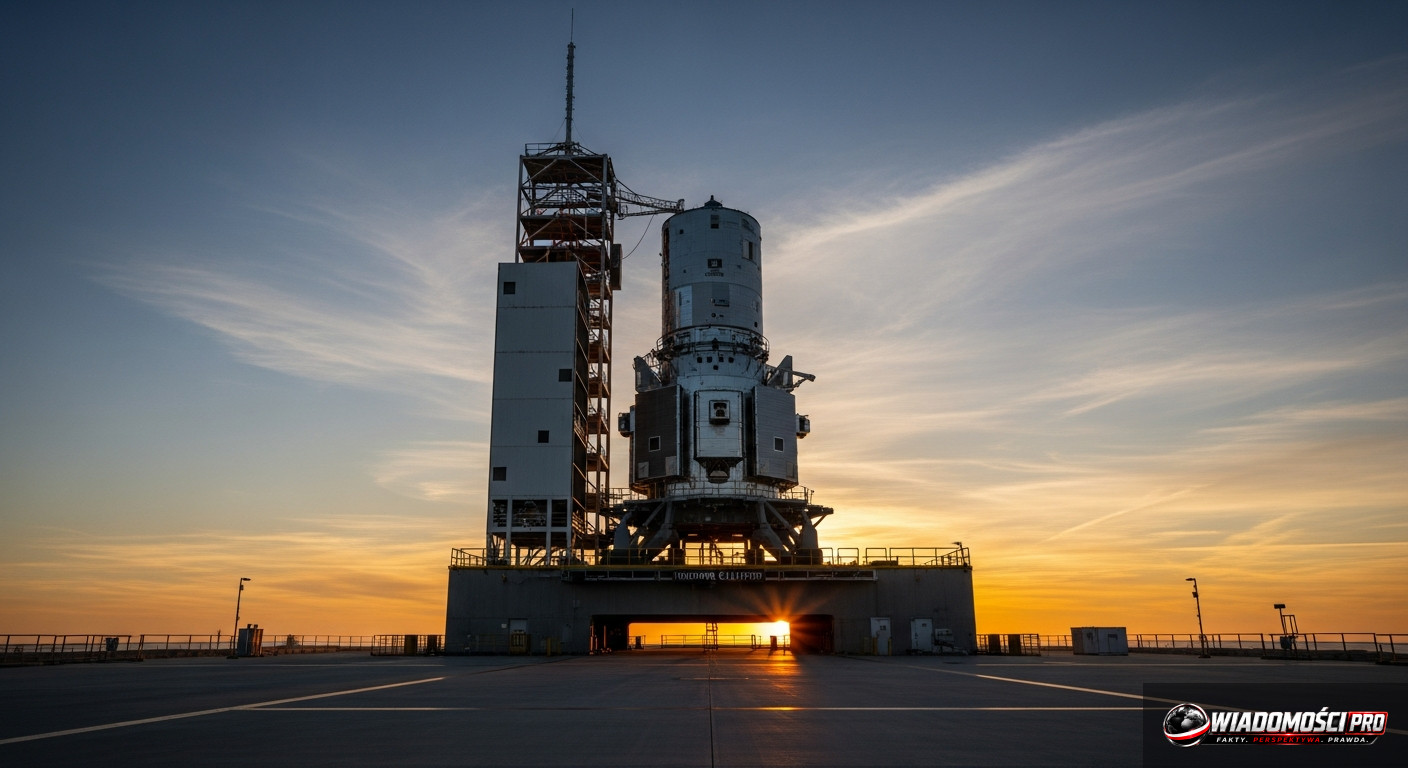
The launch of the Europa Clipper mission was a logistical challenge that tested the resilience of NASA's management systems. The original launch window was closed due to the passage of Hurricane Milton through Florida. The agency made the decision to secure the equipment in the vertical integration building, which forced the launch date to be moved to October 14. This decision helped avoid damage resulting from gusty winds and potential flooding of infrastructure at the John F. Kennedy Space Center.
The costly delay generated additional operational expenses, however, within the scale of a 5.2 billion dollar budget, the safety of the instruments remained the priority. The Falcon Heavy rocket had to undergo a detailed inspection before being placed on launch pad 39A. Engineers performed a full calibration of the systems to minimize the risk of failure during the multi-year mission.
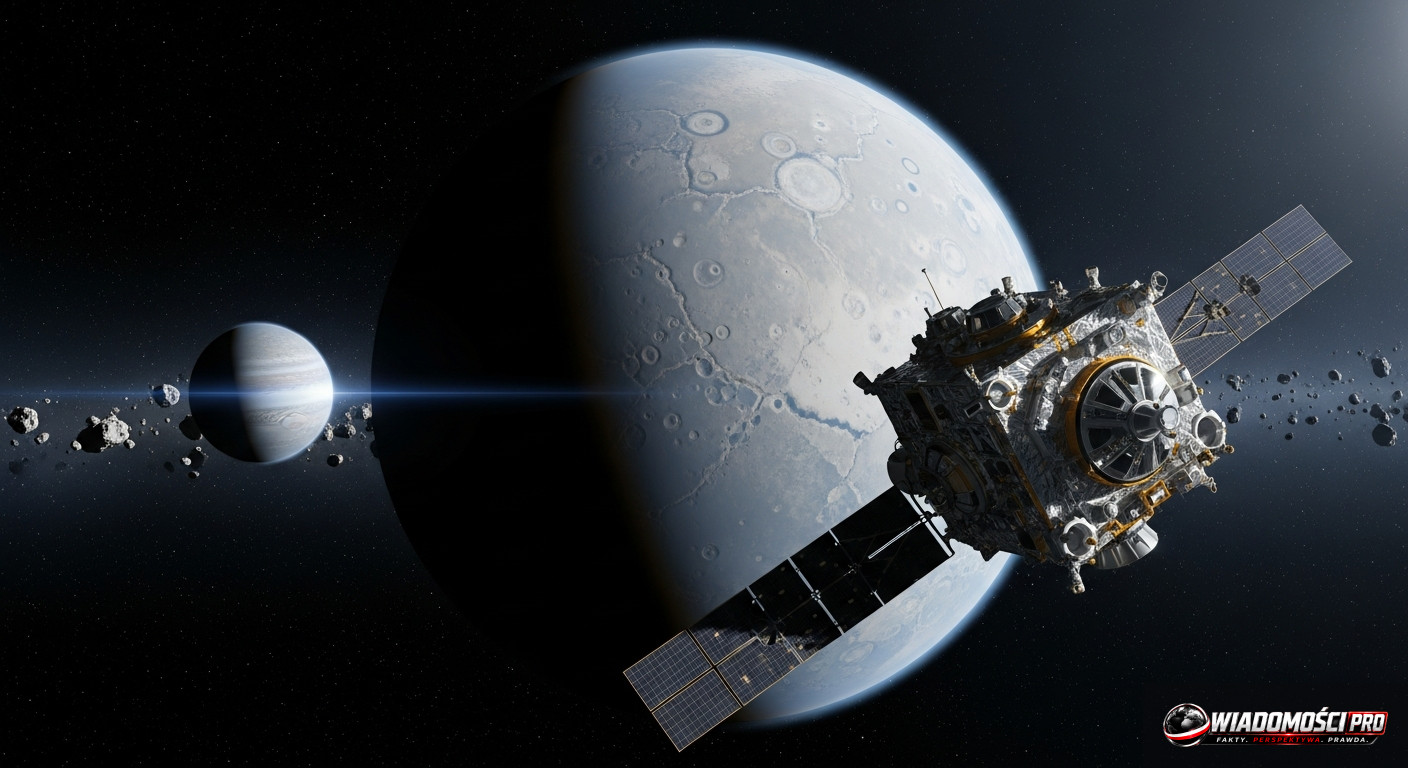
The complexity of this undertaking stems from the mass of the probe, which, including fuel, exceeds 6 tons. It is the most massive spacecraft ever built by NASA for the exploration of the solar system. Its size, resulting from the need to deploy enormous solar panels with a span of over 30 meters, imposed strict requirements regarding the stability of the launch pad. A successful launch enabled the start of a sequence of gravity-assist maneuvers, which are necessary for the probe to gain sufficient speed to reach Jupiter in 2030.
Scientific goal: What does Europa's icy shell hide?
Europa, the fourth largest moon of Jupiter, has intrigued astrobiologists for decades due to evidence suggesting the existence of a subsurface saltwater ocean. Geophysical models indicate that an ice layer between 15 and 25 kilometers thick hides a body of water up to 100 kilometers deep. If these assumptions are correct, Europa could contain twice as much liquid water as all of Earth's oceans combined.
The scientific goal of the mission is to confirm the presence of the so-called ingredients of life: water, energy, and the right chemistry. The Europa Clipper probe was not designed to drill into the ice or to search for microorganisms in a biological sense. Its task is to map the surface and perform chemical analysis of traces ejected by potential geysers. Research instruments will focus on detecting complex organic compounds and mineral salts that may be brought from the depths of the ocean to the surface through ice convection.
Researchers rule out the possibility that life could develop without a stable energy source. In the case of Europa, tidal forces exerted by Jupiter generate heat that keeps the ocean in a liquid state. The probe will verify whether these processes are efficient enough to support the metabolism of theoretical life forms. Magnetic analysis will allow for the determination of the ocean's salinity, which is crucial for establishing whether this environment is chemically friendly to the biological processes we know.

Probe technology: The largest robot in NASA's service
NASA engineers faced the problem of radiation, which is lethal to electronics in the vicinity of Jupiter. The probe has been equipped with a special "vault" made of titanium and aluminum with wall thicknesses reaching up to 9.2 millimeters. It protects the most important components from destruction during each of the 49 planned flybys of Europa.
The probe's research equipment includes nine key instruments:
- Europa Imaging System (EIS): A set of high-resolution cameras that will perform geological mapping of the surface with an accuracy of up to 0.5 meters per pixel.
- Mapping Imaging Spectrometer for Europa (MISE): A mapping spectrometer that identifies the chemical composition of the surface, including water ice, salts, and organic compounds.
- Radar for Europa Assessment and Sounding: Ocean to Near-surface (REASON): A radar system used to study the structure of the icy shell and search for water beneath the surface.
- Mass Spectrometer for Planetary Exploration (MASPEX): An instrument for analyzing the chemical composition of Europa's atmosphere in search of molecules ejected from the ocean.
- Europa Clipper Magnetometer (ECM): Studying the moon's magnetic field to determine the characteristics of the ocean.
- Thermal Emission Imaging System (THEMIS): A thermal camera used to search for locations with elevated temperatures, which may indicate geological activity.
- Ultraviolet Spectrograph (UVS): Analysis of the composition of gases in the moon's exosphere.
- Plasma Instrument for Magnetic Sounding (PIMS): Measurement of plasma in the moon's environment.
- Interior Characterization of Europa using Gravity (ICEMAG): Ultimately replaced by gravimetry to study the moon's interior.
Each of these instruments has been optimized for operation in a low-sunlight environment, which necessitated the use of enormous photovoltaic panels. The probe does not have RTG generators, making it the most advanced solar-powered project in the history of planetary system exploration.
Travel schedule: When will we reach the destination?
The journey to the Jovian system does not take place in a straight line. The probe follows a trajectory that utilizes planetary gravity assists to gain the speed necessary to reach the outer parts of the solar system. In 2025, the spacecraft will perform a flyby maneuver past Mars, and in 2026, it will again approach Earth to use its gravity for the final acceleration toward Jupiter.
Upon arrival in 2030, Europa Clipper will enter orbit around Jupiter, rather than directly around the moon. Such a solution is necessary to protect the probe from the strongest radiation in the immediate vicinity of Europa. The spacecraft will perform elliptical flybys, approaching the moon's surface at distances ranging from 25 to 2,700 kilometers. Each such flyby is a sequence of intensive data collection, followed by a long transmission of results to the Deep Space Network on Earth.
The probe's operational period will last at least four years. During this time, engineers will manage hundreds of gigabytes of data, the transmission of which, with current technical capabilities, will take many months. Each stage of the mission is strictly planned, and any deviations from the course are corrected by chemical propulsion systems. It is a precise operation where the margin of error in orbital navigation is measured in seconds and meters per second of delta-v.
Competition for discoveries: USA versus Europe
The competition for primacy in the exploration of Jupiter's moons is a fact. The European Space Agency (ESA) has sent its own probe, JUICE (JUpiter ICy moons Explorer), which will reach the Jovian system sooner than the American Clipper. However, these missions differ in their premises. While JUICE focuses on studying Ganymede, Callisto, and Europa in a broader sense, Europa Clipper is specialized for a single object.
The American project aims to provide data that a universal European probe would not be able to ensure. NASA has invested in specialized instruments that allow for significantly more frequent and closer flybys of Europa. NASA's financial dominance, supported by a 5.2 billion dollar budget, allows for the application of technical solutions that ensure higher data resolution.
The political dimension of the mission is equally significant. Washington treats the exploration of Europa as a demonstration of technological power. The success of Europa Clipper will strengthen the position of the USA in the international research consortium, setting standards for future lander-type missions. The European competition, although operating on smaller budgets, successfully carries out scientific goals that complement American data. Cooperation between both agencies is necessary for a full understanding of Jupiter's geophysical mechanisms, however, it is NASA that sets the pace for the search for habitability in this region of the Solar System.
Why is Europa so important for science?
Europa represents a unique case in astrobiology. Unlike Mars, where life could have existed billions of years ago, Europa shows signs of geological activity that may continue to this day. Interactions between the rocky seafloor and the ocean could lead to hydrothermal processes, similar to those that support ecosystems around hydrothermal vents on Earth.
The presence of a global ocean beneath a thick layer of ice makes Europa the most important research target. If life exists outside of Earth, this environment is one of the few in which it could survive in isolation from surface radiation. Scientists are looking for so-called biosignatures, i.e., metabolic products that could permeate through cracks in the ice.
It is worth noting that the lack of evidence for the existence of conditions conducive to life does not mean that the ocean is dead. It may be too salty or chemically inactive, which the probe will verify through the analysis of concentrations of CHNOPS elements (carbon, hydrogen, nitrogen, oxygen, phosphorus, sulfur). It is precisely these elements that are the building blocks of the life we know, and their presence or absence on Europa will change our understanding of the universality of biology in the cosmos. This mission constitutes the foundation for surface research planned for the coming decades, which may answer the question of whether liquid water is a sufficient condition for the emergence of life.

What this means for you
The Europa Clipper mission pushes the boundaries of what we consider possible to explore. Engineers developing radiation-resistant technologies and scientists searching for answers to the fundamental question about our place in the universe stand to gain. The catch lies in the enormous costs and waiting time. The results we receive after 2030 will not contain photos of "aliens," but rather charts, density maps, and chemical composition data, the interpretation of which will take years. For the average reader, this means a transition from science-fiction speculation to raw data that will either confirm that Europa is a biological wasteland or point to the existence of an environment in which life could theoretically flourish without access to sunlight.
Questions and answers
Why was the launch delayed until October 14?
The launch was postponed due to the passage of Hurricane Milton through Florida, which necessitated securing the probe and launch infrastructure to avoid damage caused by extreme weather conditions.
Will the probe land on Europa's surface?
No, Europa Clipper is not equipped with a lander. It is an orbiter designed for multiple flybys of the moon, which allows for the collection of data from various regions of the surface while avoiding prolonged exposure to lethal radiation in the immediate vicinity of Europa.
What exactly will the probe be studying?
The probe will focus on analyzing the thickness and structure of the icy shell, the chemical composition of the surface, studying the salinity and depth of the ocean, and monitoring geological activity, which may be crucial for sustaining biological processes.
Will Europa Clipper find life?
The probe does not possess instruments for the direct detection of microorganisms. Its task is to assess habitability, i.e., to check whether the conditions in Europa's ocean are chemically and energetically necessary for the emergence and sustenance of life.
Sources
- Start of the Europa Clipper mission to Europa - AstroNET – Polish Astronomical Portal
- NASA sends a probe to Europa. The Europa Clipper mission has launched - WP Tech
- Europa Clipper launches. A key task ahead of them - Geekweek Interia
- Europa Clipper probe will search for life on Europa - Urania - Polish Astronomical Portal
- Start of the Europa Clipper mission [TRANSMISSION]. Americans will outpace Europeans in the search for life on Europa - Wyborcza.pl
- Europa Clipper has launched. It will investigate whether there are conditions for life on Jupiter's moon - Polskie Radio 24
- Europa Clipper probe will search for life on Jupiter's moon, Europa - wszystkoconajwazniejsze.pl
- Hurricane Milton delays the launch of NASA's largest space probe, Europa Clipper, until October 14 - Notebookcheck.pl
Article prepared by the Wiadomości PRO editorial team with the support of artificial intelligence. Facts come from the sources listed above.

Komentarze (0)
Ładowanie komentarzy...