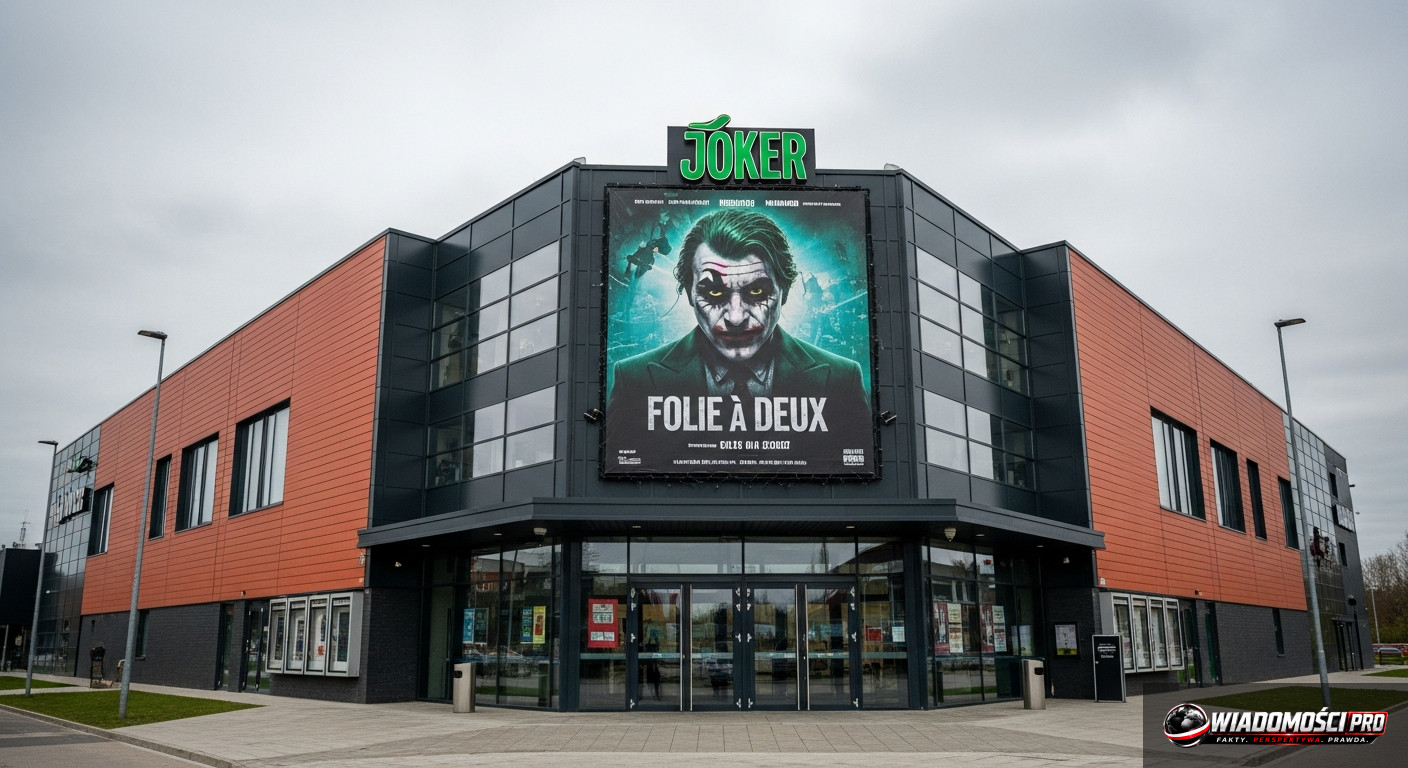
The film *Joker: Folie à Deux* earned $121 million in its opening weekend against a production budget of $200 million, leading Warner Bros. to officially label the project a financial failure. This disparity between the studio's expectations and actual audience interest became the foundation for a deep revision of the studio's release strategy. This decision ultimately ended speculation regarding the profitability of the venture, which was intended to replicate the success of the first installment from 2019.
The economics of a major production: The mechanism of failure
In Hollywood, the profitability of a film project does not end with the production budget alone. The $200 million allocated for the production of *Joker: Folie à Deux* is only the tip of the iceberg regarding the costs a distributor must face. To this sum, one must add marketing and distribution costs, known in the industry as P&A (Prints and Advertising). In the case of high-budget spectacles, these amounts usually range from $100 to $150 million, meaning the studio's total investment in this title could have exceeded $300-350 million. For the film to break even, it would have needed to generate box office receipts of at least two and a half times those costs, considering that theaters keep about half of the ticket revenue for themselves.
An opening result of $121 million globally placed Warner Bros. in an extremely difficult situation. Instead of building on the success of its predecessor, which was a financial phenomenon, the sequel began generating losses from its first days of release. In the context of such massive operating expenses, every subsequent day the film remained in theaters, with declining attendance, only increased the company's financial deficit. The official recognition of the project as a failure by Warner Bros. was, therefore, not so much an artistic declaration as a financial necessity resulting from the lack of prospects for recovering the invested capital.
Genre risk: Why did the musical discourage the audience?
The first part of *Joker* attracted a wide audience interested in the dark, realistic character study of Arthur Fleck. Viewers expected similar dynamics in the sequel, but the creators decided on a bold change of convention, transforming the film into a musical. This decision proved to be the main factor discouraging the target group, which seeks entirely different experiences in comic book cinema than those offered by musical theater.
Attendance data shows a clear decline in interest after the first preview screenings. Fans of the series, expecting a continuation of the brutal story, felt misled by the promotional campaign, which did not fully communicate the musical nature of the production. The change in genre was not perceived as an innovation, but as a barrier for the mass audience. As a result, instead of attracting fans of the first part, the film lost interest as early as the second week of release. The speed at which attendance began to drop indicates that "word of mouth" was exceptionally unfavorable for the production. Viewers who saw the film on opening weekend effectively discouraged other potential customers from buying a ticket with their opinions.
Comparison with other productions: Where is the line?
An analysis of the financial results of *Joker: Folie à Deux* in comparison with other titles allows us to understand the scale of the problem. In industry rankings, the sequel to Arthur Fleck's adventures began to be compared with productions that are synonymous with commercial flops in Hollywood. For example, the film *Morbius* from the Sony stable, despite fatal reviews, generated results that were more predictable for the studio in relation to its budget. *Joker 2* also lost in a direct comparison with other productions based on comic book licenses, which shows that even a brand with the status of a global hit is not immune to strategic errors.
For comparison, the third part of the *Venom* series, debuting in a similar period, managed to maintain its position as the leader of the North American box office, showing greater resilience to criticism and more stable attendance. This comparison is devastating for Warner Bros., as it shows that in the world of comic book cinema, it is not the name of the lead actor or the prestige of the director that determines success, but the alignment of content with audience expectations. *Joker 2* has become a warning to investors that mindlessly pumping budgets into sequels that depart from proven foundations is a direct path to financial disaster.
Distribution strategy: Escape to VOD
The speed with which Warner Bros. decided to move *Joker: Folie à Deux* to VOD platforms – as early as October 15, 2024 – is an unprecedented signal of surrender. In the standard distribution model, productions of this scale remain in theaters for at least 45 to 90 days. Shortening this window to just over a week means the studio deemed further presence in multiplexes unprofitable.
This decision was dictated by the desire to minimize further losses resulting from fees for keeping the film in cinema repertoires and marketing costs, which, with such a poor box office result, were becoming a waste of money. Moving the film to streaming is an attempt to save the balance sheet by reaching viewers who decided against visiting the cinema but might choose to watch the production in the comfort of their own homes. This move, however, does not change the fact that the investment in *Joker 2* did not pay off in theaters. For Warner Bros., this is a painful lesson that in the age of streaming, with such high production costs, the only chance for profit is maintaining viewer attention in theaters for a long time, which in this case proved impossible.
Conclusions for the market: The end of the era of unlimited budgets?
The situation surrounding *Joker: Folie à Deux* forces decision-makers in film studios to revise their approach to high-budget projects. The traditional business model, in which a high budget was supposed to guarantee quality, and quality was supposed to translate into profits, has ceased to function in a predictable way. Wall Street investors are increasingly asking questions about the sense of spending $200 million on projects that do not have a clearly defined target group.
The conclusions for the market are as follows:
- The necessity of rigorous production cost control before filming begins.
- More careful risk analysis when changing genres within established series.
- Increasing the role of market research in the screenwriting process.
- Flexibility in planning marketing budgets, which must be adequate to actual interest, not the historical success of a brand.
This failure does not mean the end of comic book cinema, but it certainly ends the period in which studios assumed that a brand would sell itself. Warner Bros. will have to be more cautious in the future regarding projects that go beyond the genre frameworks that audiences are accustomed to. Every subsequent decision to greenlight a costly sequel will now be burdened with a higher break-even threshold and detailed risk analysis.

Editorial perspective: Could this failure have been avoided?
Looking at the matter from the editorial perspective, the failure of *Joker: Folie à Deux* is a lesson in humility for the entire Warner Bros. studio system. Observing the studio's actions, one gets the impression that excessive belief in the brand's potential led to ignoring signals coming from the market. The lack of proper alignment of marketing communication with the actual content of the film – i.e., a musical – was the first strategic error.
The studio counted on the director's name and the reputation of the first part being enough to attract millions of viewers. It turned out, however, that even the most recognizable brands are exposed to rejection if the final product misses the consumer's needs. VOD platforms benefit from this, becoming a safe haven for projects that did not work in theaters, but from the investors' perspective, this is merely an attempt to minimize losses, not a success. For future productions of this type, the failure of *Joker 2* will serve as a textbook example of what not to do in the process of planning a long-term franchise strategy.

Questions and answers
Did Joker 2 break even in theaters?
No, with a production budget of $200 million and an opening result of $121 million, the film did not meet the financial expectations of Warner Bros. and did not reach the break-even point.
What were the main reasons for the financial failure of this production?
The main reasons were: the change in convention to a musical, which discouraged the target group expecting a realistic drama, high production costs, and poor attendance, which dropped sharply after the first weekend of release.
Why did Warner Bros. decide on a VOD release so quickly?
The decision to move the film to digital distribution, just over a week after its theatrical premiere, was dictated by the desire to minimize losses and an attempt to recover some capital from viewers who did not decide to go to the cinema.
How does the financial result of Joker 2 compare to other productions?
In industry rankings, this result is considered significantly below expectations, and in some comparisons, it performs worse even than productions considered financial flops, such as *Morbius*.
What does this failure mean for the future of the DC universe?
This failure represents a turning point that will force Warner Bros. to be more cautious in financing risky projects and to exercise more rigorous cost control in future high-budget productions.
Did the studio officially admit to the failure?
Yes, after analyzing the financial results, Warner Bros. officially classified *Joker: Folie à Deux* as a financial failure, which was confirmed by industry reports.
What impact did marketing costs have on the financial result?
Marketing and distribution costs (P&A), which in the case of such large productions usually amount to an additional $100-150 million, drastically raised the break-even threshold, making the film's financial success practically impossible to achieve with such a low opening.
Did the sources provide a specific date for the VOD release?
Yes, the film was added to VOD service offerings on October 15, 2024.
What does the lack of a "long tail" mean in the context of this film?
The lack of a "long tail" means that interest in the film did not persist for many weeks, which is essential for high-budget theatrical productions to achieve profit. In the case of *Joker 2*, attendance dropped drastically almost immediately after the premiere.
Was the success of the first part a guarantee of profit for the sequel?
As the case of *Joker 2* showed, the success of the first part is not a guarantee for subsequent projects, especially if the artistic concept changes in a way that does not meet the acceptance of the original's fans.
How are investors reacting to such results?
Investors view such results with great reserve, forcing film studios to conduct more thorough market research and more conservative budget planning for future sequels.
Can the film still break even in the long term?
Taking into account the official position of the studio and the lightning-fast premiere in streaming, the chances that the film will bring a profit in the traditional sense are considered negligible, and the studio is currently focusing only on limiting losses.
What lesson will Warner Bros. learn from this?
The studio will certainly learn a lesson regarding budget management and communication with the viewer, avoiding projects in the future that may be misunderstood by the brand's fan base.
Is every sequel burdened with such high risk?
Every sequel involves risk, but in the case of *Joker 2*, the risk was multiplied by a drastic change in the film's style, which was unacceptable to many viewers.
Was the 2024 cinema market exceptionally difficult for this type of film?
The 2024 cinema market is demanding, but the successes of other productions show that viewers are willing to buy tickets as long as the offered content meets their expectations, which apparently failed in the case of *Joker 2*.
Sources
- Box Office USA: Shocking debut of the film "Joker: Folie à Deux" - Filmweb
- Joker 2 is an unfunny joke at the box office. Results are even worse than assumed - Eurogamer.pl
- How much will Joker 2 earn on opening weekend? Predicted result significantly worse than the 1st part - naEKRANIE.pl
- The third "Venom" is the leader of the North American box office - Polish Press Agency SA
- Joker 2 lost even to Morbius. The worst Marvel and Sony films earned more - Gram.pl
- "Joker: Folie à Deux" on VOD! Sooner than you think - Filmweb
- Opinions on Joker 2 are divided, but one thing we know for sure: Warner Bros. considers the film a failure - Eurogamer.pl
- Izabela Trojanowska's song in the new Intermarché communication platform - Marketing przy Kawie
Article prepared by the Wiadomości PRO editorial team with the support of artificial intelligence. Facts are derived from the sources provided above.

Komentarze (0)
Ładowanie komentarzy...