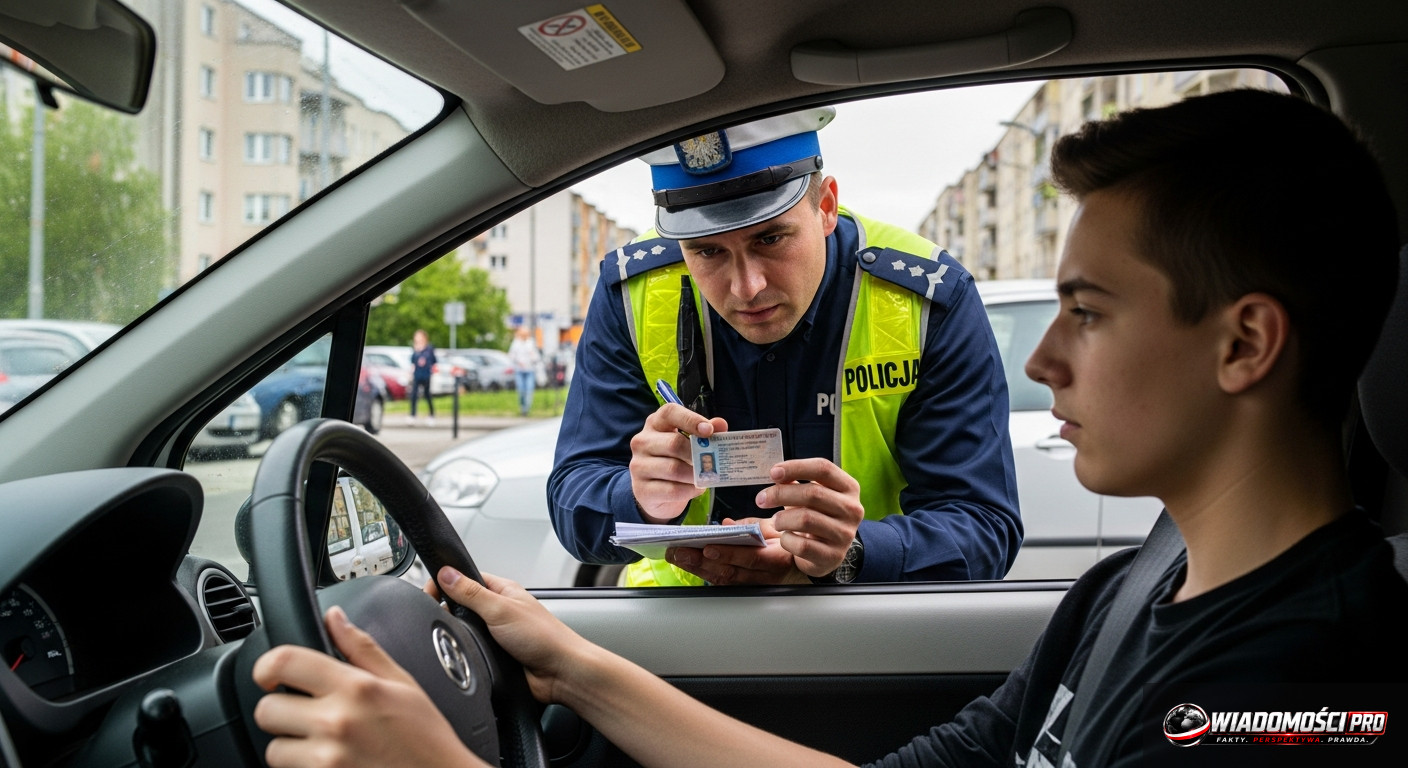
The government has adopted a draft introducing a two-year probationary period for young drivers, during which stricter speed limits (50 km/h in built-up areas, 80 km/h outside them) and mandatory road safety training will apply. The new regulations will come into force in 2026. The document, processed under parliamentary print number UD45, defines the legal framework for individuals obtaining category B driving privileges for the first time.
Two-year probationary period: Mechanics of legal changes
A person who receives a category B driver's license in 2026 will be subject to a 24-month probationary period. This status is automatically recorded in the Central Register of Drivers (CEPiK) system. This is not merely a database annotation, but an active control tool that changes the rules for driving on public roads. During this time, every prohibited act assigned to the driver's PESEL number is analyzed by the system's algorithms more rigorously than in the case of drivers with many years of experience.
The legal basis for these actions is the legislator's aim to reduce the number of road incidents involving inexperienced individuals. Police statistics indicate that the 18-24 age group generates the highest risk on Polish roads. The draft law assumes that the probationary period is intended to enforce caution through direct financial and administrative consequences. In the event of a traffic offense during the probationary period, the system sends information about the necessity of undergoing additional skills verification.
Speed restrictions: Technical challenges for novices
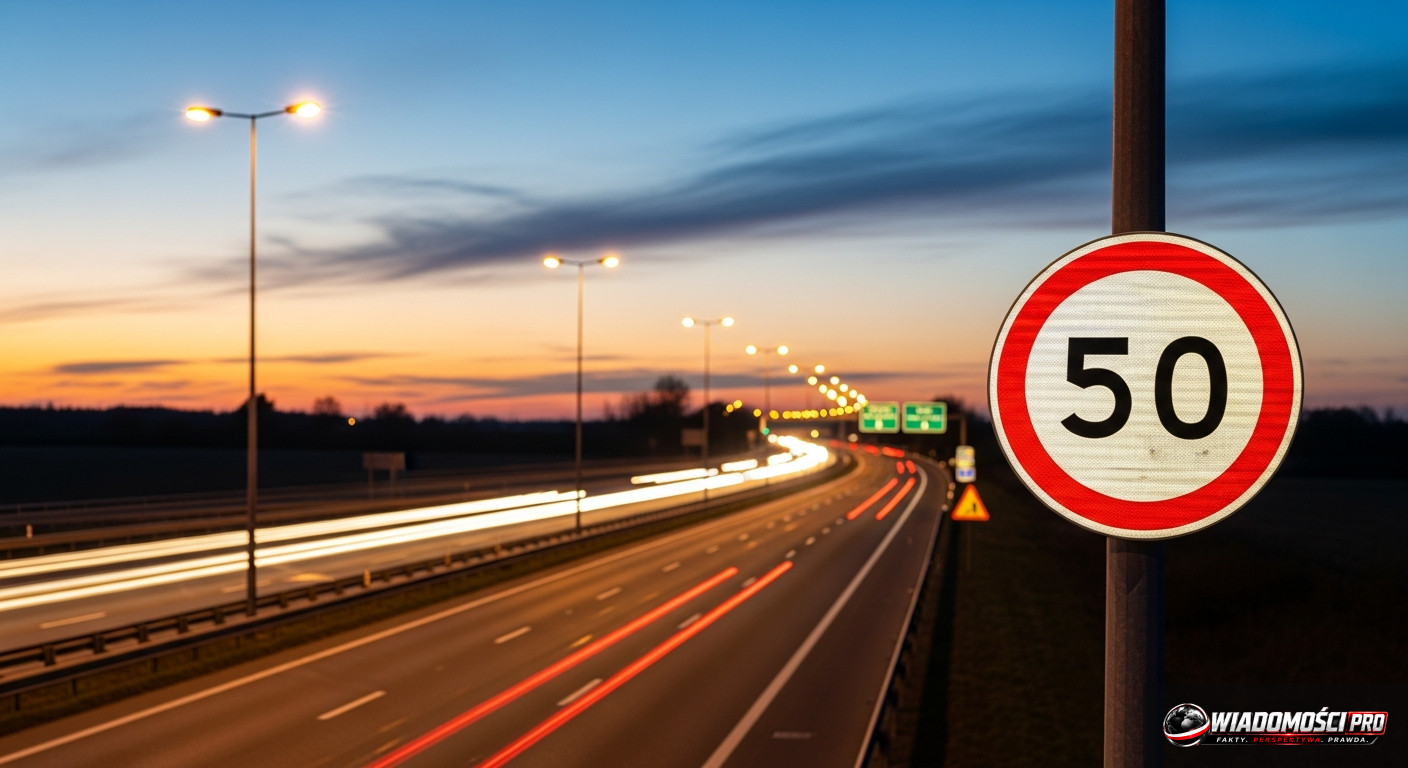
Speed limits for individuals in the probationary period have been set rigidly: 50 km/h in built-up areas and 80 km/h on other roads outside built-up areas. On motorways and expressways, the limit is 100 km/h. These values are independent of vertical signage, even if the signs allow for a higher speed. A driver with two years of experience cannot take advantage of a higher limit, even if the road technically allows for faster driving.
This structure of regulations causes disputes in the driving instructor community. Critics point to the phenomenon of forced traffic slowing, which generates additional overtaking maneuvers by other road users. From the Ministry of Infrastructure's point of view, lower speed means less kinetic energy of the vehicle, which drastically increases survival chances in the event of a collision. A driver must verify their speed not only in relation to signs but, above all, to their own legal status resulting from the date of document issuance.
Training at WORD: Costs and logistics
Mandatory road safety training is a key element of the reform. Between the fourth and eighth month after obtaining a driver's license, the driver is required to report to the Provincial Road Traffic Center (WORD). The program includes theoretical and practical classes aimed at raising awareness of the risks resulting from excessive speed and lack of predictability on the road.
The costs of this training are borne directly by the young driver's wallet. Estimates indicate a range of 400 to 700 PLN for the full cycle. This is an obligatory expense that must be added to the costs of obtaining a driver's license. Examination centers must prepare infrastructure capable of accommodating thousands of young drivers annually. There is a risk that in densely populated regions, the capacity of WORD centers will become a bottleneck in the system. Failure to complete the training within the statutory period results in the automatic suspension of privileges by the CEPiK system, which in practice means a ban on driving until the obligation is fulfilled.
Points system and the specter of losing privileges
During the probationary period, the penalty point system operates unconditionally. Every offense is treated as a serious warning. The legislator has introduced a rule whereby exceeding the penalty point limit does not just end in the suspension of the driver's license, but in its complete revocation. This means that after losing privileges, the driver must undergo the full training process and pass the state exam at a WORD again.
The police have tools to verify a driver's status in real-time. During every traffic stop, the officer, after checking the data in the system, receives information on whether the person driving the vehicle is in a probationary period. The lack of leniency from the services, which was reported in 2026 communications, is becoming a fact in the daily work of traffic police. The interpretation of regulations by officers has been limited to a minimum, which is intended to prevent corruption and arbitrariness when issuing tickets.
2026 Context: Changes in traffic law
The year 2026 brought a series of changes to traffic regulations that integrate the driver supervision system. The legislator focused on sealing the skills verification system. The introduced changes also include stricter penalties for the most serious offenses, such as driving under the influence of alcohol or participating in illegal races. The system in which a young driver operates is part of a broad state security reform.
Verification of knowledge and skills has become more demanding compared to previous years. State exams after 2025 have increased in difficulty, which was intended to eliminate people unprepared for real threats from the roads. Currently, the exam is a test of assertiveness and anticipating the behavior of other road users. A young driver, entering this system, must demonstrate not only knowledge of regulations but also the ability to handle non-standard situations, which is verified already during the driving course.
State exams: A harder road to the goal
Provincial Road Traffic Centers, after the turmoil of mid-2025, have stabilized examination standards. Examiners emphasize practical skills, which are crucial in critical situations. A student can no longer count on leniency regarding driving technique errors. Every maneuver is evaluated in terms of safety, which directly translates into pass rates.
The increase in exam difficulty is a direct response to accident statistics. The state is investing in systems that are meant to filter candidates at the stage of obtaining privileges. This approach makes the driver's license a document requiring high competence from the first day of independent driving. Young people must prepare for the fact that the process of obtaining the document is not only more expensive but, above all, much more intellectually and technically demanding.

The role of the police in the new road reality
Traffic police in 2026 use full integration of IT systems. Officers have speed meters and license plate reading systems that compare data with CEPiK in real-time. In places with a high number of collisions, patrols are more frequent. For a driver in a probationary period, this means that every trip is monitored for compliance with tightened speed limits.
The lack of warnings for novices is a new operational standard for the police. A speeding ticket, even a minimal one, becomes an entry in the driver's history that can affect their future. The system is binary. If a driver does not comply with the 50 km/h limit in a built-up area, they risk penalty points, which in the probationary period carry much more weight than for drivers with longer experience. Officers are tasked with enforcing the law without exceptions, which is intended to instill a habit of absolute discipline in young drivers.
Is this the end of recklessness on Polish roads?
The legislator assumes that strict regulations will lead to a reduction in accident rates in the 18-24 age group. However, skeptics raise the argument that administrative pressure alone may have the opposite effect to that intended. The frustration of young drivers resulting from restrictions that seem artificial to many may lead to dangerous behavior in stressful situations.
The effectiveness of these solutions will be measured by accident indicators for the years 2026-2027. If statistics confirm a decrease in the number of fatalities, the government will be able to claim a successful reform. Otherwise, a revision of the regulations will be necessary. Currently, young drivers must adapt to a new reality where every kilometer per hour over the limit has a real price in penalty points and zlotys.
Perspective for a young driver
An eighteen-year-old who receives a driver's license enters a system where the privilege of driving a vehicle is conditional upon numerous terms. Driving a car ceases to be a freedom and becomes a conditional permit. Every mistake, every moment of inattention, every ignored sign is recorded in CEPiK.
Additional training at a WORD is not only an expense but also a logistical challenge. A young person must fit into an imposed deadline, which for those studying or working can be difficult to reconcile with daily duties. The lack of flexibility on the part of the system is one of the most frequently raised complaints by youth organizations. Young drivers feel treated like citizens against whom a presumption of guilt is applied, which in practice means the necessity of constantly proving their competence to state authorities.
Training logistics: Will the system hold up?
Provincial Road Traffic Centers have faced the challenge of digitalization and increasing the employment of examiners. If several hundred new drivers receive their licenses in a given county in one month, the centers may not be able to handle everyone within the required window between the fourth and eighth month. This creates a risk of administrative congestion that could hit citizens.
If a driver does not complete the training on time, their privileges will be suspended. This is a drastic measure that meets opposition from young driver circles. They argue that the state shifts the responsibility for the efficient functioning of the system onto people who have no influence on the organization of work at WORD centers. This is another flashpoint that may become the subject of legal disputes in the coming months.
Summary of changes and future forecasts
The introduction of a two-year probationary period changes the landscape of Polish roads. Young drivers must prepare for a legal regime that previous generations did not know. Statistics for 2027 will be crucial for evaluating this reform. If the number of accidents drops, the government will be able to boast of success. However, if indicators remain at a similar level and only the number of blocked privileges and social frustration increases, a revision of the assumptions will be necessary.
Currently, a young driver in Poland must be not only an attentive road user but also proficient in administrative regulations. Every trip on the road is a high-risk operation, where not only other cars but the legal system itself poses a challenge. It remains to be hoped that such radical measures will bring the intended effect in the form of a real reduction in the number of fatalities, which is the only justification for such strict restrictions.
Questions and answers
How exactly is the probationary period for a young driver calculated?
The probationary period lasts 24 months, counting from the date of the first issuance of the driver's license document. During this time, the driver is subject to all tightened legal rigors, including speed limits and mandatory training.
Is there a right to leniency for offenses during the probationary period?
No. According to the guidelines and the spirit of the amendment, the police do not apply leniency. Every violation of regulations is recorded in the CEPiK system, and penalty points in this period carry more weight in the context of losing privileges.
What happens if I don't make it to the mandatory training at a WORD?
Failure to fulfill the training obligation within the period between the fourth and eighth month after the issuance of the driver's license results in the automatic suspension of privileges until the course is completed. The system does not provide for deadline extensions for random reasons.
Do the 50 km/h and 80 km/h speed limits apply on motorways?
On motorways and expressways, the limit for young drivers in the probationary period is 100 km/h. This is a rigid value, independent of higher limits resulting from road signage for other road users.
Do standard speed limits return after the two-year probationary period?
Yes, after 24 months from the date of issuance of the driver's license, the driver ceases to be subject to the restrictions of the probationary period and is subject to standard speed limits provided for all drivers in Poland.
Where can I check if my probationary period has already ended?
The status of privileges and the end date of the probationary period can be checked in the mObywatel system or directly in the Central Register of Drivers by logging into your account on government services.
Does the training at a WORD include a practical part, or only theoretical?
Mandatory training during the probationary period consists of both parts. The goal is not only to refresh knowledge of traffic regulations but, above all, to improve driving technique and learn to anticipate threats in practical road conditions.
Does the tightening of regulations also apply to drivers holding a category A driver's license?
The draft law in its current form focuses primarily on holders of category B driver's licenses, due to the highest number of road incidents involving them in the initial phase of independent driving. Regarding category A, regulations may be subject to separate provisions.
Does the point system during the probationary period differ from the standard system for experienced drivers?
The difference lies in the consequences. For young drivers, exceeding the penalty point limit ends in the revocation of privileges, which forces the full procedure of obtaining a driver's license from the beginning, including the course and the state exam.
Do I have to carry any certificate of completing the training with me?
Data on completed training is automatically sent to the CEPiK system by the WORD, so there is no need to have a physical certificate with you during a traffic stop. The police verify this fact in real-time.
The two-year probationary period is a fundamental change for Polish roads. Introducing such restrictive frameworks for people starting their adventure with motoring means that road education no longer ends at the moment of receiving the document. The state takes on the role of a strict observer that monitors every driver's behavior through the CEPiK system. However, this mechanism has its weak points. First and foremost is the capacity of institutions such as WORD. If the system does not provide enough training slots, young drivers will get stuck in an administrative limbo, losing their driver's license not because of recklessness, but because of errors in the organization of work at examination centers.
Skeptics also note that the imposed rigid speed limits – 50 km/h in built-up areas and 80 km/h outside them – may be a factor increasing tension in traffic. A driver who drives according to the regulations becomes an "obstacle" for other road users, which forces them to constantly check the speedometer instead of analyzing the situation on the road. This is a paradox that the legislator will have to face in the first months of the new regulations' operation.
If the reform actually leads to a reduction in the number of accidents, it will be a success that will defend itself. However, if it turns out that the system mainly serves to generate revenue for WORD centers and make life difficult for young people, a quick correction will be necessary. Currently, young drivers must accept that their first two years behind the wheel are a test where the margin for error practically does not exist. Every decision behind the wheel, every extra kilometer per hour, can cost the loss of privileges. This is pressure that no generation before 2026 knew.
It is worth remembering that a category B driver's license in the current system is not only a document but also a responsibility, which in light of the new regulations becomes a burden. The police have received a clear signal: zero leniency. Officers during checks will not look for excuses for novices. The CEPiK system will provide them with all necessary data before approaching the car window. For a young driver, this means the necessity of full concentration and submission to strict rigors, even if they seem inadequate to real road conditions.
Ultimately, the future of Polish roads depends on how quickly young drivers adapt to the new rules of the game. Will the system discipline them, or perhaps only discourage them from legal driving? We will know the answer to this question no sooner than in 2028, when the first cohorts pass through the full cycle of two-year supervision. Until then, the road to obtaining and maintaining a driver's license will remain a process requiring constant financial and emotional commitment. Every young driver now becomes part of a system that requires absolute discipline in exchange for the privilege of using public road infrastructure. This is a new reality that defines safety standards for years to come.
Sources
- Will seniors lose their driver's license in 2026? Final decision on exams made. Here are the new rules - Dziennik.pl
- New regulations from today. The police will not be lenient - Interia Motoryzacja
- New regulations 2026: Lifetime loss of driver's license, prison for recklessness, ban on racing - Gazeta Prawna
- Chaos in driver's license exams. What will change on July 1st? - WP Finanse
- Changes in driver's license. New regulations coming - PolsatNews.pl
- Rules for the driver's license exam at the last minute - Rzeczpospolita
- You will lose your driver's license for this offense. New regulations are coming - TVN24
- Harder driver's license exam from July 1st? We are checking - Onet
Article prepared by the Wiadomości PRO editorial team with the support of artificial intelligence. Facts are derived from the sources provided above.
Komentarze (0)
Ładowanie komentarzy...