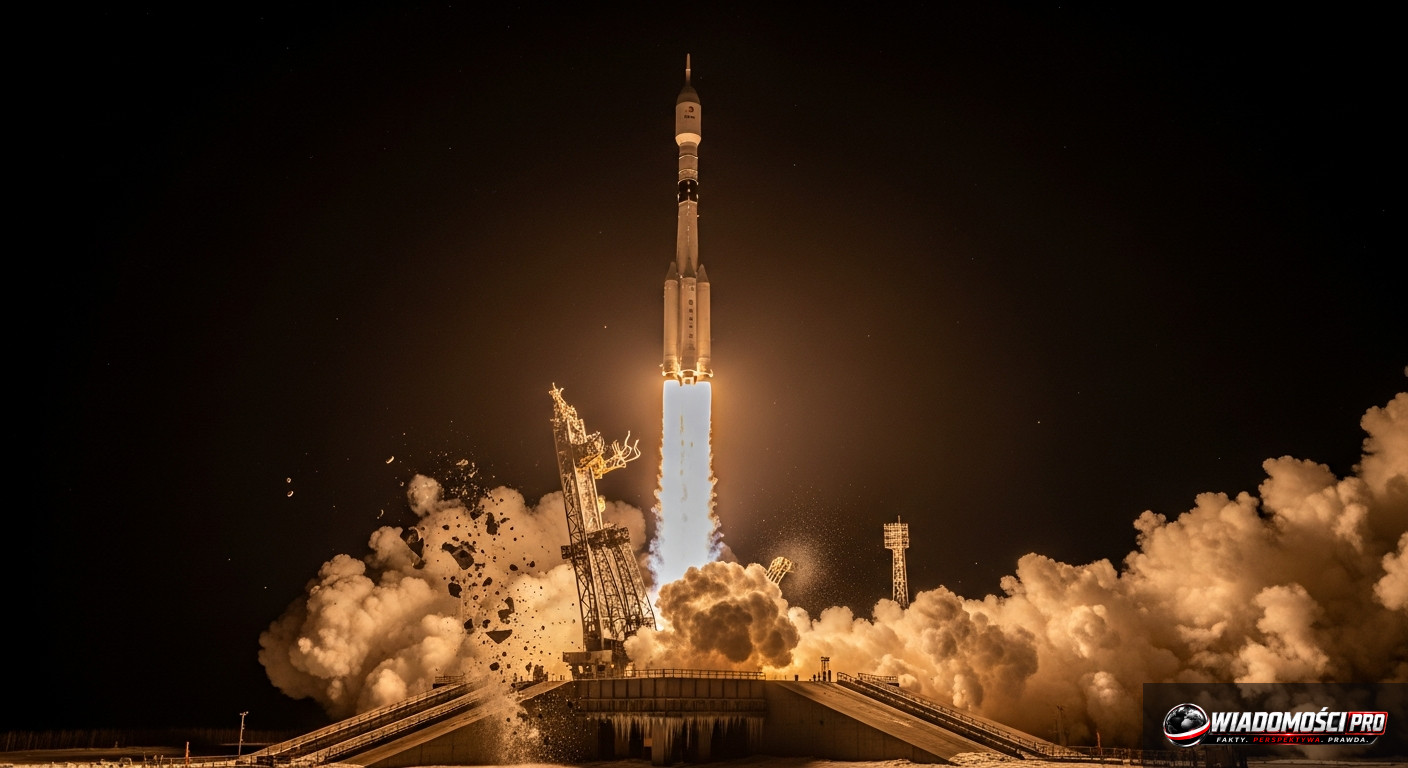
The Europa Clipper probe, which launched on October 14, 2024, after a delay caused by Hurricane Milton, is tasked with checking whether the ocean beneath Europa's icy shell has the conditions necessary to sustain life. The mission does not involve landing on the moon's surface or directly searching for microorganisms in soil or ice samples. NASA engineers have focused on creating an orbital laboratory that will assess the habitability of this environment without physically interacting with it.
Technical specifications and construction challenges
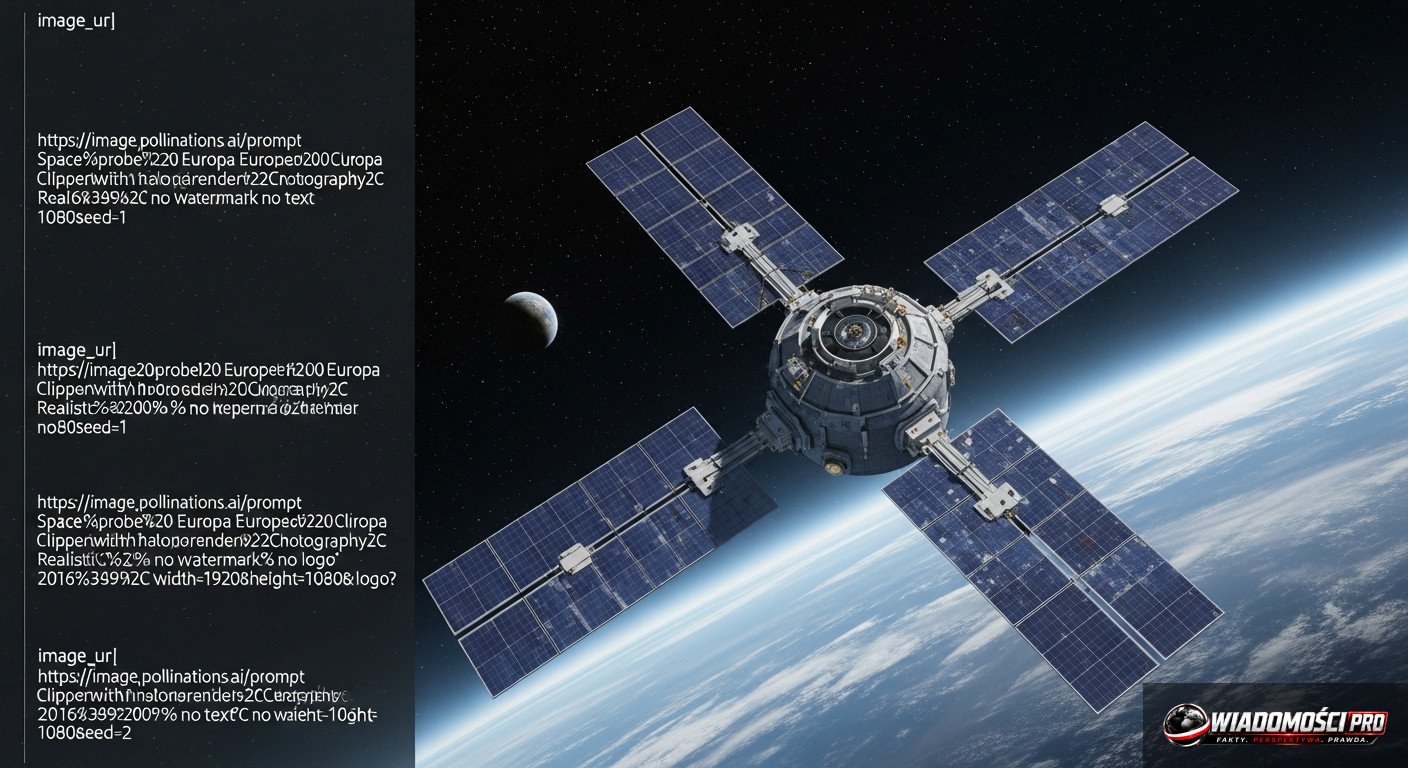
The cost of the entire project is estimated at approximately 5.2 billion dollars. It is an investment in a machine with a launch mass of nearly 6,000 kilograms, nearly half of which is fuel needed to perform a series of orbital maneuvers and course corrections on the way to the Jovian system. The probe itself, after deploying its massive solar panels, reaches a span exceeding 30 meters. It is the largest unit ever built by NASA for an interplanetary mission.
Engineers faced the problem of protecting electronics from Jupiter's deadly radiation. The gas giant has the strongest magnetic field in the Solar System, which accelerates charged particles to relativistic speeds. To survive in this environment, key components were enclosed in a special vault made of titanium and aluminum nearly one centimeter thick. This construction is intended to weaken the bombardment of particles, which would otherwise lead to the total degradation of the integrated circuits within just a few months.
On board is a carefully selected set of research instruments. The REASON system, an ice-penetrating radar, is designed to penetrate the icy shell and detect potential pockets of water or layers of varying density. The MISE instrument will allow for mapping the chemical composition of the surface, identifying salts, organic compounds, and hydrates. Meanwhile, the EIS camera will provide high-resolution images that will enable precise analysis of the moon's geological structures. MASPEX, a mass spectrometer, will conduct an analysis of the composition of gas and dust molecules in Europa's environment, which may provide indirect evidence of what is happening inside the ocean.
Mechanics of the orbital dance
The flight trajectory of Europa Clipper is the result of many years of ballistic calculations. The probe did not fly directly toward the Jovian system. Instead, it uses gravity assists from Earth and Mars to gain the speed necessary to cover the vast distance. Such a solution saves fuel, but significantly extends the duration of the journey. Reaching the Jovian system is planned for the beginning of the 2030s.
Upon arrival, the probe will not enter orbit around Europa itself. Instead, it will orbit Jupiter, performing a series of 49 close flybys of the moon's surface. Each such approach is an opportunity to collect data, but also a huge risk. The flybys take place at various altitudes, from several hundred kilometers to just 25 kilometers above the surface. This strategy allows for systematic mapping of nearly the entire globe while limiting exposure time to the most intense radiation near the moon.
This approach differs from missions that assumed a landing. A lander would have to cope with difficult terrain, uncertain ice thickness, and a lack of energy if the solar panels were covered in frost. An orbiter avoids these problems by operating in space, where conditions are constant, and the only limitation is the lifespan of electronic systems subjected to continuous radiation.

Does water mean life?
The question about the possibility of life on Europa is based on the foundation of the presence of liquid water. Observations made by the Voyager and Galileo probes indicated the existence of a global ocean hidden beneath an ice shell 15 to 25 kilometers thick. The energy needed to keep the water in a liquid state comes from Jupiter's tidal interactions, which knead the moon's core, generating heat through internal friction.
However, heat and water alone are not enough. Biology requires access to chemical energy and building blocks such as carbon, hydrogen, nitrogen, oxygen, phosphorus, and sulfur. Europa Clipper is to check whether the chemical composition of the surface – which may be the result of processes occurring in the ocean and the ejection of matter through cracks in the ice – contains the appropriate proportions of these ingredients. If the probe detects complex organic compounds, the chances of finding life will increase significantly.
Skeptics, however, point to the possibility that the ocean on Europa may be too salty or too poor in organic compounds to sustain life as we know it. There is also a risk that the geological processes that transport matter from the ocean to the surface are too rare to allow for its analysis from orbit. Every result, even a negative one, will be valuable for science, as it will allow for the exclusion of one of the most probable scenarios of extraterrestrial habitability in our system.
Technical challenges: Jupiter's radiation
Jupiter's environment is deadly for electronics. The planet's magnetic field traps charged particles from the solar wind and those ejected by volcanoes on the moon Io, creating radiation belts of unprecedented intensity. Europa Clipper was designed to withstand a radiation dose equivalent to millions of chest X-rays. Without thick shielding, the probe's processors would fail within a few days.
Designers opted for an architecture that minimizes the number of components exposed to direct radiation. Power systems, onboard computers, and communication modules are located inside the aforementioned vault. Even the cabling was routed in such a way as to reduce the risk of electrostatic charges, which could lead to circuit breakdowns.
Furthermore, the probe's software must have a high degree of autonomy. The communication delay between Earth and Jupiter is between 33 and 53 minutes one way. This means that in emergency situations, the probe must be able to independently diagnose the problem and enter safe mode without waiting for instructions from the mission control center at the Jet Propulsion Laboratory.
Astronomical race and international cooperation
Modern space exploration does not take place in a vacuum. Europa Clipper is NASA's flagship project, but the European JUICE (Jupiter Icy Moons Explorer) probe is also heading toward the Jovian system. Although the goals of both missions overlap to some extent, their priorities are different. JUICE focuses on studying the entire Jovian system and the moons Ganymede and Callisto, while Europa Clipper is dedicated solely to Europa.
This situation creates a unique opportunity for data exchange. Cooperation between NASA and ESA may allow for the creation of a more complete picture of the dynamic environment of the Jovian system. The Americans, by sending Clipper, want to take the initiative in astrobiological research, but science in this case is rarely a zero-sum game. Every set of data collected by the probes will be available to the international community, which constitutes the strength of the modern approach to exploration.
However, the political context cannot be ignored. Funding the mission through the US Congress required many years of negotiations. The budget of over 5 billion dollars was repeatedly questioned in the face of rising costs of other NASA programs, such as Artemis. Maintaining this level of funding over the decades of the project's duration was a test for the stability of American space policy.
What the mission means for the future of exploration
The success of Europa Clipper will set the direction that space agencies will follow in the mid-21st century. If the probe shows that conditions conducive to prebiotic chemistry exist beneath Europa's ice, the next logical step will be to design a lander mission, or perhaps even a submarine capable of breaking through the ice. However, this would require technologies that are currently only in the conceptual phase.
On the other hand, a lack of evidence for conditions for life will force astrobiologists to verify models regarding the origin of life in extraterrestrial oceans. Perhaps life requires conditions that we are unable to detect using current tools, or perhaps Europa is too sterile an environment. Regardless of the result, data from Europa Clipper will serve scientists for decades, becoming a reference point for every future mission exploring icy worlds.
For the general public, this mission is a symbol of the possibilities of human engineering. Sending a complex device a distance of hundreds of millions of kilometers and forcing it to operate precisely in extreme conditions is an achievement that goes beyond pure science. It is proof that our civilization is capable of crossing the boundaries of its own planetary system, even if the goals of these expeditions remain in the sphere of fundamental questions to which an answer may never be found in our lifetime.
Data analysis: how to recognize life without landing?
The probe's instruments are designed to detect so-called biosignatures. These are not direct evidence of the existence of microorganisms, but chemical or physical "traces" that could suggest biological activity. For example, an excess of certain carbon isotopes in ejected water vapor plumes could testify to metabolic processes occurring in the ocean.
MASPEX plays a key role here. It is a very high-resolution mass spectrometer that can distinguish complex organic molecules from simple hydrocarbons, which can be formed as a result of non-living processes. If the probe detects amino acids, lipids, or other complex structures in gas samples, it will be the strongest signal yet that something extraordinary is happening on Europa.
However, this does not mean confirmation of life. Organic chemistry is common throughout the Solar System – from comets to Saturn's moons. The challenge for scientists will be to distinguish matter delivered from space by meteorites from that which could have been formed in the moon's local environment. This is why the correlation of data from the REASON radar and the EIS camera is so important. Only by putting all the pieces of the puzzle together – chemical composition, shell thickness, geological activity – will it be possible to draw conclusions about whether the environment is truly habitable.
Risks and unknowns
The greatest threat to the mission is the unpredictability of Jupiter. Despite thousands of simulations, the radiation environment near the planet is dynamic. Solar flares can increase radiation intensity, which will affect the operation of electronics. There is also a risk that the probe will collide with dust particles or rock fragments while flying through Jupiter's rings or near Europa itself.
Another risk factor is communication itself. The probe must transmit huge amounts of data through the Deep Space Network using high-power antennas. Any failure in the ground-based network of receiving stations could mean the loss of invaluable information. For this reason, the mission was designed with redundancy in mind – most critical systems have backup counterparts that can take over functions in the event of a failure.
One must also not forget the human factor. Europa Clipper is a project involving hundreds of people. Software bugs, oversights in ground tests, or even mistakes in entering commands could jeopardize the mission. Nevertheless, NASA's history shows that engineering discipline allows for minimizing these risks to a level that makes space exploration possible.

What this means for you
As observers of this process, we must arm ourselves with patience. Many years will pass from the moment of launch until the first concrete data is obtained. This is not news that changes everyday life, but it is a mission that pushes the horizon of what we understand as a "place to live." We are gaining scientific understanding of the physics of icy moons, while losing the illusion that we are the only object in the Solar System that possesses adequate water resources. If Europa turns out to be a dead globe, our view of Earth as a unique oasis in space will be further strengthened. If it turns out that life is teeming beneath the ice, human history will be divided into the time before and after this discovery.
Questions and answers
When exactly will the probe reach Europa?
The journey of the Europa Clipper probe is planned for many years. After launching in October 2024, the probe will use gravity assists from Earth and Mars to finally reach the Jovian system in 2030. Only then will the actual research phase begin, involving a series of 49 close flybys.
Why does the probe not have a lander?
Landing on Europa involves huge technical risks. The moon's uneven surface, the uncertain thickness of the icy shell, and Jupiter's extreme radiation make safely placing a lander and providing it with power extremely difficult. An orbital mission allows for safe and systematic research from a distance, which increases the chances of obtaining data without exposing equipment to rapid degradation.
Will Europa Clipper find life?
The probe is not tasked with directly finding life, but with checking whether the ocean beneath the icy shell has the conditions necessary to sustain it. The probe will look for evidence of the existence of water, appropriate chemical compounds, and energy that could support biology. Discovering these conditions will be a breakthrough that will open the way for subsequent, even more advanced search missions.
How much did this mission cost and was it worth spending that money?
The cost of the Europa Clipper mission is approximately 5.2 billion dollars. The decision to fund it is based on the conviction that the answer to the fundamental question about the existence of life outside Earth is worth the investment. For scientists, the value of this data is invaluable, as it will allow us to understand whether the processes leading to the emergence of life are common in the universe, or whether we are an exception on a galactic scale.
Sources
- Start of the Europa Clipper mission to Europa - AstroNET – Polish Astronomical Portal
- NASA sends probe to Europa. Europa Clipper mission has launched - WP Tech
- Europa Clipper launches. A key task ahead of them - Geekweek Interia
- Europa Clipper probe will search for life on Europa - Urania - Polish Astronomical Portal
- Start of the Europa Clipper mission [BROADCAST]. Americans will overtake Europeans in the search for life on Europa - Wyborcza.pl
- Europa Clipper has launched. It will investigate whether there are conditions for life on Jupiter's moon - Polskie Radio 24
- Europa Clipper probe will search for life on Jupiter's moon, Europa - wszystkoconajwazniejsze.pl
- Hurricane Milton delays the launch of NASA's largest space probe, Europa Clipper, to October 14 - Notebookcheck.pl
Article prepared by the Wiadomości PRO editorial team with the support of artificial intelligence. Facts come from the sources listed above.

Komentarze (0)
Ładowanie komentarzy...