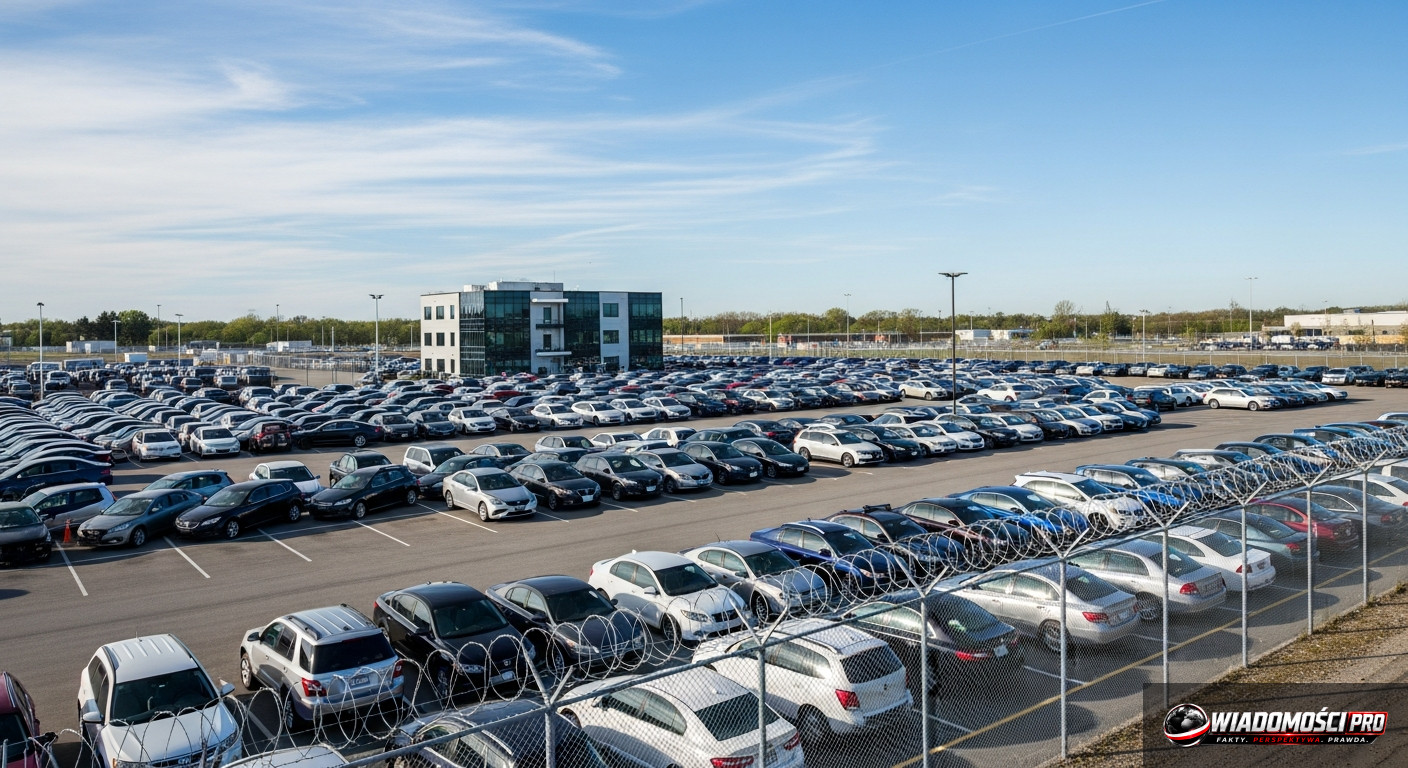
From January 1, 2027, the maximum cost associated with towing and a day of storage at a guarded parking lot will increase to 837 PLN. This price hike represents a significant burden for drivers who have previously paid much less for vehicle removal due to traffic violations. This change results from an update to the Ministry of Finance's announcement, which adjusts maximum rates to the level of inflation and the rising operating costs of companies performing tasks commissioned by local governments.
### Financial mechanism: rate comparison
The current system of fees for towing a vehicle and storing it at a municipal-designated parking lot is based on limits set in the Ministry of Finance's announcement. In 2026, the maximum fee for towing a passenger car was 697 PLN. The change, which will take effect in a few months, means a jump of 140 PLN. For many motorists, this is a signal that maintaining road infrastructure and enforcing parking laws is becoming an increasingly expensive operation.
These values are not accidental. The Ministry of Finance publishes them annually based on changes in the prices of consumer goods and services. When the cost of renting land, fuel for tow trucks, third-party liability and comprehensive insurance for towed vehicles, and staff wages rises, the statutory "ceiling" must be raised. Drivers must be aware that the amount of 837 PLN is the upper limit. A municipal council may set a lower rate by resolution, but in the budgetary realities of many Polish cities, it is rare to forgo charging the maximum permissible amounts.
### Legal basis and the role of local governments
The legal foundation for these actions is Article 130a of the Act of June 20, 1997 – Road Traffic Law. It is this legislative act that gives municipalities the right to remove vehicles if leaving them poses a safety risk or obstructs traffic. Local governments do not act in a vacuum here. They must sign contracts with external entities that have the appropriate equipment, i.e., tow trucks, and fenced, guarded parking lots.
The process of setting rates by the municipal council is strictly limited by the Ministry of Finance's announcement. A municipality cannot enact a fee higher than the one indicated by the minister in their announcement. This mechanism is intended to protect citizens from the arbitrary imposition of penalties that could become a source of unjustified profits for local budgets. Nevertheless, from a driver's point of view, the difference between 697 PLN and 837 PLN is noticeable and in many cases exceeds the cost of repairing a minor fault in a workshop.

### Economic background of rising costs
Why must the towing operation cost so much? The answer lies in the fixed costs of companies providing these services. A company that wins a tender for operating impound lots must ensure 24-hour readiness, protection of the area against theft and vandals, and full documentation for every vehicle accepted. In the face of rising inflation, the costs of maintaining the lot – including property taxes, utilities, and security – have skyrocketed over the last two years.
Industry websites, such as MotoGuru.pl or Interia Motoryzacja, emphasize that for entrepreneurs involved in towing, raising the limit to 837 PLN is a necessary condition for continuing to provide services. Without this adjustment, many companies would have to abandon contracts with municipalities because operating costs would exceed revenue from fees. Consequently, we would face a paralysis of the system for removing wrecks or poorly parked cars. This shows that every element of the system is interconnected – from the Ministry of Finance's decisions, through tenders in city offices, to the final invoice received by the owner of the towed car.
### Infrastructure and safety in a broader context
Increasing towing costs is just one aspect of changes in transport. It is worth looking at it more broadly. When a city invests in modern solutions, such as low-floor trams – 50 new units of which will hit the GZM tracks by mid-2027 – it simultaneously tries to discipline drivers so they do not block traffic. The situation is similar regarding purchases of equipment for Volunteer Fire Department units in the Lesser Poland or Łódź provinces. The state systematically invests in safety, and enforcing parking regulations through higher towing penalties is a form of protecting this shared infrastructure.
A driver who parks on an access road for a fire truck is not just breaking the rules. They are genuinely endangering the safety of residents. In this light, a higher towing fee ceases to be just a "tax on a mistake" and becomes a preventive tool. Is this a fair tool? That is a topic for debate. However, it is a fact that in 2027, the cost of ignoring "no parking" signs will become high enough that for many people, it will become the main argument for finding a legal parking space, even if it requires a longer walk.
### Technical aspects of towing: what you need to know?
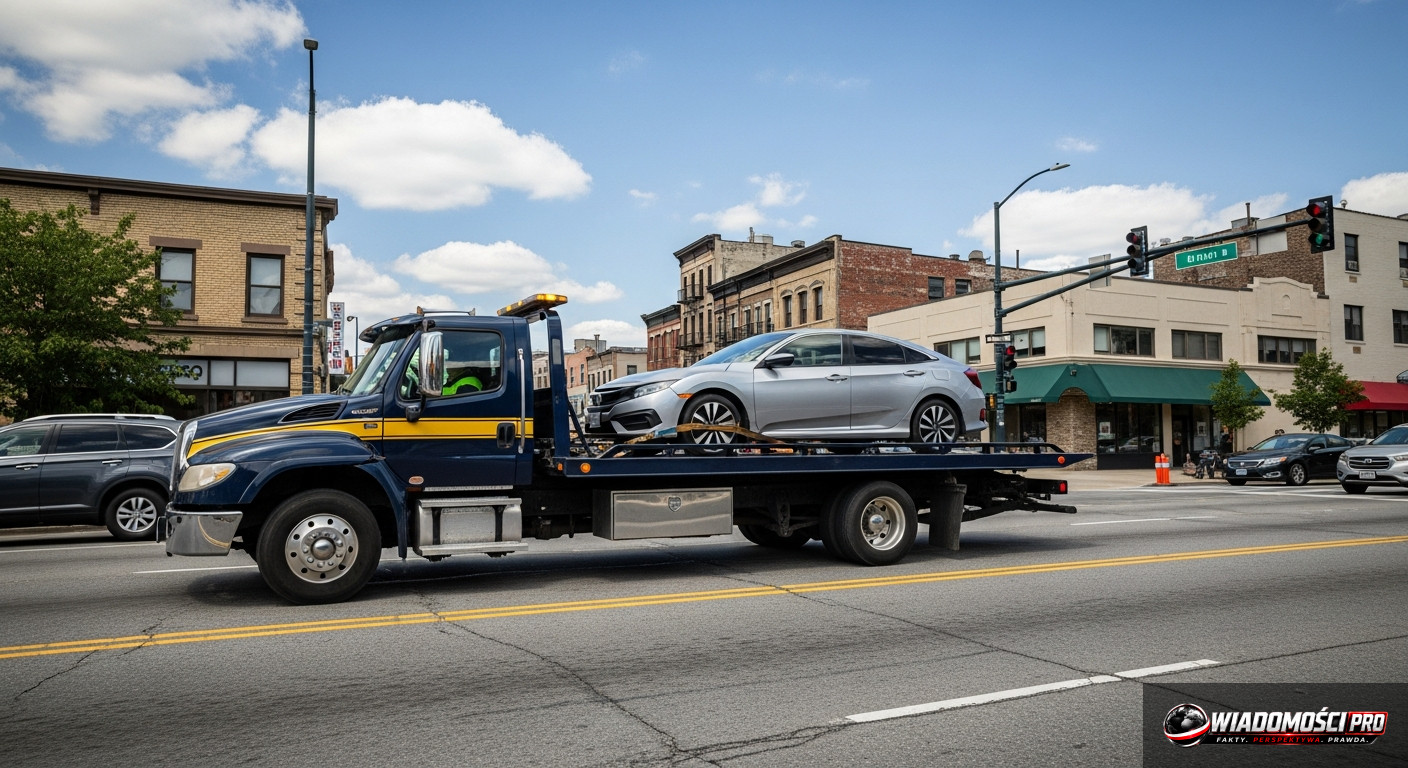
It is worth understanding exactly what the car removal process consists of. When a police officer or municipal guard makes the decision to tow, the vehicle is secured on a tow truck. From that moment on, the municipality is responsible for its condition. The fee, which will rise to 837 PLN, covers not only the transport itself but also the administrative costs associated with issuing the decision and operating the parking lot for the first 24 hours.
What happens if the car stays longer? For every subsequent day, the municipality charges an additional fee, which is also legally limited. Drivers often forget that time works against them, not only in the context of rising parking fees but also in the context of potential criminal fines that often accompany the decision to tow. The total cost can therefore exceed 1,000 PLN if we add the fine for violating the parking ban to the amount for the tow truck and parking.
### The role of impound lot operators
Most parking lots where towed cars end up are run by private companies based on orders from the city office. They are the direct beneficiaries of the rate increases. It is often argued that this system promotes corporations at the expense of the citizen. On the other hand, without the participation of the private sector, municipalities would have to build their own huge parking bases, which would be an even greater burden on taxpayers.
The current model is an attempt to find a compromise. The municipality commissions the service, a private company performs it, and the price limit imposed by the Ministry of Finance is meant to prevent abuse. Does it work? In large metropolitan areas, the main problem is the lack of free spaces in impound lots. In some cities, it happens that cars sit in lots for months, becoming wrecks that owners do not want to pick up, hoping the matter will expire. The new rates are also intended to encourage faster vehicle retrieval so that "rotation" in the parking lots is higher.
### The 2027 perspective: what will change in the daily life of drivers?
From January 2027, every driver planning to park in the city center should check the signs twice. The previous freedom, stemming from the belief that "it will be fine," will be brutally verified by their wallet. 837 PLN is an amount that for many families represents the equivalent of weekly groceries or a loan installment.
This change fits into the general European trend where the costs of owning and using a car in city centers are systematically driven upward. Is this the beginning of the end of the era of cheap parking? Many signs point to it. Cities are focusing on public transport, cycling, and walking, and the car is increasingly treated as an intruder in the urban fabric. High towing fees are just one piece of this puzzle.
### Controversies surrounding maximum rates
There is no shortage of critical voices regarding the Ministry of Finance's policy. Representatives of motoring organizations argue that the increase to 837 PLN is too abrupt. In their opinion, instead of raising rates so drastically, one should focus on improving parking infrastructure. They argue that drivers often park in prohibited places not by choice, but due to a lack of any alternative.
On the other hand, city leaders refute these accusations, pointing to the need to ensure road passability. If everyone could park wherever they wanted, city arteries would turn into impassable parking lots. The decision to raise the rate therefore also has an order-keeping dimension. It is a signal: public space is a common good, and occupying it illegally must cost enough that it stops being profitable.
### What does the appeal procedure look like?
If you believe your car was towed unfairly, the law gives you the opportunity to appeal. You can file an application with an administrative court or a local government appeal board, depending on the procedure under which the penalty was imposed. However, it should be remembered that the appeal itself does not suspend the obligation to pay for the towing and parking.
First, you must settle the bill to get the vehicle back, and only then apply for a refund. This is another barrier that discourages many drivers from asserting their rights. The process is lengthy and often requires legal assistance, which generates additional costs. That is why it is so important to park in accordance with the regulations and avoid situations where it would be necessary to fight for your rights before officials or judges.
### Differences in rates between cities
Although 837 PLN is the maximum ceiling, municipalities have the freedom to set rates below this limit. This means that in different counties, we may encounter different price lists. Smaller municipalities that have less of a parking problem may decide to keep lower fees so as not to burden residents. In turn, metropolises, where parking pressure is enormous, will almost certainly decide to introduce the maximum rate.
It is worth checking local municipal council resolutions regarding fees for vehicle removal before traveling to another city. This information is publicly available in Public Information Bulletins. Knowing how much a mistake costs in a specific location can be a valuable lesson in humility for anyone who treats traffic regulations too loosely.
### Education instead of punishment?
Could education replace high towing fees? Road safety experts claim that financial penalties are more effective than social campaigns. A person learns fastest from their own mistakes, especially those that hit the wallet. 837 PLN is an amount that is remembered for a long time.
Probably after the new regulations come into force, for the first few months, we will witness many emotional discussions. Drivers will post photos of their bills on social media, and the media will highlight cases of "unfair" towing. This is a natural process of adaptation to new realities. Over time, however, the level of compliance with bans will likely increase, which will be proof of the effectiveness of economic pressure.

### Summary: what does 837 PLN mean for a driver?
The change in rates from January 1, 2027, is inevitable. 837 PLN is becoming the new standard we must get used to. For the average driver, this means the need to change habits: reading signs more carefully, using multi-level parking lots, and planning routes in advance.
This is not a change that will improve our quality of life in the city in the short term, but it is a change that will force greater order. Are we ready for this? Probably not. But after the first few weeks of the new regulations, when hundreds of drivers receive high bills, this lesson will be learned. Towing a car is not just a cost of 837 PLN; it is primarily stress, loss of time, and the necessity of dealing with matters in offices. Avoiding all of this is worth much more than the few minutes saved on illegal parking.
Questions and answers
From when exactly will the new rates apply?
The new maximum fees for towing and a day of storage at a guarded parking lot will enter into force on January 1, 2027.
Why is the fee increasing to 837 PLN?
The increase to the 837 PLN level results from an update to the Ministry of Finance's announcement. Rates are adjusted by the inflation index and the real costs of operating impound lots, which are borne by local governments and the companies serving them.
Will I pay 837 PLN in every city?
No. 837 PLN is the maximum rate that municipal councils cannot exceed. Municipalities have the right to set a lower fee, but in practice, in larger cities, one should expect rates close to this limit.
Can the decision to tow be appealed?
Yes, there is an appeal path, but it usually involves the necessity of first paying the towing and parking costs, and then seeking their refund through administrative or judicial channels.
What is the current cost of towing a vehicle?
In 2026, the maximum fee for towing a passenger car was 697 PLN. The change from 2027 means an increase of 140 PLN.
What makes up the 837 PLN amount?
This amount is the maximum cost covering the service of towing the vehicle and the fee for the first day of storage at a parking lot designated by the municipality. Each subsequent day of storage is charged in accordance with the local municipal council resolution, which also has its own statutory limits.
Does the increase apply only to passenger cars?
Maximum rates are differentiated depending on the type of vehicle. 837 PLN refers to passenger cars. For other vehicles, such as motorcycles, trucks, or buses, the statutory limits differ from each other according to the table contained in the Ministry of Finance's announcement.
How to avoid being towed?
The most effective method is to follow road signs, in particular signs informing about the possibility of vehicle removal in case of parking in a prohibited place. In case of doubt, it is better to park further from the destination than to risk high towing costs.
Sources
- The cost of towing a car will increase. Up to 837 PLN per day - MotoGuru.pl
- 837 PLN for towing a car. New rates from 2027 - Interia Motoryzacja
- Towing a car from 2027 will be more expensive - otomoto.pl
- New technical inspections later this year. We explain what will actually change - Auto Świat
- New trams on GZM tracks. 50 low-floor vehicles will hit the tracks by mid-2027 - Kurier Kolejowy
- Lesser Poland. New vehicles for volunteer firefighters - informatorbrzeski.pl
- Łódź region for safety. Five new fire trucks for preventing disasters and catastrophes - Łódzkie - Marshal's Office
- Safe Opole region - purchase of equipment for OSP units for conducting rescue operations and removing the effects of catastrophic phenomena - opole.pl
Article prepared by the Wiadomości PRO editorial team with the support of artificial intelligence. Facts come from the sources listed above.
Komentarze (0)
Ładowanie komentarzy...