
The budget for the Europa Clipper mission is approximately 5 billion dollars, and the probe, launched on October 14, 2024, will reach the Jovian system in 2030. This endeavor represents the most expensive planetary project in the history of the American space agency. The investment aims to answer the question of whether the conditions necessary to sustain life exist beneath the icy crust of Jupiter's moon.
Behind the scenes of the launch: How Hurricane Milton affected NASA's schedule
The Europa Clipper probe left Earth using a Falcon Heavy rocket. The launch, which was originally planned for an earlier date, was postponed due to a meteorological threat. Hurricane Milton approached Florida, forcing the Kennedy Space Center to implement safety procedures. Technical personnel had to secure the infrastructure and the vehicle itself against the destructive force of the wind and heavy rain. Each day of delay generated additional operational costs, impacting the rigid orbital schedule.
NASA treats such delays as a risk inherent in space exploration. Launch windows for interplanetary missions are extremely narrow. They result from the need to place the probe on a specific trajectory that allows for the use of planetary gravity assists to save fuel. Hurricane Milton was a test of logistical resilience for the engineers. The team had to not only protect the equipment but also maintain the readiness of onboard systems to operate in a deep vacuum. After the threat subsided, the agency conducted necessary technical inspections, confirming the probe's integrity before igniting the rocket engines.
The launch was a success, and the probe entered its planned flight path. Now, the engineers face the challenge of maintaining communication and monitoring the machine's vital signs during the multi-year journey. Every hour of flight is a verification of design assumptions. The probe has no crew, so all responsibility for course correction rests with algorithms and ground control teams.
Scientific goals of the mission: Searching for life in an icy ocean
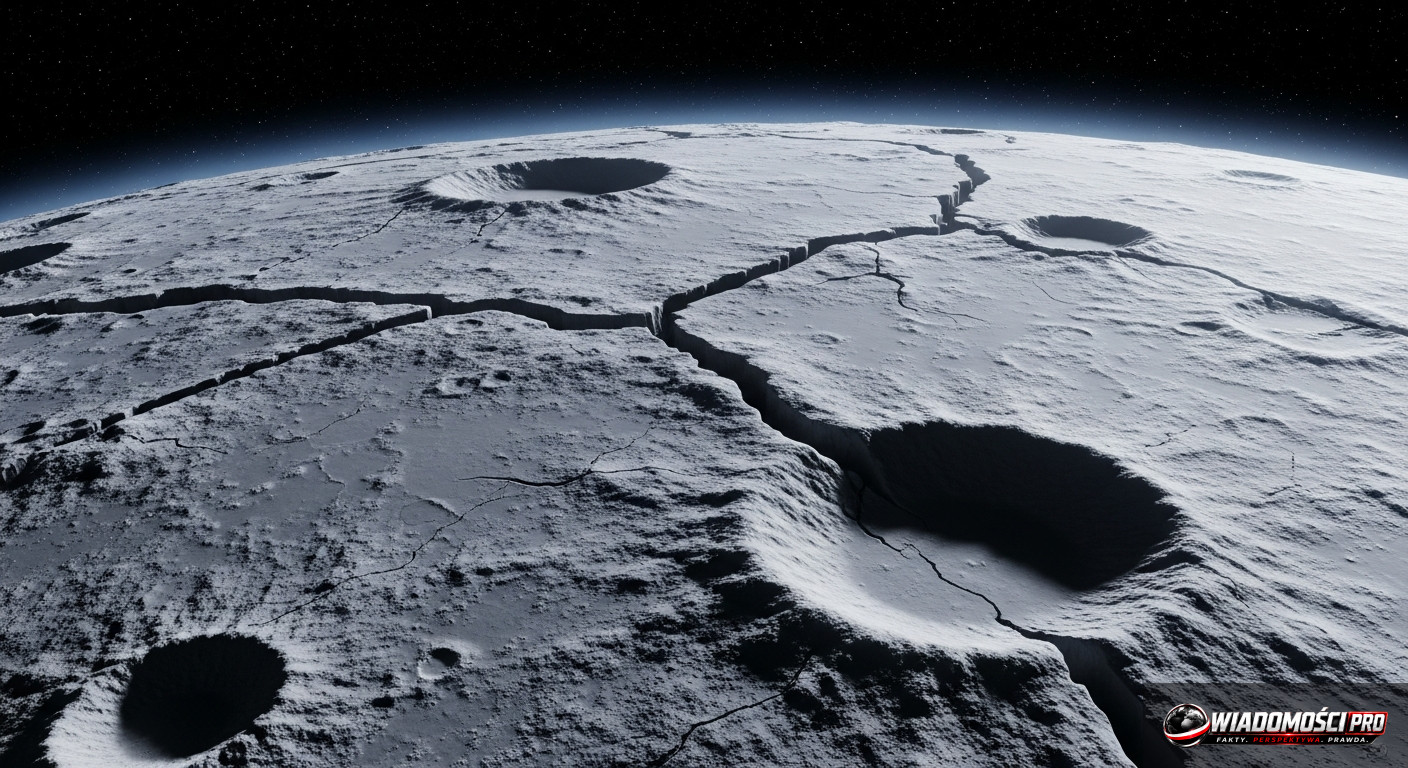
Europa is one of the four largest moons of Jupiter. Telescopic observations and data from previous missions indicate that a saltwater ocean exists beneath a thick crust of ice. Scientists estimate that the volume of this reservoir could be twice that of all Earth's oceans combined. Europa Clipper is tasked with investigating the chemical composition of this environment. The probe does not carry a lander, but during flybys, it will scan the surface using advanced radar instruments and spectrometers.
Researchers are primarily looking for biosignatures. These are pieces of evidence for the existence of biological processes that could indicate the presence of microorganisms. Geological analysis will also allow us to understand how the ocean communicates with the moon's surface. Cracks in the ice suggest that water may escape in the form of vapor plumes. Clipper will study these ejections by collecting samples of gas and dust. If organic molecules are detected in the space around the moon, it will be a signal for the next stage of research.
Modern astrobiology places Europa at the top of the list of habitable places. Unlike Mars, which is dry and almost devoid of an atmosphere, Europa offers a stable source of liquid water. Heat from Jupiter's tidal forces prevents the ocean from freezing completely. The probe will check whether these processes are sufficient to sustain the metabolism of potential organisms. The collected data will allow for the creation of ice thickness maps and the identification of areas where the crust is thinnest. This is crucial for future missions that could potentially plan a landing on the moon's surface.

Space finance: How much does exploring the Jovian system cost
The 5 billion dollar budget places Europa Clipper among the most expensive missions in NASA's history. This amount covers the full project life cycle: from concept, through production and radiation testing, to data management after reaching the destination. Funding comes from the U.S. federal budget, making the mission a subject of constant public scrutiny. Critics point to the high unit costs, while supporters emphasize the scientific value that understanding biological potential beyond Earth will bring.
The financial complexity stems from unique technical requirements. The probe must survive in the extreme radiation environment of Jupiter, which necessitates the use of expensive shielding materials and specialized electronics resistant to high doses of energy. Every component underwent rigorous testing, the cost of which far exceeds standard components used in satellites in Earth orbit. The mission's logistics also include years of maintaining scientific teams that handle sensor calibration and trajectory planning.
This money is invested primarily in the American technology industry and research facilities such as the Jet Propulsion Laboratory. For the taxpayer, this is an expenditure whose effects, in the form of raw scientific data, will only begin to be visible after the probe enters Jupiter's orbit in 2030. Until then, the mission functions as an endeavor based on long-term planning. The lack of direct material benefits for the citizen means that the narrative around the project focuses on expanding the boundaries of human knowledge. NASA must demonstrate that such high financial expenditure will translate into a breakthrough in astrobiology, thereby justifying the priorities of American space policy.
Europa Clipper technology: The probe's equipment
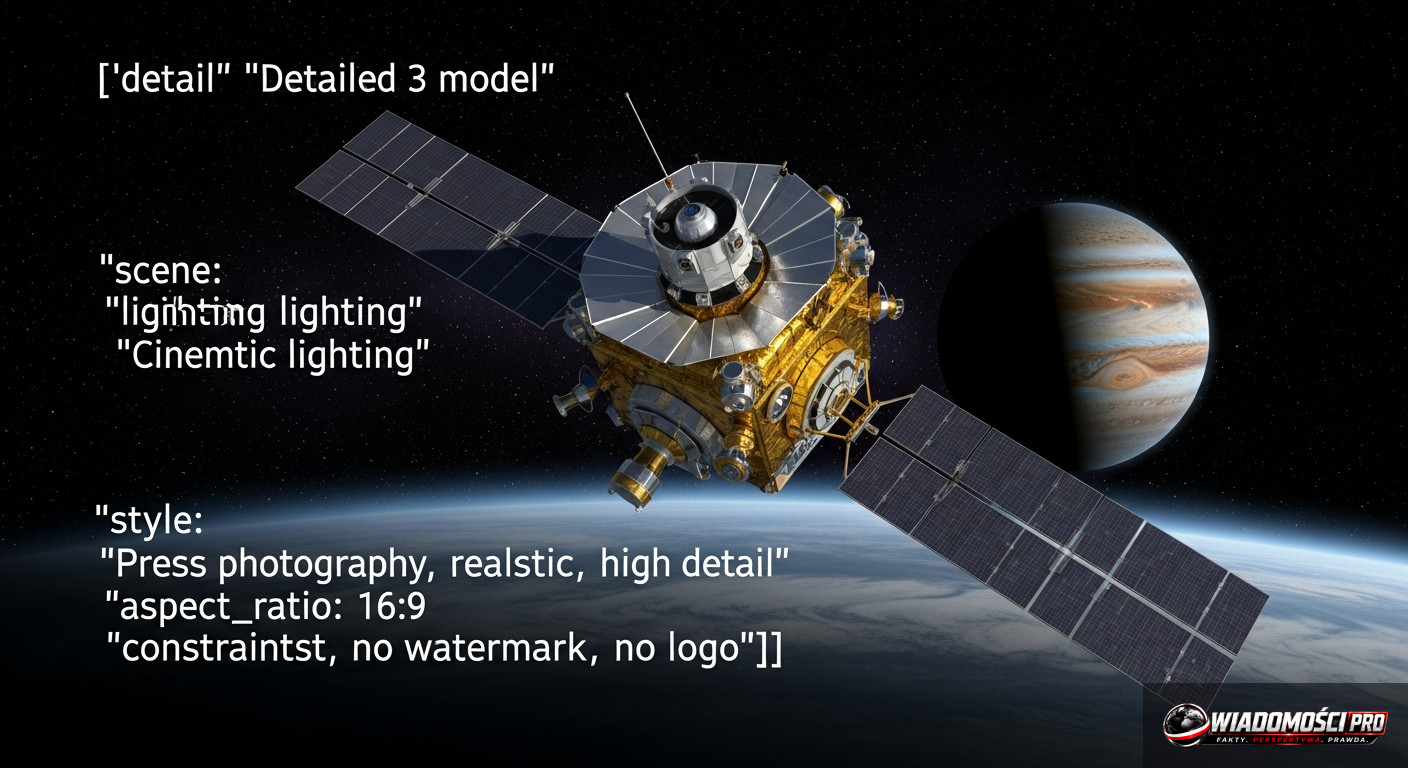
The design of the Europa Clipper probe is a masterpiece of engineering. Due to the need to operate in Jupiter's strong magnetic field, the device has been enclosed in an armored housing. It protects delicate processors from degradation caused by ionizing radiation. The size of the structure is impressive, especially after the huge solar panels are deployed. They are necessary because, in Jupiter's orbit, sunlight intensity is much weaker than near Earth.
On board is a set of scientific instruments designed to work in harsh conditions. An ice-penetrating radar will allow us to look beneath the moon's surface to a depth of several kilometers. Infrared and ultraviolet spectrometers will determine the chemical composition of the ice and any organic deposits. A magnetometer, in turn, will study Europa's magnetic field, which is necessary to confirm the existence of a global ocean beneath the crust. Each of these systems draws energy from a central power module, which has been optimized for longevity.
Engineers had to solve the problem of data transmission over vast distances. A high-gain antenna will ensure communication with Earth, but transmission speed will be limited by distance. Therefore, the probe has been equipped with advanced data compression systems and mass storage capable of holding measurement results for a long time. This approach minimizes the risk of information loss in the event of a link failure. The entire system constitutes the largest planetary probe ever built by the American agency. Its reliability will be tested for years, until the end of the operational mission.
The race for discovery: NASA versus the European Space Agency
The competition for primacy in studying the Jovian system is a fact. The European Space Agency (ESA) also has its own plans for studying Jupiter's moons. While NASA opted for a dedicated Europa Clipper probe, the Europeans are carrying out the JUICE project. Both missions have different priorities, although the main goal remains the same: searching for conditions favorable for life. The U.S. aims to deliver detailed data on Europa itself as quickly as possible, which gives them a time advantage.
Space policy is based on prestige and technological dominance. The Americans want to prove that they can carry out such a risky mission on their own, setting standards in the field of deep space exploration. The success of Clipper will be a triumph of American technical thought. In turn, the European JUICE mission focuses on a broader spectrum of objects in the Jovian system, studying not only Europa but also Ganymede and Callisto. This systemic approach means that both agencies complement each other scientifically, despite clear competition for priority in discoveries.
For the scientific world, such competition is beneficial. More probes in one system mean more data that can be compared and verified. If NASA discovers traces of life, ESA will provide environmental context from neighboring moons. This makes the Jovian system the best-studied corner of the outer Solar System in this decade. The rivalry is not just about budgets, but also about the ability to solve technical problems in real-time. Europa Clipper must work flawlessly, as any malfunction could be used by the competition as evidence of the failure of the chosen strategy.
Travel schedule: What awaits the probe until it reaches Jupiter
The journey of the Europa Clipper probe is a process divided into several stages. After launching from Florida, the vehicle had to leave Earth's low orbit. Now it is in the interplanetary cruise phase. To gain the necessary speed, the probe uses gravity assists. This is a technique involving flying near planets, which allows it to "steal" a small part of their orbital energy and accelerate without using rocket fuel. It is the only way for such a heavy object to reach Jupiter in a reasonable amount of time.
The schedule assumes precise maneuvers during flybys of Earth and Mars. Each of these encounters is a moment of increased risk. The flight control team must monitor the trajectory with meter-level accuracy. The slightest error could result in missing the assist point, which would drastically extend the journey or make it impossible to reach the destination. After the maneuvers, the probe will enter a period of long-term flight, during which most systems will be switched to power-saving mode.
In 2030, the key moment of the mission will occur: entering Jupiter's orbit. This will be an operation requiring the ignition of braking engines so that the probe does not fly past the giant. Only after stabilizing its position will Clipper begin a series of close flybys of Europa. Each flyby is an opportunity to collect data with minimal time spent in the most dangerous radiation zones. The schedule is tight and does not allow time for repairs or servicing. Everything the probe is to achieve must be done according to the algorithm uploaded to its memory before launch.
What this means for you
The Europa Clipper project is proof of how far human ambitions currently reach in seeking answers to fundamental questions about the origin of life. From the perspective of the average observer, this is an investment in our knowledge of the universe. Although the distance to Jupiter prevents us from directly experiencing these discoveries, the data sent by the probe will change our astronomy textbooks. The uncertainty about the mission's success, resulting from the extreme conditions prevailing in the Jovian system, is the price we pay for attempting to look into a world to which we have never had access before.
Questions and answers
Why was the launch of the Europa Clipper mission delayed?
The launch was postponed to October 14, 2024, due to a weather threat caused by Hurricane Milton, which required securing the infrastructure of the Kennedy Space Center.
What is the main goal of the Europa Clipper probe?
The probe is to investigate the conditions on Europa, Jupiter's icy moon, regarding the potential existence of life in a subsurface ocean.
What is the budget for this space mission?
The total cost of the Europa Clipper mission is estimated at approximately 5 billion dollars, making it NASA's most expensive planetary project this decade.
When will the probe reach Jupiter?
The probe was launched on October 14, 2024, and after a multi-year journey and gravity assist maneuvers, it will reach the Jovian system in 2030.
Does the probe have a lander?
No, Europa Clipper is a probe designed to perform a series of close flybys, during which it will conduct remote studies of the moon's surface and atmosphere.
Why was Europa chosen as the target for research?
Europa has a saltwater ocean beneath a thick layer of ice, making it one of the most likely places in the Solar System where conditions favorable for the development of life could exist.
What is the biggest threat facing the probe at Jupiter?
The biggest threat is Jupiter's extremely strong radiation field, which could damage the probe's electronics, which is why the structure has been protected with special armor.
What instruments are on board?
The probe is equipped with radar to study the icy crust, spectrometers for chemical analysis, and a magnetometer to map the moon's magnetic field.
Is the mission international in nature?
Although it is a NASA project, space science in this area is characterized by global data exchange, and the European JUICE mission will complement the research on Jupiter's moons.
What will happen after reaching the destination in 2030?
After entering Jupiter's orbit, the probe will begin a planned series of flybys of Europa, collecting scientific data that will be successively transmitted to Earth.
Sources
- Europa Clipper mission launch to Europa - AstroNET – Polish Astronomical Portal
- NASA sends a probe to Europa. The Europa Clipper mission has launched - WP Tech
- Europa Clipper launches. A key task ahead of them - Geekweek Interia
- Europa Clipper probe to search for life on Europa - Urania - Polish Astronomical Portal
- Europa Clipper mission launch [BROADCAST]. Americans to overtake Europeans in the search for life on Europa - Wyborcza.pl
- Europa Clipper has launched. It will investigate whether there are conditions for life on Jupiter's moon - Polskie Radio 24
- Europa Clipper probe to search for life on Jupiter's moon, Europa - wszystkoconajwazniejsze.pl
- Hurricane Milton delays the launch of NASA's largest space probe, Europa Clipper, until October 14 - Notebookcheck.pl
Article prepared by the Wiadomości PRO editorial team with the support of artificial intelligence. Facts come from the sources listed above.


Komentarze (0)
Ładowanie komentarzy...