
Yes, the government is preparing a second attempt to introduce a windfall tax in August 2026, responding to the record financial results of the Orlen company. The Ministry of Finance is analyzing a correction to the regulations that is intended to allow for the collection of a portion of the extraordinary income generated by the Płock-based concern. This decision is a direct response to the financial data published on August 7, 2026, which confirmed that exceptionally high refining margins are being maintained within the company's revenue structure.
The scale of Orlen's financial success
The latest financial report, made public on August 7, 2026, shed light on the mechanism that allowed Orlen to generate profits exceeding standard stock analyst forecasts. This growth is not a matter of chance, but the result of an operational strategy in which refining margins play a leading role. The scale of these profits has become a catalyst for the finance ministry to revise its fiscal policy.
As early as March 11, 2026, the Autocentrum.pl portal pointed out that refining margins were remaining at a level that raises controversy in the era of the energy crisis. At that time, however, the discussion about a "political brake" was merely the domain of market experts. Today, following the publication of the August results, this topic has become a key element of the debate on the responsibility of the largest state-owned companies for the condition of the central budget. Orlen, as the leader of the fuel market, has become a beneficiary of market conditions that mean a long-term burden at the pumps for the average consumer.
This situation creates tension between the interests of shareholders, who expect high dividends, and the needs of the state, which is looking for additional sources of funding in the face of a deficit. The Ministry of Finance, having new data from August 7, decided that previous legislative attempts had not exhausted the possibilities of obtaining funds from the energy sector. From the government's perspective, Orlen's record financial results are sufficient justification for making a second legislative attempt, this time in a way that is intended to bypass the legal obstacles that led to the failure of previous projects.

Behind the scenes of the legislative battle
The second attempt to introduce a tax on extraordinary profits, announced for August 2026, is not merely a technical correction of the law. It is a political operation aimed at avoiding a repeat of the July scenario. Let us recall that on July 25, 2026, the president made the decision to refer the windfall tax act to the Constitutional Tribunal. This was a critical moment, in which the head of state openly sided with protecting the interests of fuel companies, concluding that sudden fiscal burdens could strike at the stability of strategic entities.
In the corridors of the finance ministry, there is a conviction that the current situation requires a more precise approach. Officials are working on definitions intended to exclude accusations of the levy being arbitrary. The goal is to create an act that cannot be easily undermined in the process of constitutional review. The government does not hide the fact that the August offensive is a priority. After the blocking of the regulations in the Presidential Palace in July, every subsequent attempt must be better prepared from a legal standpoint so as not to become another point of contention between centers of power.
Analyzing the events of July 25, one can conclude that the biggest challenge for the government is not the desire to tax profits itself, but the way in which it will be carried out so as not to violate the foundations of economic law. Stock market investors are carefully following every announcement coming from the ministry, realizing that the potential introduction of the tax will change the rules of the game for Orlen for the coming quarters.
International context: The Lithuanian ultimatum
The Orlen case also has an international dimension, which significantly complicates the situation for the government in Warsaw. On April 30, 2026, reports emerged that Lithuania was considering imposing a new tax on the Polish giant. This decision was intended to be retaliation for Polish energy policy, which put Orlen in a difficult diplomatic position. The company's foreign assets thus became hostages to the fiscal ambitions of neighboring states.
For the government in Warsaw, the Lithuanian threats are a signal that the room for maneuver is becoming increasingly narrow. If Orlen is subjected to an additional tax in both Poland and Lithuania, the profitability of its foreign operations could deteriorate significantly. Moreover, the events of April 30 coincided with the publication of BP's results. The global giant, posting record profits, became a symbol of the success of the fuel sector, which triggered a wave of demands for the introduction of windfall taxes across Europe. Poland is therefore not alone in its actions, but the specifics of Orlen's ownership structure make the matter much more complex than in the case of Western concerns.
The international context shows that the fuel giant is under pressure from two sides. On one hand, we have local fiscal aspirations, and on the other, growing regulatory risk in foreign markets. The government in Poland is well aware that if it does not take a portion of Orlen's profits in the form of a tax, this capital may be taken by foreign tax offices. This creates a kind of race against time, where the stakes are billions of zlotys in budget revenue.
Stock market reaction and political risk valuation
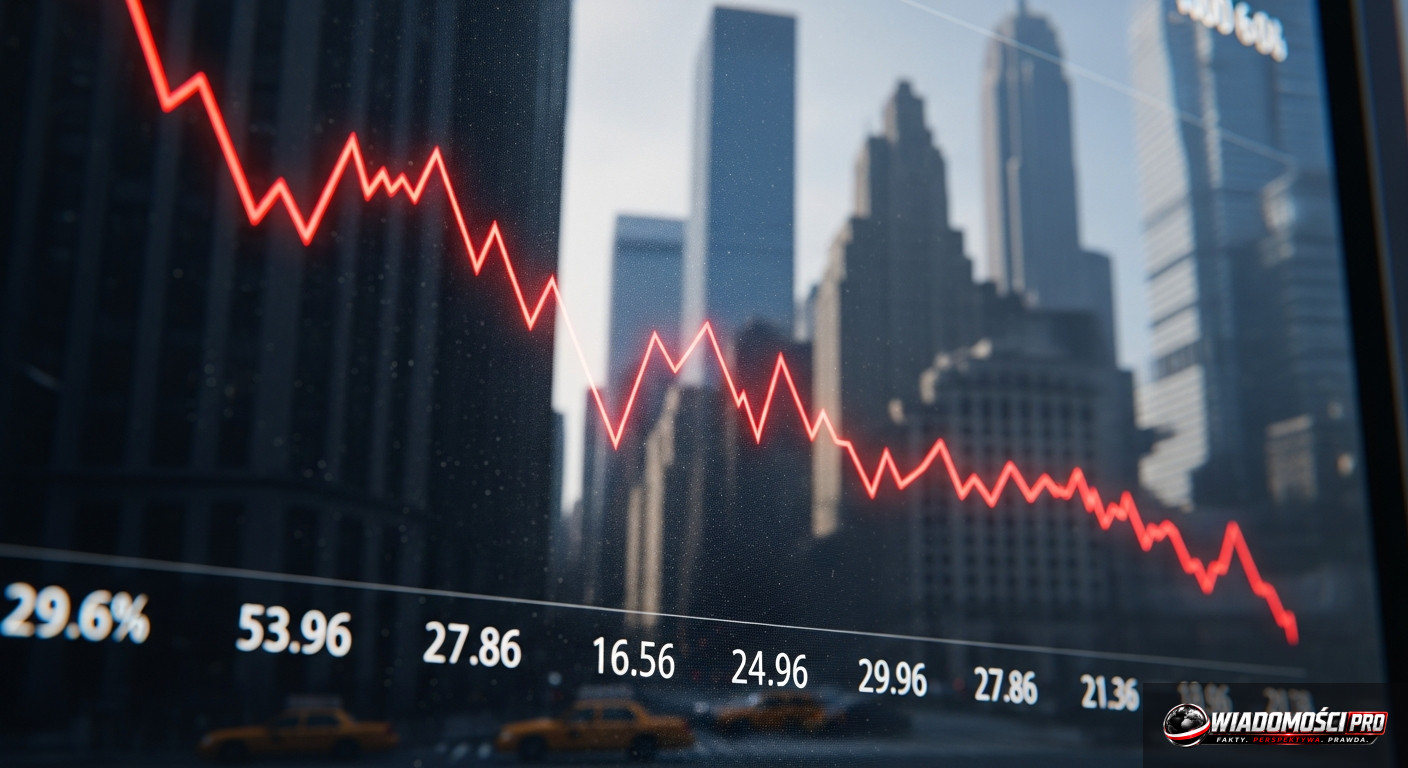
The Warsaw trading floor reacted to the news about the windfall tax in a way predictable for financial markets: with a sell-off of shares. A key moment was March 26, 2026, when the stock market reacted with a sharp drop in Orlen's share price to the first serious signals of possible government intervention. Investors, discouraged by the uncertainty, began to discount political risk, which in their eyes ceased to be theoretical and became a real threat to dividends.
An analysis by "Parkiet" from March 26 confirmed that any mention of an extraordinary tax acts like a fuse for the market. Institutional investors, fearing for the company's long-term foundations, began to reduce their exposure. The situation in August 2026 is a repeat of that scenario. The market is again pricing in the risk, and the lack of clear declarations from the government regarding the final shape of the tax only deepens the uncertainty.
It is worth noting that for the stock market, it is not just the amount of the tax itself that matters, but also the way it is communicated. The chaotic legislative actions that characterized the first attempt to introduce a windfall tax are a warning signal for investors. If the government decides on a forceful solution without prior consultation with the market, it could lead to a long-term weakening of trust in companies with State Treasury participation. Foreign capital, which is extremely sensitive to changes in the legal environment, may in such a situation look for safer havens, which will negatively affect the valuation of the entire WIG20 index.
Strategic dilemmas for Orlen's management
Orlen's management board faces an extremely difficult task. On one hand, it must demonstrate results that satisfy shareholders, and on the other, it must navigate an extremely difficult political environment. High refining margins, while beneficial for financial results, have become a political burden. Each subsequent profit record is an argument for the government that the company has sufficient reserves to support the state budget.
In practice, this means that Orlen is caught in a pincer between market and political requirements. If the management decides to lower margins to avoid the tax, it will risk the anger of investors. If it maintains margins at the current level, it will expose itself to the sights of the Ministry of Finance. This is a classic dilemma for a strategic company that, in times of crisis, ceases to be treated like an ordinary business entity and becomes a tool of fiscal policy.
The coming weeks will be a test for the concern's management. Will it be possible to work out a compromise that satisfies the government without excessively draining the company's profits? Many indications suggest that the room for maneuver is very limited. August 2026 is the month in which key decisions regarding Orlen's tax future will be made. Market observers point out that the longer the uncertainty lasts, the more the stock market valuation suffers, which ultimately hits everyone who holds Orlen shares in their portfolio.
Analysis of arguments for and against the windfall tax
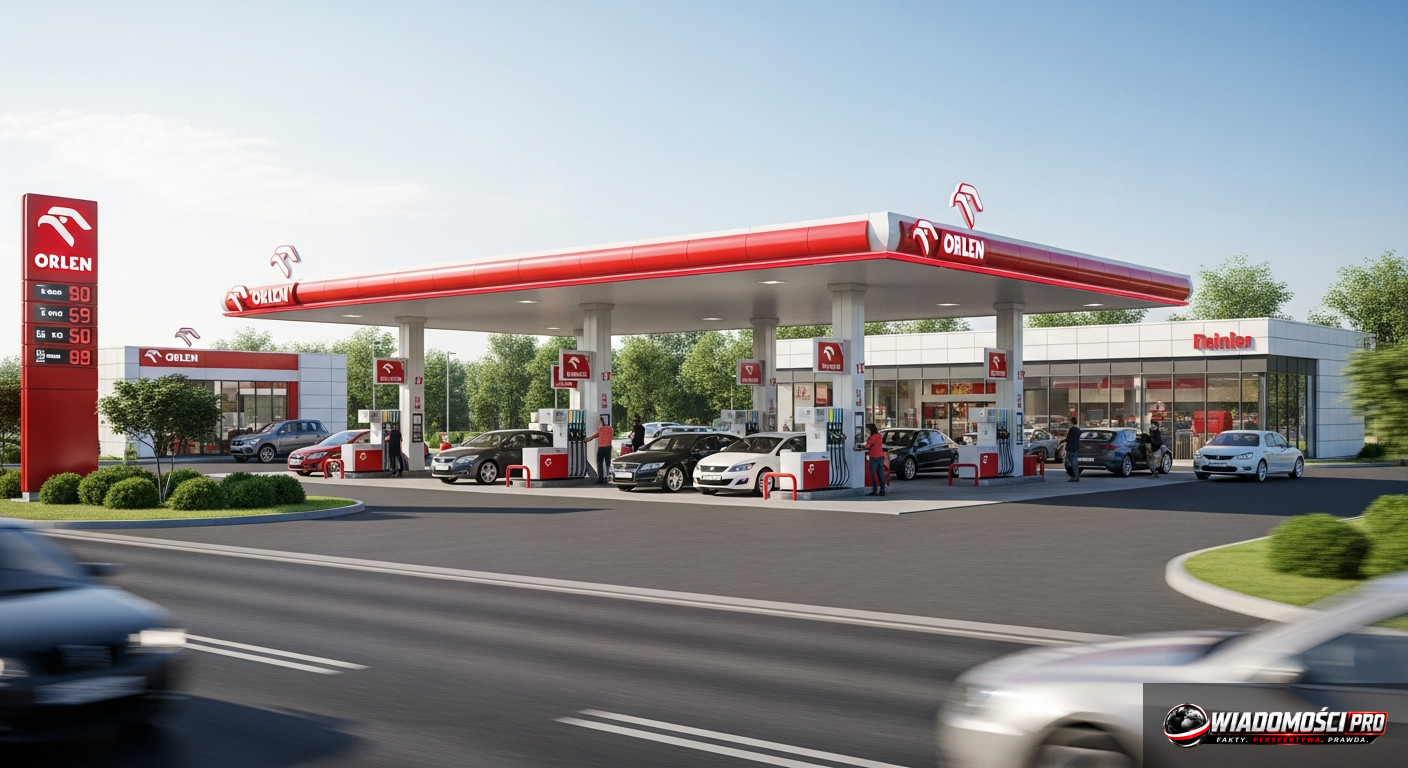
The debate about the windfall tax in Poland focuses on several basic points. Supporters of the tax argue that in the face of the energy crisis, the state has a moral obligation to redistribute the excess profits generated by fuel companies. They point out that Orlen's financial success is not the result of innovation, but of a specific market situation in which the concern holds a dominant position.
On the other hand, opponents of the tax, including many market analysts, raise the issue of legal stability. They argue that introducing taxes ad hoc, in response to temporary financial results, is destructive to the investment climate. They point out that Orlen needs billions of zlotys for energy transformation, and taking away a portion of the profits will directly affect the concern's investment capabilities. This dispute does not have an easy solution, because both sides have strong substantive arguments.
It is worth noting, however, that the presidential veto of July 25, 2026, showed that the argument about investment stability is still strong in state structures. The Constitutional Tribunal, to which the act was sent, will have to decide whether the state can freely interfere in the profits of state-owned companies. This ruling could become a precedent that will set the rules for taxing extraordinary income in Poland for years to come. Until then, every government attempt will be burdened with legal risk, which the decision-makers in Warsaw are well aware of.
Consumer perspective: Will fuel get more expensive?
For the average driver, the issue of the windfall tax may seem distant, but in reality, it has a direct translation into prices at the pumps. If Orlen is forced to give up a portion of its profits to the budget, the company's management may look for ways to maintain profitability through cost optimization. Often, this means that the pressure to raise fuel prices in order to offset fiscal losses becomes one of the few available paths for management to defend margins.
The discussion about a "political brake" on margins, which was already mentioned in March 2026, shows that the government is aware of this threat. Politicians fear that taxing Orlen will trigger a wave of fuel price hikes, which will hit public sentiment. Therefore, they are looking for a golden mean – they want to take the profit, but they do not want to take responsibility for the price increases at stations. However, this is a very high-risk game, because the fuel market is extremely sensitive to any legislative changes.
If the tax is introduced, Orlen will have to communicate its pricing decisions very carefully. Every increase will automatically be linked to the new fiscal burden, which will create an image problem for the company. Consumers, already burdened with high costs of living, will not welcome further increases justified by government taxes. This makes the windfall tax a double-edged sword for the government – on one hand, it provides budget revenue, and on the other, it risks losing social support in the event of rising fuel prices.
Questions and answers
Why does the government want to introduce a windfall tax right now?
The government is reacting to Orlen's record financial results announced on August 7, 2026, aiming to take over a portion of the company's extraordinary profits, which is intended to support the state budget in the face of a difficult fiscal situation.
Were previous attempts to introduce this tax effective?
No, the previous act was referred by the president to the Constitutional Tribunal on July 25, 2026, which effectively blocked the legislative process and the implementation of the regulations.
Does Orlen have to fear taxes abroad?
Yes, the situation in Lithuania, where threats of imposing a retaliatory tax on the Polish giant appeared on April 30, 2026, confirms that the international legal environment for Orlen is becoming increasingly restrictive and risky.
What was the impact of the March reports on Orlen's valuation?
On March 26, 2026, the stock market reacted with a sharp drop in Orlen's share price to the news of possible government interference in the fuel market, which showed how much investors fear the political risk associated with the windfall tax.
Are refining margins a key argument for the government?
Yes, high refining margins, which were already written about on March 11, 2026, constitute the government's main argument in the discussion about the fair redistribution of energy sector income and the need to introduce a windfall tax.
What is the biggest risk for the government in this operation?
The biggest risk is the possibility of the act being blocked by the Constitutional Tribunal and a potential increase in fuel prices at stations, which could be perceived by consumers as a direct result of the government's fiscal policy.
Does the BP situation matter for the Polish tax?
Yes, BP's results from April 2026 became a point of reference for the debate about the windfall tax across Europe, giving the Polish government an alibi for pursuing similar actions in the domestic market.
In summary, August 2026 is a time of final decisions for Orlen and the government. Regardless of whether it succeeds in introducing the tax in a new form, the legal and political dispute surrounding it permanently changes the perception of the company as a safe investment. Stock market investors must reckon with the fact that the era of predictability for the fuel giant has come to an end, and the management board faces challenges that it did not have to face in previous years. The market will remain on standby until the final provisions of the act are voted on and signed, which could take many more weeks. Every day of delay in this matter only increases the pressure on the share valuation and the uncertainty among shareholders, who expect a clear signal regarding the future dividend and the concern's investment policy. There are no winners in this clash – the state risks the stability of the company, and the company risks the trust of investors, while the consumer remains the last link in this chain of costs.
Sources
- Orlen's record results. Will the government make a second attempt at a windfall tax? - Strefa Inwestorów
- windfall tax orlen - Strefa Inwestorów
- wyniki orlen - Strefa Inwestorów
- Sudden drop in Orlen's share price. Government decisions may change the fuel market - Parkiet
- Lithuania threatens Poland with retaliation. It may impose a new tax - Business Insider Polska
- Orlen under fire: Record refining margins in times of crisis. Will the government introduce a "political brake"? - Autocentrum.pl
- Windfall tax sent to the Tribunal. President supported fuel companies - Strefa Inwestorów
- BP posts record results. Is this a harbinger of Orlen being covered by a windfall tax? - Strefa Inwestorów
Article prepared by the Wiadomości PRO editorial team with the support of artificial intelligence. Facts come from the sources provided above.


Komentarze (0)
Ładowanie komentarzy...