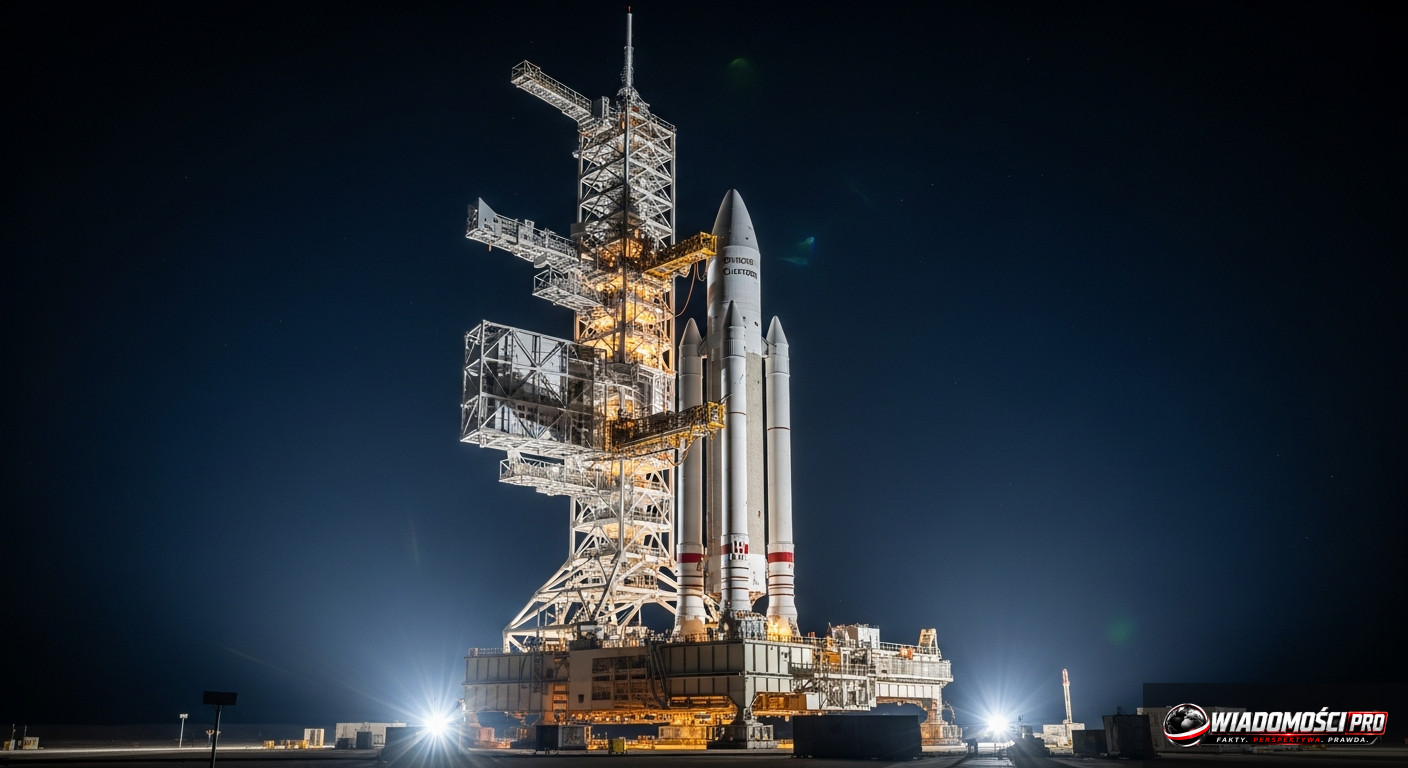
The Europa Clipper mission launched on October 14, 2024, with a budget estimated at approximately $5 billion, to investigate whether conditions conducive to life exist beneath the icy crust of Jupiter's moon. The probe is not searching for organisms directly, but rather analyzing chemical traces and the ocean beneath the ice that could support biological processes. It is the most expensive planetary endeavor in NASA's history, representing the technological pinnacle of modern astrophysics.
Launch in the shadow of Hurricane Milton
The operational schedule at Cape Canaveral was brutally verified by nature. Hurricane Milton, which struck Florida, forced a halt to preparations at a critical moment. The probe, enclosed within a giant structure, had to wait out the storm, which caused a wave of anxiety in NASA's technical departments. Every day of delay meant the risk of missing the launch window, which in orbital mechanics is synonymous with losing the chance for an optimal flight trajectory. Ultimately, after the meteorological situation stabilized, a Falcon Heavy rocket carried the payload toward Jupiter on October 14, 2024.
Engineers from the Jet Propulsion Laboratory worked under immense time pressure. The project's costs, reaching $5 billion, placed a responsibility on the team that cannot be compared to smaller research missions. This is a sum that, in the American public sector, necessitates constant justification of its economic sense. In return, taxpayers received a machine that is the pinnacle of engineering precision, designed to survive in one of the most hostile environments in the Solar System. However, the probe did not fly into space to record the sounds of alien civilizations or photograph advanced life forms. This is a fundamental misunderstanding that often appears in media reports.
The goal is much more technical. The probe will focus on a chemical audit of the moon. If specific organic compounds and salts are detected in the data streaming from the instruments, scientists will consider it evidence of Europa's potential habitability. This is the difference between finding a living organism and finding an "energy store" and "building blocks" that could support biology as we know it.
Scientific goal: an ocean hidden under the ice
Europa, a moon of Jupiter, has fascinated astronomers for years. Estimates indicate that beneath its icy surface there may be an ocean containing twice as much water as all of Earth's oceans combined. It is a giant reservoir, cut off from direct sunlight but heated by powerful tidal forces generated by Jupiter's gravity. It is these forces that prevent the water from freezing completely and keep it in a liquid state. The Europa Clipper probe is tasked with checking whether this ocean possesses the right chemical "recipe" to sustain metabolic processes.
Scientists do not expect spectacular photos of "aliens." Instead, they expect a series of data on salinity, temperature, and the thickness of the icy crust. There is a real risk that after years of analysis, it will turn out that Europa is merely a dead block of ice that has water but lacks the energy or elements needed for life to arise. An investment of billions of dollars does not guarantee success in the form of discovering a "second Earth." It does, however, guarantee the collection of raw data that will allow Europa to be crossed off the list of potentially inhabited places or placed at the top of that list with new evidence.
In 2030, when the probe reaches its destination, humanity will face hard facts. Even the most advanced equipment may return with results that confirm the presence of water but rule out the possibility of life. This is a disappointment we must be prepared for. Science is not about confirming our hopes, but about verifying hypotheses. Europa Clipper is a tool for the final verification of a theory that has fueled the imagination of astrobiologists for decades.
Technology on board: REASON, MISE and others
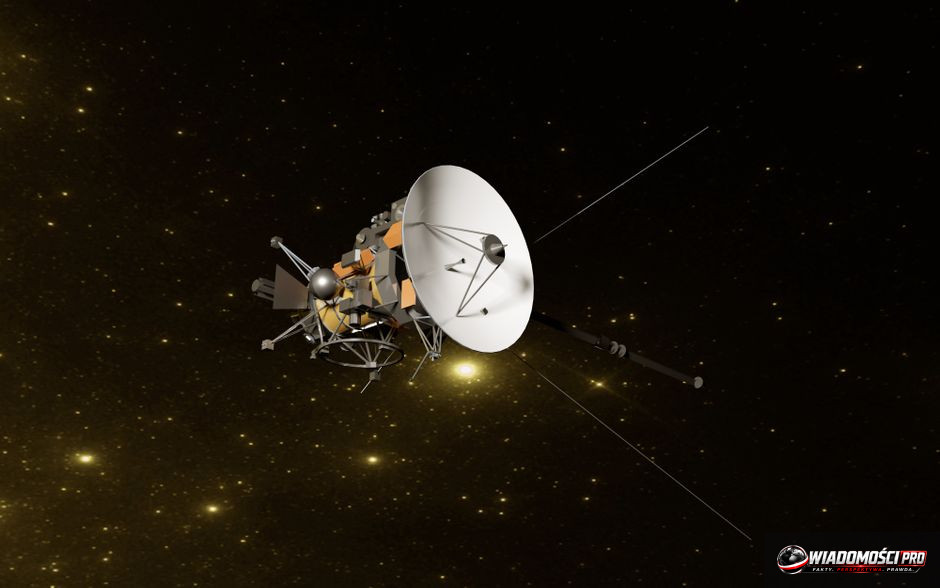
The Europa Clipper probe is the largest planetary spacecraft built by NASA. Its size, resulting from the need to deploy huge solar panels in the distant Jovian system, is impressive. These panels are crucial because, at a distance of 600 million kilometers from the Sun, the light is too weak to power standard systems. However, it is the interior of the hull that determines the value of this mission. JPL engineers equipped the probe with nine main scientific instruments.
The most important of these is REASON (Radar for Europa Assessment and Sounding: Ocean to Near-surface). It is an ice-penetrating radar designed to "X-ray" the moon's crust. Thanks to it, we will learn how thick the ice layer is and whether there are pockets of water inside it. This is crucial to understanding how matter from the ocean can reach the surface. Meanwhile, MISE (Mapping Imaging Spectrometer for Europa) will handle mapping the chemical composition. This spectrometer will identify salts, organic compounds, and other chemical substances on the surface, which will help in understanding the processes occurring deep in the ocean.
Another significant element is EIS (Europa Imaging System). It is an advanced imaging system that will provide high-resolution photos, allowing for geological analysis of the surface. Every crack, every crater, and every change in topography could be evidence of geological activity. On board there are also:
- SUDA (Surface Dust Analyzer) — a device for studying dust and particles ejected from the moon's surface.
- MASPEX (Mass Spectrometer for Planetary Exploration) — an instrument for analyzing the composition of Europa's atmosphere, which will allow us to "smell" molecules escaping from the icy crust.
- PIMS (Plasma Instrument for Magnetic Sounding) — a plasma sensor that will help in studying magnetic interactions.
These instruments must survive extreme bombardment by charged particles in Jupiter's environment. This planet's magnetosphere is one of the deadliest zones for electronics in our system. NASA declares that the radiation shielding is sufficient, but nature can be surprising. The real challenge is maintaining the equipment's functionality in conditions where radiation is thousands of times stronger than in Earth's orbit. If the electronics survive, we will receive data that astronomers have dreamed of since the Voyager missions.
Competition for the conquest of Jupiter's moons
The Europa Clipper mission is not just a scientific excursion. It is a manifestation of the power and technological advantage of the USA. NASA has been competing from the beginning with European agencies, which are also exploring the Jovian system, albeit in a different format. For Washington, Europa Clipper is a tool for maintaining the status of a leader in deep space exploration. The American approach is clear: what counts is the priority of discovery and the quality of the collected samples.
Behind the scenes, it is openly said that beating the competition in the search for life on Europa was one of the unspoken goals of the project. The stakes are high, because whoever is the first to provide hard evidence of biological processes outside Earth will change the paradigm of science for the next century. Europa Clipper has a huge advantage in this race in the form of funding and technical advancement. Space remains an arena where the prestige of powers weighs just as much as the quality of the collected telemetry data.
The billions of dollars spent on this project do not guarantee success, but they increase the probability that the data streaming to Earth will be the most precise in history. Will that be enough to prove life exists outside Earth? That remains to be seen. Currently, we are observing a clear division of roles: NASA is betting on a powerful probe dedicated to only one goal, while other players are looking for opportunities in more diverse missions. It is a competition where every mistake costs billions of dollars and years of work by entire generations of engineers.
Travel schedule and key stages
The journey to the Jovian system is a time-consuming process that requires computational precision from NASA engineers. The probe will not reach its destination in express mode. It needs several years to cover the distance separating us from the gas giant. Along the way, it will use gravity assists, which are maneuvers that allow it to gain speed thanks to the gravity of other planets, such as Mars or Earth. This is a standard procedure, but in the case of such a heavy probe, every maneuver is critical to the success of the mission.
After reaching its destination in 2030, numerous flybys near Europa itself will become a key element. The probe will not enter orbit around the moon, because Jupiter's radiation would quickly destroy its systems. Instead, it will perform a series of very close flybys, collecting data in short time windows. Each such flyby is planned many months in advance. A navigation error could mean the waste of decades of preparation.
Below is a summary of the most important facts regarding technical parameters:
- Launch date: October 14, 2024.
- Launch site: Kennedy Space Center, Florida.
- Estimated budget: $5 billion.
- Goal: Study of the subsurface ocean and surface chemistry of Europa.
- Travel time: Reaching the Jovian system in 2030.
Scientists do not hide the fact that this is only the beginning of a long wait. Until the probe sends the first reliable results from the immediate vicinity of Europa, we have to rely on simulations. An investment of billions of dollars raises justified questions about the real return on research. Will chemical clues be enough to satisfy our curiosity, or will they leave us wanting more, like many previous space missions? We will have to wait a few more years for answers, during which the probe will traverse the interplanetary void.
Budget: How much does searching for life cost?
The total cost of the Europa Clipper mission is estimated at about $5 billion. This is a gigantic sum, even by NASA standards. This amount includes not only the construction of the probe itself, packed with advanced research equipment, but also the costs of launching it into space and the multi-year operational support that will last long after it reaches the Jovian system. The taxpayer has the right to ask if the game is worth the candle.
From the perspective of nearly two years since the launch planning began, we see that this investment is not aimed at quick, spectacular success. The goal is tedious detective work. The probe does not have tools for directly detecting living organisms, such as microscopes or DNA sequencers. Instead, scientists are focusing on analyzing the ocean hidden under a thick layer of ice and searching for chemical traces that testify to biological processes. This is a cautious, almost defensive approach. NASA does not want to risk public embarrassment or ambiguous interpretations of data. Instead, it is betting on hard environmental evidence that will allow us to assess whether Europa is habitable at all.
Funding such high amounts in an era of budget constraints in the public sector puts the project in a difficult position. Every failure or minor delay in data transmission will be analyzed in terms of the efficiency of spending these billions. Private investors in the space industry look at such numbers with disbelief, hoping that in the future, similar goals can be achieved for a fraction of this price. For now, however, Europa Clipper remains the most expensive test of our curiosity, and its success or failure will define the direction of astronomy funding for decades to come.
What this means for the reader
For the average observer, this mission is a test for the prestige of American science. Scientists and the technology sector gain by receiving invaluable data, while taxpayers bear a high cost. The catch is the technical risk associated with extreme radiation near Jupiter, which could shorten the probe's lifespan. If the electronics fail too early, billions of dollars will turn into the most expensive scrap metal in human history.
This is a project where success is measured in the amount of information bytes transmitted, not in spectacular film discoveries. We are witnessing a moment in which technology is catching up with our ambitions, but nature remains unpredictable. Europa Clipper is the ultimate test of whether we can step outside our local backyard and answer a question that has been with us since the dawn of time: are we alone in the universe?
The answer will not come in 2024. It will not come in 2026. We will have to wait until 2030, when the probe finally enters Jupiter's orbit and begins its great research mission. Then, every dollar spent on this project will be converted into the scientific quality that this machine will provide us. Europa, although icy and dead in our eyes, may turn out to be the key to understanding the processes that led to the emergence of life on Earth.
Questions and answers
Will the probe land on the surface of Europa?
No, Europa Clipper is not a lander. The probe will perform a series of flybys at a safe distance, studying the moon using remote instruments such as the REASON radar or the MISE spectrometer.
Why was Europa chosen specifically?
Europa is one of the most promising places in the Solar System due to the presence of a huge subsurface ocean that may meet the conditions necessary to sustain life, including the presence of energy and the right chemical ingredients.
When will the first data from the probe arrive?
The probe needs several years to reach the Jovian system, using gravity assist maneuvers. The first key scientific data will flow to NASA's base after arriving at the destination in 2030.
What happens if the probe finds no traces of life?
Not finding traces of life does not mean the mission is a failure. Scientists will then obtain invaluable information about the geology, chemical composition, and conditions prevailing on Europa, which will allow for a better understanding of what parameters are necessary for life to exist in other planetary systems.
Why does the mission cost as much as $5 billion?
The costs result from the need to develop technology capable of surviving in the extreme environment of Jupiter, the construction of advanced scientific instruments, the costs of launching the Falcon Heavy rocket, and the multi-year operational support of a team of specialists from the Jet Propulsion Laboratory.
Did competition from other countries influence the mission launch?
Competition for the position of leader in space exploration is a significant factor. NASA strives to maintain dominance, and this mission confirms the US commitment to the most complex research projects, outpacing other agencies in access to data from Europa.
Is Jupiter's radiation the probe's biggest enemy?
Yes, Jupiter's magnetosphere is extremely strong and destructive to electronics. The probe has been designed with special shielding to minimize the risk of onboard system failure during flybys through zones with the highest intensity of charged particles.
How will the probe send data to Earth?
Europa Clipper will use powerful antenna systems to transmit collected data across deep space, using the Deep Space Network, which provides constant communication with probes located in distant corners of the Solar System.
Does the mission have any time limits?
The mission is limited by the durability of components in conditions of strong radiation. After completing the planned series of flybys and collecting the maximum amount of data, the mission will be concluded, and the probe will likely remain in Jupiter's orbit.
Is Europa Clipper the only mission studying Jupiter's moons?
No, other agencies, including the European Space Agency, have their own programs for exploring the Jovian system. However, Europa Clipper is currently the only project of this scale that focuses so specifically on the biological potential of Europa.
Space exploration is a high-stakes game where success is defined not by emotions, but by numbers. Europa Clipper is currently the most important link in this chain of discoveries, and its launch in October 2024 opened a new chapter in the study of conditions conducive to life. Every subsequent year of the probe's journey will be a time of tension for the entire scientific community. We are left to observe how this gigantic capital of knowledge and money translates into an answer to a question that has intrigued humanity for centuries. Is there something hidden under the ice that will change our perception of biology? We will know the answer after 2030, when the probe begins its work near the moon.
Sources
- Launch of the Europa Clipper mission to Europa - AstroNET – Polish Astronomical Portal
- NASA sends a probe to Europa. The Europa Clipper mission has launched - WP Tech
- Europa Clipper launches. A key task ahead of them - geekweek.interia.pl
- Europa Clipper probe to search for life on Europa - Urania - Polish Astronomical Portal
- Launch of the Europa Clipper mission [BROADCAST]. Americans will overtake Europeans in the search for life on Europa - Wyborcza.pl
- Europa Clipper has launched. It will investigate whether there are conditions for life on Jupiter's moon - Polskie Radio 24
- Europa Clipper probe to search for life on Jupiter's moon, Europa - wszystkoconajwazniejsze.pl
- Hurricane Milton delays the launch of NASA's largest space probe, Europa Clipper, to October 14 - Notebookcheck.pl
Article prepared by the Wiadomości PRO editorial team with the support of artificial intelligence. Facts come from the sources listed above.

Komentarze (0)
Ładowanie komentarzy...