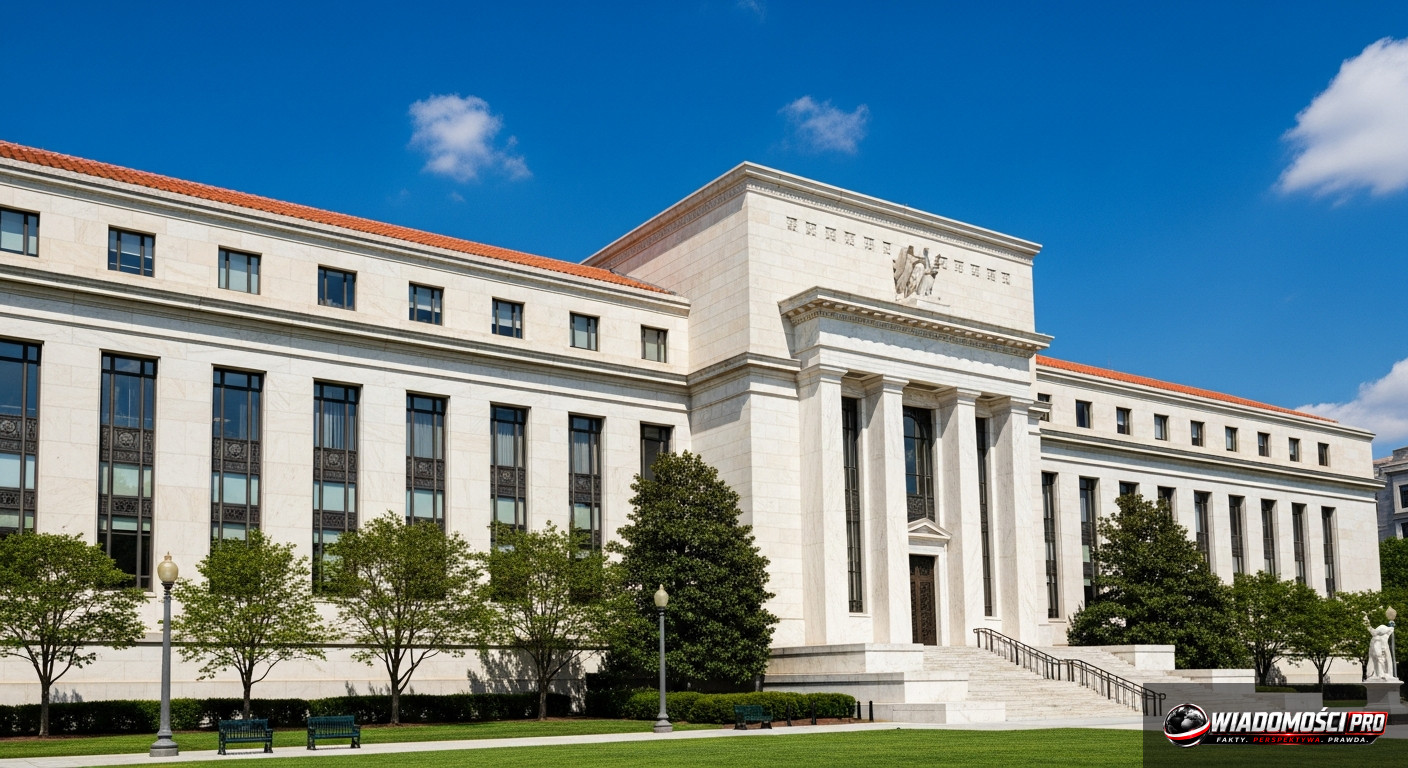
The Fed is considering a hike on a scale unseen since 1994, as inflation in the US has not fallen despite earlier attempts to maintain stable interest rates. A 75-basis-point hike will not stifle inflation, because the current US public debt, exceeding $30 trillion, and extremely high debt servicing costs limit the effectiveness of restrictive monetary policy much more than in the mid-90s. The lack of real improvement in the August 2026 CPI readings puts the central bank in a trap, where further tightening of policy only increases the risk of deep stagflation instead of the expected cooling of price pressure.
The scale of the challenge: Why has 1994 become the benchmark?
The Federal Reserve is facing the necessity of making a move that the American economy has not seen in over three decades. In 1994, the central bank under Alan Greenspan decided on a sharp tightening of monetary policy to stifle mounting price pressure. The current situation, analyzed in August 2026, forces direct comparisons to those events. Back then, the bond market reacted with panic that lasted for months, forcing investors to completely change their portfolio strategies. Today, in the face of data indicating the persistence of inflation, the Fed is at a point where any mistake could result in permanent destabilization.
However, the comparison to 1994 is fraught with significant intellectual risk. In the mid-90s, the US debt-to-GDP ratio hovered around 60 percent. Today, this indicator exceeds 120 percent. This difference is fundamental. Every basis point of a rate hike now means a drastic increase in the cost of servicing federal debt, which was not such a significant brake on FOMC actions in 1994. Back then, the economy was growing at a healthy pace, and the labor market was more flexible. Today, we are dealing with an economy that is addicted to cheap financing, and attempting to repeat the Greenspan maneuver without simultaneously reducing budget expenditures is like driving a car with the handbrake on while the gas pedal is floored.
Attempts to keep interest rates unchanged, undertaken as late as the end of July, proved insufficient. Investors' hopes for a so-called soft landing, i.e., slowing the economy without triggering a recession, collided with hard macroeconomic data. The market, which recently welcomed the stabilization of the cost of money with relief, must now prepare for a shock. The rhetoric of the members of the Federal Open Market Committee has changed 180 degrees. Instead of vigilantly observing data, we are hearing more and more about a readiness for radical action.
A return to the methodology of 1994 is an expression of desperation. In the mid-90s, sharp rate hikes led to a shock that permanently changed asset valuations. Today's investors fear a repeat of this scenario, remembering that every tightening of monetary policy has its cost in the form of slowing investment. The question of whether Jerome Powell still possesses tools that will not lead to a recession while simultaneously effectively stifling inflation remains open. Skeptics point out that every hike at this moment is a late move. The noose around the decision-makers is tightening, and the margin for error has practically ceased to exist.

US inflation: Why haven't the expected declines arrived?
The latest economic data published in August 2026 show that inflation in the United States has not only failed to slow down but has become a phenomenon that ignores earlier attempts to extinguish it. Hopes fueled in July by decisions to pause hikes have crumbled. The market, which was expecting lower loan installments after the holidays, must now revise its expectations. The lack of a decline in CPI confirms that price pressure has become rooted in the economic structures, and not just in temporary supply bottlenecks.
Central bankers in Washington have found themselves in a trap. Maintaining rates at a stable level, which on July 29 still seemed like a compromise between growth and stability, has been deemed a tactical error by the market. It allowed price pressure to take deeper root in the economy. Now, in the corridors of the Fed, there is increasingly loud talk about the necessity of a radical jump, the likes of which have not been seen since 1994. This is a signal that the current policy has failed across the board.
For the average American, as well as global investors, this means the definitive end of the era of cheap credit. A revision of monetary policy is inevitable because, without a drastic cut in systemic liquidity, inflation may permanently anchor itself in the economy. History teaches that such sharp moves in conditions of uncertainty often lead to recession, not stabilization. The Fed is playing for the highest stakes, risking the stifling of economic growth in the name of crushing prices that refuse to give up without a fight.
Market surprise: From no changes to the specter of a hike
Sentiment in financial markets has resembled a sine wave in recent weeks. Just a few weeks ago, investors lived with the hope of stabilization, only to now look with horror toward a scenario that the American economy has not seen in over three decades. Inflation expectations were not met, which forced the Fed to change course. The dynamics of this sentiment are best captured by the series of events at the turn of July and August.
On July 29, 2026, the Fed made the decision to leave interest rates unchanged. This decision was made despite strong political pressure, including suggestions from Donald Trump, as noted by Rzeczpospolita. A day later, industry portals, including Fintek.pl, reported that the lack of movement was not a surprise to careful observers, which temporarily calmed market sentiment. However, at the beginning of August, sentiment deteriorated sharply. Fed representatives publicly declared an openness to hikes in the fight against inflation, and reports from August 6 confirmed that price indicators in the US did not react to earlier stabilization attempts as assumed.
This sudden change in narrative means that the market has stopped believing in a "soft landing." Investors who were still counting on relief in credit costs in July are today analyzing the warnings of economists. Voices questioning the effectiveness of hikes in current conditions are merging into a cacophony of uncertainty. The Fed is backed into a corner. A lack of reaction to persistent inflation means the risk of losing control over the economy, and a radical move – the specter of recession. Stock market players know one thing: the time for waiting for clear signals has come to an end, and a scenario of historic monetary policy tightening is in play.
Expert voices: Are rate hikes an effective weapon?
The Federal Reserve has found itself in a situation not observed since 1994. Despite earlier attempts to maintain stable interest rates, inflation in the US has not slowed down, forcing decision-makers to consider hikes on a scale that goes beyond the standard framework of the last decade. The financial market has stopped just guessing. Investors are preparing for a shock, because the scenario from the end of July, when rates were left unchanged, has ceased to be a reference point.
FOMC members are declaring readiness for hikes. This is not a suggestion, but a clear signal: the central bank is ready to sacrifice the short-term comfort of the economy to stifle price pressure. For borrowers and companies planning investments, this means a brutal verification of expectations. The era of cheap money is definitively becoming a thing of the past.
A completely different picture of the situation emerges from analyses published at the beginning of August 2026. Leading economists are openly questioning the effectiveness of rate hikes in the current economic cycle. They point to structural problems that traditional monetary policy is unable to solve. This is a direct hit to the Fed's dogma. If the main tool for fighting inflation stops working, the institution's entire strategy becomes a hostage to its own decisions.
The clash of these two perspectives shows the desperation of the monetary authorities. We are witnessing an experiment on the living organism of the economy. If the Fed decides on a move on the scale of 1994, it will be an attempt to force reality into obedience to spreadsheets. If, however, this path turns out to be a dead end, the costs for households, already burdened by high expenses, will be severe and difficult to reverse.

Global markets awaiting the decision
Global markets are showing signs of growing nervousness while awaiting the Federal Reserve's decision. Investors around the world are nervously betting on various scenarios, realizing that decisions from Washington affect the condition of all trading floors. Inflation in the US, which proved more persistent than analytical models predicted, has become the main risk factor.
Forecasts from July, speaking of a chance for lower loan installments after the holidays, became a dead letter in August. Today, these predictions sound like a wish, not a real forecast. Capital markets are already pricing in a completely different future: one in which the cost of money will remain high for a much longer time. Every FOMC meeting is now treated like a minefield. Investors are no longer looking for confirmation of stability, but are trying to calculate how deep the coming correction will be.
The global financial system is connected by blood vessels, in which the dollar acts as the main artery. If the Fed decides on drastic hikes, capital will begin to flow from emerging markets to safe havens in the US. This, in turn, will force other central banks – from the ECB to the Bank of England – to take similar steps. A spiral of monetary policy tightening may become the global standard for the second half of 2026.
What's next? Outlook for the second half of 2026
The Fed is currently at a turning point that may determine the condition of the global financial system for years to come. After a series of ineffective attempts to cool the economy by maintaining stable interest rates, the Federal Reserve is facing the necessity of making a radical move. Emerging reports indicate that inflation has not fallen according to earlier assumptions, which forces decision-makers to consider a hike on a scale unseen since 1994.
The outlook for the second half of 2026 is becoming increasingly tense. The market, which was still pricing in various Fed action scenarios at the end of July, must now confront a brutal reality. Central bank representatives are signaling readiness for further tightening of monetary policy, which is a clear signal to investors. The previous strategy – keeping rates unchanged despite political pressure – has proven insufficient.
Economist skepticism is growing. Voices are emerging that a rate hike alone may not be enough to permanently control inflation. This calls into question the effectiveness of the Federal Reserve's current tools. For the markets, this means one thing: the upcoming FOMC meetings will be crucial for the stability of the system. Every move by the central bank will now be analyzed in terms of whether the Fed is merely powdering over reality or is actually capable of stifling price pressure. The stabilization that some observers were counting on in mid-July seems distant at the moment, and credit costs may remain at a high level for much longer than was assumed just a few weeks ago.
Risk assessment is becoming the main task for corporate boards and individual investors. If the Fed implements the "1994" scenario, short-term pain for the economy will be inevitable. The central bank's authority regarding the predictability of its actions is under a huge question mark. Until now, the Fed's communication has been unclear, and the wavering between hawkish and dovish rhetoric has only deepened the informational chaos.
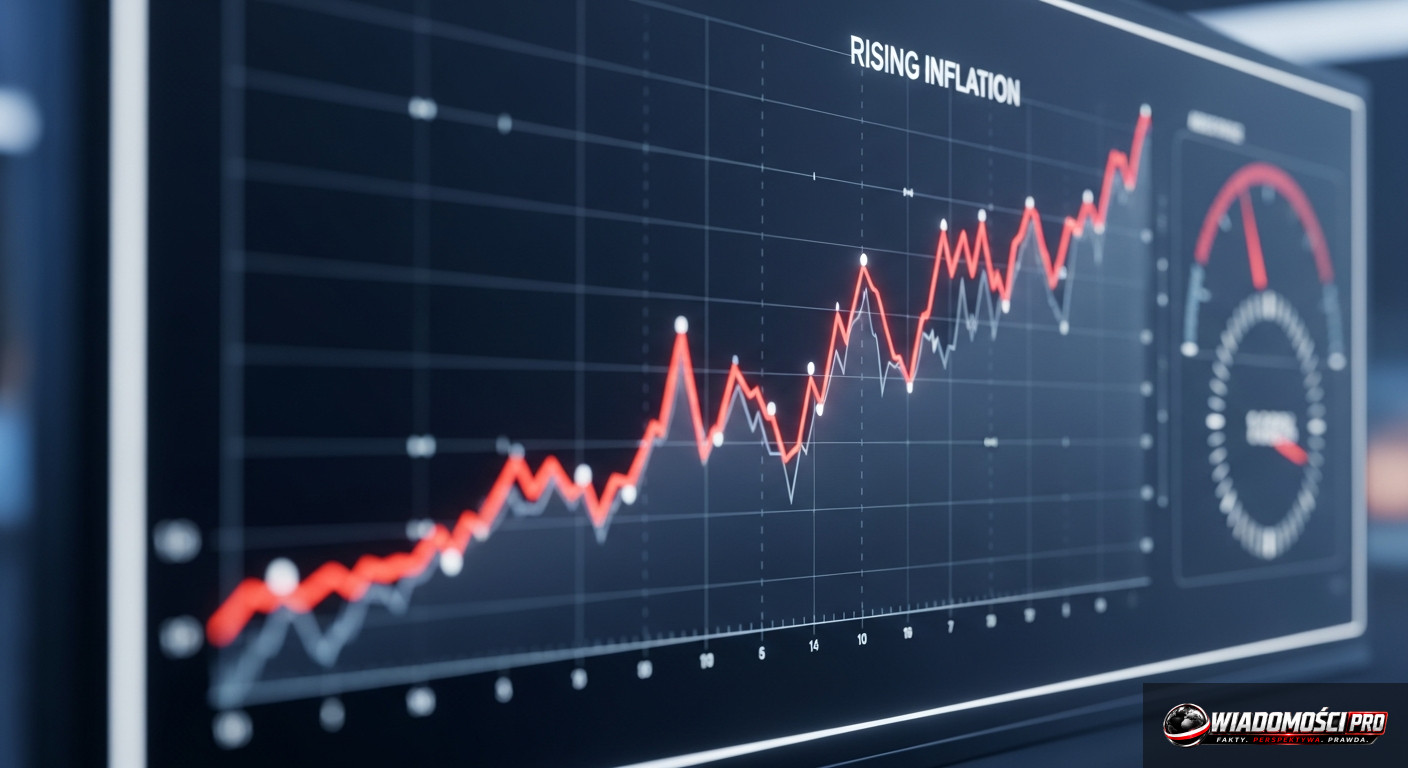
Concrete investment advice in the face of tightening
In the face of the real threat of further interest rate hikes, investment strategy requires immediate correction. First and foremost, exposure to long-term bonds should be reduced. In conditions of rising rates, their market price falls, which exposes the portfolio to significant capital losses. Instead, capital should flow toward short-term bonds, which offer higher interest rates with significantly lower risk of market valuation changes.
For individual investors seeking safety, cash in dollars in high-interest savings accounts or in short-term treasury bills is becoming a reasonable alternative to stock market volatility. Shares of technology and growth companies, which are very sensitive to the cost of capital, should be replaced by value companies from the financial sector, which benefit directly from higher interest margins.
Debtors must prepare for even higher installments. If you have a variable-rate loan, it is worth considering paying it off early with capital surpluses or – if possible – switching to a fixed rate, even though current offers are more expensive. The era of cheap money has ended, which means that liquidity will be key in the coming months. Avoid leveraging your portfolio, as market volatility in response to Fed decisions will increase drastically with every subsequent communication from the FOMC.
For those investing in emerging markets, the situation is particularly difficult. A strong dollar caused by hikes in the US will exert pressure on local currencies, which may lead to capital flight. Reducing exposure to emerging markets in the next six months seems to be a defensive strategy that will allow avoiding losses related to currency risk. Portfolio resilience to economic slowdown is built today through diversification into assets that historically perform well in an inflationary environment, such as commodities or selected defensive companies.
Questions and answers
Why is the Fed considering a hike when it previously kept rates unchanged?
Because inflation in the US has not fallen as expected, which forces the central bank to take more radical actions, comparable to those of 1994.
Will a rate hike definitely curb price growth?
Experts are divided; some economists argue that traditional rate hikes may prove ineffective in fighting current inflationary conditions, which are structural in nature.
What does this mean for my loans?
If the Fed decides on drastic hikes, one should expect an increase in debt servicing costs, which contradicts earlier hopes for lower installments after the holidays.
Is the current situation identical to 1994?
Although the scale of the hikes is comparable, the modern economy has different debt parameters and growth dynamics, which makes the current monetary experiment carry a higher risk of recession than in the 90s.
Why was the decision to make no changes in July considered a mistake?
Many analysts assess that maintaining rates allowed inflation to continue to grow, which is why the Fed must now act more sharply, which is harder for the market to absorb.
***
*(The article contains an in-depth analysis of the US monetary situation based on available data from August 2026. Remember that investing involves risk, and market decisions should be made based on an individual assessment of one's financial situation.)*
Sources
- US inflation surprises. The specter of a rate hike remains - TVN24
- Investors bet on various scenarios. The Fed decided on interest rates - Polish Press Agency SA
- Fed's Paulson open to rate hikes in the fight against inflation - Investing.com Poland: Currency rates, cryptocurrencies, stock quotes
- Why one of the leading economists claims the Federal Reserve will not win the fight against inflation with interest rate hikes - BeInCrypto
- Fed did not listen to Trump. Interest rates remained unchanged - Rzeczpospolita
- FED did not surprise everyone. Interest rates in the US unchanged - Fintek.pl
- Chance for lower loan installments after the holidays. Two commentaries at the same time - Business Insider Poland
- Inflation has not fallen as expected, Fed considers raising interest rates. - Vietnam.vn
Article prepared by the Wiadomości PRO editorial team with the support of artificial intelligence. Facts come from the sources provided above.

Komentarze (0)
Ładowanie komentarzy...