In brief
- Ukraine has issued final approval for exhumations in Huta Pieniacka and Uhly in Volhynia (as of August 8, 2026).
- The approval concerns 2 out of 26 applications submitted by the Polish side, which represents a fraction of a broader search process.
- Work in Huta Pieniacka was preceded by a lengthy administrative process that began with a preliminary decision by the Ministry of Culture of Ukraine in February 2026.
A breakthrough decision in Huta Pieniacka and Uhly
A breakthrough decision in Huta Pieniacka and Uhly
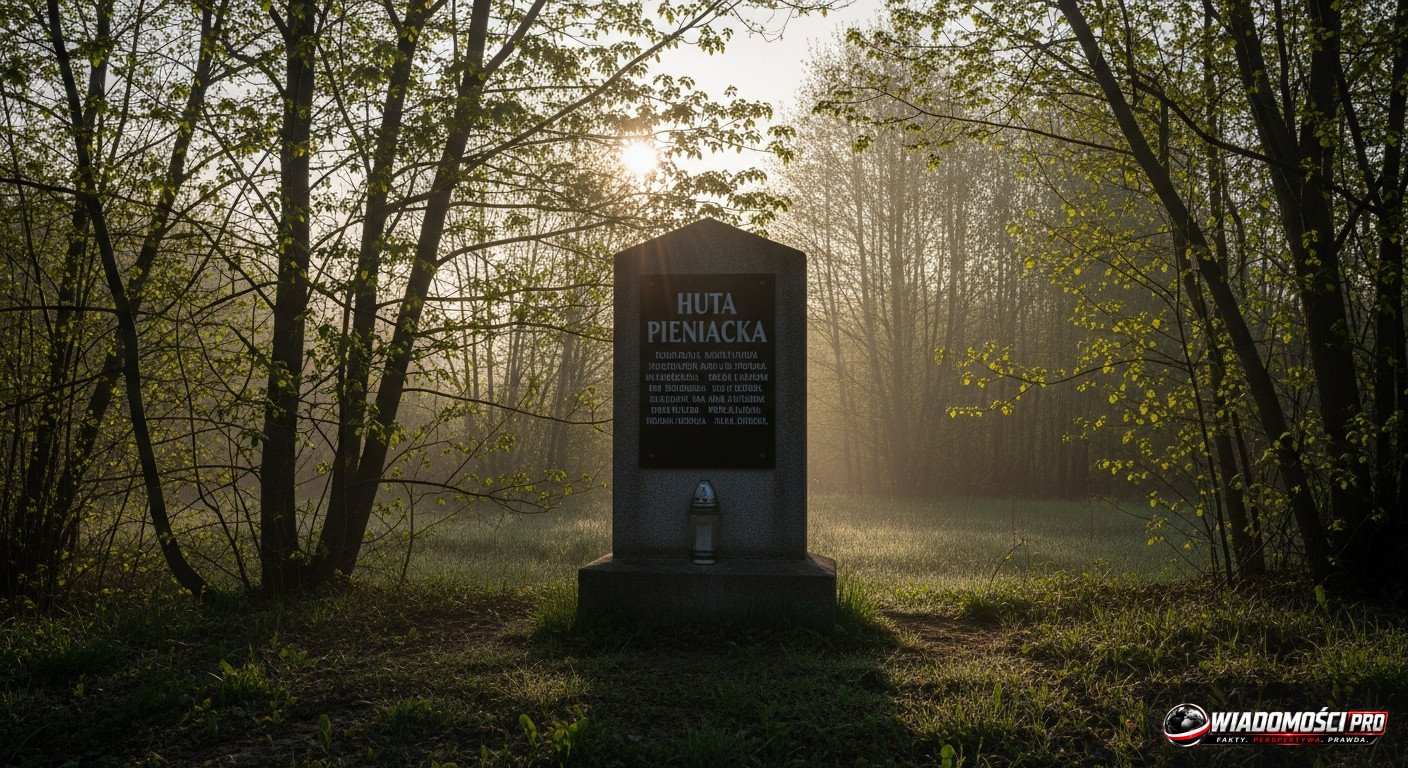
The months-long stalemate regarding the search for the remains of Polish victims in Ukraine has been officially broken. On August 8, 2026, the Ukrainian interdepartmental commission issued final approval for exhumation work at two locations: Huta Pieniacka and the village of Uhly in Volhynia. This is the formal confirmation that the victims' families and Polish officials have been waiting for for many months, repeatedly encountering administrative blockades and unclear procedures.
Information flowing from Kyiv ends a period of uncertainty that lasted at least since June, when reports of possible work in Huta Pieniacka were merely vague announcements rather than a plan ready for implementation. Earlier communications, including those from June 18, 2026, suggested that exhumations would have to wait up to a year. Today's decision turns this pessimistic scenario upside down.
However, one should remain sober in assessing the situation. Although the interdepartmental commission's approval is a necessary legal step, the practice of recent years teaches that logistical chasms often yawn between an official's signature and the physical start of work in the field. Observers certainly remember the July reports in which Ukraine accepted only a few of the dozens of Polish applications. This time, however, we are dealing with specific, named locations, which gives hope for real progress in historical and archaeological work.
For the families of the murdered Poles, this is primarily a chance for a dignified burial of their loved ones, whose remains have rested in nameless pits for decades. From the perspective of Polish-Ukrainian relations, working out a compromise on such a sensitive issue may be a test of a new quality of historical dialogue. The question remains whether these two locations constitute an isolated gesture of goodwill or the beginning of a broader path that will allow for the unblocking of the remaining, still frozen search applications. For now, we are focusing on Huta Pieniacka and Volhynia. This is a concrete fact that has finally ceased to be merely a subject of diplomatic notes and media speculation. It remains to wait for the work schedule, which will show whether the commission's decision will be followed by a rapid mobilization of teams in the field.
Balance of applications: The scale of needs vs. political realities
The decision to unblock work in Huta Pieniacka and Uhly is a signal that after months of stalemate, the diplomatic gears have finally moved. However, this does not mean that the Ukrainian side has opened the door wide for Polish specialists. A cool analysis of the numerical data shows that each such approval is paid for with arduous negotiations, rather than a systemic approach to a difficult historical topic.
The status as of July 11, 2026, left no illusions about the scale of difficulties faced by Polish institutions. Warsaw sent 26 exhumation applications to its Ukrainian partners. The response that arrived is extremely selective. Ukraine accepted only 3 of them, which, given the scale of the submitted requests, looks like a gesture of limited trust. This entire process is part of a difficult second stage of searches, the goal of which is to find the remains of dozens of Poles scattered across Ukrainian villages.
What does this mean in practice for the victims' families and researchers? Above all, the need to constantly balance respect for the deceased with Kyiv's political restraint.
- 26 applications submitted by the Polish side, which remained in bureaucratic limbo for many months, waiting for the interdepartmental commission to act.
- 3 locations approved by the Ukrainian authorities, including the key Huta Pieniacka and Uhly, which constitutes only a fraction of the Polish side's overall expectations.
- The second stage of searches, which is intended to lead to the discovery of the graves of dozens of Poles, still encounters systemic barriers, which slows down field work.
These numbers are not just dry statistics. They are proof of how much historical policy determines access to burial sites. Focusing on two specific points on the map, while simultaneously lacking clear declarations regarding the remaining 23 locations, shows that the Ukrainian side is rationing approval extremely cautiously. For the relatives of those resting in nameless

Timeline of the administrative path to approval
Timeline of the administrative path to approval
The long road to getting the green light for work in Huta Pieniacka and the village of Uhly has finally come to an end. The decision of the interdepartmental commission of August 8, 2026, closes a months-long, tension-filled negotiation process between Warsaw and Kyiv. This is a political concrete that both history researchers and victims' families have been waiting for, even if the course of the procedures was frustrating for observers.
Everything formally began on February 18, 2026, when the Ministry of Culture of Ukraine issued preliminary approval for search work. This was a signal to Polish experts that there was political will to take action in the field regarding Huta Pieniacka. After several months of intensive work, on June 18, 2026, the completion of the search stage in this village was announced. However, enthusiasm was dampened by reports of the actual exhumation being postponed by a full twelve months. Today, from the perspective of today's information, that "in a year" turns out to be outdated, because the interdepartmental commission's approval came much faster than announced in June.
It is worth noting the numbers that accompanied this administrative path over the last half year. They show the scale of the challenge that the Polish side faced in Ukrainian offices:
- Exhumation applications accepted by Ukrainian authorities (as of July 11, 2026) — 3 out of 26 (Tygodnik Solidarność)
- Date of issuance of preliminary approval for search work in Huta Pieniacka — February 18, 2026 (Institute of National Remembrance)
- Date of completion of search work in Huta Pieniacka — June 18, 2026 (Do Rzeczy)
- Date of issuance of final approval by the interdepartmental commission — August 8, 2026 (Kresy.pl)
Achieving this agreement does not mean that the process will now be fast and trouble-free. Experiences from previous months, including reports of difficult conditions set by the Ukrainian side, dictate caution. The commission's approval is only the beginning of the operation in the field. The question remains whether the pace of work will allow for a full exhumation in the shortest possible time, or whether bureaucratic details will continue to be the main obstacle to restoring dignity to the victims. For now, however, we have a breakthrough that the state institutions of both countries have been waiting for.
Controversies surrounding the conditions set by Kyiv
The long road to today's decision by the Ukrainian interdepartmental commission regarding Huta Pieniacka and Uhly was paved not only with bureaucracy but, above all, with political tug-of-war. Although the final approval ends a months-long stalemate that froze search work in this part of Volhynia, the process of reaching this moment leaves a bitter aftertaste.
Over the past months, the Polish side had to face mounting obstacles. The situation was a stalemate not only because of the sluggishness of officials but also because of the scope of the accepted applications. One only needs to look at the data from July 11, 2026, when "Tygodnik Solidarność" warned that Ukraine had accepted only 3 out of 26 Polish search applications. This illustrates the scale of the difficulties faced by teams of experts trying to find the remains of the victims.
Media in Poland did not spare criticism regarding the way the talks were conducted. As early as June 20, 2026, the station wPolsce24 pointed directly to the "shocking conditions" that the Ukrainian authorities were setting when issuing approvals. It was not just about the possibility of entering the field, but about legal and procedural constraints that were unacceptable to historians and archaeologists. This atmosphere of distrust meant that even after obtaining preliminary assurances, the time from declaration to actually putting a shovel in the ground stretched into infinity.
This is a specific game of time that irritated the victims' families and Polish research circles. This was perfectly visible in June 2026, when "Do Rzeczy" reported on the completion of searches in Huta Pieniacka, adding that the exhumations themselves would have to wait another year. Such fragmentation of the process made historical justice a hostage to a complicated procedure.
The procedural difficulties mentioned by the media are not just a matter of paperwork. They are, above all, a mental and political barrier that for months allowed Kyiv to ration approvals at an almost pharmaceutical pace. Even today's "yes" does not change the fact that previous months were wasted negotiating conditions that should be obvious in normal relations. For the victims' families, these are more months of waiting, and for historians – a fight against time, in which every day of delay destroyed the chance for a dignified burial of the murdered. Now that the barriers have been formally lifted, the key question remains whether the pace of work will be as efficient as the earlier piling up of problems.
DNA from Ostrówki as part of a broader process
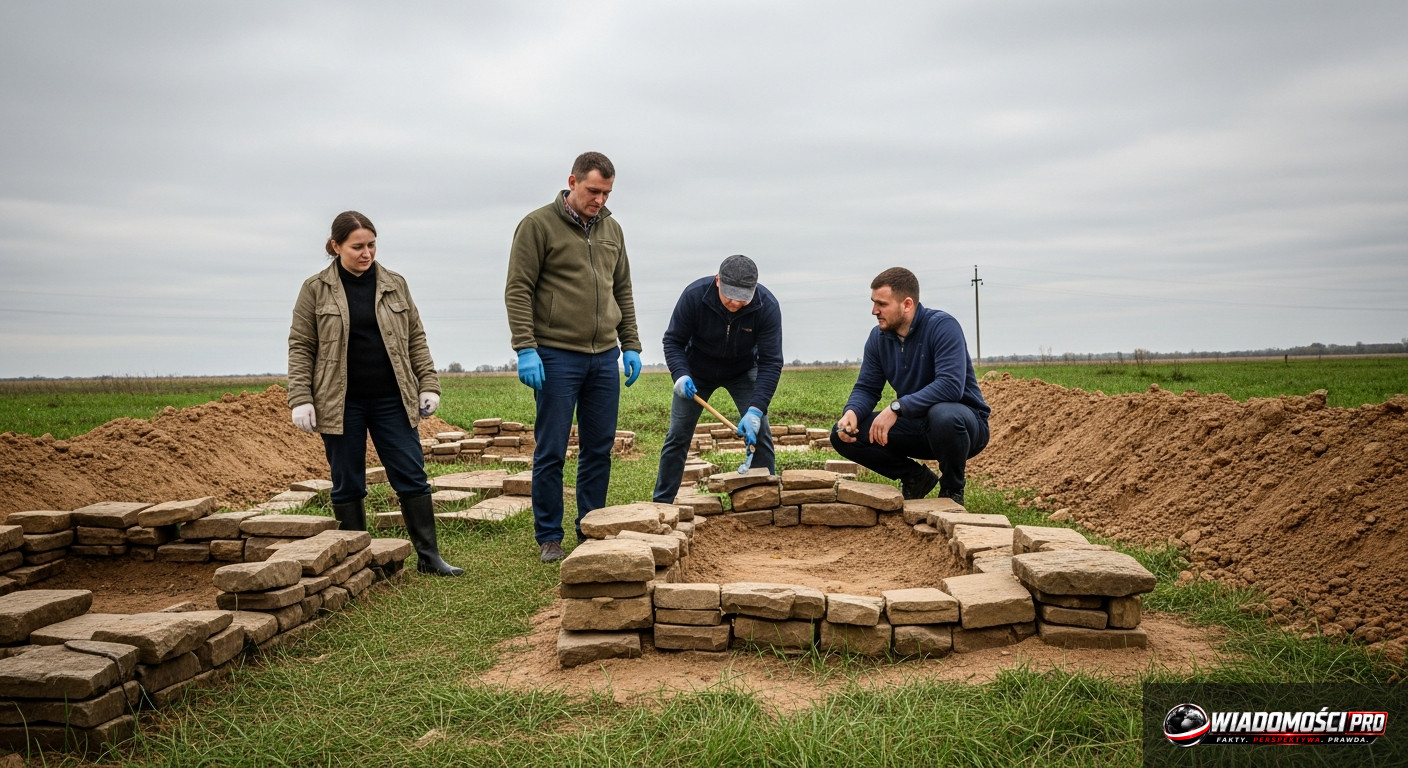
The interdepartmental commission's decision regarding Huta Pieniacka and Uhly does not function in a vacuum but is part of a broader process of historical negotiations. In parallel with the breakthrough in these two key locations, Polish experts gained permission on August 8, 2026, to collect DNA samples in Ostrówki. This is a significant expansion of the scope of work, which until now had focused mainly on searching for physical remains. Now the Polish side will be able to conduct genetic testing of the victims, which in many cases remains the only way to fully identify them.
Including genetic diagnostics in field activities is a qualitative change. Previous attempts to establish the identity of the victims of the Volhynian massacre often failed due to a lack of consent for advanced analysis of biological material. The consent to collect samples in Ostrówki shows that the Ukrainian approach to contentious issues is beginning to evolve toward more technical, less politicized cooperation. For the victims' families, this is a signal that after years of a standstill, the Polish state is gaining tools for reliable documentation of the crime, not just for symbolic commemoration of the sites of execution.
However, looking at the history of recent months, one should maintain a cool distance. As recently as July 2026, "Tygodnik Solidarność" reported that Ukraine had accepted only 3 out of 26 search applications, which puts today's decisions in a slightly different light. This is not an opening of all doors, but rather a point-based approval for activities in places with the highest gravity for Polish-Ukrainian relations.
The question of the durability of this change remains. The history of recent years, including numerous disputes over the scope of work in Huta Pieniacka, teaches that every decision by Ukrainian officials is a resultant of the current political situation and social pressure. The consent for DNA testing in Ostrówki is undoubtedly a negotiating success, but it is hard to shake the impression that the pace of this work remains dependent on decisions made ad hoc in Kyiv. Whether we are dealing with a new quality in historical dialogue or merely a technical concession intended to silence tensions – time will tell. For now, Polish specialists have the green light to enter the graves, which seemed an unlikely scenario just a few weeks ago.
Historical significance for Polish-Ukrainian relations
Historical significance for Polish-Ukrainian relations
The decision of the Ukrainian interdepartmental commission to grant permission for exhumation work in Huta Pieniacka and the village of Uhly in Volhynia ends a months-long stalemate that affected relations between Warsaw and Kyiv. This is a concrete move that has been awaited for months. For a long time, this issue remained a flashpoint, where every subsequent application from the Polish side crashed against bureaucratic barriers or the silence of Ukrainian officials. Today's confirmation from Kyiv changes the optics of these talks.
Exhumations are the foundation of reconciliation regarding the crime in Volhynia. For years, Polish politicians and historians have pointed out that without finding and giving the victims a dignified burial, there is no talk of closing the most difficult chapters of shared history. Breaking down long-standing barriers to access to memorial sites has been an extremely slow and complicated process until now. As recently as July of this year, Tygodnik Solidarność reported that Ukraine had accepted only 3 of the 26 submitted applications. Today's decision, confirmed by media such as Kresy.pl or niezalezna.pl, is therefore a clear signal of readiness to unblock the work.
However, one must remain moderate in assessing the scale of this gesture. Although the information from August 8, 2026, brings a long-awaited positive, the issue of the remaining applications, which are still waiting to be processed, remains. Experiences from previous months, including June reports of difficult conditions set by the authorities in Kyiv or information about postponing work for subsequent years, dictate caution.
For the victims' families and organizations caring for historical memory, today's announcement is primarily a restoration of faith in the possibility of reaching the truth about the fate of their loved ones. From a political point of view, it is a chance to extinguish one of the most emotionally charged disputes between Poland and Ukraine. However, as previous months show, consent in writing is only the beginning of the road. The real test will now be the pace and conditions under which Polish specialists begin work in the field. Until the first shovel is struck in Huta Pieniacka and Uhly, the matter will remain in the declarative sphere, albeit this time with a solid, official foundation. Skepticism in this matter, resulting from years of stalemate, is fully justified. Now the ball is in the executive court.
The second stage of work: what awaits us in the coming months?
The second stage of work: what awaits us in the coming months?
Obtaining final approval from the Ukrainian interdepartmental commission ends a months-long stalemate, but by no means does it mean immediately striking shovels into the ground. Administrative procedures in Ukraine, especially in historical matters, have their inertia, which cannot be overcome by political will or diplomatic notes alone. The schedule is rigid and heavily extended over time, which for the victims' families is another test of patience.
The current situation results from a precisely defined division of work that has been developed in recent months. Experts and archaeologists do not enter the area "blindly." The preparatory activities completed in June were a prelude to a much more serious operation, the finale of which is planned only for next year.
Here is a concrete calendar of actions, from which it follows that we still have a long way to go:
- June 22, 2026 – the start of the second stage of search work was officially confirmed. It was then that preparatory activities began, necessary for the later safe extraction of remains.
- Huta Pieniacka – work in this village, although the most publicized, was only a technical introduction. The team completed the reconnaissance phase there, which was intended to precisely locate the graves.
- Year 2027 – it is for this date that the actual exhumations have been scheduled. Only then, after completing the full cycle of field research and obtaining all necessary permits, will specialists proceed to extract the victims' remains.
From a logistical perspective, the gap between "consent for exhumations" and the actual moment of their implementation is significant. The Ukrainian side, when issuing decisions, imposes rigorous conditions that have repeatedly sparked controversy in the Polish media. We are therefore dealing with a situation where a political "yes" has been said, but the technical implementation of this commitment is pushed far into the future.
For the families of the murdered Poles, this means that in the coming months they will not see the final burial of their loved ones. Experts must now focus on inventorying the sites in Huta Pieniacka and in the village of Uhly so as not to waste time on re-examination in 2027. This is a race against nature and bureaucracy. Every winter, every downpour, or change in the terrain can affect the condition of the already secured sites. The optimism flowing from obtaining the approvals is therefore moderate, because we will see the real effects of the work in at least a dozen or so months. The question remains whether the adopted schedule will stand the test of time and whether further administrative "bottlenecks" will not appear along the way.
Challenges for Polish historical diplomacy
Challenges for Polish historical diplomacy
The Ukrainian interdepartmental commission has issued final approval for exhumation work in Huta Pieniacka and the village of Uhly, which definitively ends a months-long stalemate in this matter. For Polish diplomacy, this is a signal that the current negotiation strategy, based on arduously maintaining dialogue within the interdepartmental commission, is beginning to bring concrete, albeit point-based, results. This decision, confirmed on August 8, 2026, relieves diplomats of the pressure of an immediate image failure, but the list of problems remains long.
Success in Huta Pieniacka and Uhly does not mean the automatic resolution of all contentious issues. The Polish Ministry of Foreign Affairs is currently facing the challenge of processing the remaining 23 applications that are still waiting to be considered. The scale of the difficulty is clear: Ukraine has so far accepted only 3 out of 26 submitted requests, which shows how much every consent for searches is conditioned by political terms. Historical diplomacy must now prove that it can maintain the pace of talks without being pushed into a defensive position, where each location becomes the subject of a separate, months-long bargain.
For observers of Polish-Ukrainian relations, it is clear that merely getting the green light is only half the success. The real test for the Polish state will begin in the field, where logistics, legal issues, and securing the work will require the constant presence of officials and experts. The Polish side cannot afford to slow down the processes again, as we observed as recently as June, when after initial announcements, work in Huta Pieniacka was postponed for a year.
The current situation therefore requires pragmatism from Warsaw. Maintaining communication channels with the Ukrainian interdepartmental commission is a necessity, which, however, does not guarantee the quick resolution of the remaining 23 applications. Diplomats know that every subsequent decision on exhumation will be analyzed by Kyiv in terms of internal political moods. Polish historical diplomacy is entering a phase where successes will be counted by individual approvals, not by a systemic solution to the problem, which in practice means that the topic of the Volhynian victims will remain at the center of tensions between Warsaw and Kyiv for many years to come. Stability of dialogue is more important here than one-off gestures, because only in this way can one realistically think about bringing the processing of all remaining applications to an end.
What this means for you
The decision opens the way to a dignified burial of the victims, however, the issue of the remaining 23 applications remains. For Poland, it is a diplomatic success; for Ukraine – a gesture toward the normalization of historical relations, although paid for with difficult formal conditions.
Questions and answers
Does the approval cover all crime sites in Volhynia?
No, the approval at this moment concerns only 3 out of 26 requested locations, including Huta Pieniacka and Uhly.
When will the exhumations in Huta Pieniacka begin?
According to information from June 18, 2026, the actual exhumation work is planned for a year after the completion of the searches, i.e., in 2027.
Are other studies being conducted besides the exhumations?
Yes, on August 8, 2026, permission was obtained to collect DNA samples in Ostrówki, which will allow for the identification of the victims' remains.
Sources
- Search and exhumation work in Ukraine. Consent to collect DNA samples in Ostrówki - Forsal.pl
- Ukraine has granted permission for exhumations in Huta Pieniacka and Uhly in Volhynia - Kresy.pl
- There is consent for further exhumations of Polish victims. Ukraine indicated two locations - niezalezna.pl
- Beginning of the second stage. They will search for the graves of dozens of Poles in Ukraine - PolsatNews.pl
- End of searches in Huta Pieniacka. Exhumations only in a year - Do Rzeczy
- This is what the Ukrainian authorities' "consent" for exhumation looks like! Shocking conditions - wPolsce24
- Breakthrough regarding exhumations in Volhynia? Ukraine accepted only 3 out of 26 applications - Tygodnik Solidarność
- The Ministry of Culture of Ukraine has issued final approval for search work in Huta Pieniacka - Institute of National Remembrance
Article prepared by the Wiadomości PRO editorial team with the support of artificial intelligence. Facts come from the sources listed above.


Komentarze (0)
Ładowanie komentarzy...