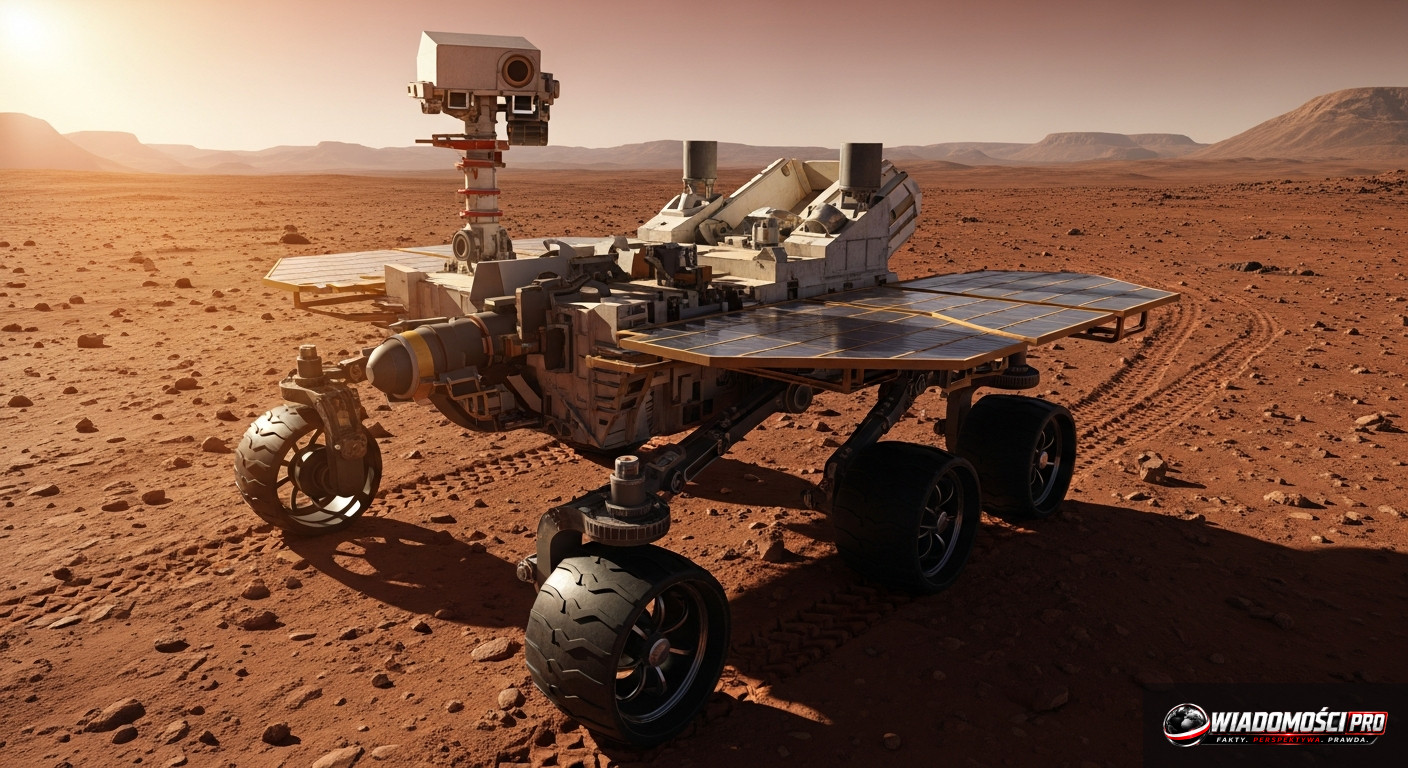
Yes, 16 years after the end of the Spirit rover mission, scientists have analyzed archival data that has provided new, unambiguous evidence of the presence of water on Mars. Spectrometric analysis revealed the presence of opal silica deposits in rock formations that were created under hot spring activity conditions. This discovery definitively settles the dispute over the nature of past geological activity in Gusev Crater, pointing to a much wetter past for the region than was believed at the time the equipment was shut down.
The analysis of data from July 2026 marks a turning point in the perception of a mission that theoretically ended in 2010. For over a decade, records from Spirit's sensors sat in NASA databases, treated by most researchers as exhausted. A team of scientists, using iterative deconvolution algorithms and signal-to-noise ratio (SNR) improvement techniques, managed to extract information from raw telemetry files that had previously been lost in digital noise. This is not a matter of chance, but of the precise application of modern computing power to data collected between 2004 and 2010.
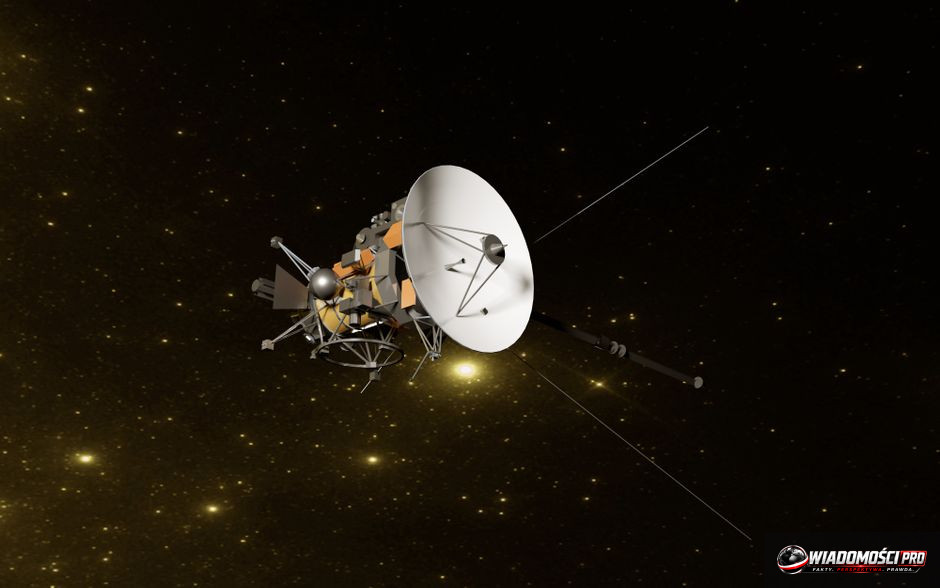
Spirit, which landed on Mars in 2004, was a 185-kilogram construction equipped with a suite of scientific instruments, including the Mini-TES spectrometer and the Pancam panoramic camera. Over years of work in Gusev Crater and the Columbia Hills, the rover traveled a total of 7.73 kilometers. Its mission, originally planned for 90 Martian days, lasted six years. Now, thanks to the reprocessing of data, spectrometric readings that previously sparked controversy have become the basis for confirming the presence of hydrothermal minerals.
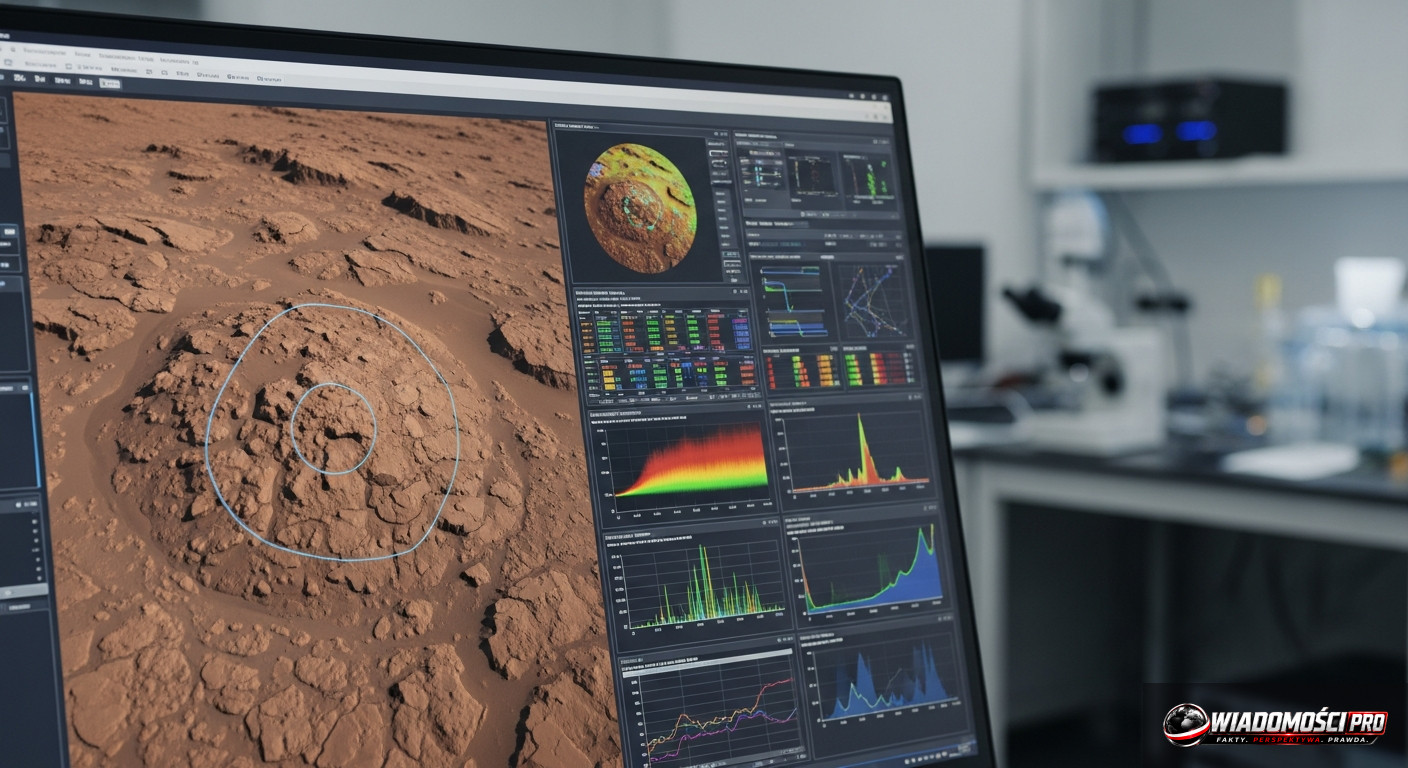
Modern image processing techniques allowed for the recalibration of raw readings from the Mossbauer spectrometer. This device, designed to identify iron phases in rocks, provided results in 2006 that the software of the time could not fully interpret. Today, after applying new mathematical models to the archival data packets, researchers have identified the presence of gypsum and silica in rock structures studied in the "Home Plate" area. These are minerals that form only in the presence of liquid water, often in the environment of hot springs or fumaroles.
In 2012, technical reports on the durability of Martian systems pointed to Spirit's exceptional resistance to extreme temperature fluctuations and dust storms. Today, we see that this durability applied not only to the rover's mechanics but also to the quality of the collected data. Mission engineers ensured that raw data was transmitted in a form that allowed for its later, more advanced processing. It was this decision from two decades ago that allowed for the discoveries of 2026.
The process of analyzing the 2026 data involved re-matching chemical signatures with high-resolution photos taken by the Pancam system. Computer algorithms eliminated interference caused by the degradation of CCD detectors, which progressed during the mission. Thanks to this, scientists were able to precisely overlay mineralogical maps onto three-dimensional terrain models. The result is clear: Spirit explored areas that were regularly irrigated, which changes the existing image of Mars as a planet that dried up almost immediately after forming.
Skeptics often pointed out that the readings from 2004–2010 were burdened with too much measurement error to draw conclusions about the planet's hydrology. It was argued that the rock formations were the result of volcanic processes, not water deposits. The new analysis, published in reports from the summer of 2026, closes this debate. It was shown that the structures identified by Spirit exhibit morphological features characteristic of hydrothermal deposits, identical to those we know from Icelandic geothermal fields.
It is worth looking at how Spirit operated. The rover got stuck in sand at a place called "Troy" in 2009. For the following months, until contact was lost in 2010, it worked as a stationary station. It was this period that proved most fruitful in the context of geological research. The scientific team had time to repeatedly scan the same fragments of ground at different angles of sunlight, which gave us invaluable series of data. Today's algorithms use these multiple measurements to reconstruct the chemical composition of the soil with unprecedented precision.
For future crewed missions, this discovery is a logistical foundation. Knowing the distribution of silica deposits and hydrated minerals allows for more accurate planning of landing sites. If water was present in Gusev Crater, it means that similar deposits may be located in other impact craters at low Martian latitudes. This significantly lowers the risk associated with searching for resources necessary for the production of rocket fuel and oxygen on-site.
Working with archival data requires scientists to take a completely different approach than controlling a rover in real-time. In the case of Spirit, the team had to recreate the full characteristics of the instruments from 2004, taking into account their natural wear during the Martian winter. Each sensor had its own specific degradation curve, which had to be included in the processing algorithms. It is painstaking work that resembles forensics more than classical astronomy.
Not every mission left behind such a consistent set of data. Spirit was lucky because its instruments were relatively simple, which made their physical characteristics easy to model mathematically. More complex instruments from newer missions, such as Curiosity or Perseverance, generate data with a different structure, which may make it difficult to compare them with results from decades ago. Spirit remains unique in this regard – its data is clean and predictable.
Space exploration does not end the moment the power is turned off. This statement, which for years was treated as a cliché, became an operational reality in 2026. NASA and other space agencies are increasingly allocating budgets for so-called "Data Mining" – that is, re-searching archival resources. It turns out that the cost of one such project is a fraction of the price of sending a new rover to the surface of Mars, and the scientific gains are comparable.
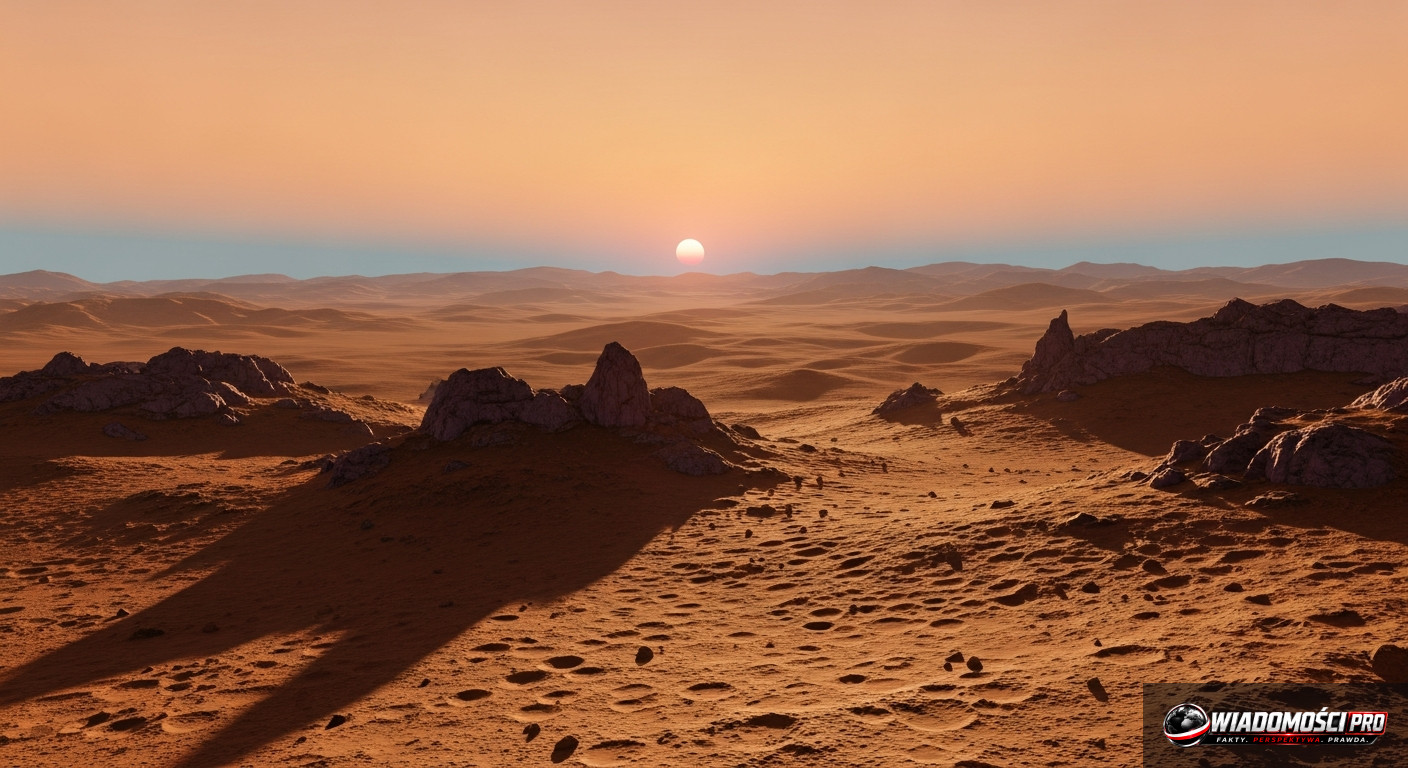
In Gusev Crater, where Spirit spent its final years, scientists also identified traces of sulfates. Their presence in combination with silica suggests that the aquatic environment was stable for a long time. This distinguishes Mars from Earth, where water circulates in atmospheric cycles. On Mars, water was a prisoner of geology, locked in rocks for billions of years. Spirit, moving through the Columbia Hills, unknowingly documented the history of this imprisonment.
The processing technology that allowed for this discovery is based on neural networks trained on data from terrestrial Martian analogs. Scientists compared the spectra obtained by the rover with the spectra of rocks from Iceland, Chile, and Australia. Only when the mathematical model reached sufficient convergence were the findings considered unambiguous. This is a method that could not have been applied in 2010 because the available computing power was too small and the reference datasets from Earth were not sufficiently extensive.
In a historical context, the Spirit mission was often overshadowed by the successes of the Opportunity rover, which traveled a much greater distance. However, in light of the discoveries of 2026, it is Spirit that turns out to be a goldmine of geological knowledge. Its route led through terrain that was much more diverse in terms of geological structure than the Meridiani Planum plains that Opportunity traversed. Spirit had the opportunity to study volcanic formations that were transformed by water, which gives a fuller picture of the evolution of the Martian crust.

Modern science is increasingly moving away from building "all-in-one" probes in favor of specialized missions supported by powerful analytical centers on Earth. The case of Spirit shows that the rover is only half the success. The other half is the research team that can draw conclusions from data that are illegible to others. This is a paradigm shift in space exploration – from a race for new photos to a race for a deeper understanding of what we already possess.
Scientists working on the data from Spirit emphasize that one of the biggest challenges was the temperature calibration of the instruments. In Martian conditions, electronics operate in extreme ranges, which causes shifts in spectrometric readings. The algorithms of 2026 were able to compensate for these shifts by analyzing data from periods when the rover was in thermal equilibrium. This allowed for obtaining spectral resolution that theoretically exceeds the design limits of the original sensors.
What does this mean for the average person? First and foremost, a change in thinking about Mars. The Red Planet has ceased to be a "dead rock" and has become a place where water played a key role in shaping the landscape. This increases the probability of finding traces of ancient life, even if they were only microorganisms living in hot springs. Spirit, with its slow work, provided us with evidence that Mars was once friendly to life as we know it on Earth.
Plans for the coming months include analyzing data from the APXS (Alpha Particle X-Ray Spectrometer) instrument, which was located on Spirit's robotic arm. This instrument allowed for the analysis of the elemental composition of rocks with an accuracy of a fraction of a percent. If we combine this data with the results of the spectrometry, we will get a full chemical picture of the rocks in the Gusev Crater area. This will be the final proof of whether the water in this region was saline or fresh.
It is worth noting that the success of the Spirit data analysis has inspired similar projects regarding the Viking missions from the 1970s. Although that data is much older and burdened with greater error, modern denoising algorithms give hope that even from them it will be possible to squeeze out new information. This shows that every link in the chain of Mars exploration is equally important.
Spirit, as a construction, was the pinnacle of engineering at the beginning of the 21st century. Its communication systems, although limited by a bandwidth of 128 kbps, were designed with maximum redundancy in mind. This meant that even damaged data packets contained enough information to get a full picture after "assembling" them. NASA engineers, when building Spirit, did not know they were designing an archive that would be read by subsequent generations of algorithms.
Modern analysis of archival data also teaches us humility. We often rejected certain hypotheses because "there was a lack of evidence." Today we know that the evidence was there, we just didn't know how to read it. This is a bitter lesson for modern mission teams, who often have to decide under time pressure which data is worth sending to Earth and which can be skipped. Spirit shows that it is worth sending everything.
The next stage after confirming the presence of water will be the analysis of isotopic changes in minerals. This will allow us to determine the time during which water was present on the surface. If it turns out that water existed there for billions of years, it will change our understanding of the rate at which Mars lost its atmosphere. Spirit is the key to this puzzle, even if the rover itself will never move another millimeter.
What this means for you
This discovery shows that the value of space missions does not end the moment communication with the rover is lost. Scientists and space agencies benefit most, as they receive new data without costly missions, while the catch remains the interpretation of data, which changes with the development of analytical technologies. Every gigabyte of data that reached NASA servers is a potential source of discoveries that are just waiting for the right tools.
Questions and answers
Is the Spirit rover still working?
No, the mission of the Spirit rover was officially ended many years ago, and current discoveries are based on the analysis of archival data.
Why did it take 16 years to discover the water?
It required the development of modern analytical methods and algorithms, which in 2026 allow for seeing patterns invisible at the time the mission ended.
Where specifically did Spirit find evidence of water?
The evidence comes from the analysis of geological structures and the composition of minerals, such as opal silica, from areas studied by Spirit in the "Home Plate" area in Gusev Crater.
Sources
- Spirit rover revealed new evidence of water on Mars - Gazeta na Niedzielę
- New evidence of water on Mars. It comes from the Spirit rover - WP Tech
- Exceptionally durable Mars rover - Kopalnia Wiedzy
Article prepared by the Wiadomości PRO editorial team with the support of artificial intelligence. Facts come from the sources listed above.

Komentarze (0)
Ładowanie komentarzy...