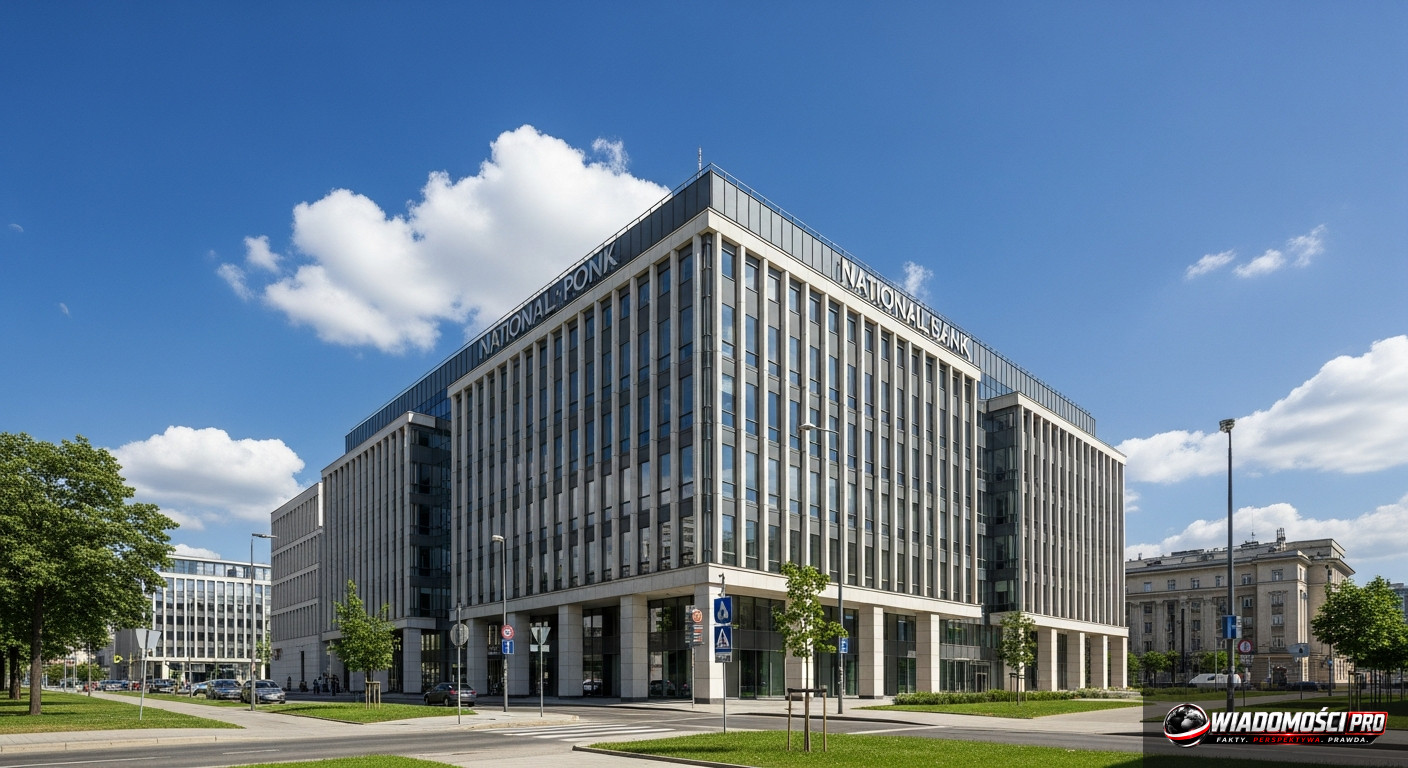
In July 2026, the Monetary Policy Council (MPC) kept interest rates at 5.25 percent, which means that loan interest rates remain stable compared to previous months. This decision ends a period of market speculation regarding the summer meeting of policymakers. Borrowers have thus gained a moment of respite, although the foundations of Polish monetary policy remain under strong external pressure.
November 2024: The starting point for monetary policy
To understand the current situation of mortgage holders, we must go back to November 2024. At that time, the Monetary Policy Council, deliberating in the shadow of high inflation, set interest rates at 5.75 percent. It was a clearly conservative signal. The market expected clearer moves toward easing, but the central bank decided on a wait-and-see strategy. Every move was analyzed through the prism of the zloty's stability and future inflation readings.
That autumn decision from 2024 became an anchor for the entire banking sector. Financial institutions, seeing a lack of will for quick cuts, kept margins at a high level, which directly translated into installments for loans based on the WIBOR rate. Households, planning their expenses for the coming quarters, received a hard message: there will be no cheap money. This was crucial for the decision-making process of many families, who had to revise their investment or purchasing plans.
For analysts, that period was a test of strength between political pressure and hard macroeconomic data. The Council did not succumb to the temptation of populism, sticking rigidly to the set parameters. In retrospect, it is clear that November 2024 was the moment when Polish monetary policy was set to defensive mode. This approach dominated the narrative for the next twelve months, creating a specific climate of uncertainty that accompanies us to this day.
Autumn 2025: A period of cuts and policy easing
A year later, the situation changed. In November 2025, the Monetary Policy Council made an adjustment, lowering interest rates. This was the result of the second autumn quarter, during which policymakers decided to ease, which for many borrowers was the first real signal of improvement. Installments began to fall slightly, and social sentiment improved. Banks began to react faster to drops in market rates, which gave hope for a lasting downward trend.
This moment was a breakthrough for the real estate market. Increased creditworthiness, resulting from lower debt service costs, fueled demand for apartments. Many people who had been holding off on buying a home in 2024 rushed to bank branches. However, the optimism did not last long. The autumn cuts of 2025 turned out to be the maximum scope of the Council's actions in that cycle. Voices quickly emerged that the room for further cuts was drastically limited by the changing situation on Poland's eastern and southern borders.
Today, analyzing those moves, we see that it was the only major easing impulse in the entire 2025 cycle. The Council acted under pressure of time and expectations, but even then it was clear that every subsequent move would be fraught with huge risk. What in the autumn of 2025 seemed like the beginning of a new era of low rates eventually turned into stabilization. Policymakers, mindful of the volatility of energy commodity prices, began to clearly curb the enthusiasm for further cutting the cost of money.

July 2026: Why did the MPC refrain from changes?
July 2026 brought the long-awaited meeting of the Monetary Policy Council, at which the decision was made to keep rates at 5.25 percent. The lack of changes in loan repayment schedules is the result of cold calculation. Members of the Council, analyzing current GDP and price dynamics data, concluded that any moves up or down would be premature. The market accepted this information without much emotion, which proves that investors were prepared for such a scenario.
The escalation of tensions between the USA and Iran is the main reason why the MPC chose the status quo. The conflict in the Middle East is not a matter distant from the Polish backyard. In the age of globalization, any unrest in the Persian Gulf hits oil prices, and thus transport and production costs in Poland. The Council must take into account so-called supply shocks, which can trigger a new wave of inflation. In such an environment, an interest rate cut would be perceived as a strategic error, weakening the zloty at a time when it needs stability.
For a mortgage holder, the lack of changes means maintaining the current burden. There is no talk of a "cheap installment," but also no fear of sharp increases. It is a state of suspension, which for many families is safer than the uncertainty associated with sudden MPC moves. From the central bank's point of view, this is a safety valve. Any "too fast" cut could lead to capital flight from Poland, which in turn would force interventions in the currency market.
Geopolitics and the Polish economy: The impact of the conflict in Iran
The US-Iran conflict casts a long shadow over the Polish economy in mid-2026. Analysts point out that every piece of information about the hardening of rhetoric between Washington and Tehran automatically weakens the zloty. In this situation, the MPC is a hostage to factors over which it has no influence. The stability of the zloty has become a priority, even at the cost of slowing economic growth, which could have been stimulated by lower interest rates.
The Polish currency acts as a "safety valve" for foreign investors. When things get dangerous in the world, capital flows to safe assets, such as the dollar or the Swiss franc, and leaves emerging markets, to which Poland is still classified. The MPC must therefore keep rates at a level that makes investing capital in the zloty still relatively attractive. This means that borrowers have to pay for this "security" with higher interest.
The impact of the conflict is also visible in the prices of imported goods. If the zloty weakens under the influence of geopolitical tensions, the costs of purchasing energy or electronic components automatically rise. This phenomenon is called imported inflation. The Monetary Policy Council, wanting to limit it, must maintain a restrictive stance. In July 2026, there were no indications to suggest that this situation would improve in the coming months.

The zloty under pressure: Market reaction to the MPC decision
The financial market's reaction to the decision to keep rates unchanged was predictable. The zloty reacted with a slight strengthening, which is a signal that investors appreciated the Council's restraint. Any other solution, e.g., an unexpected cut, would have triggered an immediate sell-off of the zloty on the Forex market. The MPC understands perfectly well the mechanisms governing this market and did not want to expose the national currency to speculative attacks.
For borrowers, however, this stability has a bittersweet taste. On the one hand, the lack of changes in installments allows for the predictability of household budgets. On the other hand, the cost of capital remains at a level that many feel is high. If we look at the WIBOR charts, we see that since the beginning of 2026, these rates have been moving in a fairly narrow channel. There is no talk of sharp jumps, but there is also no talk of a downward trend, which many had hoped for after the autumn cuts of 2025.
It is worth noting that commercial banks have also adopted a wait-and-see strategy. Loan offers are not undergoing major changes, and bank margins remain at a stable, high level. The banking sector has learned from previous years and does not want to risk sharp moves in offers for retail customers. This means that the borrower is doomed to the current level of costs for a longer time, unless the situation on the international arena improves radically.
Forecasts for borrowers for the end of 2026
Looking to the future, the end of 2026 does not look optimistic for people with variable-rate loans. Forecasts indicate that the MPC will continue its "wait and see" policy. If the conflict in Iran does not subside and commodity prices remain at a high level, it is difficult to expect any significant cuts before the end of the year.
Borrowers should prepare for a conservative variant. This means that household budgets must be ready for the current level of installments for the coming months. One should not expect "gifts" in the form of quick interest rate cuts around December. If the Council decides on any move, it will likely be symbolic and dependent on inflation readings in the fourth quarter of 2026.
Experts warn against excessive optimism coming from some media. The macroeconomic situation is complicated. On one hand, we have an economic slowdown, which theoretically requires cheaper money; on the other hand, we have inflationary and geopolitical pressure, which forces high rates. This is a classic central bank dilemma, from which there is no easy way out. Borrowers must show great patience and financial flexibility.
What this means for you
The MPC's decision from July 2026 directly hits people planning to take out a new loan. The cost of capital is high, which means lower creditworthiness and a higher starting installment. On the other hand, for people already repaying loans, it means a continuation of the "status quo." Your installment in August or September should not differ significantly from the one you paid in June.
For savers, the situation is more favorable. Stable interest rates mean that the interest on deposits and savings accounts will also not fall sharply. This is a time when it is worth rethinking your savings strategy, taking advantage of the still relatively high interest offered by banks. Money in the bank is still working, although inflation remains a silent eater of profits.
It should be remembered that every borrower should regularly check their bank's interest rate tables. Despite stable reference rates, individual banks may change margins depending on their financial liquidity. Do not assume that just because the MPC has not changed rates, your terms will remain identical forever. Monitoring competitors' offers is currently key to managing a household budget.

Questions and answers
Were interest rates raised in July 2026?
No, the Monetary Policy Council decided to keep rates at 5.25 percent, reacting to the unstable geopolitical situation between the USA and Iran, which is exerting pressure on the zloty.
How does the MPC decision affect the amount of my loan installment?
Maintaining interest rates means that the interest on loans based on the NBP reference rate remains at the current level, which guarantees stability but does not bring installment reductions.
When can further interest rate cuts be expected?
Forecasts remain uncertain; due to the escalation of tensions in the Persian Gulf region, the MPC is maintaining great caution, which may delay further decisions on cuts, likely until the international situation stabilizes.
Why did the MPC not decide on further cuts, even though it did so in the autumn of 2025?
The situation in July 2026 is diametrically different from that of a year ago. The main factor is the pressure on the zloty and the inflation risk resulting from the conflict in the Middle East, which forces the Council to take a defensive stance to protect the value of the national currency.
Does the current stabilization mean that the worst for borrowers is over?
Stabilization is a signal that sharp increases are not expected, but it does not guarantee quick drops in installments. Borrowers must prepare to maintain current burdens in the medium term, until external factors allow for a safe easing of monetary policy.
What should I do if my installment is too high under current conditions?
It is worth contacting your bank to check options for debt restructuring or transferring the loan to another institution if it offers more favorable margins in the current market environment.
Does inflation in Poland still affect MPC decisions?
Yes, inflation remains one of the main indicators that the Council looks at, but in July 2026 it was overshadowed by geopolitical risks, which currently dictate the direction of monetary policy in the country.
Do economic forecasts for the end of 2026 predict an improvement in the situation for borrowers?
Scenarios are cautious; most analysts assume interest rates will be maintained at the current level for most of the second half of the year, unless there is a sharp turn in foreign policy or a significant improvement in macroeconomic indicators.
Is it worth taking out a variable-rate loan now?
This decision is risky in the face of geopolitical uncertainty; borrowers should carefully calculate their capacity assuming that interest rates may remain at the current level for a longer time, with no prospects for quick drops in installments.
What is the significance of the zloty exchange rate for the borrower?
The zloty exchange rate has an indirect but key significance; the weakening of the currency drives up import costs, which can lead to an increase in inflation, which in turn forces the MPC to maintain higher interest rates, which directly translates into higher loan servicing costs.
Why are banks not lowering margins despite rate stabilization?
Banks must manage their own credit risk and liquidity; in an uncertain market environment, the margin acts as a safety buffer for the financial institution, which is why they are reluctant to decide to reduce it.
Does the MPC communicate its future plans clearly?
The Council maintains a rather conservative message, avoiding making promises regarding specific dates for cuts, which results from the need to leave itself room for maneuver in a dynamically changing international situation.
Can the situation in Iran force interest rate hikes?
Although the hike scenario is not currently the main assumption, an escalation of the conflict could force the MPC to take more restrictive steps if it directly affects the destabilization of prices in Poland and a drastic weakening of the national currency.
Can savers count on an increase in deposit interest?
With stable interest rates, deposit interest will likely remain at the current level; banks have no strong pressure to raise their offer for deposits, since the cost of money on the interbank market remains unchanged.
What are the key dates in the MPC calendar to pay attention to?
It is worth following the statements after each monthly meeting of the Council; although not all meetings end with a rate change, the content of published reports and NBP president's statements often contains hints as to the future direction of monetary policy.
Can changes in the state budget affect MPC policy?
Yes, the government's fiscal policy and budget expenditures are factors that the Monetary Policy Council takes into account when assessing inflationary pressure; excessive stimulation of the economy through government spending may limit the central bank's ability to lower interest rates.
Is it worth considering switching to a fixed interest rate?
This solution provides installment predictability, which in the current situation of uncertainty may be attractive to people who do not want to risk potential changes in the future, even if the current fixed interest rate seems slightly higher than the variable one.
How does the situation in the USA affect Polish interest rates?
The policy of the Fed (the American central bank) and the geopolitical situation of the USA, including involvement in the conflict in Iran, have a key impact on global financial markets, which translates into the condition of emerging market currencies, including the Polish zloty, forcing the MPC to react appropriately to protect the country's financial stability.
Sources
- Interest rate value August 2026. Forecasts and current information on interest rates in Poland - TotalMoney.pl
- See what happens with your loan! MPC has made a decision - wGospodarce
- MPC keeps rates unchanged – will the escalation in Iran bring hikes? (ANALYSIS) - Parkiet
- Interest rate forecasts for 2026 - Direct Money
- USA and Iran are at daggers drawn, and the MPC is not cutting rates. Zloty under pressure - INNPoland.pl
- There is a decision on interest rates - TVN24
- The Monetary Policy Council lowered interest rates in November 2025. This is the second autumn quarter - Bankier.pl
- There is an MPC decision on interest rates. It is already known what happens next with loan installments - Business Insider Polska
Article prepared by the Wiadomości PRO editorial team with the support of artificial intelligence. Facts come from the sources listed above.


Komentarze (0)
Ładowanie komentarzy...