
From 2026, tightened regulations introduce the possibility of a lifetime loss of a driving license for recklessness, as well as rigorous changes to exams, where a new error results in the immediate termination of the test. This radical legislative change is a response to the growing number of accidents caused by blatant disregard for traffic rules. Drivers who commit extreme violations must face permanent exclusion from the ranks of road users, ending the era of multiple warnings for the same offenses.
Evolution of regulations: From 2024 to 2026
The history of changes in Polish traffic law between 2024 and 2026 is a process of the state gradually withdrawing from a policy of leniency toward repeat offenders. The first signal of change was the amendment of regulations on June 17, 2024, which laid the foundation for more detailed verification of qualifications. The legislator focused on sealing the system, which was directly linked to the growing popularity of passenger transport services provided via apps. It was already known then that the existing driver verification rules were insufficient and that the market required deeper control.
The next stage of transformation took place on September 10, 2024. That was when new rules regarding driver verification came into force, imposing an obligation on transport app operators to more rigorously check the qualifications of the people they hire. This move was an attempt to organize the chaos in the transport sector, which had functioned in a gray area for years. The state began to treat the driving license not as a privilege acquired once for a lifetime, but as a document subject to continuous verification regarding the ability to drive a vehicle safely.
The finale of this process occurred at the end of 2025. On November 28, 2025, the President signed regulations that introduced new grounds for suspending a driving license. This decision became the final touch in the discussion about the criminal liability of drivers. From 2026, there is no longer room for interpretations that would allow for the retention of driving privileges after blatant road incidents. The legislator shifted the burden of responsibility from financial fines to the real threat of elimination from traffic, which is intended to be the most effective deterrent for people who treat public roads like racetracks.
A more difficult exam: New evaluation criteria
Driving tests, which underwent a thorough reorganization after July 1, 2025, have become a very fine-mesh sieve. Onet, in its analysis from July 4, 2025, pointed out that the changes in the examination sheet are not merely cosmetic. Examiners received guidelines that force them to more rigorously interpret errors that were previously overlooked or treated as low-harm offenses. Currently, the student must demonstrate almost absolute fluidity and predictability.
Interia Motoryzacja reported as early as June 21, 2025, on the expansion of the list of errors that end the exam immediately. This group includes situations where the student fails to maintain an appropriate distance from the vehicle in front in urban conditions or shows a lack of confidence when changing lanes in situations that can be interpreted as creating a danger to other road users. Each such incident results in the immediate termination of the practical part without the possibility of continuing the drive.
This approach changes the psychology of the exam. Students are no longer fighting to perform tasks correctly, but to avoid an error that is by definition considered critical. Examiners at Provincial Road Traffic Centers (WORD) no longer have a margin for subjectively turning a blind eye to minor stumbles. If the system detects an error, the onboard computer or the examiner's tablet entry ends the test in a fraction of a second. For thousands of young drivers, this means the necessity of taking the exam multiple times, which drastically increases the costs of obtaining a license.
Here is a summary of the most important changes in punishing and verifying drivers:
| Offense | Penalty | Legal basis |
| :--- | :--- | :--- |
| Participation in illegal races | Lifetime loss of driving license | Criminal Code amendment (2025/2026) |
| Blatant recklessness and creating danger | Lifetime loss of driving license | Traffic Regulation (2026) |
| Committing a critical error on the exam | Immediate test termination | Examination Regulation (2025) |
| Violation of passenger transport requirements (apps) | Suspension of qualifications | Road Transport Act (2024 amendment) |
New reasons for suspending a driving license
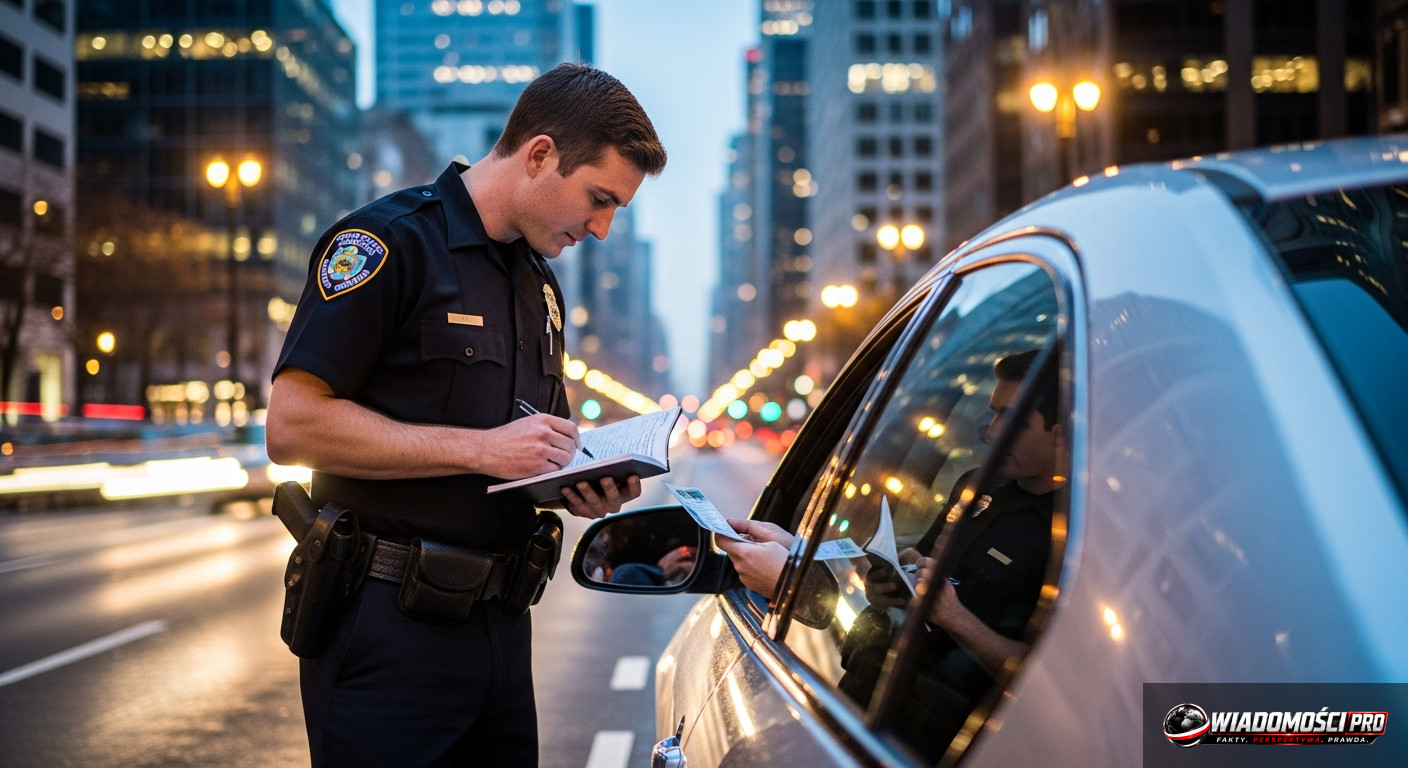
The introduction of new reasons for suspending a driving license in 2026 is the result of a profound change in thinking about public safety. Control bodies, such as the Police or the Road Transport Inspectorate, have gained broad powers to remove drivers from traffic based on new legal premises. The President's decision of November 28, 2025, paved the way for the use of measures that were considered too radical just two years ago.
The new regulations do not focus solely on speeding. A key element has become the definition of recklessness. By this term, the legislator now understands a series of behaviors that obviously threaten the lives of others: from illegal races, through aggressive behavior toward other drivers, to drastic ignoring of traffic lights. Each of these behaviors can result in a decision to suspend the document, and in extreme cases – a lifetime ban on driving vehicles.
This change strikes at the foundations of the existing penalty point system. While previously a driver could "clean" their account through training or simply wait for points to expire, the new regulations assume indefinite liability for the most serious offenses. This means that every decision behind the wheel is now fraught with risk that cannot be mitigated by paying a fine. For professional drivers, especially those working in logistics and transport, this means the necessity of absolute compliance with standards, because the loss of qualifications is synonymous with the loss of the ability to perform the profession.

Recklessness on the road: Prison and a lifetime ban
Gazeta Prawna, in its November 8, 2025 issue, clearly indicated that the legislator does not intend to negotiate with road pirates. The introduction of a prison sentence for participating in illegal races is a direct response to the plague of such events in Polish cities. Lifetime loss of qualifications is, in this context, a supplementary penalty intended to permanently remove perpetrators from road traffic.
Such a strict approach stems from an analysis of accident statistics. Previous financial sanctions have ceased to be effective. Drivers for whom a fine was just a cost of doing business or a way to reach their destination quickly must now face criminal consequences. The state has stopped being a passive observer and has gone on the offensive, treating recklessness on the road on par with crimes against life and health.
However, this approach raises controversy among road safety experts. They argue that simply tightening penalties does not always translate into better driving culture. There is a fear that the system will become elusive for those most determined to break the law, while hitting mainly drivers who make mistakes out of inattention. Nevertheless, from the government's perspective, the priority is to show a tough stance toward behaviors that have hitherto gone almost unpunished.
Challenges for app-based drivers
The passenger transport sector, based on apps, has been under permanent control since 2024. The INFOR.PL service, in June 2024, was one of the first to notice that this industry had become a testing ground for new legal solutions. The requirements that came into force on September 10, 2024, imposed on transport companies the obligation to verify not only the qualifications but also the history of driver offenses.
For people working as drivers for apps, the new law is the end of the era of easy money. Every offense resulting in the suspension of a driving license, even a short-term one, automatically ends the possibility of working for an operator who must comply with restrictive legal regulations. Transport platforms, wanting to avoid legal liability, have tightened their own verification systems, which makes the market increasingly closed.
App-based drivers must now face double pressure. On one hand, they are evaluated by passengers, and on the other – they are subject to rigorous checks by state authorities. New exam errors, which from 2026 eliminate candidates in a second after they are committed, raise the threshold for entering the profession. This means that young people who wanted to start working as drivers immediately after obtaining a driving license must demonstrate higher practical skills than their predecessors from just a few years ago.
In practice, this means the following changes:
- Introduction of the obligation for periodic verification of criminal records and penalty points by transport app operators.
- The necessity for professional drivers to hold certificates confirming safety training, which became a standard in 2025.
- Limitation of appeal options in the event of a driving license suspension for traffic offenses, which has accelerated the process of removing dangerous drivers from the market.
Such an approach makes the profession of a driver, especially in the app sector, a job for people with very high internal discipline. Every moment of inattention, every failure to yield, can end not only in a fine but in the loss of the tool of the trade. It is a system that promotes professionalism and eliminates amateurism, which is intended to directly translate into the safety of passengers using modern transport services.
Summary: Safety over freedom
The year 2026 marks a new boundary in the relationship between the driver and the state. The freedom to drive a vehicle, which for decades was treated as an almost inalienable right, has been limited by a system of absolute penalties and rigorous exams. The possibility of a lifetime loss of qualifications for recklessness is the ultimate tool intended to force road users into predictable and safe behavior.
Institutions responsible for examining drivers, including WORDs, have become units enforcing rigorous regulations that leave no room for discussion. Committing an error during a practical exam today means the end of dreams of a driving license for that attempt, which forces students to prepare even better. This is a philosophical change: the driving license is no longer "earned," but "worked for" through impeccable driving technique from the very first meters behind the wheel.
For the average driver who follows the rules, these changes are theoretically imperceptible. In practice, however, each of us must reckon with the fact that the margin for error on the road practically does not exist. Every situation that can be classified as dangerous is now monitored by a more sensitive legal system. Will this approach prove effective? The answer to this question will be provided by accident statistics in the coming years, which will be the only objective measure of the success of this legislation. One thing is certain: the times when one could count on the leniency of the system have definitely passed into history.
What this means for you
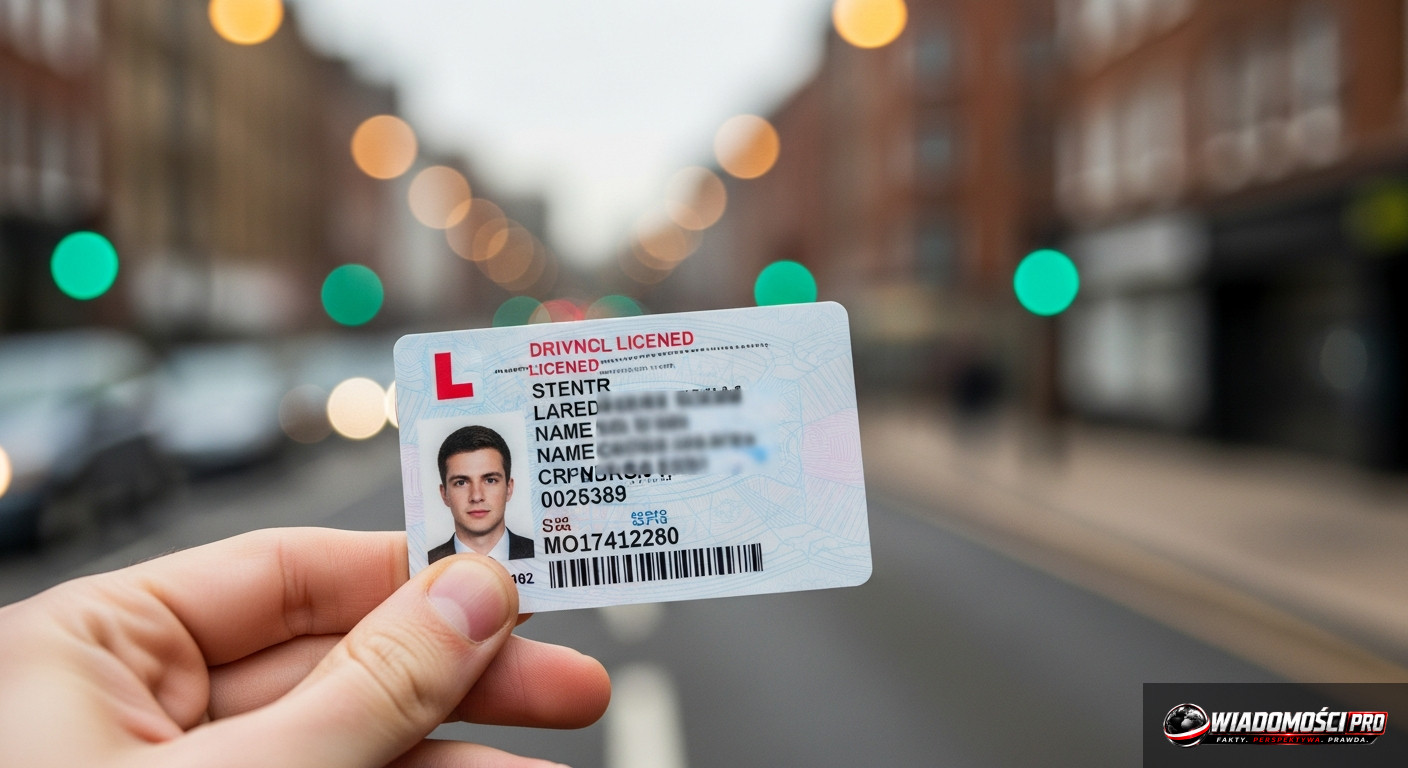
For every road user, the new regulations mean the necessity of updating knowledge about what is permissible and what can end in the loss of qualifications. The most important lesson from 2026 is the awareness that there are no longer "minor" offenses that remain without consequence. The point system, tightened exam criteria, and the possibility of a lifetime driving ban together create a network in which it is difficult to hide a dismissive attitude toward regulations. For those who are just planning to get a driving license, this means the necessity of choosing a training center that not only teaches theory but, above all, emphasizes those aspects of driving that examiners have deemed critical.
Questions and answers
Does every error on the exam now result in failing?
Not every error results in the termination of the exam. However, a catalog of critical errors has been introduced which, for safety reasons, force the examiner to immediately terminate the practical test without the possibility of continuing.
Since when does the lifetime loss of a driving license apply?
The possibility of a lifetime loss of qualifications for extreme recklessness was introduced by regulations adopted at the end of 2025 and has been in effect since 2026.
Do app drivers have to meet additional conditions?
Yes, since September 2024, tightened verification rules have been in effect, requiring drivers providing services via apps to fully comply with legal requirements, including rigorous checks of criminal records and offense history.
What exactly is considered recklessness resulting in a lifetime loss of qualifications?
This term refers to blatant violation of traffic rules, including participation in illegal races, road aggression, and behaviors creating a direct threat to the life and health of other road users.
Is the examination system now more subjective?
Although the regulations impose rigid frameworks, many students and instructors point to the large role of the examiner's interpretation in road situations. However, the introduction of rigorous criteria was intended to limit discretion as much as possible by precisely defining critical errors.
What are the chances of appealing a decision to suspend a driving license?
In the case of blatant recklessness and a lifetime ban, the appeal path is significantly more difficult than with standard fines. Decisions made based on the new 2026 regulations are based on documentation of violations, which limits the room for maneuver for appealing drivers.
Has the change in regulations affected the waiting time for an exam?
The tightening of examination criteria has caused an increase in the number of people failing on their first attempt, which in many WORD centers has translated into longer queues for subsequent practical exam dates.
Do the regulations also apply to foreign drivers?
Yes, Polish traffic regulations apply to everyone driving vehicles in the country, regardless of the country of issuance of the driving license, which means that foreigners are also subject to the rigors of the tightened penal system.
Can systematic improvement in accident statistics lead to a softening of the law?
The legislator notes that the current tightening is a response to a long-term trend and is permanent in nature. Potential changes in the future will depend on real improvement in road safety, but at the moment, there are no plans to return to earlier, more liberal norms.
Where can one check the exact list of examination errors?
A detailed list of errors can be found in the regulation on the examination of persons applying for driving qualifications, which is regularly updated with new safety guidelines.
Does the 2025 amendment also apply to cyclists?
The regulations on lifetime loss of qualifications primarily concern drivers of motor vehicles, however, general traffic rules regarding safety cover all road users, and blatant violations are subject to sanctions appropriate to the type of vehicle and the scale of the threat.
What are the consequences for fleet owners?
Owners of transport companies and fleets must now maintain more detailed supervision over their drivers, as responsibility for the technical condition of the vehicle and the qualifications of hired persons is increasingly strictly enforced by control bodies.
Has the increase in examination rigor improved pass rates?
Statistics show the opposite trend – the introduction of rigorous critical errors has lowered the average pass rate, which forces training centers to work more intensively with students on safety aspects.
Does every speed above the limit mean the loss of a driving license?
Not every one. The regulations focus on blatant speeding and reckless driving that goes beyond standard speeding offenses, defining it as a direct safety threat.
Is the new driving license 2026 the end of the "school of life" on the road?
In a sense, yes. The system now promotes people who can maintain discipline from the first hours of learning, which eliminates from the roads those who "learn" from their own mistakes at the expense of other road users.
Can one apply to regain a driving license after a lifetime loss?
In light of the new regulations, a lifetime ban is definitive, which means that a person subject to it loses the possibility of reapplying for qualifications to drive motor vehicles.
Do changes in the law affect OC insurance rates?
The introduction of stricter law may, in the long term, affect accident statistics, which is a signal for insurers to verify premiums, however, the direct translation into policy prices is a process spread over time.
What are the main goals of the 2026 changes?
The main goal is a radical improvement in safety by removing the most dangerous drivers from the roads and increasing the quality of training for new adepts of the art of driving.
Is the examination system now fully automated?
Many elements of the exam, including the recording of the drive, are fully automated, which limits the possibility of manipulation in assessing the result and ensures an objective record of the test.
Is every error resulting in immediate exam termination a "new" error?
Some of them are tightened interpretations of old regulations, however, the catalog has been expanded to include specific situations that were previously overlooked in examination procedures as less significant.
Was the introduction of the new regulations consulted with instructors?
The legislative process included consultations with various circles, including representatives of driver training centers, although the final shape of the regulations primarily reflects the legislator's determination to improve safety.
Are further changes planned after 2026?
Monitoring the effects of current changes is a standard procedure, so minor adjustments in the future cannot be ruled out if statistics show such a need.
How to prepare for an exam in the new reality?
The key is focusing on driving technique, anticipating the behavior of other drivers, and impeccably following all traffic signs and signals, without looking for opportunities for risky maneuvers.
Has the change in regulations affected the level of stress among students?
Yes, tightened examination requirements and the awareness of the consequences of immediate test termination have significantly increased psychological pressure during state exams.
Do examiners have more power after 2026?
Examiners perform a control function, and thanks to the new regulations, their role in enforcing safety standards has become more firm, which directly translates into the final result of the exam.
Sources
- New regulations 2026: Lifetime loss of driving license, prison for recklessness, ban on racing - Gazeta Prawna
- Changes in the driving test. Commit a new error, you fail immediately - Interia Motoryzacja
- Changes in driving license. New regulations coming in - PolsatNews.pl
- New reason for suspending a driving license is coming. The President has decided - Dziennik.pl
- For this offense, you will lose your driving license. New regulations are coming - TVN24
- More difficult driving test from July 1? We check - Onet
- Driving license – changes from June 17, 2024. Minor problems or complete paralysis? What awaits app-based drivers and their clients? - INFOR.PL
- Changes for drivers. From September 10, 2024, new rules regarding driving licenses - Motofakty
Article prepared by the Wiadomości PRO editorial team with the support of artificial intelligence. Facts come from the sources listed above.



Komentarze (0)
Ładowanie komentarzy...