
The proposal of a 4950 PLN gross wage starting in January 2027 means that SMEs will have to cover higher labor costs and indirect fees, such as parking prices linked to it, which could significantly reduce the profitability of smaller entities. For thousands of micro and small businesses, this government move is a signal that wage pressure is permanently changing the cost structure of business. Business owners must prepare for a scenario where the increase in minimum wages is no longer just an HR issue, but becomes a central point of financial strategy, determining survival in the market.
Growth mechanics: 4950 PLN gross in 2027
Raising the minimum wage to 4950 PLN gross at the beginning of January 2027 shifts the equilibrium point for the entire small and medium-sized enterprise sector. The government's decision, motivated by protecting consumer purchasing power in the face of inflation, is a hard accounting fact for the entrepreneur. The cost of employment does not end with the amount shown in the employment contract. The employer must add ZUS (social security) contributions to this, which, at 4950 PLN gross, actually burdens the company budget with a significantly higher amount.
For a small business employing five people, the cost jump is severe. Let's assume a calculation for a team of five. At a wage of 4950 PLN gross, the total cost to the employer (including social contributions, the Labor Fund, and the Guaranteed Employee Benefits Fund) is approximately 5965 PLN per employee per month. The total expenditure on wages for a five-person team thus increases to nearly 29,825 PLN each month. This is an amount the company must generate in margins before even thinking about paying rent, utilities, fuel, or materials. In this setup, every minimum wage increase acts as a lever that, in the absence of a proportional increase in labor productivity, hits the company's net profit directly.
The problem is compounded by the fact that the increase in the minimum wage in an economy with such strong internal linkages does not occur in a vacuum. Rising labor costs force suppliers of raw materials and services to raise their own prices, which fuels cost-push inflation throughout the supply chain. SMEs, as the link often least flexible in terms of pricing, must absorb these hikes or pass them on to the customer, which in the case of strong market competition often means losing position.

Hidden burdens: parking and municipal indexation
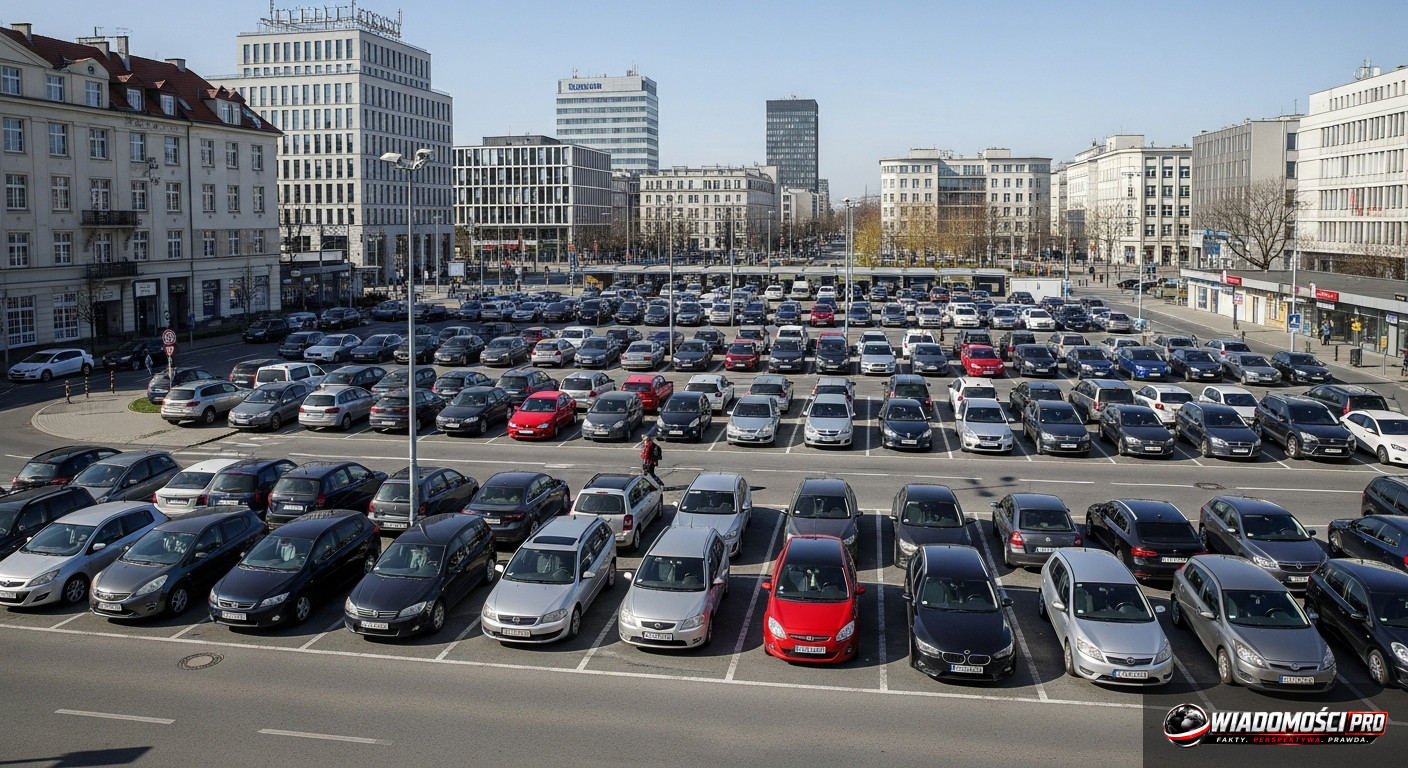
Wrocław has become a testing ground for a model where municipal fees are rigidly linked to the level of the minimum wage. The decision to index parking prices to the national minimum constitutes a direct threat to the financial liquidity of companies operating in city centers. An entrepreneur who previously planned expenses for a company fleet based on fixed rates now loses control over operating costs. Every minimum wage increase triggers an automatic mechanism for raising parking fees.
For a logistics company, workshop, or service provider operating in a paid parking zone, this is a tax on being present in the city. If the Wrocław model is adopted by other large urban centers, the costs of doing business will rise uncontrollably. The entrepreneur loses the ability to negotiate subscription rates because these become a function of the statutory minimum wage. In practice, this means that every ministry decision to raise wages automatically drains the coffers of municipal transport companies and road management budgets at the expense of local business.
Business owners who base their operational model on mobility must now add not only higher labor costs but also a "parking premium" to every order. If the client does not accept a higher price, the entrepreneur must take this cost on themselves entirely. This is a straight path to withdrawing from city centers, which in the long term could lead to the degradation of service offerings in the most attractive locations. Businesses that cannot bear these burdens will simply disappear.
OHS in the shadow of heatwaves: the new cost of downtime
Regulations introduced in July 2026 regarding work in high temperatures, setting a limit of 35 degrees Celsius as the moment to end professional duties, create a new, unpredictable operating cost. While air conditioning or modernization of halls is standard in large industrial plants, for smaller entities—logistics companies, construction firms, or smaller manufacturing plants—this is a huge financial challenge.
Stopping work due to heat does not mean an exemption from the obligation to pay wages. The entrepreneur must pay for the downtime without generating any revenue during that time. When we add to this the rising fixed costs resulting from the minimum wage at the 4950 PLN level, we get a scenario where every heatwave becomes a threat to financial liquidity. The company loses twice: it pays for work that was not performed and must settle bills for infrastructure that, in cities like Wrocław, is becoming increasingly expensive due to indexation.
Risk management in such conditions requires almost shamanic planning skills from business owners. Budgeting for 2027 must include not only hard wage data but also a margin for unforeseen weather-related downtime and variable municipal costs. A smaller entity does not have the capital reserves that would allow for multi-day production stoppages without compromising the timeliness of orders. This means that the SME sector will be forced to invest in technologies that allow for work continuity even in extreme conditions, which will only deepen investment pressure at a time when financial liquidity will be most at risk.
Survival math: profitability in the face of pressure
Business owners often treat the minimum wage as a variable they have no influence over. This is a mistake. In reality, it is the most important parameter determining whether a business makes economic sense at all. At 4950 PLN gross, the break-even point for many services shifts to a level that may prove unacceptable to the average customer. If an auto repair shop, cafe, or cleaning company raises prices by 15–20 percent to cover labor costs and municipal fees, they risk a drop in demand.
The SME sector faces a dilemma: reducing employment or reducing margins. The first solution hits the quality of service and the company's growth potential. The second solution leads to the slow bleeding out of capital. There is no "third way" in an economy where every link is rigidly connected. A minimum wage hike in one sector triggers a chain reaction that ends in rising energy, rent, and courier service costs.
The summary of financial parameters for January 2027 must include a detailed analysis of indirect costs. An entrepreneur can no longer look at the "cost of an employee" through the prism of the salary alone. They must include:
1. ZUS contributions from 4950 PLN gross (total cost for the employer).
2. Operating costs indexed to the minimum wage (parking, municipal services).
3. Reserve for downtime resulting from heat-work regulations.
4. Increase in costs of external services (accounting, transport, utilities).
This summary shows that the real increase in burdens for a small company is higher than the nominal increase in the minimum wage. If in 2026 a company with five employees paid a total of 25,000 PLN for them, then in 2027, taking all factors into account, this amount could jump by another several thousand zlotys. With margins of 10–15 percent, such a change can almost entirely consume net profit.
Adaptive strategies: automation as a necessity
In the face of such drastic changes, process automation ceases to be a futuristic vision and becomes the only way to maintain competitiveness. Entrepreneurs who invest in IT systems, machines replacing simple physical labor, or logistics optimization have a chance to survive. Those who base their business model solely on cheap labor will lose to the market as early as the first quarter of 2027.
Automation allows for minimizing the human factor where it is most expensive and difficult to manage. Self-ordering systems, automated warehouses, or digital fleet management are tools that allow for reducing the number of people needed to handle the same processes. Although the initial investment is high, in the long term, it allows for independence from cyclical minimum wage hikes and the associated hidden fees.
However, automation is not a solution for everyone. The personal services sector or crafts, where human contact is key, cannot fully automate their processes. Here, the only path remains radical optimization of fixed costs and client selection. Companies will have to give up low-margin orders in favor of those that allow maintaining profitability despite high labor costs. This is a natural selection that will lead to market consolidation – weaker players will drop out, and stronger ones will take over their shares, building larger, more stable structures.

Systemic risk: the price-wage spiral
Forecasting the effects of raising the minimum wage to 4950 PLN gross must take into account the risk of a price-wage spiral. Employees, expecting higher earnings, naturally react to the rising cost of living. When companies pass labor costs on to product prices, inflation rises, which in turn forces further wage demands in subsequent years. In this vicious circle, the SME sector is most exposed to losses, as it lacks the bargaining power of large corporations in negotiations with suppliers or customers.
Mechanisms such as the Wrocław link between parking prices and the national minimum only make this system more rigid. Instead of flexibility, we have automatism that prevents any rational cost adjustment in crisis situations. If the city needs money for the budget, the government only needs to raise the minimum wage, and parking revenues will increase automatically. This is a dangerous precedent where local governments gain a free tool to drain the pockets of entrepreneurs without the need to make unpopular political decisions.
The end result could be an economic slowdown in the small business sector. Companies will stop investing in development, focusing solely on survival. Instead of innovation, we will observe regression – cuts in quality, limiting offerings, and closing service points. For the consumer, this means fewer services, more expensive goods, and worse service. For the state – lower income tax revenues from companies that, instead of profits, will begin to show losses.
The future of the sector: what awaits business owners?
The outlook for 2027 is a trial period for the SME sector. Entrepreneurs who ignore the signals coming from the labor market and municipal policy will find themselves on the defensive. Changes in labor law, rising fixed costs, and increasingly restrictive municipal policy create an environment where only the best-organized entities will survive.
The key to success will be flexibility. Companies must learn to manage costs dynamically, reacting to changes in the environment faster than officials introducing new regulations. A revision of business models will be necessary. This may mean changing office locations, giving up owning a fleet in favor of outsourcing, or finally – boldly raising prices so that they reflect the real cost of doing business in the new economic reality.
Entrepreneurship in Poland is entering a phase where optimism must give way to cold calculation. Every hiring decision, every investment, and every contract with a counterparty must be analyzed in terms of the risk posed by the rigid link between labor costs, municipal fees, and OHS requirements. This is a challenge that not everyone will handle, but it could become an impulse for the professionalization of the entire SME sector.
Questions and answers
Does every company have to raise wages to 4950 PLN?
Yes, this is a statutory obligation for all employers hiring under an employment contract from January 2027. Failure to adjust wages to this level is a violation of labor law and carries the risk of sanctions from the National Labor Inspectorate.
How do parking prices in Wrocław connect to the minimum wage?
Wrocław has introduced a parking price indexation system in which rates for parking in paid zones are linked to the level of the national minimum. This means that every increase in the minimum wage causes an automatic increase in parking fees, without the need for additional city council resolutions.
What does the 35-degree limit in the new work regulations mean?
OHS regulations introduced in July 2026 establish that at a temperature of 35 degrees Celsius, the employer has an obligation to stop work in conditions where the air temperature exceeds this limit. This forces entrepreneurs to organize paid downtime, which generates losses while simultaneously requiring the payment of wages to employees.
How to calculate the real cost of an employee at a wage of 4950 PLN?
To the amount of 4950 PLN gross, one must add social security contributions (pension, disability, accident) financed by the employer, as well as contributions to the Labor Fund and the Guaranteed Employee Benefits Fund. In total, these burdens amount to approximately 20.5% above the gross amount, which gives a real employer cost of approximately 5965 PLN per month per employee.
Can an entrepreneur avoid parking indexation costs?
In the Wrocław model, the only way to avoid indexation is to stop using paid parking zones. For many service or logistics companies whose operations are embedded in the urban fabric, this is practically impossible without drastically limiting the scale of operations or moving them to the outskirts of the city.
Sources
- 35 degrees and work ends. New regulations on work in the heat - Wieści Rolnicze
- Wrocław introduces "eternal increase". Parking prices will be linked to the national minimum - FXMAG
Article prepared by the Wiadomości PRO editorial team with the support of artificial intelligence. Facts are derived from the sources provided above.

Komentarze (0)
Ładowanie komentarzy...