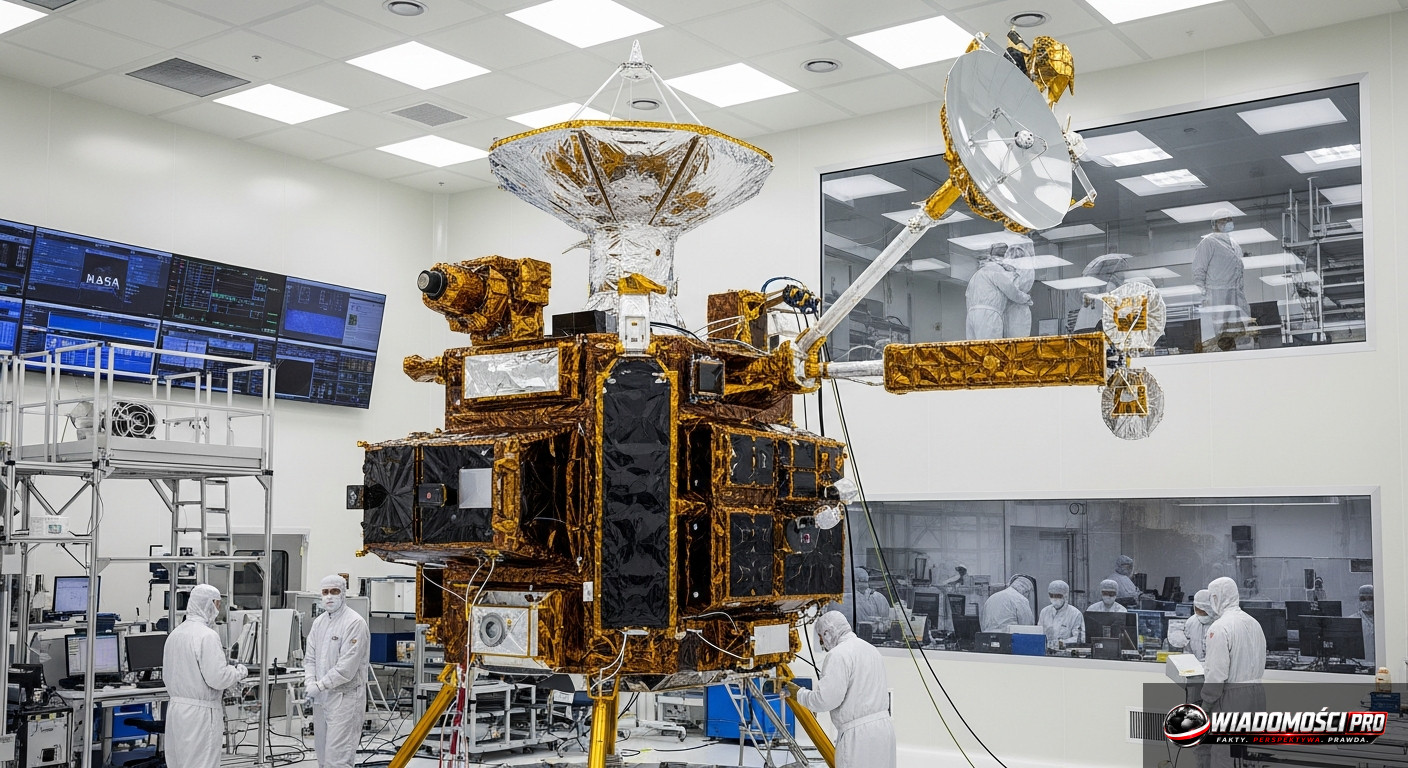
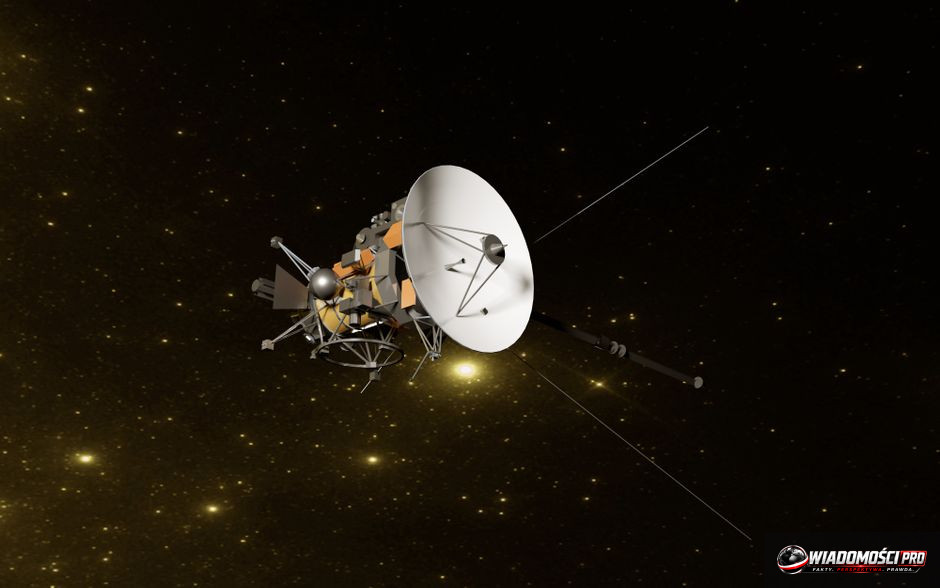
The Europa Clipper mission costs approximately 5 billion dollars and is tasked with checking whether conditions favorable for sustaining life exist beneath the icy crust of Jupiter's moon by performing 49 close flybys. It is the most complex research endeavor in the history of American astrobiology. The probe is not aimed at the direct detection of organisms, but rather at precise mapping of an environment that theoretically could host biological forms.
Europa, the fourth-largest moon of Jupiter, has been firing the imagination of scientists for decades. Beneath a thick layer of ice lies an ocean of liquid water, the volume of which may be twice that of all Earth's seas and oceans combined. It is this water reservoir that makes Europa the most important target in the search for life beyond Earth. NASA decided to send a dedicated probe to determine whether this hidden world possesses the necessary chemical ingredients, energy, and thermal stability required for metabolic processes to occur.
Engineers faced a challenge that goes beyond standard space hardware construction procedures. The probe must operate under conditions of extreme radiation generated by Jupiter's magnetosphere. Every approach to the moon is a huge burden for the electronics. Instead of entering a permanent orbit around Europa, which would quickly destroy the onboard computers, a series of close flybys was planned. Thanks to this strategy, Clipper remains safe, entering the zone of highest radiation only for short moments.
The key to success is the instrumentation. A set of devices has been mounted on board to scan Europa in a way unprecedented in planetary research. The EIS (Europa Imaging System) will provide high-resolution images, allowing for geological analysis of the surface. The REASON radar (Radar for Europa Assessment and Sounding: Ocean to Near-surface) is the scientific heart of the probe. Its task is to "X-ray" the icy crust. Scientists hope that it will allow them to determine the exact thickness of the ice and detect any potential water reservoirs within this shell.
Another important link is the MISE (Mapping Imaging Spectrometer for Europa) spectrometer. This device will map the distribution of ice, salts, and organic compounds on the moon's surface. Understanding what is on the surface is crucial for interpreting the processes occurring underneath. If material is escaping from the depths of the ocean, MISE will indicate places where chemical signatures of life might be most visible.

E-THEMIS (Europa Thermal Emission Imaging System) will focus on detecting thermal anomalies. If there are active cracks on Europa from which heat or water vapor escapes, this instrument should register them. PIMS (Plasma Instrument for Magnetic Sounding) and the ECM magnetometer will study the moon's induced magnetic field. This is an extremely clever method of indirectly studying the depths. The ocean, being salt water, conducts electricity, which reacts to Jupiter's variable magnetic field. Analysis of these reactions will allow confirmation of whether the ocean is indeed global and how deep beneath the ice it is located.
MASPEX (Mass Spectrometer for Planetary Exploration) will analyze gas and dust particles in the moon's environment. During the flybys, the probe will pass through Europa's trace atmosphere, collecting samples of particles that may come directly from the ocean. In turn, SUDA (Surface Dust Analyzer) will identify the chemical composition of particles ejected from the surface as a result of micrometeoroid impacts. Each of these instruments acts as a puzzle piece in a complex puzzle that the space agency must assemble within just a few years of operation.
The history of this project is long. As early as March 2022, the Kosmonauta.net portal reported on the progress in construction, emphasizing that the assembly of such an advanced machine required unprecedented coordination between NASA laboratories and external contractors. The schedule was tight, and financial pressure grew with each subsequent stage of system integration. The October 2024 launch was a moment of relief for thousands of people working on the project, but at the same time, the beginning of the most difficult stage – interplanetary navigation.
Competition for priority in studying Jupiter's moons is a fact. As noted by the media, including Wyborcza.pl, Europa Clipper is a priority way for Americans to mark their presence in this region of the Solar System. There is a European mission, JUICE, which is also heading toward Jupiter, but the goals of these expeditions complement each other. While the Europeans are focusing on a broader study of the Jupiter system and icy moons, NASA is betting everything on one card – Europa and its biological potential. This is a conscious strategy choice that is intended to allow for the acquisition of data of a quality previously unavailable.
Skeptics often ask about the sense of such high expenditures. Five billion dollars is an amount that opens many doors in the space sector, but also closes others. Could these funds not have been distributed to smaller, cheaper missions? NASA responds that Europa is too important to use half-measures in its case. To check whether life is dormant in the icy ocean, we need not just a camera, but a high-sensitivity chemical laboratory. And such a laboratory, sent to such a distant and dangerous place, simply must cost money.
Funding for this project comes from the federal budget, which makes it susceptible to any political change in Washington. Over the years, the project has passed through a sieve of budget audits. Every delay in the launch date meant millions of dollars in additional costs for personnel and technical readiness. American taxpayers will not get an answer right away. Data from the flybys will flow in for years, and their interpretation will take decades. This is an investment in knowledge that does not bring an immediate return on capital, which is a rarity in today's economic realities.
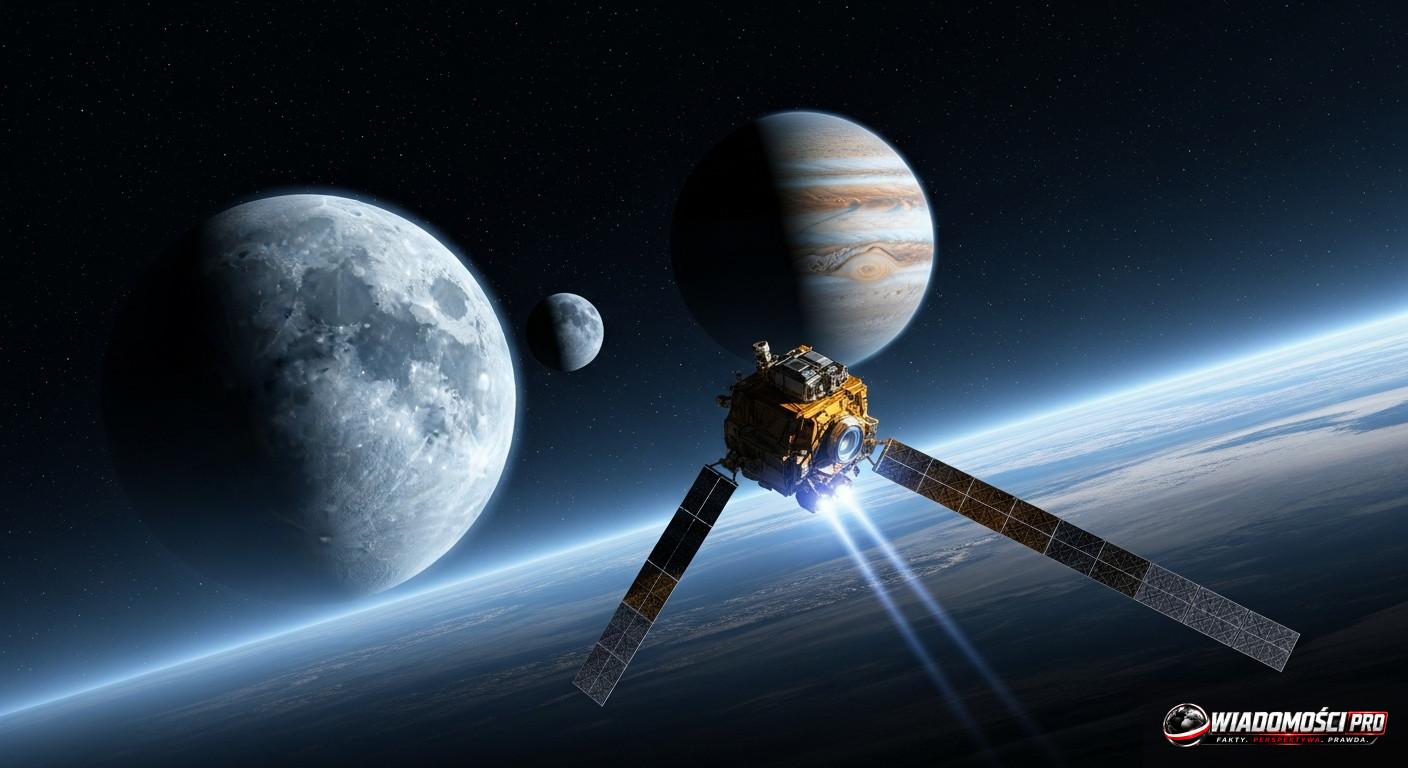
The logistics of the mission are a separate chapter. After launch, the probe had to precisely perform gravity assist maneuvers, using the gravity of Earth and Mars to gain the appropriate speed. This is an extremely energy-efficient method of travel, but it extends the time to reach the destination. The Clipper probe must travel billions of kilometers, relying on huge solar panels, which in itself is an engineering challenge at such a great distance from the Sun. The light reaching Jupiter's orbit is much weaker than in the vicinity of Earth, which is why every square meter of photovoltaic cells is worth its weight in gold.
The probe is not looking for life in the sense of fish or plants as we know them. It is looking for "biological signatures." This could be a specific ratio of carbon isotopes, the presence of complex amino acids, or specific sulfur compounds that on Earth are a byproduct of microorganism metabolism. If Clipper registers such substances, global science will be faced with a new interpretive challenge. Is this the result of geochemical processes, or proof of the existence of alien biology? This question will remain open even after the mission ends.
Technical risk is ubiquitous. In space, there is no service. If one of the instruments fails after arriving at the destination, it cannot be repaired. Therefore, every component underwent thousands of hours of testing in vacuum chambers, simulating the conditions prevailing in the vicinity of Jupiter. Engineers at the Jet Propulsion Laboratory in Pasadena had to take into account even microscopic failures that would be negligible under normal conditions. With such expensive equipment, the margin for error is essentially non-existent.
It is worth looking at Europa through the prism of other moons. Enceladus, a moon of Saturn, ejects geysers of water into space. This makes it easier to study its ocean, because you only need to fly through a plume of steam. Europa is more secretive. Its ocean is isolated by a massive shell of ice. That is why NASA's strategy assumes such an aggressive plan of 49 flybys. They must be very close so that the instruments can sense anything that escapes through cracks. Each of these maneuvers is planned with a precise orbit in mind to avoid collision with an object whose topography is still not fully known to us.
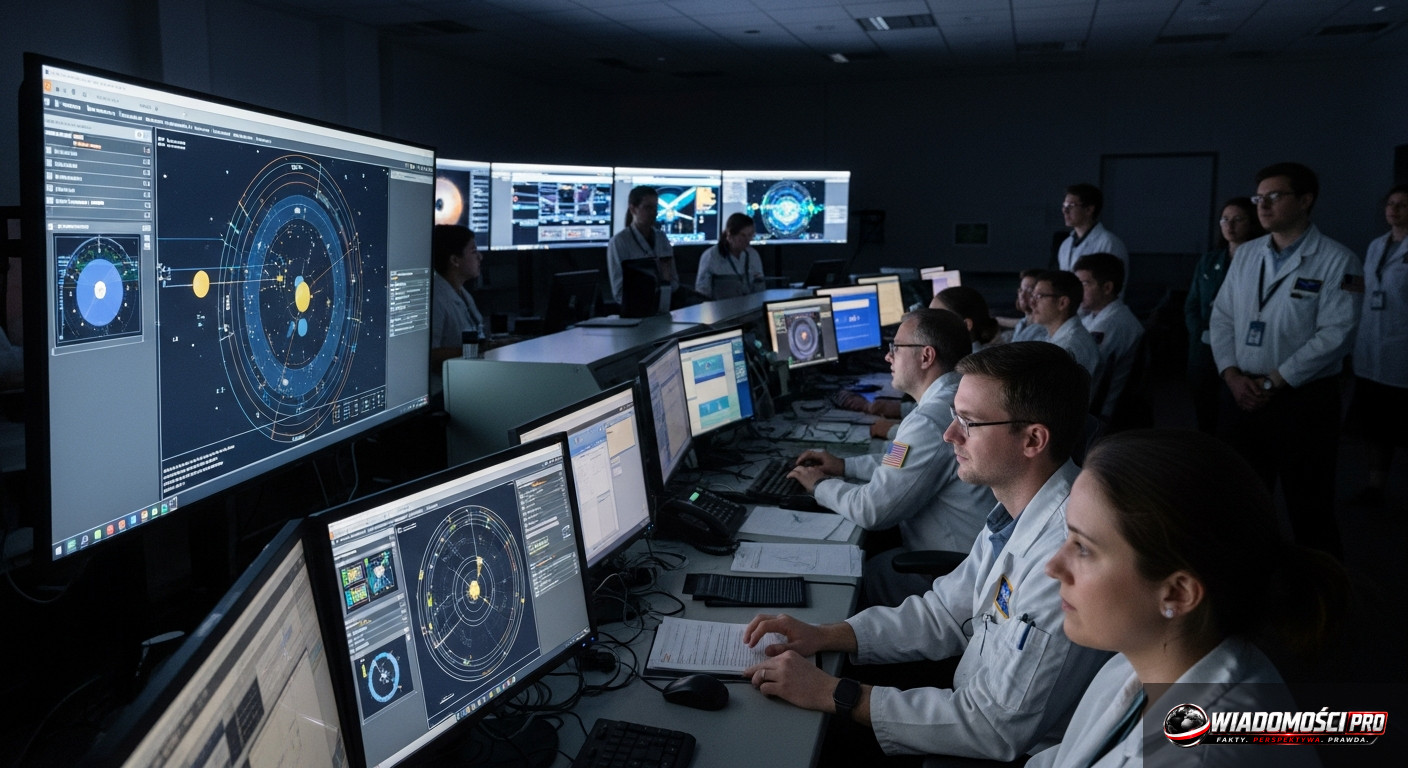
What if the mission turns out to be barren? If after 49 flybys the data indicates that the ocean is chemically dead or isolated from the surface? For science, this will still be of huge value. We will learn about the geological structure of the moon, learn how Jupiter affects its surface, and how icy worlds evolve. However, for the general public, a failure to detect traces of life may be a disappointment. That is why NASA is extremely careful in communicating its expectations. They do not promise to find life; they promise to check the conditions for sustaining it. This is a subtle difference that is the foundation of the scientific integrity of this project.
The choice of onboard equipment was not accidental. Each instrument was selected through an open competition in which the best research centers participated. This makes Europa Clipper a joint work of American technological thought, and not just a product of one agency. Cooperation between universities and NASA ensures broad access to data, which is a guarantee that the analysis of results will be multifaceted and transparent. This approach builds trust in the project, even with such gigantic amounts of money that have been pumped into it.
From the editorial perspective, this mission is a test of American ability to implement long-term plans. In a world where political cycles last four years and budget projects are often cut, maintaining interest and funding for a mission lasting over a decade requires huge political capital. Europa Clipper is proof that science in the USA can still win against short-sightedness. The success of the mission will be a triumph not only of engineering, but also of the patience of the entire society, which agreed to finance such an ambitious search for answers to one of humanity's most important questions.
Questions and answers regarding this project often touch on practical issues. Many people ask why we are not landing on the surface. The answer is simple: landing is a technical challenge for which we are not yet ready in conditions of such strong radiation. A lander would have to have heavy radiation shielding, which would drastically increase the launch mass and costs. The current flyby strategy is a golden mean between scientific ambition and technical feasibility. Each of the 49 flybys is a chance to collect data that would otherwise be unattainable without risking the loss of the entire probe during a soft landing attempt.
Is Europa really that promising? Models indicate that it is. The presence of heat coming from Jupiter's tidal interactions means that the ocean under the ice should be liquid. If we add to this the chemical ingredients that can reach the ocean through ice subduction, we have a recipe for a life-giving environment. Whether nature has taken advantage of this recipe remains a mystery. Clipper is not a guarantee of success; it is merely the sharpest tool we have ever constructed to look behind the veil of mystery of this icy globe.
Questions and Answers
Will the probe land on the surface of Europa?
No, the Europa Clipper probe is not a lander. It was designed to perform 49 close flybys of the moon to collect data from a close distance, which protects the electronics from Jupiter's destructive radiation.
When will the probe reach Jupiter?
The probe's journey will take several years. After launching in October 2024, the device uses gravity assist maneuvers, and the target scientific research will begin according to the long-term mission schedule after entering Jupiter's orbit.
Is the mission looking directly for alien civilizations?
No, the mission is not aimed at searching for intelligent life forms or civilizations. Its main goal is to study environmental conditions, such as the presence of liquid water and appropriate chemistry, which could favor the sustenance of microbiological life in the ocean under the ice.
Which instruments are key to the success of the mission?
On board are, among others, the REASON radar for studying ice thickness, the MISE spectrometer for surface composition analysis, and MASPEX, which studies gas and dust particles in the moon's environment, which will allow for inferences about the ocean's chemistry.
Why were flybys chosen instead of an orbit around Europa?
Strong radiation in the vicinity of Jupiter destroys the probe's electronics. Constant presence in Europa's orbit would lead to a quick failure of the systems. Flybys allow for data collection in a short time, after which the probe moves away from the most dangerous radiation zones.
Sources
- Start of the Europa Clipper mission to Europa - AstroNET – Polish Astronomical Portal
- NASA sends a probe to Europa. The Europa Clipper mission has launched - WP Tech
- Europa Clipper probe will search for life on Europa - Urania - Polish Astronomical Portal
- Start of the Europa Clipper mission [BROADCAST]. Americans will overtake Europeans in the search for life on Europa - wyborcza.pl
- Europa Clipper launches. A key task ahead of them - Geekweek Interia
- Europa Clipper has launched. It will investigate whether there are conditions for life on Jupiter's moon - Polskie Radio 24
- Europa Clipper probe will search for life on Jupiter's moon, Europa - wszystkoconajwazniejsze.pl
- Beginning of the construction of Europa Clipper - Kosmonauta.net
Article prepared by the Wiadomości PRO editorial team with the support of artificial intelligence. Facts come from the sources listed above.

Komentarze (0)
Ładowanie komentarzy...