
Suno AI is facing lawsuits amounting to potential billions of dollars in damages, with labels demanding up to $150,000 USD for each copyrighted work infringed, and the company has announced an appeal against unfavorable preliminary rulings. The startup's chances of survival in its current business model are slim, as the scale of financial demands exceeds its actual capital resources. This case will decide the future of generative artificial intelligence by imposing rigorous frameworks for licensing training data.
Foundations of the dispute: why did the RIAA sue Suno AI?
The Recording Industry Association of America, representing entities such as Sony Music Entertainment, Warner Music Group, and Universal Music Group, filed a lawsuit against Suno AI in 2024. The accusation is based on the massive, unauthorized use of copyrighted recordings in the process of training an artificial intelligence model. The labels claim that the database on which the algorithm learns was built without obtaining licenses. For the music industry, this is a fight to maintain a monopoly on sound distribution and control over intellectual property.
The giants' business model is based on exclusivity over every copy of a recording. In their opinion, Suno AI is not a creative tool, but an advanced copying machine that processes artists' work without providing fair compensation. Lawyers representing the RIAA argue that the machine learning process involves the reproduction of works. In light of current law, this requires the consent of the rights holder. This approach strikes at the foundation of generative artificial intelligence, which relies on the analysis of billions of data points.
Suno AI presents a different vision of the process. The company maintains that no copying occurs, only statistical analysis of patterns. Suno engineers point out that the model creates music from scratch, not by "cutting out" fragments of existing works to assemble them. This is a line of defense based on the technical distinction between "copying data" and "learning from data." The court must decide whether the process of a machine learning from music is equivalent to copyright infringement or constitutes a new quality that does not fall under classic definitions of piracy.
Legal argumentation: Fair Use versus property protection
A key element of the battle is the "fair use" doctrine. Suno AI invokes this concept, maintaining that their technology is transformative. In the American legal system, this concept allows for the use of protected materials without the author's consent if the final work differs significantly from the original.
The precedent of the Google Books case forms the foundation of Suno's defense. The court ruled then that scanning millions of books by Google to create a full-text search engine is fair use because it serves informational purposes and does not replace the original works in their market function. Suno AI aims to fit into this model. They claim their technology does not replace songs by Taylor Swift or Michael Jackson, but offers an entirely new product: music generated on demand.
The RIAA counters by pointing to the different nature of music. Unlike a text search engine, an AI model creates direct competition for artists. If a user can generate a song that sounds like a pop hit in seconds, the labels lose their reason for existence. This is not "transformative use" in the sense of Google Books, but direct parasitism on the economic value of music catalogs. The court faces a challenge: allow innovation that changes the market or protect the existing business model from digital transformation.
The lack of a settlement suggests that both sides are ready for a long-term legal war. Suno will not admit guilt by paying fines, as this would mean acknowledging that every subsequent model requires an expensive license, which would destroy the company's profitability. The labels will not allow a precedent where AI uses their resources with impunity, as this would open the door for hundreds of other technology companies.

Scale of financial claims and risk for Suno
The financial stakes in this process are unprecedented. The demand for $150,000 USD for each copyrighted work is the maximum statutory penalty provided for in American law for "willful infringement." If the court rules that Suno AI knew about the infringements, every song in the training database will become the basis for a massive claim.
The mathematics of this dispute are brutal for the startup. Even assuming that only a portion of the database is challenged, the total sum of claims would exceed the value of the entire company. Suno AI does not have the financial resources of Google or Microsoft, which makes their situation critical. One unfavorable ruling will lead to bankruptcy, even if the company wins on appeal after several years.
The situation is complicated by the fact that every decision of a lower court becomes a foundation for further legal action. Suno AI has announced an appeal against unfavorable preliminary rulings. This is a defensive strategy aimed at dragging out the process. The company hopes that in the meantime, statutory regulations will change or the market will exert such pressure on the labels that they will decide to settle. However, no official estimates regarding the total number of songs in the training database have been confirmed, which is one of the biggest unknowns of this process.
The company is in a situation where finding a way out requires not only lawyers but also a change in public perception of AI. If Suno can convince the court that their technology serves to democratize music rather than destroy artists, the chances of survival will increase. If the court maintains the current course, Suno will have to drastically change the way it builds its models or withdraw from the market entirely.
Impact on creators and the future of the music industry
Musicians watch the process with a mixture of hope and fear. Many of them feel robbed by algorithms that learn their work style in seconds. Other creators experiment with AI, seeing it as a new tool for expression. Copyright law did not foresee the moment when a machine would be able to produce a song in the style of a specific artist during a coffee break.
The devaluation of creative work is a real threat. If the market is flooded with machine-generated music, the demand for professional composition will fall. Royalties, which artists live on, will become harder to obtain in an environment where cheap AI music dominates streaming platforms. The music industry does not have a ready answer to this economic challenge.
Licensing is becoming the only logical path. If Suno AI is forced to pay for access to song databases, new business models will emerge. Perhaps artists will receive royalties for every second of music the algorithm learned from. This would require creating a massive tracking infrastructure and the consent of labels to cooperate with companies like Suno.
The lack of specific regulations causes a state of suspension. Any attempt to value the contribution of AI is currently speculation. The industry is waiting for a precedent that will decide whether, in the future, music will be the result of human sensitivity or cost optimization. Suno AI defends itself by claiming that its model is an innovation, but for the music market, it is primarily a threat to the foundation of their livelihood.
Suno's strategy: appeal and further fighting
Suno AI does not intend to capitulate. The company declares its will to continue operations despite the specter of lawsuits amounting to billions of dollars. The announcement of an appeal against preliminary rulings is a signal to investors that the startup is ready for a long legal marathon. The company's lawyers are challenging the court's interpretation of the machine learning process, arguing that the current legal framework does not fit technological realities.
This is a desperate attempt to buy time. Suno needs clear, separate regulations for generative systems, not the application of analogies to traditional phonographic piracy. The company's resistance is an attempt to avoid a final verdict that could mean its end. The lack of official announcements about possible settlements suggests that the company is preparing for the worst-case scenarios.
For creators and investors watching this process, the situation remains uncertain. If Suno loses on appeal, the costs will exceed any financial resources the startup has. We are waiting for details regarding the arguments the company intends to present in the second instance, as this data has not been made public. There is a real risk that without statutory changes, even a court victory will only be a temporary stay of execution.
This process is becoming a testing ground for the entire AI sector. If Suno falls, it will be a clear signal to other technology companies: training models on protected data is too financially risky. If it wins, the face of copyright law will change forever.
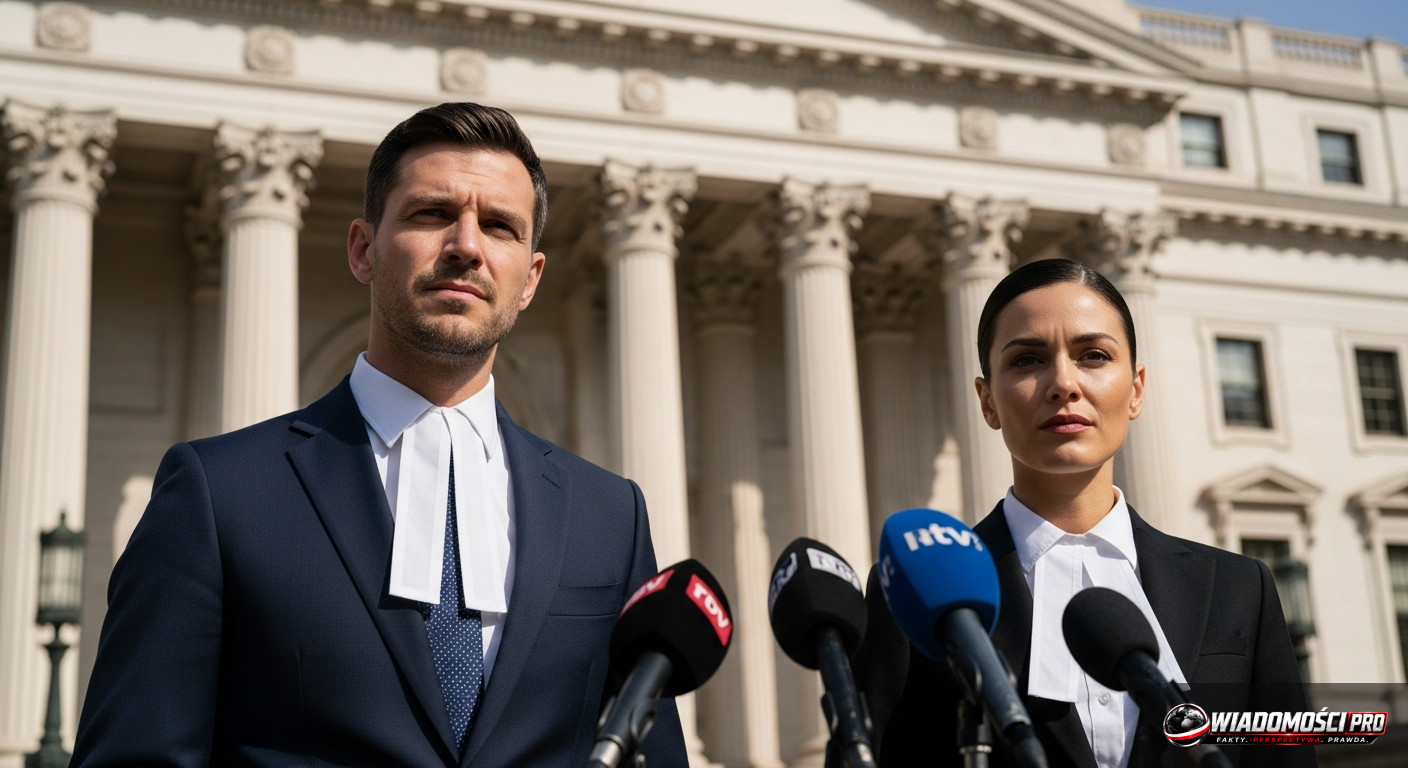
What does the verdict mean for the end user?
For the average user, the situation primarily means decision paralysis and uncertainty. The most tangible result of the legal battle is the specter of limited availability of generative tools. If the court agrees with the labels' arguments, Suno may be forced to drastically limit the training base of its models. In practice, this would mean removing millions of songs from generated effects, which would drastically lower the quality of the tool.
There is also the issue of subscription costs. If Suno is burdened with the need to pay for licenses for every song used in the learning process, the business model will change. It is difficult to expect the company to take on these huge burdens without passing them on to end recipients. The manufacturer has not stated exactly how much we will pay, citing trade secrets and the ongoing legal dispute.
The most difficult problem to resolve remains the legality of songs generated by Suno so far. Users who have created their compositions and used them on social media or in commercial projects may wake up with a legal mess. It has not been confirmed whether such work will be protected by copyright at all, or whether it will become the subject of claims from labels.
A consumer who has invested time and money in a subscription becomes a legal hostage in a dispute over which they have no influence. This is an unprecedented situation. Users must be aware that using AI tools in the current legal climate carries the risk of losing rights to generated content.
What this means for you
The verdict in this case is a precedent. If Suno loses, every AI company will have to pay labels for training data, which will destroy the business model of free or cheap generators. If it wins, creators will lose control over their works online, and their work will become just raw material for algorithms.
For the reader, this means we must start looking at the music we listen to differently. Was it created by a human or by a machine that learned the sound of your favorite artist? This dilemma will be with us for years to come, regardless of what the court rules.
Questions and answers
Is using Suno AI currently illegal?
Suno is still operating, but the ongoing lawsuit challenges the legality of how the model was trained, which casts a shadow over the copyright of generated songs.
How much money exactly is the RIAA demanding?
The RIAA is demanding maximum statutory damages of up to $150,000 USD for each song used in the training process without the consent of the rights holders.
Will the Suno case end in 2026?
Due to the announcements of appeals and the complex nature of copyright law, the process will take much longer, involving higher courts.
Why does Suno believe it is not breaking the law?
Suno argues that the machine learning process is transformative and does not involve copying files, but extracting musical patterns, which in their view falls within the framework of fair use.
Can Suno users be sued for using generated music?
At the moment, there are no reports of lawsuits against individual users, but the lack of clear legal regulations makes the status of AI-generated songs uncertain.
Do music labels have a chance to win?
It depends on how the court interprets fair use in the context of generative artificial intelligence; the case is complicated and there are no clear precedents regarding music.
What will happen if Suno loses?
A likely scenario is the need to switch to a licensed model, which will force drastic price increases for services or the removal of many features from the platform, and in extreme cases – the startup ceasing operations.
Does the case only concern Suno AI?
No, the Suno case is part of a broader trend of lawsuits against AI companies, which means the verdict will be crucial for the entire generative artificial intelligence sector.
Has Suno AI already confirmed that it intends to settle?
No such plans have been confirmed; the company has officially announced an appeal against unfavorable preliminary rulings and is preparing for further legal fighting.
Who is funding Suno's legal defense?
Details regarding the funding of Suno's legal defense have not been made public, but investors supporting the startup usually participate in the costs of intellectual property protection and corporate disputes.
Are there any regulations regarding training AI on music yet?
Currently, there are no detailed regulations dedicated directly to training AI on copyrighted musical works, which forces courts to rely on outdated copyright laws.
Can Suno AI withdraw from the market before the end of the process?
The company has not provided information about a planned withdrawal from the market; on the contrary, it declares a desire for further development, even though the startup's financial situation remains under pressure from the ongoing process.
What does statutory damages mean in this case?
This is an amount defined by law that a court can award against an infringer without the need for labels to prove specific financial losses, which drastically increases the risk for companies like Suno.
Should users stop using tools like Suno?
The decision is up to the user, but one should be aware that the legal status of AI-generated music is still a contentious issue, which may limit the possibilities for commercial use of such songs in the future.
Will the Suno case affect the price of music subscriptions on services like Spotify?
The impact of the process on prices in streaming services is not direct, but a potential change in the AI business model may affect how music is created and distributed.
What is the biggest difference between the Google Books case and the Suno case?
The main difference lies in the purpose: Google Books was used to search existing works, while Suno creates new songs that may directly compete with artists' works.
Does Suno AI have licenses for any music?
The company has not disclosed details regarding the licenses it holds, but the RIAA's main accusation is the lack of consent to use materials to train the model.
Why don't labels cooperate with Suno instead of fighting them?
Labels strive for full control and high licensing fees, and Suno's current model assumes building tools that may make labels unnecessary, which drastically makes reaching a business agreement difficult.
Will we find out what songs were in the training database after the process ends?
This depends on the court's decision regarding the disclosure of evidence, but it is unlikely, as Suno will probably protect its training data as a trade secret.
Does a Suno win mean the end of copyright for musicians?
No, a Suno win would only mean a change in the interpretation of copyright law regarding machine learning processes, which would force artists and labels to find new ways to protect their interests.
Article prepared by the Wiadomości PRO editorial team with the support of artificial intelligence. Facts come from the sources provided above.



Komentarze (0)
Ładowanie komentarzy...