
In 2026, drivers must face the possibility of a lifetime loss of their driving license for the most serious offenses, prison sentences for recklessness, and a total ban on illegal street racing. The new regulations, implemented under the amendment to the Act on Vehicle Drivers, introduce an absolute custodial sentence for those exceeding the speed limit by more than 50 km/h in built-up areas, as well as for organizers of illegal automotive gatherings. The legislator has excluded the possibility of suspending these sentences, making road safety a penal priority for the state.
The amendment of August 6, 2026, concludes the process of tightening regulations that began in early 2024. Legislators have moved away from the concept of a fine as the sole disciplinary measure. Currently, the system is based on eliminating individuals who, through flagrant violations of speed limits and participation in illegal street races, threaten the lives of other road users. This change is a direct response to data from road safety analyses, which indicated the insufficient effectiveness of the previous tariff system.

Chronology of changes in traffic and examination regulations
The table below presents the key legislative and operational moments that led to the current legal status in the Polish driver training and control system.
| Date | Event | Information Source |
| :--- | :--- | :--- |
| 01.01.2024 | Introduction of the first stage of tightening examination rules | Dziennik.pl |
| 02.01.2024 | Commencement of verification of state examination standards | Rzeczpospolita |
| 04.05.2024 | Clarification of new guidelines by examiners | TVN24 |
| 17.06.2024 | Implementation of a package of new regulations regarding qualifications | PolsatNews.pl |
| 10.09.2024 | Update of rules regarding driving license documents | Motofakty |
| 21.06.2025 | Introduction of rigorous elimination errors | Interia Motoryzacja |
| 04.07.2025 | Implementation of a more difficult assessment system during the exam | Onet |
| 08.11.2025 | Announcement of changes regarding prison sentences and bans | Gazeta Prawna |
| 06.08.2026 | Entry into force of the full amendment to the act | Legislators |
Evolution of exams: Selection instead of verification
The process of obtaining a driving license in 2026 has ceased to resemble a standard procedure for checking manual skills. It has become a sieve through which only candidates with a high level of hazard awareness pass. The changes introduced from June 21, 2025, described by Interia Motoryzacja, redefined the list of errors that result in the immediate termination of the exam. Examiners no longer have discretion in situations involving active safety.
Any violation of regulations that, according to the 2026 amendment, qualifies as dangerous, excludes the candidate from the remainder of the exam. This applies primarily to behavior at intersections, right-of-way, and reactions to speed limit road signs. The scoring system, which has evolved since July 1, 2025, is based on the assumption that the driver must anticipate the movement of other road users in a proactive manner. This is no longer a theory test, but a test of real-time risk assessment skills.
Onet pointed out in July 2025 that the more difficult exam is intended to eliminate from road traffic those who cannot maintain so-called defensive driving. In practice, this means that the student must demonstrate the ability to maintain fluidity while strictly adhering to signs. If the examiner determines that the driver's behavior suggests a lack of control over the vehicle in difficult weather conditions or heavy traffic, the exam is terminated. This has drastically increased the so-called failure rate, which is a deliberate measure intended to raise the general technical culture behind the wheel.
Penalties for recklessness: The end of the era of impunity
In 2026, the concept of recklessness was precisely defined in the penal code. According to the amendment, recklessness is defined as exceeding the speed limit by 50 km/h or more in a built-up area and participating in illegal street races. These regulations, reported by Gazeta Prawna in November 2025, do not give judges room for maneuver regarding the severity of the sentence. The perpetrator of such an act must face an absolute prison sentence.
Lifetime loss of a driving license has become the main tool in the fight against repeat offenders. If a driver is caught committing a flagrant violation of the rules for the second time within two years, they lose their qualifications without the possibility of regaining them. The state has decided that the right to drive a motor vehicle is a privilege that can be irrevocably lost as a result of acting to the detriment of public safety.
The issue of illegal street racing has been resolved definitively. The legislator has banned them completely, and participation in such an event – even as a driver of a vehicle not directly involved in racing, but blocking traffic or assisting – results in the confiscation of the vehicle. This is a solution modeled on the most restrictive European systems, aimed at curbing a practice that has become a plague in Polish cities in recent years.
The introduction of these changes means that the police have gained new powers regarding the seizure of vehicle registration documents and driving licenses at the scene. An officer, upon confirming a speed violation of 50 km/h in a built-up area, not only imposes a fine but automatically initiates criminal proceedings, which end in a court-ordered driving ban. The driver receives a temporary certificate allowing them to drive to their place of residence, after which the document is forwarded to the communications department for cancellation.
Probationary period: Supervision of new drivers
Individuals who obtained their driving license after 2024 are subject to a tightened probationary period. In 2026, this period involves not only speed limits but, above all, permanent telematic supervision. Every young driver, in the event of a traffic violation being confirmed by the police, is automatically directed to mandatory re-education courses, which they must pay for out of their own pocket.
This system is intended to develop habits that were overlooked in the training process in previous years. In 2026, the probationary period does not end simply after the time specified by the act. It is extended if, during its duration, the driver receives even one penalty point for a traffic safety offense. This approach forces young people to maintain absolute concentration on the road.
Additionally, the state has introduced a requirement to undergo specialized training in safe driving in difficult conditions, which is carried out at advanced driving technique centers. Without passing this module, the probationary period cannot be considered completed. This is part of a strategy aimed at preparing the driver for critical situations, such as skidding or emergency braking, which were previously treated only as a supplement to training, rather than a key element.
Editorial perspective: The catches in the new system
The 2026 amendment hits primarily those who treat a car as a tool for expressing emotions through speed. From the legislator's point of view, this is a success because the margin for error has been drastically reduced. However, there are significant doubts regarding the practical application of these regulations.
The main problem remains the capacity of the judiciary. If every case of speeding by 50 km/h in a built-up area is to end in a court case, district courts may be paralyzed by the influx of cases. Additionally, the examination rigor has caused the costs of obtaining a driving license to rise by several dozen percent compared to 2024, which for many young people is becoming an economic barrier.
All road users benefit – pedestrians and cyclists, for whom streets will become safer. However, for the average driver who makes a mistake resulting from momentary inattention, and not from a desire to break the law, the 2026 system shows no mercy. This is a world where one mistake can mean the end of a driver's career, which in the Polish reality – often excluded from public transport outside large cities – is a severe and difficult-to-reverse penalty.
Is the 2026 examination system fair?
Critics of the changes argue that the current examination requirements place too much emphasis on exclusion and too little on real education. Examiners, under social and media pressure (as reported by TVN24 and PolsatNews), have become stricter, which in practice means that candidates often fail the exam not because of a lack of skills, but because of stress caused by rigorous procedures.
However, it must be remembered that accident statistics in Poland have been among the worst in the European Union for years. The legislator, in implementing these changes, was guided primarily by the need to improve public safety. Will the effectiveness of these actions be lasting, or will drivers, after the initial shock, learn to "bypass" the system using technology, such as radar detectors or apps warning of checks? This will become clear in the coming years of the amendment's operation.
Questions and answers
Since when do the new penalties for recklessness apply?
The new regulations concerning, among other things, absolute prison sentences for recklessness and a total ban on racing were formalized as part of the amendment to the Act on Vehicle Drivers, which entered into force on August 6, 2026.
Is the driving test more difficult than in 2024?
Yes, the process of tightening exams has been ongoing since the beginning of 2024. The introduction of new errors resulting in immediate failure of the exam, which occurred in June 2025, significantly raised the bar for candidates.
Is there a penalty of lifetime loss of a driving license for speeding?
Yes, the law provides for such a sanction in the case of recidivism, i.e., committing a flagrant violation of regulations (e.g., exceeding the speed limit by 50 km/h in a built-up area) for a second time within a short period.
What are the consequences of participating in illegal races?
Participation, organization, and assisting in illegal street races is treated as a crime in 2026, punishable by imprisonment and mandatory vehicle confiscation.
Is the probationary period for young drivers more rigorous in 2026?
Yes, the probationary period involves mandatory training in driving technique in difficult conditions and supervision that can be extended if even one penalty point is received for an offense.
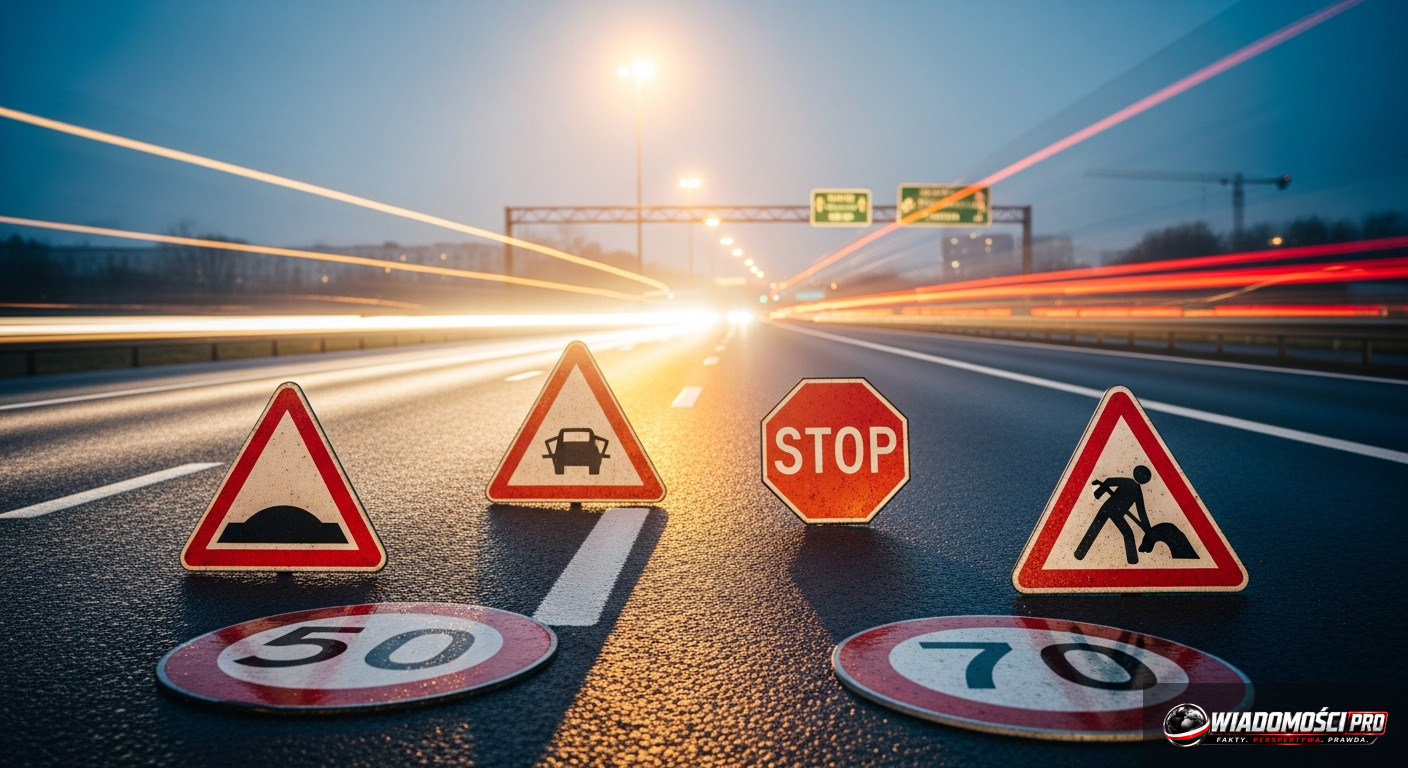
The legislation introduced in 2026 is undoubtedly the most courageous step in the history of Polish traffic law. The state has stopped negotiating with road pirates, opting for severity, which is intended to be the only effective language of communication with those who disregard the rules. However, will such harsh law not become a tool for abuse? Time will tell how courts will interpret the concept of "recklessness" in ambiguous situations.
For drivers, this means one thing: it is high time to return to basics. Knowledge of regulations, mastery of driving technique, and anticipating the movements of others are no longer just recommendations from instructors, but a necessary condition to be able to legally move on Polish roads in 2026 and in subsequent years. Every maneuver, every decision behind the wheel, now has its price, which can no longer be paid with a simple fine. This is the reality after August 6, 2026, in which a driving license document is more demanding than ever before in the history of Polish motoring.
The control system, based on the tightened criteria from 2025, combined with new penalties, creates a closed loop. Lack of skills means a failed exam. Lack of driving culture means loss of qualifications. Lack of respect for the lives of others means prison. These are simple rules intended to create an environment on the roads where safety is the only acceptable standard. Drivers who cannot adapt to this must face total exclusion from traffic.
Ultimately, the effectiveness of these regulations depends on how quickly the police and courts cope with implementing the new procedures. This requires a huge amount of work, training for officers, and modernization of IT systems that support the driver database. If these processes are carried out efficiently, the year 2026 will be remembered as the moment when Polish roads ceased to be an arena for irresponsible behavior and became a space where the law is respected by every road user without exception.
However, one cannot ignore the fact that for many drivers, especially those accustomed to the previous liberal policy, these changes are a shock. Protests by automotive circles that took place during the discussion on the amendment indicate strong social resistance. Arguments regarding "safe places to test performance" were, however, rejected by the legislator in favor of public safety. The state decided that no passion can be pursued at the expense of the lives of bystanders on public roads.
It is worth following court rulings in the coming months. They will ultimately define how restrictive the law will be in practice. Every verdict in a case of recklessness will create a precedent that will influence the behavior of thousands of other drivers. Polish motoring is entering a new stage, in which driver convenience is secondary to safety. This is a lesson we all must learn if we want to avoid the harshest consequences provided for in the amended act.
Recent data from communications departments show that the number of driving licenses issued in 2026 is lower than in the same period in 2024. This is direct proof that the examination system acts as an effective filter. Candidates prepare longer, approach exams with more humility, and less frequently risk mistakes that were previously downplayed. This is a positive signal, indicating that a change in mentality has already begun, even if it is taking place in the shadow of the threat of severe punishment.
In summary, 2026 is a time of verification. Every driver who sits behind the wheel must be aware that they are responsible not only for themselves but for every other road user. This responsibility has been moved from the level of declarations to the level of hard criminal law. For a conscious driver, nothing changes – except that it will simply be safer on the roads. For road pirates, time has run out. This is the only right way to improve statistics that have been a source of shame for Poland on the European stage for years. The choice is ours, but in 2026, the consequences of that choice are final and irrevocable. Everyone must understand this before they start the engine of their vehicle again.
Sources
- New driving test rules. Changes already on January 1, 2024 - Dziennik.pl
- New regulations 2026: Lifetime loss of driving license, prison for recklessness, racing ban - Gazeta Prawna
- Changes in the driving test. Make a new mistake, you fail immediately - Interia Motoryzacja
- Changes for drivers from June. Examiner explains - TVN24
- Changes in driving license. New regulations coming - PolsatNews.pl
- Changes in driving test rules - Rzeczpospolita
- More difficult driving test from July 1? We check - Onet
- Changes for drivers. From September 10, 2024, new rules regarding driving licenses - Motofakty
Article prepared by the Wiadomości PRO editorial team with the support of artificial intelligence. Facts come from the sources provided above.


Komentarze (0)
Ładowanie komentarzy...