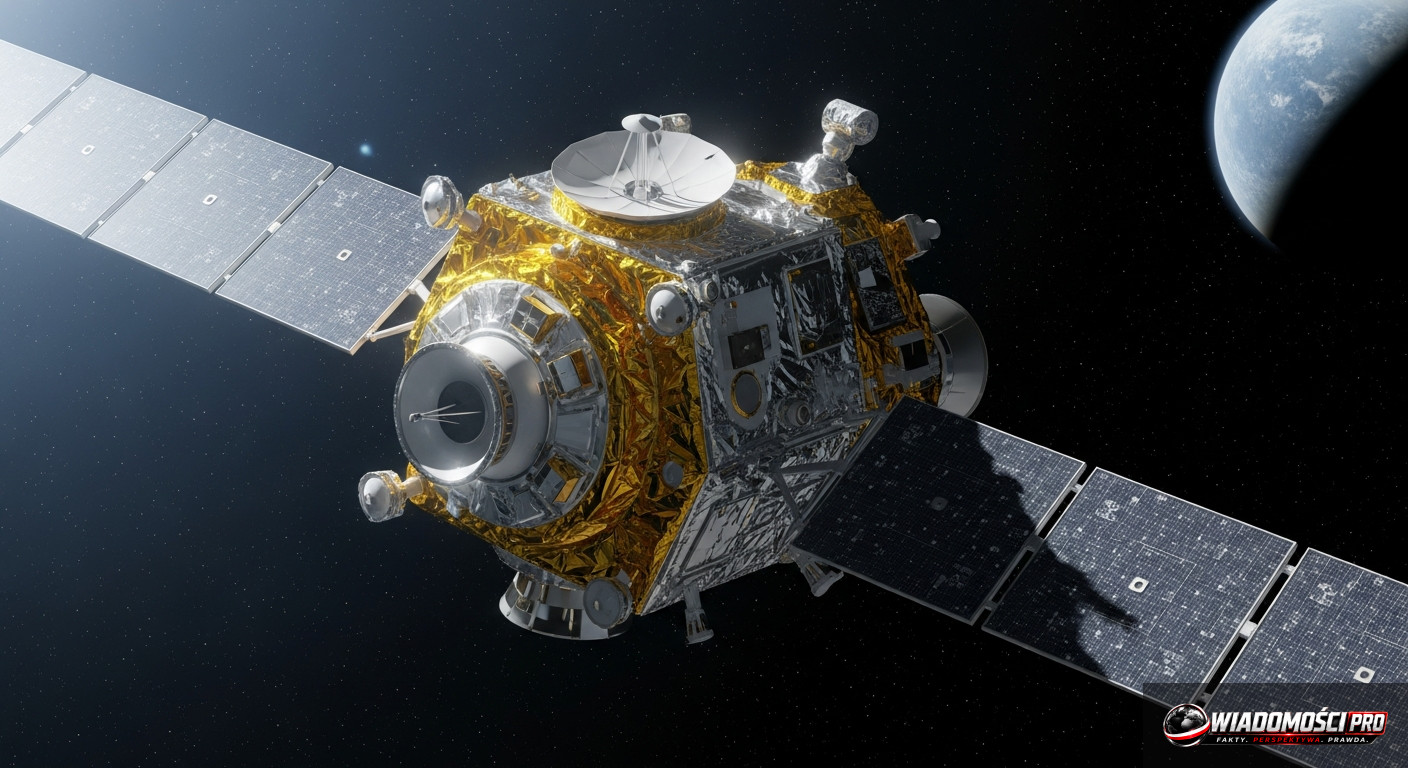
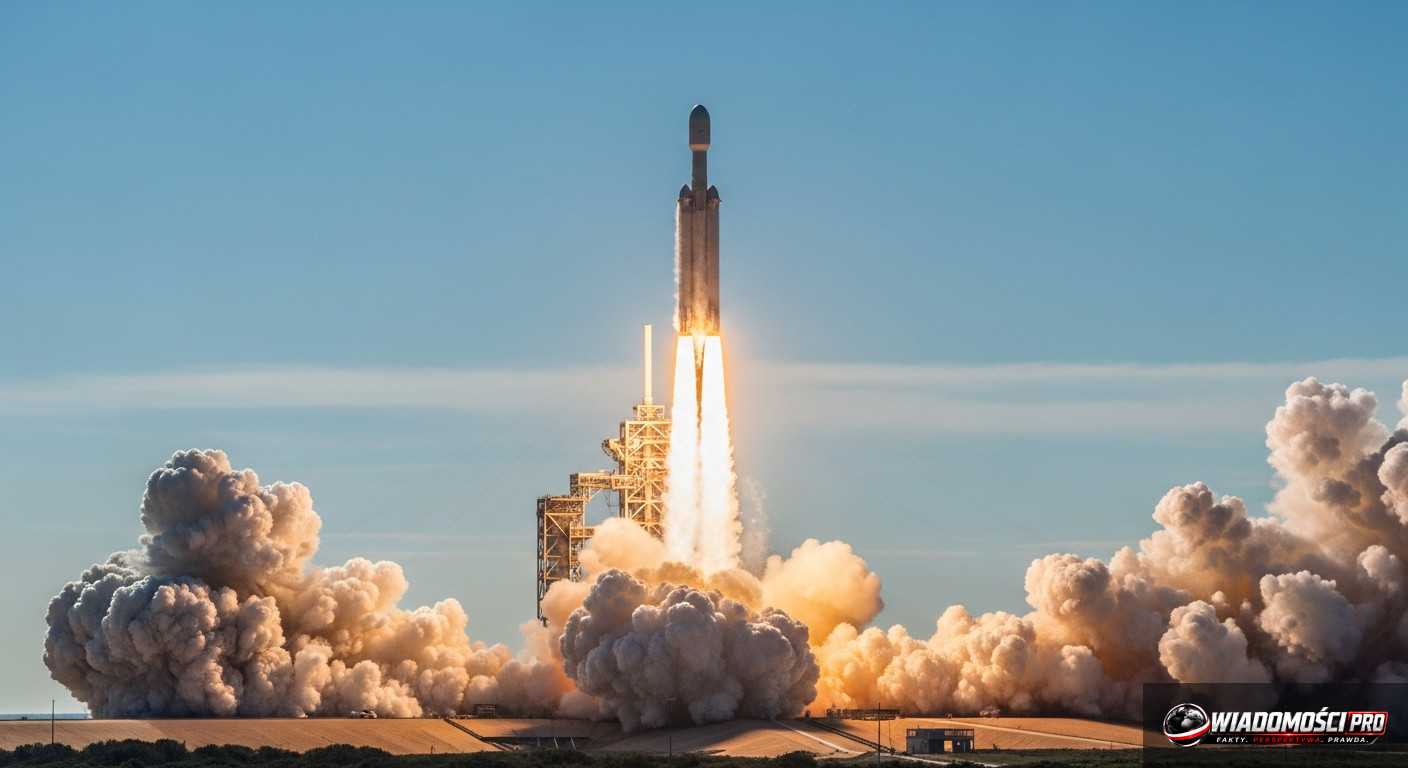
The Europa Clipper mission cost $5 billion and was designed to investigate whether conditions favorable to sustaining life exist beneath the icy shell of Jupiter's moon. It is the most complex research endeavor in NASA's history, directed toward a distant, icy world that has been at the center of astrobiologists' interest for decades. On October 14, 2024, from the launch pad at Kennedy Space Center in Florida, a SpaceX Falcon Heavy rocket carried the probe into space, thus beginning a long-term expedition toward the Jovian system.
The choice of the Falcon Heavy rocket was not accidental. Due to the enormous mass of the probe, equipped with powerful solar panels spanning over 30 meters, it was necessary to use one of the most powerful launch systems available. The probe must travel nearly 3 billion kilometers, using gravity assists from Mars in February 2025 and Earth in December 2026. Only after these maneuvers, in 2030, will Europa Clipper enter orbit around Jupiter to begin a series of 49 close flybys of Europa's surface.
The structural complexity of Europa Clipper stems from the extreme environment in which it will operate. Jupiter possesses one of the strongest magnetospheres in the Solar System, generating radiation belts capable of instantly destroying electronics. To protect sensitive instruments, engineers designed a special "vault" with walls made of titanium and aluminum nearly 1 centimeter thick. It is inside this armored box that the processors and the most important research modules are located. Without this protection, the mission would have ended in system failure during the very first month of operation in the vicinity of the gas giant.
The research instruments installed on board represent the pinnacle of modern planetary engineering. One of the most important is REASON (Radar for Europa Assessment and Sounding: Ocean to Near-surface). This dual-frequency radar is tasked with penetrating the moon's icy shell, the thickness of which is estimated to be between a dozen and thirty kilometers. REASON will search for pockets of water within the ice and attempt to determine the depth at which the main, global ocean is located. Data obtained from this radar will allow for the creation of a three-dimensional model of the ice shell's structure, which is essential for assessing the geological processes occurring beneath the surface.
Another key element is MISE (Mapping Imaging Spectrometer for Europa). This spectrometer will map the moon's surface composition in the infrared. Its task is to identify chemical substances – salts, minerals, organic compounds, and water ice. Thanks to MISE, scientists want to check whether matter from the interior of the ocean is brought to the surface by cryovolcanic or tectonic processes. If complex organic compounds are found on the surface, it will be the strongest evidence yet that Europa's ocean possesses the chemical building blocks of life.
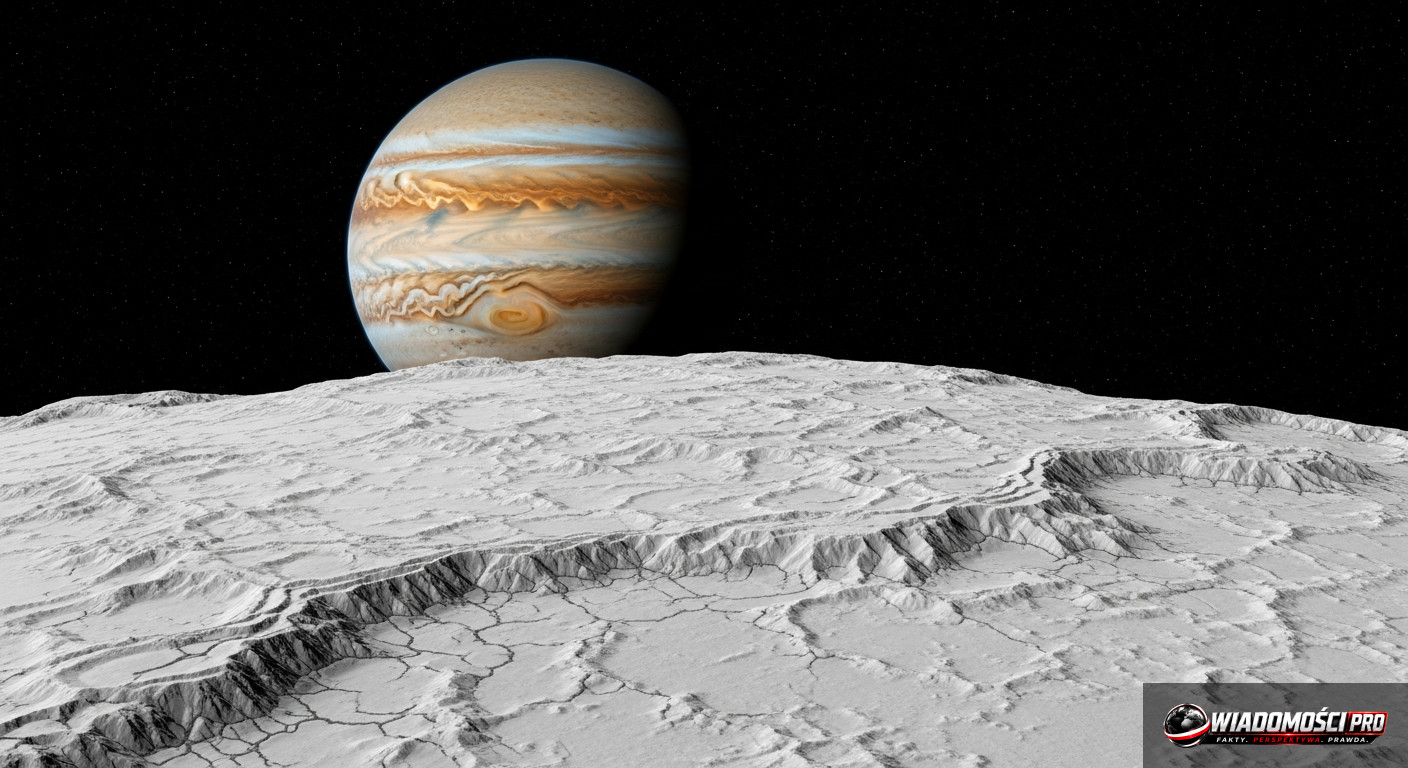
EIS (Europa Imaging System) is a set of high-resolution wide- and narrow-angle cameras that will provide images of the moon's surface with an accuracy of up to 50 centimeters per pixel. EIS will allow for a detailed analysis of Europa's tectonics, mapping cracks, ridges, and geologically active areas. These images will be compared with radar and spectrometric data to understand how the surface reacts to tidal forces exerted by Jupiter's gravity. These forces stretch and compress the moon, generating heat that likely keeps the ocean in a liquid state.
The probe has also been equipped with an ECM (Europa Clipper Magnetometer) to study the moon's induced magnetic field. Because Europa orbits within Jupiter's strong magnetic field, electric currents are induced in its interior if a salty, conductive ocean is present there. Magnetometer measurements will confirm the presence of this ocean and determine its salinity and depth. This is an indirect method, but extremely effective in studying celestial bodies where a lander cannot easily be deployed.
Complementing the measurement suite is the PIMS (Plasma Instrument for Magnetic Sounding) instrument, which measures the plasma surrounding Europa. PIMS is necessary to filter out interference in magnetic field measurements caused by ionized gas in the moon's environment. Thanks to this, data from the ECM magnetometer will be precise and free from errors resulting from plasma dynamics in the Jovian system.
It is worth noting the SUDA (Surface Dust Analyzer) instrument, which will study dust and ice particles ejected from Europa's surface into space as a result of micrometeorite impacts. Analyzing the composition of these particles in flight will allow for remote analysis of surface material without the need for landing. This innovative approach allows for obtaining samples of matter from different regions of the moon during each flyby.
This mission is not an attempt to search for "little green men" or advanced life forms. Astrobiologists are focusing on three pillars of habitability: the presence of liquid water, access to energy, and the appropriate chemical composition. Europa possesses all these ingredients. The ocean under the ice contains more water than all of Earth's oceans combined. Heat from the moon's interior, generated by tidal friction, may power hydrothermal vents on the ocean floor, similar to those on Earth that support life in the total absence of sunlight.
The expenditure of $5 billion on this mission is directly correlated with the scale of the technical challenges. Building a probe that must survive in such a hostile environment for many years required the use of materials and thermal control systems unknown in older space projects. The probe must operate at temperatures near absolute zero while simultaneously coping with enormous fluctuations in thermal energy during flybys near Jupiter.
The logistics of the mission are as complex as its engineering. The use of gravity assists means that the NASA operations team will have to manage the probe for a long time before it even reaches its destination. Each flyby maneuver around Europa requires precise trajectory calculations to minimize the time spent in the strongest radiation belts. The probe will not be placed into a permanent orbit around Europa because the amount of fuel needed for braking would be too great, and radiation exposure would kill the electronics in a few weeks. Instead, a flyby strategy was adopted – the probe will orbit Jupiter, each time performing a "jump" over Europa, collecting data and escaping to a safer area.
From NASA's perspective, Europa Clipper is part of a broader strategy for exploring the Solar System. After the successes of the Cassini mission at Saturn and Juno at Jupiter, Europa became the logical next step. It is there that the chances of finding evidence that life is a common phenomenon are highest. If, however, the research results turn out to be negative, it will be a valuable lesson in humility for science, indicating that the mere presence of water and energy is not enough for biological processes to occur.
Some skeptics within the academic community raise arguments regarding opportunity costs. They wonder whether, for the same $5 billion, one could not send several smaller, more specialized missions to different places – for example, to Enceladus (a moon of Saturn) or Titan. The decision to concentrate resources on one powerful Europa Clipper probe, however, reflects NASA's policy, which prefers to "put all its eggs in one basket" by building a research platform with the highest possible degree of reliability and versatility.
The technological symbiosis between NASA and SpaceX, visible during the launch of the Falcon Heavy rocket, sets a new standard in the space sector. The government agency handles science and instrument management, while the private sector takes on the logistical burden, providing launch vehicles with the appropriate power. This is a division of roles that allows for cost optimization in projects of such a massive scale.
It is also worth mentioning the communication challenges. The probe is hundreds of millions of kilometers from Earth, which means that a radio signal takes several dozen minutes to reach Deep Space Network receiving stations. The probe's autonomy is therefore crucial. Onboard software must independently react to potential anomalies because, in the event of a failure, help from engineers on Earth is delayed by the time it takes for the signal to travel both ways. Europa Clipper is equipped with advanced diagnostic algorithms intended to ensure the mission's safety even in critical situations.
During the mission, scientists from all over the world will analyze data flowing from the instruments. Each flyby will be a celebration of science, and research results will likely be published with a significant delay, necessary for thorough processing and verification. Understanding the nature of Europa takes time. This is not a project that will yield immediate, sensational photos of alien life forms. It is painstaking detective work, consisting of connecting chemical, geophysical, and radiometric clues.
While the probe travels toward Jupiter, engineers at the Jet Propulsion Laboratory in Pasadena are already preparing for operational scenarios that will occur in 2030. Each instrument must be calibrated with the highest accuracy to avoid measurement errors, which would be unacceptable given the mission's enormous cost. International cooperation within this project is unprecedented – data from Europa Clipper will feed the knowledge bases of thousands of researchers around the world, creating the foundations for future, perhaps even more ambitious, lander missions.
Will Europa Clipper answer the question of whether we are alone in the universe? Perhaps not directly. Answering that question likely requires directly sampling the ocean, which is a task for future generations of probes. Europa Clipper, however, will lay the groundwork for it. It will provide maps of places where the ice is thinnest, where the most interesting chemical anomalies occur, and where thermal energy is highest. It is precisely this data that will be crucial for the designers of future missions that will land on the moon's surface.
It is worth remembering that Europa is not the only active moon of Jupiter. Io is the most volcanically active body in the Solar System, and Ganymede possesses its own magnetic field. However, it is Europa, thanks to its global ocean, that is the most promising from the point of view of astrobiology. All the engineering effort, all $5 billion and years of planning, are aimed at only one thing: confirming that life is not exclusively a terrestrial phenomenon.
In summary, Europa Clipper is not just a probe; it is an expression of humanity's determination in its quest to understand its place in the cosmos. Every component, from the REASON radar to the MISE spectrometer, is a testament to civilizational advancement. The success of this mission will be the success of us all, regardless of whether it turns out that Europa is a vibrant ocean or just a frozen desert. The discoveries made during these 49 flybys will forever change the way we look at the night sky and at what lies beneath the ice of Jupiter's moon.

Flybys over Europa will take place at different altitudes, which will allow the probe to obtain high-resolution data from different regions of the moon. This strategy is intended to avoid measurement monotony and enable the study of diverse geological formations. Scientists expect to discover much evidence that Europa is not a dead globe, but a celestial body that still exhibits geological activity.
Long-term mission planning also includes the phase after the flybys are completed, when the probe will likely be directed toward one of Jupiter's larger moons or a controlled deorbit into the gas giant's atmosphere will be performed. All of this is aimed at protecting planetary environments from contamination by Earth microorganisms, which is in accordance with international planetary protection regulations.
Ultimately, Europa Clipper is a monument to technology that shows how far we have come in our space exploration capabilities. Regardless of the final outcome, it has already generated invaluable engineering data that will be used in future missions to other corners of the Solar System. It is an investment in knowledge that cannot be calculated solely in money, although the $5 billion figure will remain a symbol of the scale of this challenge.
Questions and answers:
How much exactly did the Europa Clipper mission cost?
The total cost of building and executing the mission is $5 billion.
When did the Europa Clipper probe launch?
The probe launched on October 14, 2024, from Kennedy Space Center in Florida.
What is the main goal of sending the probe to Europa?
The main goal is to investigate whether conditions favorable to sustaining life exist beneath the icy shell of Jupiter's moon, with a particular focus on searching for evidence of a liquid water ocean and analyzing the chemical composition of the surface.
Why was the Falcon Heavy rocket chosen?
This choice was dictated by the enormous mass of the probe and the need to launch it onto an interplanetary trajectory, which required the power that the SpaceX launch system possesses.
Which research instruments are most important for the mission?
Key instruments include the REASON radar, the MISE spectrometer, the EIS camera system, the ECM magnetometer, and the SUDA dust analyzer, which together are tasked with creating a full physicochemical picture of Europa.
Will the probe land on the moon's surface?
No, the Europa Clipper mission was designed exclusively for orbital flybys around Europa to avoid the destructive impact of radiation and minimize the risk of failure.
How long will the journey to Jupiter take?
The probe will reach the Jovian system in 2030, after performing a series of gravity assist maneuvers near Earth and Mars.
Is the mission supported by other countries?
The project is carried out by NASA, but it benefits from international scientific support in terms of data analysis and research collaboration.
Sources
- Start of the Europa Clipper mission to Europa - AstroNET – Polish Astronomical Portal
- NASA sends a probe to Europa. The Europa Clipper mission has launched - WP Tech
- Europa Clipper probe to search for life on Europa - Urania - Polish Astronomical Portal
- Start of the Europa Clipper mission [BROADCAST]. Americans will overtake Europeans in the search for life on Europa - Wyborcza.pl
- Europa Clipper launches. A key task ahead of them - geekweek.interia.pl
- Europa Clipper has launched. It will investigate whether there are conditions for life on Jupiter's moon - Polskie Radio 24
- Europa Clipper probe to search for life on Jupiter's moon, Europa - wszystkoconajwazniejsze.pl
- Flight to Jupiter for $5 billion. Europa Clipper launch aboard Falcon Heavy - Benchmark.pl
Article prepared by the Wiadomości PRO editorial team with the support of artificial intelligence. Facts are derived from the sources listed above.

Komentarze (0)
Ładowanie komentarzy...