The film earned $121.1 million globally in its opening weekend against a production budget of $200 million, with the projected financial loss exceeding $150 million. Such a drastic gap between expenditures and revenue in October 2024 placed Warner Bros. in an unprecedented situation. The continuation of Arthur Fleck's story, instead of becoming a financial pillar of the DC universe, turned into an operational burden whose scale surprised market analysts.
Financial analysis of this project requires an understanding of the mathematics governing Hollywood blockbusters. A production budget of $200 million is merely the foundation of expenses. To this sum, one must add marketing and distribution costs, known as the P&A (Prints and Advertising) indicator, which for a high-profile production of this nature oscillates around $100 million. The standard market rule states that a film must generate revenue at 2.5 times its budget to break even. This requires accounting for the split of receipts with cinema operators, who typically retain 40% to 50% of the ticket price. With an opening result of $121.1 million, the studio could not even approach the break-even point, making estimates of a loss exceeding $150 million highly probable.

The events of autumn 2024 serve as a lesson regarding the risks of investing in niche comic book adaptations. Market analysts, who modeled revenues before the premiere based on the success of the first installment in 2019, had to make a sharp revision of their forecasts after just the first three days of screening. The decline in viewer interest was immediate and brutal. The studio not only failed to build a new brand on the foundation of previous success but permanently damaged investor confidence in high-budget, risky auteur projects within the DC franchise.
Warner Bros. did not intend to sugarcoat this reality. The studio's official stance in the months following the premiere indicated that the project was recognized as a painful business mistake. Industry media, describing the situation, used terms suggesting a total loss of control over financial parameters. While in June 2026 the competition was recording attendance records – for instance, thanks to the "Toy Story 5" series – the spectacle featuring Joaquin Phoenix and Lady Gaga remained in the industry's annals as a warning against flawed budgetary strategy.
The problem was not limited to ticket sales alone. It was an image blow to the DC brand, which was supposed to be a guarantor of quality. The studio failed to defend an artistic vision that, in the eyes of the audience, missed fan expectations. The lack of commercial success, when compared to the successes of other brands, compounded the impression of decision-making chaos within the board. For a studio accustomed to box office dominance, this result was a signal that the existing model of investing huge sums in niche, artistic approaches to well-known characters had ceased to be profitable.
Cinema receipts are only half the equation. One must deduct the shares of cinema operators and the costs of the promotional campaign. The lack of viewer interest after the first weekend meant that the chances for a so-called "long tail" of revenue almost evaporated. In the film industry, such a rejection by the public is a verdict. The studio not only failed to earn on tickets but had to pay extra to minimize losses in the promotional balance sheet. There was no room here for an unfortunate coincidence, but rather for a fundamental underestimation of audience sentiment relative to a budget that was supposed to guarantee a hit.
The scale of the failure becomes stark when we compare it to productions that were often vilified and yet performed better in theaters. Industry analyses point to an uncomfortable conclusion for Warner Bros.: the Joker brand did not prove to be a sufficient guarantee of success when faced with low critic scores and a cold reception from the public. The comparison with the film "Morbius," which became a synonym for a cinematic flop, is exceptionally painful for Warner Bros. While Marvel and Sony productions, despite scathing criticism, managed to generate revenue allowing for smaller losses, here the story spiraled in a negative direction.
Viewers in 2024 proved to be selective in a way the creators did not foresee. The studio had to count losses burdening the corporation's balance sheet, calling into question the future of the entire universe in its current formula. The controversy began long before the first reviews. Videos from the set were circulating online, confirming significant changes to the script made at the last minute. The most telling evidence of the lack of a coherent vision was the issue of the alternative ending. The scene, which ultimately did not make the final cut, was widely commented on, fueling speculation about desperate attempts to save the project in post-production.
The studio could not decide whether it wanted to follow the path of a dark drama or experiment with a musical form that did not resonate with the mainstream. This lack of decisiveness translated into the reception of the production. Fans expecting a repeat of the 2019 success felt cheated. Warner Bros. collided with a reality where even the biggest names in the cast cannot save a film if the script loses its direction. In retrospect, it is clear how this failure influenced subsequent decisions regarding the DC universe.
The cinema market in 2026 is brutally verifying studio expectations, dividing premieres into crushing successes and costly mistakes. While the attention of viewers and analysts in June of this year focused on the results of "Toy Story 5," which is chasing series records, the financial condition of "Joker: Folie à Deux" stands as a painful contrast for Warner Bros. The film, in which enormous hopes were placed, became a warning signal for strategies based on sequels with high artistic risk. Estimates remain unchanged: a projected financial loss exceeding $150 million makes this title one of the biggest financial disasters of the decade.
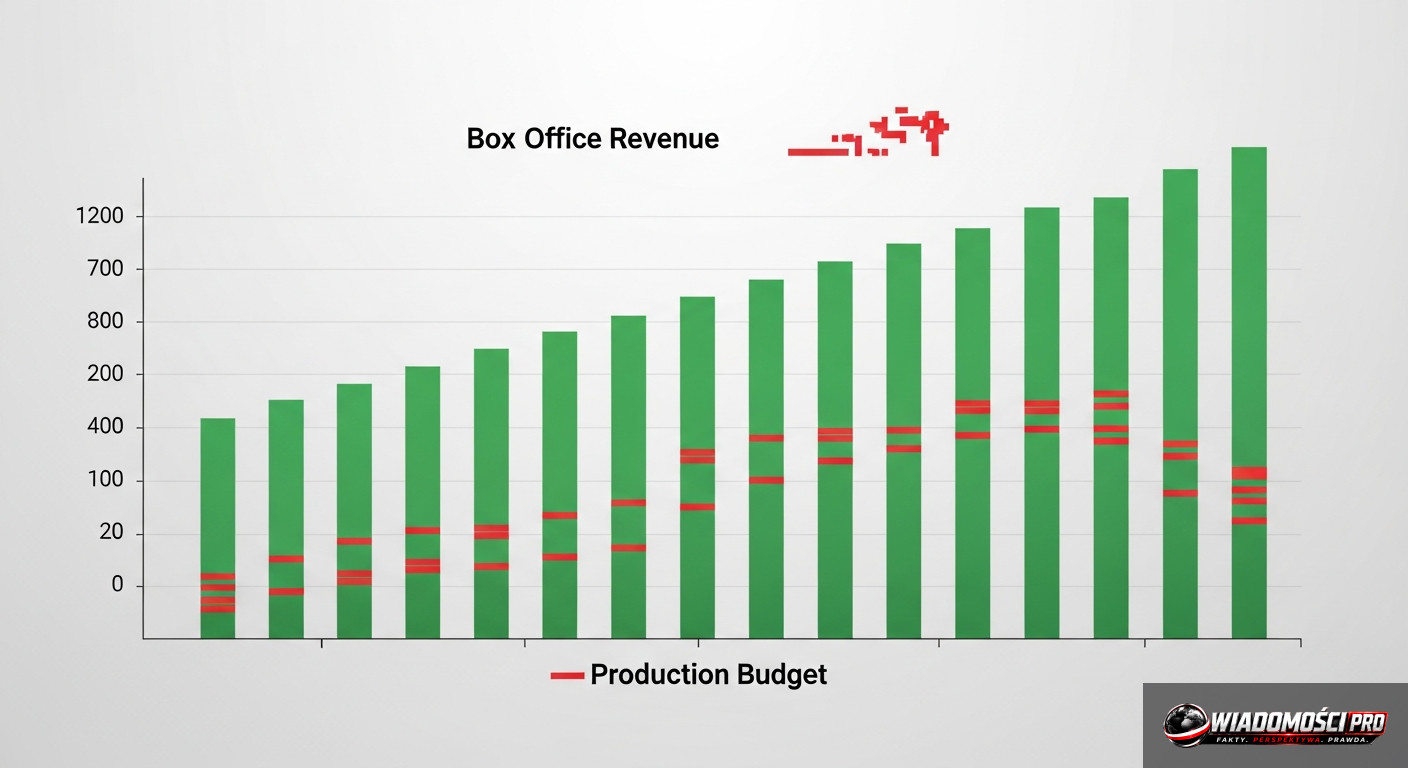
This comparison exposes the mechanism of modern distribution. Viewers in 2026 are betting on proven, family-friendly brands that guarantee predictable entertainment. "Toy Story 5" fills theaters, offering investment security that the creators of this production can only dream of. Warner Bros. had to confront a reality where even a recognizable brand does not guarantee profits if the film's convention misses the expectations of the mass audience. Looking at these numbers, a clear polarization is visible. Pixar's successes show that cinema can still be a powerful money-making machine, provided it perfectly hits social moods.
"Joker: Folie à Deux" became a symbol of the opposite process. It is a warning against too much faith in artistic experiments with budgets that require widespread acceptance to even begin to pay for themselves. The studio not only failed to recoup its investment but generated a loss that will long be a reference point in discussions about misguided business decisions. For Warner Bros., this failure means the necessity of verifying the budgetary strategy for films bordering on art and blockbusters. Investors are losing confidence in high expenditures on risky auteur visions, which in 2026 is resulting in a shift of funds toward proven animated franchises.
From the perspective of film portfolio management, this situation forced the studio to return to so-called "safe havens." It was understood that the cinema audience in 2024 was not ready for such a radical deconstruction of the character as the creators proposed. Introducing musical elements into a world that previously relied on raw realism turned out to be a miscalculation of risk. Many industry observers point out that Warner Bros. tried to repeat the magic of the first part, ignoring the fact that the originality of the original was its greatest asset, not a feature that could be arbitrarily scaled in a sequel.
As a result, the studio's current release plans are more conservative. Projects that three years ago would have received a green light without much analysis now pass through a multi-stage financial verification sieve. Every dollar invested in production must have solid justification in focus group research and box office forecasts. This is a direct result of the losses generated by Arthur Fleck's story. This failure is not just about money. It is primarily a lesson that even the most recognizable brands have their limit of endurance for experiments.
In 2026, Warner Bros. operates in a different market reality. The success of films like "Toy Story 5" shows that viewers return to cinemas when they get what they expect. The disappointment brought by "Joker: Folie à Deux" was a turning point for the studio's board. Instead of looking for the next "artistic" hits for $200 million, the studio focused on restructuring creative departments. It is safe to say that this one production changed the way Hollywood approaches sequels to its most important franchises.
It is also impossible to hide that the impact of this flop goes beyond the studio's finances. It influenced the way cinema exhibitors negotiate terms with distributors. When a project with such a large budget fails, cinemas lose confidence in so-called "sure bets." This, in turn, leads to more difficult conversations when setting the split of ticket receipts. In recent years, Warner Bros. has had to work to rebuild relationships with cinema chains that, after the premiere of "Joker 2," were left with empty halls and losses on operational costs.
The story of this title's financial failure is a lesson for the entire industry. It shows that in an era where production costs are rising at a dizzying pace and viewer attention is scattered across dozens of streaming platforms, there is no room for errors in communication with the recipient. Every dollar spent on promotion and production must be supported by a clear strategy that is not based solely on a star's name or a recognizable title. Warner Bros. paid over $150 million for this lesson, making this case the strongest argument in the discussion about the future of high-budget cinema in the coming years.
Analyzing the case of "Joker 2," one should also pay attention to the issue of audience demographics. The first part of the film, despite its dark nature, attracted a wide spectrum of viewers, becoming a social phenomenon. The sequel, by imposing a musical convention, significantly narrowed the target group, cutting itself off from comic book fans who expected a continuation of the psychological thriller aesthetic. This mismatch with expectations was a strategic error that affected all aspects of distribution.
Film studios often fall into the trap of "bigger, more expensive, more complicated." In the case of this production, a $200 million budget was spent on a project that, in its essence, was the antithesis of a commercial blockbuster. Such a disproportion between the artistic nature of the film and the financial requirements imposed by the budget is a guarantee of disaster. In 2024, Warner Bros. risked capital that, under normal conditions, would have been allocated to three or even four smaller, more diverse projects.
The issue of Lady Gaga, who was supposed to be a magnet attracting a new audience, also did not bring the expected results. Although her presence in the cast generated media buzz before the premiere, it did not translate into conversion to ticket sales. Viewers who were looking for a musical experience in the cinema did not find it in a tone that would satisfy pop fans, and fans of the dark Joker felt discouraged by the musical elements. This cognitive dissonance was visible in viewer reviews, which were exceptionally critical in the first phase after the premiere.
It is also worth mentioning the role of social media in shaping the reception of this film. In the age of instant communication, negative opinions from the first screenings spread at a pace that marketers could not control. Unlike productions that build tension over weeks, "Joker: Folie à Deux" was condemned by internet users almost the moment they left the cinema hall. This phenomenon shows how fragile a brand's reputation is in the digital age, where one failed project can tip the scales after years of building the studio's image as a leader in quality.
For Warner Bros. investors, this failure became a turning point in risk assessment. Analytical firms monitoring box office results have been applying stricter indicators since October 2024 when evaluating projects that do not show clear genre affiliation. "Joker 2" became a case study that is cited at board meetings throughout Hollywood. The question of whether it is worth investing $200 million in an auteur vision that may divide the audience has become crucial for the survival of the largest studios.
Ultimately, the fate of this title shows that even the most powerful promotional machine cannot save a product if it does not hit current social moods. In 2024, the public did not want a musical deconstruction of a dark hero. They wanted entertainment that would provide specific emotions or allow for escapism, not a confrontation with a depressing artistic vision. Warner Bros.' failure is therefore not only financial but, above all, communicative. The studio did not understand in which direction the taste of the mass viewer was heading, and paid one of the highest prices in the history of modern cinema for it.
Looking at this case from the perspective of 2026, one can conclude that "Joker: Folie à Deux" was the final alarm bell for a business model that assumed the name of a director or star was enough to fill theaters. The industry has learned its lessons. High-budget projects are now subjected to much stricter selection, and experiments are moved to the mid-budget sector, where a potential loss does not threaten the liquidity of the entire studio. What happened around "Joker 2" changed the rules of the game for a long time, forcing a return to the foundations of film craft and greater attention to the expectations of the end recipient. This failure, although painful, became a catalyst for changes that, in the long run, may benefit the entire cinema market.
Sources
- Joker 2 is an unfunny joke at the box office. Results are even worse than assumed - Eurogamer.pl
- Box Office USA: Massacre of new releases. "Toy Story 5" is chasing series records - Filmweb
- "Joker 2" will lose over 150 million dollars. "One of the biggest disasters of the year" - naTemat.pl
- How much will Joker 2 earn in its opening weekend? Predicted result significantly worse than part 1 - naEKRANIE.pl
- Joker 2 lost even to Morbius. The worst Marvel and Sony films earned more - Gram.pl
- This is how much "Joker: Folie à deux" earned in its opening weekend! A big flop for the creators and cast? - Radio ESKA
- Opinions on Joker 2 are divided, but one thing we know for sure: Warner Bros. considers the film a failure - Eurogamer.pl
- The ending of Joker 2 was supposed to be different. This video from the set hinted at it - naEKRANIE.pl
Article prepared by the Wiadomości PRO editorial team with the support of artificial intelligence. Facts are derived from the sources listed above.
Komentarze (0)
Ładowanie komentarzy...