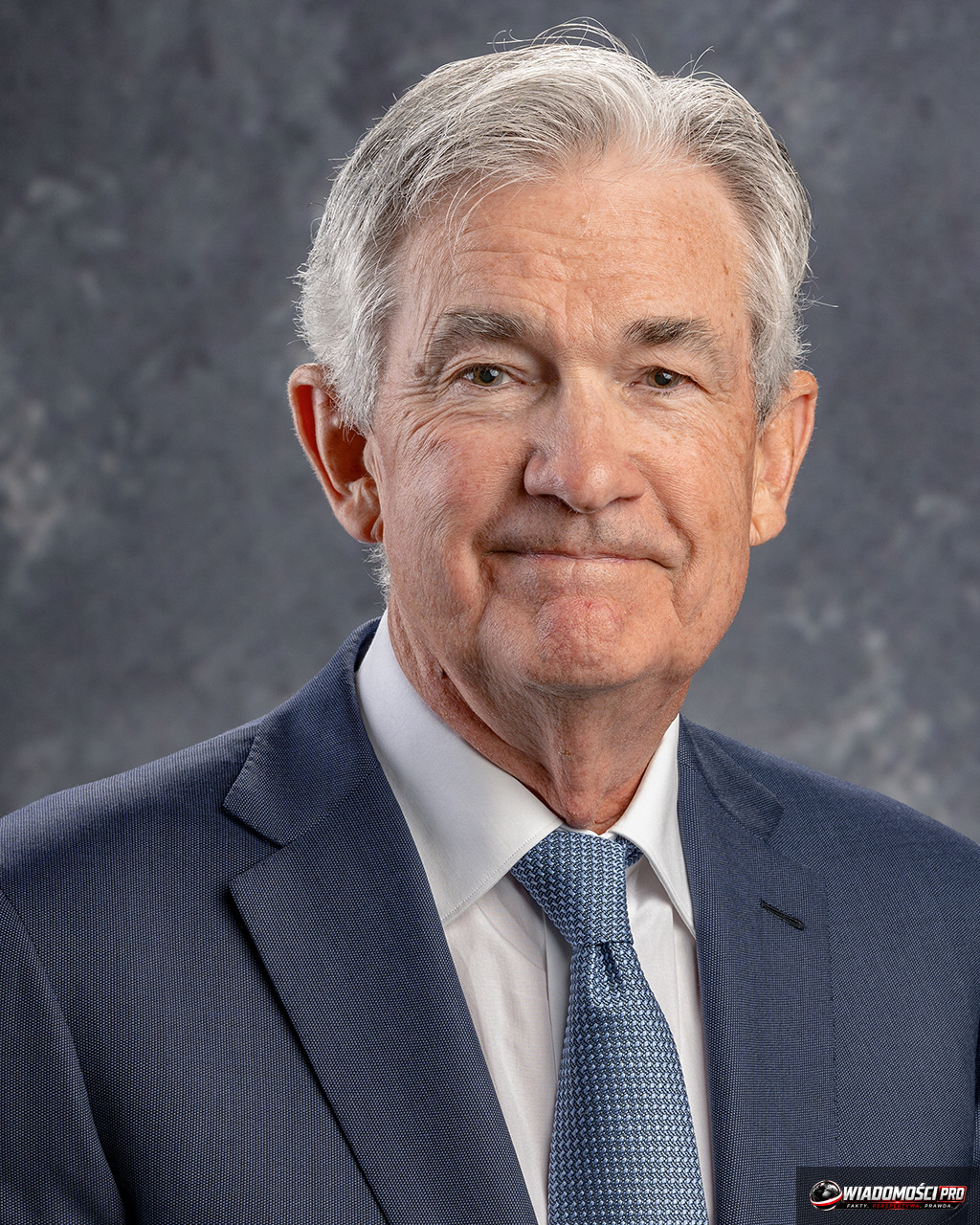
The Fed's decision to cut rates to the 4.75-5.00% range in September 2025 was a reaction to weak labor market data, which initiated a monetary policy easing cycle. This move did not permanently stabilize the American economy, but merely deferred the effects of the slowdown, creating new challenges for fighting inflation in subsequent quarters. A year after this decision, the economy is in a phase of difficult adaptation to capital costs which, despite the cut, remained at a level higher than optimistic market forecasts had assumed.
Genesis of the decision: Why did the Fed choose 50 basis points?
On September 17, 2025, the Federal Open Market Committee (FOMC) ended a long period of waiting. The decision to cut interest rates by 50 basis points to the 4.75-5.00% range was a signal that the US central bank considered the signals coming from the economy to be alarming. Jerome Powell, Chair of the Fed, had to face the fact that the US labor market had ceased to be a growth engine and had begun to show clear signs of exhaustion.
Specific macroeconomic indicators lay at the foundation of this move. Reports on non-farm payrolls and the rise in the unemployment rate caused the FOMC to abandon its cautious approach. Policymakers did not want to wait for problems to escalate, so they opted for an aggressive step. From the perspective of ING analysts, this decision was described as a "hawkish cut." This suggests that the Fed, despite wanting to save growth, maintained a high degree of distrust regarding the durability of price stabilization in the USA.
Debates over the pace of easing took place behind the scenes of the meeting. The choice of 50 basis points, instead of the standard 25, was a compromise between the need for stimulation and the fear of reigniting inflationary pressure. Central bankers had to weigh whether a recession or the entrenchment of high inflation posed a greater threat to the stability of the dollar. Ultimately, they prioritized the labor market, which became the foundation of a new monetary cycle. This was not just a technical correction. It was an attempt to get ahead of a collapse that could have destabilized the financial system before the end of 2025.
Inflation vs. growth: The dilemma of American policymakers
The September 2025 FOMC decision exposed the discrepancy between the Fed's official goals and market realities. Setting the rate range at 4.75-5.00% resulted from the fact that inflation in the US was still oscillating around levels that concerned policymakers. Instead of waiting for the CPI index to return to the 2% target, central bankers decided to prioritize employment levels.
The 50 basis point move was forced by a series of weak readings from the American labor market. Investors who had hoped for a "soft landing" in mid-2025 had to revise their assumptions. The US economy was no longer able to maintain the restrictive financing conditions imposed by the interest rates of the first half of the year. The choice fell on saving businesses and consumers from the effects of high credit costs.
This decision carried real risk. By prioritizing the labor market over the fight against inflation, the Fed accepted the possibility that price growth would persist in the economy longer than assumed in the forecasts from the beginning of the year. Today, looking from the perspective of August 2026, it is clear that that September decision became a turning point. The US economy did not become more resistant to the inflationary shock, but it gained the breathing room needed to avoid a deep recession. It was a choice of the lesser evil in conditions where every solution involved painful consequences for specific social groups.
Political context: Pressure on the Fed in 2025
The Federal Reserve's decision in September 2025 to cut interest rates to the 4.75-5.00% range did not take place in isolation from the political environment. Although the FOMC is officially guided by macroeconomic data, the autumn of 2025 was marked by unprecedented external pressure. Media reports indicated that the institution found itself in an extremely difficult position, balancing between independence and the expectations of Donald Trump's circle.
Press headlines from that period, including "Trump got his way," clearly communicated a narrative in which the Fed ceased to be an apolitical technocratic body. For investors, this was an ambiguous signal. There were fears that Jerome Powell's overly compliant stance could undermine the credibility of the fight against inflation. Every decision to ease was interpreted through the prism of electoral calculations.
The Fed found itself in an image trap. The cut, although economically justified by labor market data, became a flashpoint in public debate. Starting an easing cycle in an atmosphere of such intense political noise permanently changed the way market participants perceive the autonomy of the central bank in the USA. Investors had to start including political risk in their models, which in 2026 became a permanent element of asset valuation analysis. Uncertainty about future Fed actions became the norm, not the exception, which made it difficult to build stable long-term portfolios.
Market reaction: How did investors receive the FOMC move?
The Federal Open Market Committee's decision on September 17, 2025, was not a surprise to analysts following the sentiment in Washington. When Jerome Powell announced the 50 basis point cut, Wall Street reacted with great determination, which translated into immediate changes in company valuations. The retreat from restrictive policy forced portfolio managers to quickly revise their strategies.
Capital that had flowed toward safe dollar assets for many months began to look for higher returns elsewhere. Stock indices breathed a sigh of relief, but the enthusiasm was underpinned by clear skepticism. Investors asked themselves whether the Fed had not reacted too late to the economic slowdown. The cut occurred in the shadow of worrying inflation data, which meant that the gains on the stock market were speculative rather than fundamental.
The market gained fuel for growth, but at the same time gained a new puzzle: how deep and how fast would the Fed cut rates in subsequent quarters to avoid a recession? In September 2025, capital bet on further easing, but the price for this optimism proved high. In 2026, many companies had to face the fact that despite lower rates, access to cheap financing had not returned to the levels from before the tightening cycle. This forced the restructuring of many enterprises and a shift in investment strategies to more defensive ones.
Global comparison: Eurozone vs. USA
September 2025 brought a clear fork in the road for global monetary policy. While the US Fed decided on an aggressive 50 basis point cut, the European Central Bank chose a different tactic. The ECB, after its meeting on September 11, 2025, decided to keep interest rates unchanged. For financial markets, this meant dissonance: the US entered rescue mode, while Europe remained in wait-and-see mode.
This divergence called into question the strength of the dollar in relation to the euro. Frankfurt policymakers concluded that inflationary pressure in the eurozone still required maintaining restrictive financing conditions, ignoring the arguments about economic slowdown that prevailed in Washington. Investors had to choose between the American pro-growth approach and European caution.
The key parameters of that period were clear: the reference rate in the US fell to the 4.75-5.00% range, while the ECB deposit rate remained at its previous level. The American path was a gamble. If the easing did not revive the labor market, the Fed would be left with inflation and a slowdown it would have no way to treat. The ECB, on the other hand, risked that keeping rates high for too long would stifle the European economy, which was showing signs of anemia. Capital seeking higher returns began to flow out of Europe toward the US, seeking refuge in American assets, which further complicated the exchange rate situation for the EUR/USD pair.
2026 perspective: Where are we a year after the cut?
August 2026 brings a picture of a US economy that has fully adapted to the monetary policy initiated almost exactly twelve months earlier. The Federal Reserve's September 2025 decision, bringing rates down to the 4.75-5.00% range, became the operating base for planning budgets for subsequent quarters. Businesses and consumers in the US are operating in a new interest rate environment that has ceased to be a shock and has become the new normal.
The question of the effectiveness of that decision remains open. The labor market has stabilized, but this does not mean a return to the bull market of several years ago. Investors who in September 2025 were counting on a quick turnaround in Fed policy had to brutally revise their expectations. Current credit costs are still effectively curbing the most aggressive investments, forcing corporate boards to exercise greater financial discipline. S&P 500 company earnings have stopped growing at a double-digit pace, suggesting that the era of "cheap money" has remained only a memory.
In 2026, we observe a phenomenon of "creeping stabilization." Inflation has not skyrocketed, but it has not fallen to the 2% target either, remaining at a level slightly higher than comfortable. This puts the Fed in a difficult position ahead of subsequent meetings. If policymakers take another step toward easing, they risk a return of price pressure. If they hold back, they risk stagnation in the industrial sector. A year after the cut, it is clear that the 2025 decision was merely "buying time." The US economy is now more dependent on central bank actions than ever before. Every communication from the FOMC triggers nervous reactions, which confirms that the market has not yet fully regained its independence after that September shock.
What this means for the investor: Recommendations
Investors who in September 2025 were counting on easy stock market profits were verified by reality. The 50 basis point rate cut was not a signal for a bull market, but a warning signal. For a capital manager, this means that traditional strategies based on buying indices no longer yield such high returns.
In the current environment, a year after the start of the cycle, it is worth focusing on companies with strong balance sheets and low debt. Companies that do not have to refinance their debt in a 4.75-5.00% rate environment are in a much better position than those that based their development on cheap credit. The bond market has become attractive again, offering yields that, at current inflation, allow for the protection of capital against the loss of purchasing power.
One should not expect sudden moves from the Fed in the near future. The central bank is a hostage to data, and these are currently contradictory. Investors should avoid excessive portfolio leverage, as the volatility caused by every subsequent publication of employment indicators will remain at a high level. A strategy based on building positions in dividend-paying companies and high-quality corporate bonds seems to be the most rational response to monetary policy, which forces us to be constantly vigilant. Stability in 2026 is not the absence of change, but skillful risk management in conditions where "cheap money" simply does not exist.
Q&A
Why did the Fed cut rates despite inflation?
Policymakers concluded that a weakening labor market posed a greater threat to economic stability than persistent inflation, which at that moment was perceived as less dangerous than the specter of recession.
Are interest rates in the US still falling in 2026?
After the September cut to 4.75-5.00% in 2025, monetary policy in 2026 focused on very cautious adjustments to current macroeconomic readings, which ruled out sudden downward moves.
How did the Fed's decision affect borrowers?
The 50 basis point cut translated into a gradual reduction in the costs of servicing dollar-denominated debt, which was felt throughout the financial system, although it did not fully eliminate the pressure resulting from earlier rate hikes.
Was the 2025 decision a "mistake"?
In retrospect, it is assessed as necessary to avoid a hard landing, although its cost is permanently higher inflation than what the Fed had assumed in its long-term forecasts a year ago.
What should investors avoid a year after the cut?
One should avoid companies with a high level of debt that do not show the ability to generate cash to service debt at the current interest rate level, as their profitability remains under pressure from capital costs.
Sources
- ING Journal: "Hawkish cut" by the Fed in the shadow of weak labor market data and expected deep easing with a new Fed chair. Regulated electricity prices will not change significantly in 2026. - ING Economic Service
- Trump got his way. Fed resumed interest rate cut cycle - Bankier.pl
- Why the Fed cut interest rates, even though inflation in the US still causes concern - businessinsider.com.pl
- Half the world was waiting for this decision. Fed indicated interest rates in the US - Money.pl
- FED will decide on interest rates today. What decision will the FOMC make? - Strefa Inwestorów
- Interest rates in the eurozone unchanged for the second time in a row - Analizy.pl
- Fed cuts rates for the first time this year. What will be the effects? - Subiektywnie o finansach
- MPC did not change interest rates in September '24 - Miesięcznik Finansowy BANK
Article prepared by the Wiadomości PRO editorial team with the support of artificial intelligence. Facts come from the sources listed above.



Komentarze (0)
Ładowanie komentarzy...