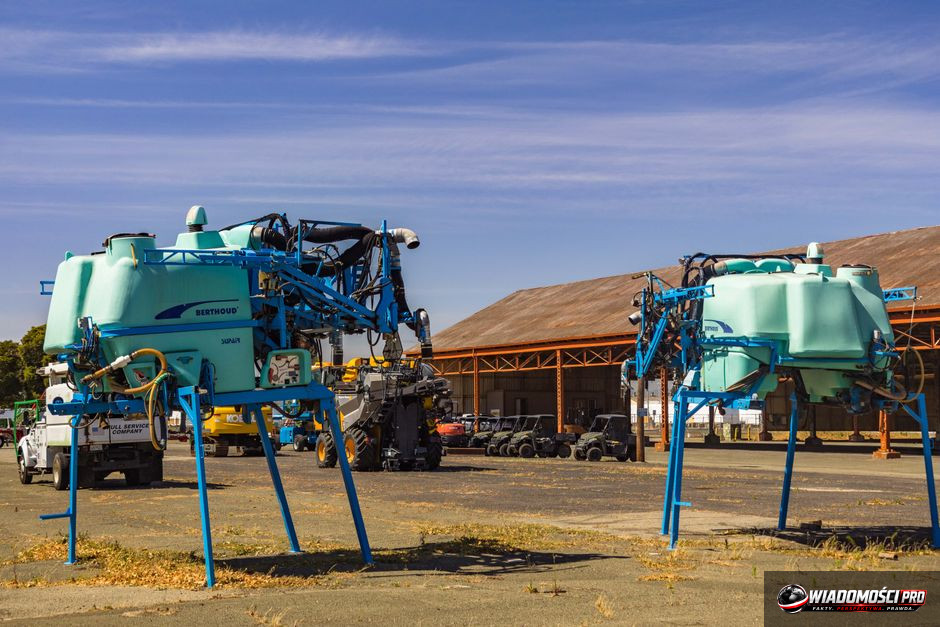
UOKiK has imposed a 136 million PLN fine on agricultural machinery dealers, including the Claas brand, for long-term price agreements that artificially inflated equipment purchase costs for Polish farmers. The practice, which lasted from 2020 to 2025, eliminated natural competition between sales outlets, forcing buyers to overpay for essential equipment. This decision marks the culmination of extensive supervisory actions that, in 2025 alone, led to the exposure of systemic irregularities throughout the entire agricultural machinery distribution chain in Poland.
Record fines: UOKiK strikes at machinery dealers
On August 3, 2026, the Office of Competition and Consumer Protection concluded proceedings that will be remembered by the agricultural equipment distribution industry for years to come. The 136 million PLN fine imposed on dealers cooperating with the Claas brand is not just a financial burden for the companies. Above all, it is confirmation that a market intended to be a field of fair competition for the customer was operating based on a scripted scenario. Instead of competing with margins and service offers, dealers decided to divide their influence. A farmer entering a dealership did not receive a genuine market proposal, but rather the result of arrangements made behind closed doors by managers.
Supervisory actions were not limited to a single entity. The scale of the phenomenon, revealed by the President of UOKiK, covered entire distribution networks. The collusion mechanism involved the exchange of information and rigid price-fixing, which in practice made it impossible to obtain a real discount. A farmer in need of a tractor or combine harvester became a hostage to a system where the final price was "cemented." This situation lasted at least since 2020. For five years, machinery buyers financed, through their hard work, margins inflated by illegal agreements.
Analyzing the effects of these actions, it should be noted that the 136 million PLN fine is merely the tip of the iceberg. In December 2025, the office had already imposed sanctions totaling 170 million PLN, and a week later, another set reaching 340 million PLN. The total amount of fines in the agricultural machinery sector has exceeded half a billion PLN in just over a dozen months. This shows how deeply rooted the commercial pathology was. Dealers, feeling the security provided by the agreement, stopped feeling the need to optimize costs or fight for the customer through service quality.
It is worth asking whether these sanctions will bring real relief to farmers. Administrative fines go into the state budget, but they do not return directly to the farmer who bought a machine at an inflated price in 2022 or 2024. UOKiK acts as a market guardian, but civil law leaves a door open for those affected. Anyone who made a purchase during the collusion period can now analyze their invoices in the context of the office's rulings. This is a long-term process, but it is necessary so that justice is not limited only to statistics published by the regulator.
Which brands were covered by the proceedings?
The UOKiK proceedings do not strike at "agriculture" as such, but at specific sales structures that monopolized access to modern technology. The main flashpoint became the Claas brand, which received a 170 million PLN fine in December 2025. However, this does not mean that the problem concerned only one manufacturer. The office scrutinized an entire group of agricultural machinery dealers who, by cooperating with leading equipment suppliers, created a system of limiting choice for Polish farms.
Among the penalized entities are the largest dealership networks in the country. These are companies that for years built an image of experts and partners to the Polish farmer, while simultaneously secretly agreeing with competitors on what prices would apply in given regions. Such territorial division was the worst-case scenario for the buyer. A farmer from the Greater Poland or Lublin voivodeship, when looking for a machine, could not count on a better offer from a dealer in a neighboring county, because that dealer was bound by price "non-aggression pacts."
In 2025, UOKiK identified a series of violations that added up to 340 million PLN in fines for various entities in the machinery industry. Today's decision to impose 136 million PLN on Claas dealers is a continuation of this process. The office does not point to isolated incidents, but to a systemic business model that was copied by dozens of entities. This is not a matter of "one dishonest seller," but the specifics of a dealership model that, in Polish conditions, stopped serving the farmer and became a tool for enforcing higher profits.
Does this mean that the farmer can feel safer? Certainly yes, provided that this mechanism is permanently destroyed. The Office of Competition and Consumer Protection has announced that it is monitoring the market for signs of a return to old practices under the guise of new agency agreements. Dealers who have not yet been covered by the proceedings are currently in a difficult situation. Every price move they make is now under the scrutiny of UOKiK analysts. A lack of transparency in price lists will henceforth be treated as grounds for initiating further inspections.
Chronology of the anti-competitive practice
The history of price-fixing in the agricultural machinery market is a chronicle of long-term abuse of trust. Although official settlements coincided with the end of 2025 and August 2026, the roots of the practice go much deeper. As early as 2020, when equipment prices began to rise rapidly, dealers noticed that farmers, fueled by subsidies from EU and national funds, were able to accept higher investment costs. It was this moment that became the catalyst for informal agreements.
In December 2025, the first "earthquake" occurred. On December 8, 2025, news spread about a 170 million PLN fine for Claas. It was a signal that the office had hard evidence: emails, transcripts of conversations, and meeting minutes that directly pointed to price-fixing. Just seven days later, on December 15, 2025, UOKiK added another 340 million PLN in fines for other entities in the industry. That was when the market first began to understand that this was not about individual fines, but about a complete restructuring of trade rules.
August 2026 brought the finalization of another stage, this time with a 136 million PLN fine. It is worth noting how long these proceedings lasted. The office needed months to analyze thousands of invoices and sales documents to prove that prices were not set by the market, but by the dealers. During this time, farmers invested billions of PLN in machines that, under conditions of fair competition, could have been cheaper by a dozen or even several dozen percent.
Looking at the chronology of UOKiK's actions, a clear strategy of "cutting off the heads" is visible. First, the largest entities were struck, and then the system was tightened by punishing smaller intermediaries. This action is preventive in nature. Every company that is considering entering into a similar arrangement today must take into account not only the risk of a financial penalty but also the loss of reputation, which is a paramount value in the agricultural industry. After five years of uncertainty and artificial prices, the Polish agricultural machinery market is at a turning point.
Collusion mechanism: How were farmers losing money?
The question of how exactly the farmer was losing money is key to understanding the scale of the problem. The mechanism was elegant in its simplicity. Dealers, instead of competing for the customer through service quality or discounts, divided the market. If a farmer from a specific county approached several dealers of the same brand, they received offers that differed only cosmetically. Agreeing to the price imposed by the first dealer visited was, in fact, agreeing to the market price that had been set by all players in the collusion.
The buyer, convinced that "these are the market prices," made the purchase, often financing it with an investment loan. The cost of this loan, calculated on the artificially inflated purchase amount, further burdened the farm's budget. In this way, the dealers' collusion not only took money directly from the farmer's pocket but also generated long-term financial costs. This hindered the technological development of the Polish countryside. Instead of investing in better farm management software or modern precision farming systems, funds went to dealers as excess margin.
The President of UOKiK repeatedly emphasized in his communications that such action is "unacceptable." It was not about a situation where a company has a right to profit. It was about the fact that profit was built on the foundation of a lie about the lack of alternatives. A farmer wanting to buy a Claas combine harvester had the impression that the price was imposed by the manufacturer and was the same everywhere. Meanwhile, it was the dealers, taking advantage of the tolerance for unfair practices, who blocked the possibility of negotiation. This exclusion from negotiation was the most painful effect of the collusion.
Importantly, the collusion often also concerned service and spare parts. After purchasing a machine, the farmer became a "prisoner" of the authorized service center, which also did not have to compete on price with other workshops. The lack of service competition led to a situation where the cost of operating the machine was as high as the cost of purchasing it. This was a spiral from which the farmer could not escape without replacing the entire fleet of machinery with equipment from another brand, which in turn involved huge logistical and training costs.
Multi-million fines: Is this the end of the market cleaners?
The multi-million sanctions that fell on the industry in 2025–2026 are unprecedented. Does this mean that the "market cleaners" from UOKiK have finished their task? The answer is: no. Regulators in such cases rarely announce a complete success. Usually, after such a strong blow, there is a period of silence during which the industry tries to regroup. Dealers who survived the inspection will now be extremely cautious, which may lead to a temporary drop in margins, but does not yet guarantee full transparency.
Comparing the fine amounts: 170 million PLN in December 2025, 340 million PLN in mid-December 2025, and 136 million PLN in August 2026, the scale of the "cleansed" profits is visible. This money was not earned through fair sales, but as a "collusion tax." Are companies able to pay such amounts without bankruptcy? Most of them have capital that allows for covering the sanctions, however, for many of them, it will mean the necessity of restructuring. From a market perspective, this is natural selection. Companies that built their power on fraud must now face the costs of their own actions.
Many market observers wonder if the fines will be "passed on" to farmers in the form of even higher prices. This is a classic scenario that economists warn about. If dealers want to quickly recoup their losses, they may try to raise service prices or limit the scope of warranties. Therefore, the role of the farmer as a conscious consumer is now more important than ever. Anyone planning a purchase should demand full cost transparency and—most importantly—compare offers from dealers in different regions, even if it requires traveling to the other end of Poland.
UOKiK will not fix the market with a decision alone. It is the farmers, using the rights available to them under competition protection, who must force a new standard of service on dealers. If dealers see that the customer is vigilant, they will not dare to return to old practices. The collusion was only possible because farmers did not have knowledge of the scale of the practice. Now that this knowledge is publicly available, any attempt at collusion will be much harder to hide.
What does the UOKiK decision mean for the future of agriculture?
The decision to impose a 136 million PLN fine is a signal that Polish agriculture is emerging from the "Wild West" phase in machinery trading. For the farmer, this means moving to a model where the customer dictates the terms, not the seller. In the long term, the introduction of fair competition standards should lead to a decrease in equipment prices by a few percent. This may seem like little, but with investments counted in hundreds of thousands of PLN for a single tractor, savings of several or a dozen thousand PLN are measurable.
Moreover, this decision opens the door for new players in the market. If existing dealers were "cemented" in collusion, then for small, independent sellers, an opportunity opens up to offer better conditions. It is precisely new, fair competition that is the best medicine for high prices. The more entities that compete for the farmer, the more the farmer will be the beneficiary of this change. The modernization of the Polish countryside, which is talked about so much in the context of EU funds, will finally gain a real foundation in the form of cheaper and more accessible equipment.
The future of agriculture lies in technology, but technology must be affordable. If machinery prices are artificially inflated, Polish agriculture will lose competitiveness against farmers from Germany or France, who operate in much more transparent markets. The UOKiK decision is a step towards leveling the playing field. Polish farms, often smaller and weaker in capital than those in Western Europe, cannot afford to finance illegal dealer collusions.
The final issue is the role of certification and audits within dealership companies. After such drastic fines, every dealer will be forced to implement "compliance" programs, i.e., procedures for compliance with competition law. This will require companies to hire lawyers and analysts who will ensure that sales staff do not engage in unauthorized contacts with competitors. This is a costly but necessary investment in trade hygiene, which at the end of the day will also affect the final price of the machine.
What this means for you
As a farmer, you now have the right to demand full transparency for every quote. If the machine you bought between 2020 and 2025 came from a dealer involved in the collusion, you have grounds for claims. Do not trust assurances about "fixed manufacturer prices"—always ask for a written offer and confront it with other sales points. The market has become riskier for dishonest dealers, which is your greatest opportunity for cheaper investments in the future. Remember that every zloty saved through fair negotiation is a zloty that stays on your farm for development, not for covering fines for dealers.
Questions and answers
Why did UOKiK impose a 136 million PLN fine?
The fine is a consequence of proven, long-term price agreements between agricultural machinery dealers, which artificially limited competition and inflated final prices for Polish farmers in the years 2020–2025.
Did Claas pay a fine in this case?
Yes, the Claas brand was already the subject of a UOKiK decision previously. In December 2025, entities associated with it were fined 170 million PLN for participating in similar market practices.
Can farmers count on a refund?
The UOKiK decision concerns fines imposed for the state budget for violating competition law. It is not an automatic refund for the farmer, however, this decision constitutes strong evidence in civil lawsuits that farmers can bring against dealers to recover overpaid amounts.
How to check if my machine was covered by the collusion?
You should check the date of purchase and the entity from which the equipment was purchased. If the transaction took place in the 2020–2025 period and was made at one of the dealers against whom UOKiK issued a decision, you can contact a law firm specializing in competition law to assess the chances of recovering part of the costs incurred.
Are the 340 million PLN and 136 million PLN fines for the same matters?
These are separate stages of UOKiK's actions. The 340 million PLN fine from December 2025 concerned a wider group of entities in the industry, while the 136 million PLN fine from August 2026 is the finale of proceedings concerning specific dealership networks of the Claas brand. However, all these actions create a picture of systemic violation of the law in this sector.
Sources
- Record 136 million PLN fine for dealers. Farmers lost out due to collusion - Fakt
- UOKiK: great collusion in the machinery market. "Unacceptable" - Money.pl
- "We politely made him understand". Collusion in the market and over 170 million in fines - TVN24
- UOKiK: Fines for agricultural machinery dealers - Prawo.pl
- More fines from UOKiK for companies in the agricultural machinery industry. This time almost 340 million PLN - Farmer.pl
- Fine for Claas. UOKiK imposed 170 million PLN for collusion - AgroFakt.pl
- Trade collusion in the agricultural machinery industry. UOKiK imposes draconian fines - Business Insider Polska
- UOKiK strikes at agricultural machinery dealers. Huge fine - Next Gazeta.pl
Article prepared by the Wiadomości PRO editorial team with the support of artificial intelligence. Facts come from the sources listed above.
Komentarze (0)
Ładowanie komentarzy...