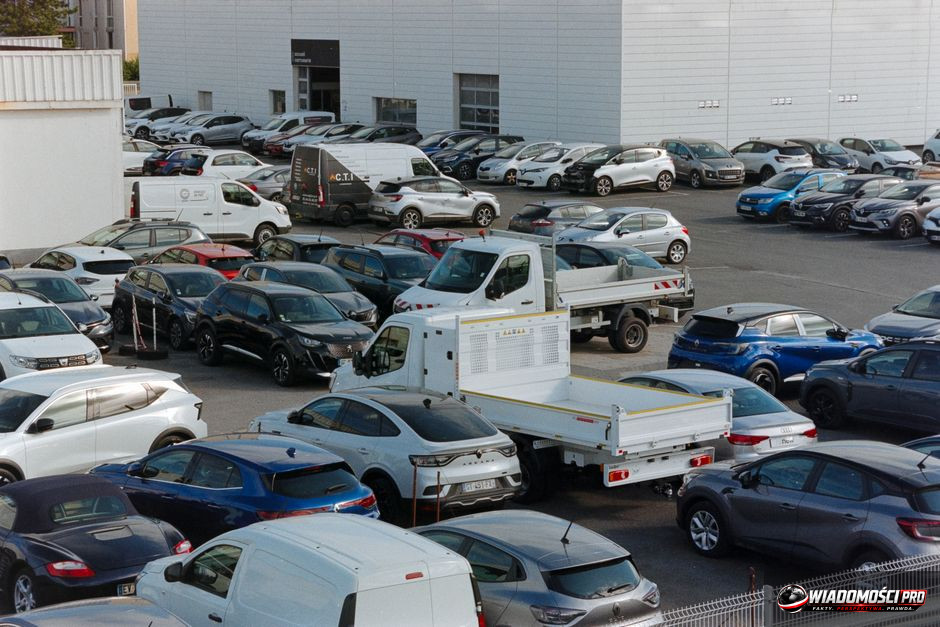
From January 1, 2027, the maximum rate for towing a vehicle will increase to 837 PLN. This is another price hike burdening the budgets of drivers, who are already struggling with rising car maintenance costs in 2026. The new regulation is a direct consequence of the annual indexation of rates carried out by the finance ministry based on inflation indicators and the real market costs of transport services.
New 837 PLN rate: What exactly is changing?
Raising the upper limit of the fee to 837 PLN means that local governments gain significant leeway in shaping local price lists. Previous limits had become inadequate for many cities regarding the operating costs that towing companies face in the reality of 2026. In practice, this means that a vehicle owner who has violated traffic regulations must account for a one-time expense of nearly a thousand zlotys before even adding any fees for storage at a guarded parking lot.
The ministry's decision leaves no illusions about the direction of the state's fiscal policy toward motorists. Instead of maintaining rigid, low rates, the system shifts the burden of maintaining parking infrastructure directly onto the offenders. A driver whose car is removed from the road no longer pays only for the tow truck service but becomes a party to a complex administrative process. Every step – from securing the vehicle by municipal police or the police to its physical transport – is priced according to the new limits.
For the average household, where car operating costs constitute a significant portion of monthly expenses, such a change is noticeable. This is not merely a cosmetic adjustment of rates, but a real raising of the entry threshold for people who, as a result of carelessness or misinterpretation of road signs, lose access to their means of transport. It is worth noting that at current fuel and spare parts prices, companies providing towing services also operate on very low margins, which naturally forced the legislator to update the price list.
Why is the finance ministry raising towing fees?
The mechanism that led to the 837 PLN amount is based on an analysis of market service costs in 2026. The finance ministry, while preparing the draft regulation, had to take into account three main factors: wage growth in the transport sector, maintenance costs for specialized vehicle fleets, and fuel price dynamics. A company involved in removing vehicles must have not only appropriate equipment but also qualified personnel, whose maintenance in the current economic conditions is more expensive than it was two years ago.
The final amount is also influenced by fleet insurance costs and specialized equipment that must meet strict technical standards. Every towing operation involves the necessity of securing the scene, photographic documentation, and ensuring safety during loading. Officials argue that keeping rates below real market costs would lead to a situation where municipalities would have trouble finding contractors willing to provide these services.
The situation in 2026 shows that inflationary pressure permeates almost every segment of the market, including municipal and cleaning services. Instead of subsidizing the removal of poorly parked cars from city budgets, the state is opting for a solution where the driver breaking the rules fully covers the costs of the operation. This approach promotes the logic of the user paying for the costs they generate, which in theory is intended to discipline drivers. In practice, however, for many people, the 837 PLN amount becomes a barrier that, in the event of a breakdown or a parking mistake, significantly impacts financial stability.
Car maintenance costs in 2026: A broader perspective
The increase in towing fees fits into the broader picture of car ownership costs, which reached a historically high level in 2026. Drivers are facing not only higher penalties for offenses but, above all, rising service prices. As market data shows, the prices of spare parts and hourly labor rates in authorized and independent service centers are systematically rising, which is a result of the lack of component availability and high energy costs.
In parallel, cities are investing in alternative forms of transport, which can be seen in the expansion of tram networks, as is the case in the Upper Silesian-Zagłębie Metropolis, where 50 modern, low-floor vehicles will appear by mid-2027. Investments in ecological hybrid buses that have joined the fleet in Toruń, or the modernization of rescue equipment in OSP units in the Opole region and fire trucks in the Łódź region, testify to a change in priorities in public spending. Individual transport, although still necessary for many Poles, is becoming increasingly expensive and treated more restrictively by public administration.
A private driver in 2026 must take into account a number of variables:
- Rising prices for technical inspections, resulting from tightened diagnostic standards.
- Higher motor insurance premiums, correlated with rising costs of post-accident repairs.
- Traffic restrictions in city centers, which often force the use of paid parking lots, generating additional, fixed costs.
In this context, 837 PLN for towing is just one piece of the puzzle. For the owner of a mid-range car, an unexpected expense of this size may mean having to give up other planned service expenses. The change in car sales rules, introduced by brands such as BMW, also suggests that manufacturers are moving away from traditional distribution models toward more integrated services, which may in the future affect the availability of service centers and the operating costs of premium vehicles.
How to avoid towing and high costs?
Prevention in 2027 will become a key element of every driver's household budget management. Since every mistake can cost nearly a thousand zlotys, there is no room for error. The first rule is a thorough analysis of vertical and horizontal signage in paid parking zones. A common mistake is assuming that having a parking app exempts one from the obligation to check whether a given street section is subject to a no-stopping ban during specific hours.
Another aspect is education regarding residential zones. Many people unknowingly park in places that are not designated for parking, forgetting that in a residential zone, parking is permitted only in designated areas. Municipal services, equipped with modern tools, including monitoring systems, identify violations faster. In 2027, the effectiveness of law enforcement will likely increase, making the risk of towing a real threat, not just a theoretical possibility.
Here are the key rules that will help protect you from a costly visit to the impound lot:
- Verification of signage when entering every side street, even if it seems quiet.
- Using official municipal parking maps, which often indicate safe and legal spots.
- Responding to notifications from parking apps, which may inform about the end of parking time or changes in traffic organization.
Ignoring regulations in the hope of "no patrol" is a strategy that in 2027 ceases to have any economic justification. Even if we find a spot that seems "safe for a moment," the risk that a tow truck will appear during that time becomes too expensive in relation to potential time savings. Every driver should treat road signs as direct instructions regarding the safety of their own finances.
Towing procedure in light of new regulations
Understanding the procedure itself is key to minimizing stress and costs in the event of losing a vehicle. The process of removing a car from the road based on Article 130a of the Road Traffic Law is strictly formalized. The decision to tow is made by a police officer or municipal guard if the vehicle poses a threat to traffic safety or blocks the passage. The car is then taken to a designated guarded parking lot, where it remains until all dues are settled.
After finding an empty parking space where we left the car, the first step should be to determine whether the vehicle was towed or stolen. To do this, contact the nearest municipal guard or police unit. Only after receiving confirmation of towing does the owner receive information about which guarded parking lot the car was taken to.
A key element of the procedure is the necessity of obtaining authorization to collect the vehicle. This requires first paying the fine or settling the offense, and then paying the invoice for the towing service itself and, most importantly, the fees for each day of storage at the parking lot. In practice, from January 2027, the sum of these costs will consist of the basic fee (up to 837 PLN) and storage costs. It is worth emphasizing that the faster the driver reacts, the lower the final bill will be. A delay of every subsequent day means the necessity of an additional payment, which over the scale of a few days can become a painful burden. Local governments, when setting parking rates, follow their own price lists, which often range from 40 to even 150 PLN per day, depending on the location and class of the parking lot.
Is 837 PLN the final amount for the driver?
The amount of 837 PLN is only the maximum rate for the act of removing a vehicle from the road. It is not a closed amount that ends all the driver's financial obligations to the city or services. Alongside it, there are costs for storing the vehicle at the parking lot, which are charged for every started day. This means that if a car ends up in the parking lot on Friday evening and is collected only on Monday morning, the owner will pay for three days of storage.
It is worth taking a close look at the cost structure that creates the final invoice:
- Maximum towing fee: up to 837 PLN.
- Fee for each day of storage: on average from 50 PLN to even 200 PLN in metropolises where the deficit of parking spaces is highest.
- Administrative costs: issuing certificates, handling documentation, and processing the return of the vehicle may be added in some jurisdictions as handling fees.
From a financial perspective, collecting the vehicle after a few days can cost the driver over 1200 PLN, not counting the fine for the offense itself, which is usually between 100 and 500 PLN. Such a comparison shows that a so-called mistake on the road becomes a serious financial event. Skepticism toward these rates is fully justified, as although the legislator sets the boundaries, the real cost depends on the policy of a specific local government. In smaller towns, these rates may be lower, but in large agglomerations, where pressure on infrastructure is enormous, it can be expected that municipalities will strive to maximize the allowable limits to balance the costs of maintaining impound lots.
What this means for you
The new regulations, which will enter into force on January 1, 2027, change the approach to using urban parking space. The amount of 837 PLN is not just a number, but a signal that the margin of error in road traffic has shrunk drastically. Drivers who do not ensure precise compliance with regulations must reckon with consequences that can shake the household budget.
The main beneficiaries of these changes will be local governments, which will receive a tool for more effective traffic management and law enforcement, and towing companies, whose revenues will be adjusted to the market realities of 2026. The driver, on the other hand, is left with the necessity of choosing: either precise compliance with regulations or risking high costs, for which there may simply be no room in many families' budgets. In the face of rising car maintenance expenses, the development of alternative transport infrastructure, such as new trams or ecological buses, ceases to be just a matter of ecology and becomes a real economic necessity.
Questions and answers
Does 837 PLN apply to every type of vehicle?
The amount of 837 PLN is the maximum rate set by the finance ministry, which will apply to standard passenger vehicles from January 1, 2027. In the case of other vehicle categories, such as trucks or motorcycles, the regulations provide for separate limits, which are also subject to indexation.
From when exactly do I have to reckon with a higher fee?
The new rates enter into force on January 1, 2027. Every towing operation carried out after 00:00 on that day will be settled according to the indexed price list, regardless of when the offense occurred.
After being towed, will I pay only for the tow truck service?
No, the amount of 837 PLN is only the upper limit of the fee for removing a vehicle from the road. To this amount, one must add the costs of storing the car at a guarded parking lot, which are charged for every day of parking, and any potential administrative costs related to handling the release of the vehicle.
Sources
- 837 PLN for towing a car. New rates from 2027 - Interia Motoryzacja
- Towing a car from 2027 will be more expensive - otomoto.pl
- New trams on GZM tracks. 50 low-floor vehicles will hit the road by mid-2027 - Kurier Kolejowy
- New vehicles in the Podlaski Border Guard Branch - Podlaski Oddział Straży Granicznej
- Toruń orders more ecological buses. Eight new hybrids will join the city fleet - TVP Bydgoszcz
- Łódzkie for safety. Five new fire trucks for preventing disasters and catastrophes - Łódzkie.pl
- Safe Opole region - purchase of equipment for OSP units for conducting rescue operations and removing the effects of catastrophic phenomena - opole.pl
- BMW changes car sales rules, also in Poland. Customers are set to benefit - Telewizja Polska S.A.
Article prepared by the Wiadomości PRO editorial team with the support of artificial intelligence. Facts come from the sources listed above.
Komentarze (0)
Ładowanie komentarzy...