In brief
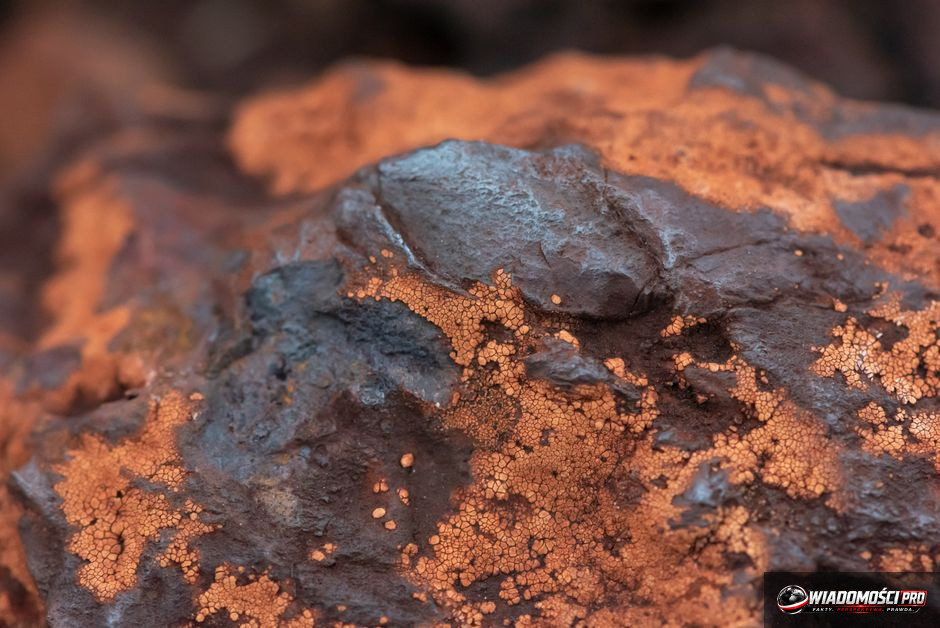
- The NWA 7034 (Black Beauty) meteorite contains igneous breccia that does not resemble any other rock found previously on Mars.
- Isotopic analysis confirms that the rock formed 4.4 billion years ago, pointing to early volcanic and water activity.
- This discovery challenges the "homogeneous Mars" model, suggesting that the planet possessed a diverse crust as early as its formation phase.
The mystery of Black Beauty: Why is this meteorite different?
The NWA 7034 meteorite, found in the Sahara, is not just another space rock to modern planetary science. Its uniqueness lies in the fact that it provides direct evidence of what Mars looked like in its near-infant stage. Scientists have estimated the age of this rock at 4.4 billion years. That is almost the beginning of the formation of the Solar System.
What is causing the most excitement in laboratories is the chemical composition of the sample. Black Beauty, as the meteorite has been named, is rich in sodium, potassium, and phosphorus. This distinguishes it dramatically from typical Martian basalts, which have defined our knowledge of the Red Planet's geology until now. Standard rocks from Mars that we have dealt with previously were much simpler in their structure. Here, we are dealing with a unique igneous breccia.
This means that 4.4 billion years ago, Mars was not a dead, geological desert, but a celestial body with an extremely complex crust. The complicated structure of this meteorite suggests the existence of an active water cycle at such an early stage of the planet's development. This calls into question many of our current models of planetary evolution.
It has not yet been confirmed in which exact region of Mars this particular rock formed, which remains a significant gap in the research. We also do not know whether Black Beauty is an isolated case or rather a representative of a broader group of rocks still waiting to be discovered. Skeptics point out that basing such far-reaching conclusions about a global water cycle on a single, even if unique, find requires caution. However, the chemical data are undeniable: Mars was a much more dynamic and complicated place in its youth than textbooks suggested even a decade ago.
New type of rock: What is igneous breccia?
Igneous breccia is not an ordinary fragment of space rock like the thousands that end up in terrestrial collections. It is a conglomerate of various rock fragments that have been permanently cemented in a violent volcanic process. In the case of NWA 7034, commonly known as "Black Beauty," we are dealing with a geological puzzle that has not fit into any model of Mars' structure known to us until now.
The key difference lies in what this structure carries with it. Unlike other SNC-type meteorites, which is a group including shergottites, nakhlites, and chassignites, "Black Beauty" shows clear signs of interaction with water. This changes the perspective of research. While most Martian samples come from deep, igneous layers of the planet, NWA 7034 was formed in the surface layers of the crust. Its unique structure points to intense recycling processes of the Martian crust as early as 4.4 billion years ago.
For planetary geologists, this is a warning signal against drawing conclusions too hastily based on previous findings. SNC meteorites, which for years formed the foundation of our knowledge about Mars, may be only a fraction of the truth because they represent specific, perhaps even atypical, volcanic environments. "Black Beauty" shows something much more complex. It proves that early Mars possessed a developed crust and an active water cycle at a time when Earth was only just forming its foundations.
However, there is a lack of hard data on the exact location from which this material originates. It has not been confirmed whether "Black Beauty" is a witness to a global phenomenon or merely the result of a local geological anomaly. Until we reach samples taken directly from the surface of Mars as part of *sample return* missions, we must treat these analyses as the most probable, but still limited, interpretation of the history of the Red Planet. Excessive optimism on this issue is premature.
Evidence of early water on Mars
Studies of the NWA 7034 meteorite, called "Black Beauty," have shown the presence of a unique igneous breccia, which proves that early Mars possessed a complex crust and an active water cycle as early as 4.4 billion years ago. This discovery shifts the time frames of the Red Planet's geological maturity. Previously, it was thought that such processes required much more time, and that the planet remained a dead, frozen rock for eons. Now, we must verify these models.
The chemical analysis of "Black Beauty" provides hard data that is difficult to ignore. It turns out that water was not a guest on Mars, but a permanent element of the landscape from the very beginning. The following observations are key for scientists:
- The high water content in the sample, which is about 6000 ppm, exceeds the values found in most Martian meteorites.
- The presence of clay minerals in the rock's structure is a clear signal of long-term contact with liquid water, not just a fleeting episode.
- The chemical composition indicates unambiguously that water must have been present on the surface of Mars during the formation of the crust itself, which changes our understanding of early climatic conditions.
If water was so abundant during the crust formation phase, we must ask about conditions favorable for life. Was Mars a biological incubator 4.4 billion years ago that we had no idea about? Skeptics point out that one sample is not enough to draw conclusions for the entire planet. They are right. "Black Beauty" is unique, but it is merely a point in the Martian ocean of unknowns. We lack data from other regions of the planet that would confirm whether the discovered igneous breccias are the standard or just a local geological anomaly. These data do not confirm the existence of life, only its potential time frame. The rest remains in the realm of hypotheses that cannot yet be verified without further sampling missions.
Geological revolution: The end of the homogeneous planet model
Geological revolution: The end of the homogeneous planet model
For decades, the model of early Mars resembled a tabula rasa. Scientists assumed that the planet's crust formed in a uniform manner, being essentially a simple, frozen basaltic mass. This assumption crumbled along with the analysis of the NWA 7034 meteorite, known in the research community as "Black Beauty." The results of the studies are unambiguous: early Mars was geologically sophisticated.
The key to this shift in thinking is the unique igneous breccia from which the meteorite is built. It is not a common piece of rock. Its structure proves magmatic complexity and clear geochemical differentiation, which 4.4 billion years ago was unthinkable within the old paradigm. Mars was not a static globe. It possessed a dynamic, diverse crust and—most importantly—an active water cycle.
Most intriguing for planetary geologists is the similarity of "Black Beauty's" composition to terrestrial volcanic rocks found in subduction zones. Here, however, a major catch appears. Mars did not and does not possess plate tectonics, which on Earth drives subduction processes. How, then, were such complex formations created? Currently, there is no clear answer. No mechanism has been confirmed that could imitate terrestrial tectonic processes under Martian conditions without the physical shifting of lithospheric plates.
It is possible that our planetary geology textbooks require a thorough revision, not just cosmetic corrections. If such a complex crust existed so early, we must completely remodel our thinking about how rocky planets formed in the Solar System. The data flowing from NWA 7034 do not give clear clues as to whether this is an isolated case or the norm for young planets. For now, we are left with one rock that challenges the foundations of knowledge we have been learning for years.
What does this mean for future missions to Mars?
The discovery regarding NWA 7034 forces a radical correction of plans for future Sample Return missions. Space agencies, including NASA and ESA, have so far aimed mainly at vast, basaltic plains, counting on easy access to rock material. Now, this approach is becoming an anachronism. Since early Mars possessed a complex crust and an active water cycle as early as 4.4 billion years ago, geological diversity has become a priority. Future rovers must land in places with high heterogeneity, where tectonic and hydrothermal processes have mixed minerals for eons.
Landing on flat terrain that is only "frozen lava" loses scientific sense. Mission designers are now looking for locations where erosion has exposed deeper, older layers of the crust. This change, however, generates massive technical risk. Geologically diverse terrain is usually difficult to land on: full of boulders, craters, and steep slopes. Engineers have not yet confirmed whether current precision landing systems will cope with such conditions without increasing the mass of the landers, which automatically raises the costs of the entire undertaking.
There is also the problem of planetary protection. If we are studying samples for biosignatures, we must be sure that cross-contamination has not occurred in places with a complex water history. Protocols must be tightened because "Black Beauty" proves that the early water environment could have been much more dynamic than we thought. This complicates sterilization and sample storage procedures during the return to Earth.
Here is a summary of technical and estimated parameters for upcoming operations that must incorporate the new data:
- Maximum permissible landing terrain slope — 15 degrees (technical data from the Perseverance/Mars Sample Return rover)
- Minimum resolution of terrain imaging from orbit before landing — 25 cm/pixel (NASA guidelines)
- Estimated duration of sample quarantine after return — not specified (planetary protection protocols in the revision phase)
Skeptics note that these requirements are contradictory. We want to land in difficult, "interesting" terrain, but our safety systems prefer boring, flat plains. This is a key dilemma that has not been resolved at any of the recent planetary symposia.
Questions about life: Did water mean organisms?
Questions about life: Did water mean organisms?
The presence of water on early Mars, confirmed by studies of the NWA 7034 meteorite, opens a new time window for the search for life. Since the planet possessed an active water cycle and a complex crust 4.4 billion years ago, theoretical biological foundations could have existed much earlier than assumed in conservative models of planetary evolution. This does not mean, however, that we have found evidence of microbes.
In the meteorite itself, known as "Black Beauty," no direct traces of fossils or evidence of biological processes have been discovered. Scientists have had to come to terms with the fact that we only possess a chemical record of environmental conditions, not biological testimony of their use. The rock provides data on the temperature and chemical composition of the waters, but is silent on whether anything managed to survive in this aquatic environment, or whether it remained a barren, albeit geologically active, laboratory.
The enthusiasm of astrobiologists must now be translated into concrete field actions. The next steps are already planned, although their implementation depends on the success of upcoming robotic missions. The goal of researchers is to reach specific craters that may hide sediments formed in this distant period. Only there, in protected geological layers, are the chances of finding biosignatures real.
Skeptics remind us that the mere existence of water is a necessary, but insufficient, condition for the emergence of life. Understanding what happened in the crevices of the Martian crust billions of years ago remains one of the greatest mysteries today. No connection has been confirmed between the discovered igneous breccia and organic processes. We must stop treating water as a synonym for the success of search missions. This is only the beginning of the road to answering whether Mars was ever a home, or just a geologically interesting testing ground.
What this means for you
This discovery is a breakthrough for the scientific community (planetary geologists are gaining new data), but it poses challenges for space agencies. The catch is that meteorites are 'blind' samples – we do not know their exact place of origin on Mars, which makes it difficult to fully understand the geological context without a Sample Return mission.
Questions and answers
Why is this meteorite called Black Beauty?
The name 'Black Beauty' (NWA 7034) comes from the dark, brecciated appearance of the rock, which visually distinguishes it from other, lighter Martian meteorites.
Does this mean there was once life on Mars?
The discovery confirms that early Mars possessed water and complex geology, which is a necessary condition for life, but it is not direct evidence of its existence.
How do we know it is definitely a rock from Mars?
Chemical analysis of gases trapped inside the meteorite perfectly matches the composition of the Martian atmosphere, measured by the Viking landers in the 1970s.
Article prepared by the Wiadomości PRO editorial team with the support of artificial intelligence. Facts come from the sources provided above.

Komentarze (0)
Ładowanie komentarzy...