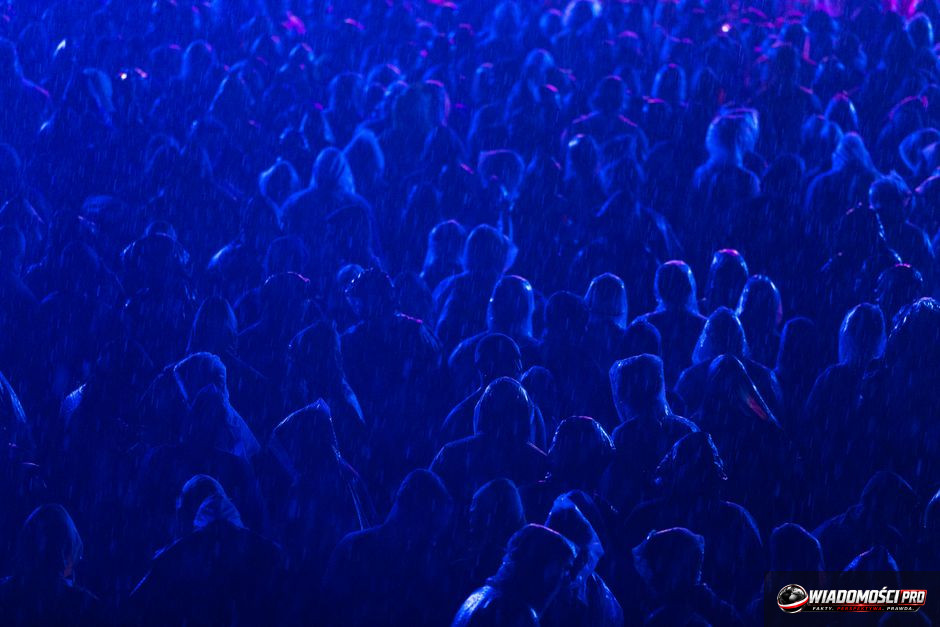
The evacuation of Męskie Granie in Wrocław on August 1, 2026, was forced by violent weather phenomena, and the organizers have already confirmed in statements that they are working on a compensation system for ticket holders. The refund process is expected to start within 14 days, although the detailed technical mechanism is still awaiting final approval from the festival's legal department. Thousands of participants who were looking forward to an evening of Polish music were forced to leave the venue in the face of an immediate meteorological threat.
Facts: The course of Saturday's evacuation in Wrocław
The situation in the park where Męskie Granie was taking place changed within a few minutes on August 1, 2026. Meteorologists issued third-degree warnings regarding violent storms, strong wind gusts, and intense rainfall. The organizers, having their own crisis management team, decided to stop the concerts the moment the first lightning strikes approached the safety threshold established in the mass event security plan.
The evacuation involved thousands of people. In accordance with protocols that must comply with the Act on the Safety of Mass Events, every participant had to leave the designated zone via marked evacuation routes. Security services, supported by a private security company, began operations around 8:00 PM. Reports appeared on social media from witnesses describing the chaos accompanying the exit from the event area. Some fans, unaware of the scale of the threat, resisted. Press headlines from that day, including those from the plejada.pl website, quoted people refusing to evacuate, which further hindered the work of rescuers and security staff.
For the organizers, interrupting the concert meant the necessity of immediately closing the stage, shutting down sound and lighting systems, and securing property against the storm. Losses resulting from the need to interrupt the event are counted in the hundreds of thousands of zlotys, including both logistical costs and claims from artists and subcontractors. Although safety was paramount, the timing of the decision sparked a wave of criticism that quickly moved to online news outlets such as Onet or WP Wiadomości.
The financial side of the crisis: What about the tickets?
Ticket holders, whose prices varied depending on the pool and date of purchase, felt left to their own devices the moment the gates were closed. Official statements issued by the organizers during the night and on Saturday morning confirmed that the topic of compensation is being treated as a priority. According to the announcements, the process is to be formalized within two weeks.
The refund mechanism for mass events interrupted due to force majeure is not simple. Organizers must settle accounts with sales platforms that collected commissions, as well as with insurers. There are several scenarios currently being analyzed by the festival staff:
- A full refund of the ticket price for every participant, regardless of the time the concert was interrupted.
- A partial refund of funds, taking into account the fact that some artists managed to perform before the storm.
- A voucher system for future editions or other events promoted by the organizer.
Each of these variants involves a huge amount of administrative work. Considering the number of tickets sold, processing applications will take at least several weeks. Fans are left waiting for instructions, which will appear in official communication channels. It is worth remembering that having proof of purchase, i.e., an electronic or paper ticket, is necessary to pursue claims.
Crowd psychology: Why didn't fans want to leave?
The resistance that appeared during the evacuation in Wrocław is a phenomenon well known to crowd psychologists. In extreme situations, such as the sudden interruption of a highly anticipated concert, people go through a phase of denial. Many people who paid for tickets, traveled from other cities, and booked hotels could not accept the fact that their investment of time and money was ending prematurely.
The slogan "I am not evacuating," quoted by the media, is an expression of rebellion against the loss of control. From the organizer's point of view, every minute of delay in clearing the area increases the risk of tragedy. If lightning had struck the stage structure while the crowd was still under it, the consequences would have been catastrophic. Security services in Wrocław had to be assertive, which is often perceived by participants as aggression.
An important aspect is also the role of social media. "Live" reports created by fans during the evacuation influenced the perception of the situation by people outside the event area. False information about the reasons for the concert's interruption was created, which increased frustration. The organizers, issuing statements via cgm.pl or Eska ROCK, tried to correct these inaccuracies, but the speed of rumors spreading online always outpaces official statements.
Safety logistics in the face of climate change
The summer of 2026 poses new challenges for organizers of mass events in Poland. Violent weather phenomena, which were a rarity a decade ago, have now become a permanent element of the festival season. The Wrocław Męskie Granie is an example of how difficult it is to plan events in open spaces when weather forecasts change dynamically within just a few hours.
Safety planning for a mass event is based on risk analysis. Organizers hire meteorologists who monitor the situation in real-time. The decision to interrupt a concert is not made by one person. It requires consultation with the fire department, police, and city representatives. In Wrocław, this decision-making chain worked correctly, although from the end user's point of view, it seemed delayed or too rigorous.
The costs of securing events are rising. They require not only an appropriate number of security guards but also advanced infrastructure that can withstand strong winds. Stage structures are designed to survive gales, but technical endurance limits are absolute. When the wind exceeds a certain speed, further operation of the stage becomes a crime against safety. Organizers are aware that every evacuation is a blow to their image, but the alternative of a fatal accident is unacceptable to them.
Image consequences for the Męskie Granie brand
Męskie Granie is one of the strongest music brands in Poland. Over the years, it has built its prestige on high artistic quality and perfect organization. The Wrocław incident is the first such serious test for the festival's image. Reactions on social media show that fan loyalty is being put to a severe test.
Crucial to emerging from the crisis will be transparent management of compensation. If the organizers show empathy and speed, the incident will be remembered as "that stormy edition" where human life was the priority. However, if the refund process is dragged out over time or hindered by bureaucracy, the brand may lose trust that will take years to regain.
It is worth noting that competition in the festival market is huge. Participants have a choice and are increasingly looking not only at the line-up but also at safety and refund policies. The organizers of Męskie Granie must understand that in 2026, a fan is not just a spectator, but a customer who expects professionalism in crisis situations. Statements issued by Fakt or Viva.pl suggest that fans will not let the topic go until the money is back in their accounts.
Legal analysis: Who bears the responsibility?
In light of Polish law, the organizer of a mass event bears full responsibility for the safety of participants. A ticket purchase agreement is a civil law contract. If the service, i.e., the concert, was not performed in full, the consumer has the right to a refund of part or all of the amount paid. The problem arises when defining "force majeure."
Weather is a classic example of force majeure, over which neither party has any influence. However, in judicial jurisprudence, it is often argued that a professional organizer should anticipate the variability of weather conditions during the summer. Therefore, the argument of an "unpredictable storm" may be insufficient to refuse refunds. The organizers of Męskie Granie, by publishing assurances about working on compensation, are avoiding the courtroom, which is the most rational solution.
Lawyers specializing in copyright and event organization point out that the festival's regulations are key. They usually contain provisions excluding liability for random events. However, these regulations cannot be contrary to the Consumer Rights Act. This means that any attempt by the organizer to keep the money would be easy to challenge before the Office of Competition and Consumer Protection. Therefore, the announcement of a compensation system is not so much good will as a legal necessity.
The future of the concert tour: Will the organizers learn their lessons?
The event in Wrocław on August 1, 2026, calls into question the comfort of viewers at subsequent stops on the tour. If the organizers decide to tighten evacuation criteria, fans can expect more frequent breaks in the music even with a slight deterioration in the weather. This, in turn, creates the risk of "material fatigue" among the audience, who will start giving up on buying tickets for fear of another interruption of the event.
The logistics of subsequent concerts will have to include a larger number of exit points and better warning systems. This may mean that the festival will have to invest in more advanced weather monitoring systems that will send information directly to participants' phones via a dedicated app. This is a solution successfully used by organizers of large events in the USA or Western Europe.
For the Polish show business, Wrocław is an alarm signal. The industry must develop standards of conduct in crisis situations that are understandable to the viewer. The current state, in which every organizer operates according to their own, often unclear procedures, does not favor building trust. A debate involving uniformed services, insurance companies, and promoters is needed to create a uniform model of safety management in the era of climate chaos.
How to prepare for future events?
Participants must be aware that participating in a mass event involves risk. Before going to a festival, it is worth familiarizing yourself with the site map, with particular emphasis on evacuation routes. It is also worth following the festival's official profiles, which are the fastest source of information in the event of a crisis.
Fans who felt cheated by the events in Wrocław should not take hasty legal action. Waiting for an official announcement about the refund procedure is the most reasonable strategy at this moment. The organizers have an interest in resolving the matter amicably and quickly, as they care about further ticket sales for the remaining concerts. Any unnecessary conflict will only prolong the process of recovering funds.
Questions and answers
Why was the Męskie Granie concert in Wrocław interrupted?
The concert was interrupted on August 1, 2026, due to the occurrence of violent weather phenomena that threatened the safety of participants.
Do the organizers plan compensation for tickets?
Yes, the organizers confirmed in official statements that they are working on a compensation system for people who purchased tickets for the interrupted event, and the process is to start within 14 days.
Will the festival be resumed at a later date?
Decisions regarding the future of the tour and any changes are communicated by the organizers on an ongoing basis through official information channels.
What should be done to receive a refund?
One should follow the organizer's official announcements and keep the proof of ticket purchase, which will be necessary in the claim verification process.
Was the evacuation carried out in accordance with the law?
Yes, the evacuation was carried out in accordance with the mass event security plan, which is a legally required document for this type of event.
What was the role of the services during the evacuation?
Security services and protection were responsible for efficiently moving the crowd out of the park area, which, in the face of resistance from some fans, required decisive action.
Are the organizers liable for fans' losses?
The organizer's liability is limited to a refund for the unperformed service, i.e., the ticket, in accordance with the event regulations and the Consumer Rights Act.
Where to look for the latest information?
The most reliable source of information is Męskie Granie's official social media profiles and the festival's website.
Will the Wrocław edition be repeated?
At this moment, there is no official information about a possible repetition of the concert in Wrocław at a later date.
What was the biggest logistical challenge during the evacuation?
The biggest challenge was the need to quickly move thousands of people out in the conditions of an approaching storm, while simultaneously facing resistance from some participants.
Will every participant receive a refund?
The organizers confirmed work on a compensation system, which suggests that all ticket holders will be covered by the refund procedure.
Is this the end of weather problems on the tour?
The organizers have announced a more rigorous approach to weather forecasts, which may involve more frequent breaks in concerts in case of danger.
What are the chances of a full refund?
This is one of the variants being analyzed, which depends on legal and insurance arrangements conducted by the festival staff.
Was it worth evacuating the event?
From the point of view of the safety of the participants' lives and health, the evacuation was the only right decision, despite the emotional reactions of the audience.
What about the artists who did not manage to perform?
The situation of the artists is part of broader settlements between the organizer and subcontractors, which does not directly affect the refund process for viewers.
Can fans claim compensation for non-material losses?
In Polish civil law, obtaining compensation for "non-material losses" in the event of a concert cancellation is extremely difficult and rarely ends in success.
What is the main conclusion after the Wrocław incident?
Wrocław showed that the safety of mass events in the era of climate change requires new standards of communication and logistics that must be understandable to the recipient.
Will the refund system be automated?
The organizers are working on a solution that is intended to be as simple as possible for the user, but the scale of the event requires meticulous verification.
What are the plans for the next stops on the tour?
The tour is continuing according to the schedule, with each subsequent concert being subject to tightened weather safety procedures.
Could the chaos have been avoided?
The chaos largely resulted from the psychological unpreparedness of the participants for the sudden interruption of the event, which is difficult to completely eliminate in a crowd.
Sources
- Evacuation and interrupted concert at Męskie Granie. There is a statement from the organizer and compensation for ticket holders - wroclaw.pl
- Męskie Granie interrupted by evacuation. Organizers comment on fan outrage - Onet
- Męskie Granie interrupted. Organizers mention compensation - WP Wiadomości
- Męskie Granie issued a statement after the evacuation of concerts in Wrocław. Organizers explain the decision by safety considerations - cgm.pl
- Evacuation at Męskie Granie in Wrocław. Organizers spoke out regarding tickets - Radio Eska ROCK
- Męskie Granie explains the decision to evacuate. Organizers issued a new statement - Fakt
- Męskie Granie in Wrocław interrupted. "I am not evacuating" - plejada.pl
- Storm thwarted the plans of thousands of fans. Męskie Granie announced what will happen next - Viva.pl
Article prepared by the Wiadomości PRO editorial team with the support of artificial intelligence. Facts come from the sources provided above.
Komentarze (0)
Ładowanie komentarzy...